Rural Intelligence: The Online Magazine for Eastern New York, Western Connecticut and the Southern Berkshires
Search:
Mailing List:

Berkshire Theatre Festival

Joie de Livres

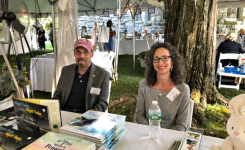
Spencertown Academy Book Fair

Capitol Steps at Cranwell

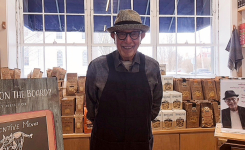
Johnnycake Books

Barbara Farnsworth, Bookseller

Bart Gulley Landscape Painting Class

Independent Bookstores

G J Askins Bookseller
New Lebanon, NY
Pittsfield, MA

Barbara Farnsworth Bookseller
West Cornwall, CT

Berkshire Books
Chatham, NY

The Bookbarn
Hillsdale, NY

The Bookloft
Great Barrington, MA

The Bookstore
Lenox, MA

The Chatham Bookstore
Chatham, NY

House of Books
Kent, CT

Johnnycake Books
Salisbury, CT

Joie de Livres
Salisbury, CT

Librarium
East Chatham, NY

Merritt Bookstore
Millbrook, NY
Red Hook, NY

George Robert Minkoff, Inc. Rare Books,
Alford, MA

Oblong Books & Music
Millerton NY
Rhinebeck, NY

Richard J. Lindsey Bookseller
Kent, CT

The Spotty Dog Books & Ale
Hudson, NY

Stockbridge Booksellers
Stockbridge, MA

Village Books
Tivoli, NY

Yellow House Books
Great Barrington, MA

RI Archives: Arts

View past Book articles.

If It’s Tuesday, This Must be Tyringham

Rural Intelligence ArtsIt’s easy to take our region’s rich history for granted, because 18th century houses and 19th century churches are daily sightings for most of us. But how often do we stop to explore the interior architecture of that house of worship we’ve driven by hundreds of times?  How often do visit a neighboring town with the curiosity we’d bring to any tiny village we might visit on a trip to, say, Italy or France?

David J. McLaughlin’s Inside the Berkshires: Sixteen Journeys of Discovery will make you realize just how much you’ve been missing in your own backyard. Think of this photo-rich guide book as an amuse bouche—it will whet your appetite for local travel and history.  This Baedeker is filled with ideas for year-round excursions, but everybody knows that there’s no better time for a Sunday drive than autumn, so use this book to start planning your fall foliage road trips.

(0) Comments

Enjoy this post? Share it with others.

Tell-a-Friend del.icio.us    Digg    Facebook    Reddit    StumbleUpon   

Posted by Dan Shaw on 08/14/08 at 06:15 PM • Permalink

Signings in Sharon; A Lecture in Lenox

Rural Intelligence Arts Section Image

Novelist Roxana Robinson signs books August 1

There’s a good chance that one of your favorite local authors will be autographing their latest book at the Hotchkiss Library of Sharon‘s 12th annual Summer Book Signing on Friday night, August 1. The fund-raiser is not only a highly personal (and charitable) way to buy new books but also a celebration of our region’s literary tradition and role as a center of creativity.

The more-than-two-dozen authors appearing span the Dewey Decimal system. They include Roxana Robinson, who’s well-reviewed literary novel Cost chronicles what happens when an art history professor must confront her son’s heroin addiction; Christopher Andersen, the author of Somewhere in Heaven, a biography of Christopher and Dana Reeve; sportswriter Frank Deford who’s wrtten a novel, The Entitled: A Tale of Modern Baseball and former baseball commissioner Fay Vincent who’s oral history project is called We Would Have Played For Nothing; Bunny Williams, the prominent New York City interior designer with a much-photographed garden in Falls Village, whose coffee table book memoir, Bunny Williams’s Point of View, was co-written by yours truly.

Many of the authors are writers or illustrators of children’s books and it’s a great opportunity to stockpile birthday gifts for the fall, including The Block Mess Monster by Betsy Howie, The Wolves Are Back by Wendell Minor, and Valorie Fisher‘s When Ruby Tried to Grow Candy.

Summer Book Signing
On the Green at the Hotchkiss Library of Sharon
August 1; 6 - 8 PM
$25

-----------

Rural Intelligence ArtsWriter Gioia Diliberto has long been interested in society ladies of yesteryear. Her books include Debutante: The Story of Brenda Frazier, a compelling biography about the tragic life of the socialite who was dubbed Deb of the Year in 1938, and I Am Madame X, a novel based on the life of Virginia Gautreau, who was the subject of John Singer Sargent’s most famous painting. Thus, she should feel right at home at The Mount when she lectures on Coco Chanel (photo) on Monday, August 4. Diliberto, who has written a historic novel, The Collection, which is set in Chanel’s atelier in 1919, will use dozens of slides to illustrate her talk on fashion history and how she researched her novel. A book signing and tea will follow her presentation.

Coco Chanel Lecture at The Mount
Lenox, MA; 413.551.5104
August 4; 4 PM
$18 in advance (by noon); $20 at the door.

(0) Comments

Enjoy this post? Share it with others.

Tell-a-Friend del.icio.us    Digg    Facebook    Reddit    StumbleUpon   

Posted by Dan Shaw on 07/31/08 at 06:22 PM • Permalink

Talking about China in the Berkshires; Simon Winchester at Home

Rural Intelligence ArtsSimon Winchester, the Oxford-trained geologist turned bestselling author, became renowned with his inspired much-touted The Professor And the Madman: A Tale of Murder, Insanity, and the Making of the Oxford English Dictionary, and almost equally praised for Krakatoa: The Day the World Exploded, August 27, 1883. The latest of this prolific author’s 17 books, The Man Who Loved China: The Fantastic Story of the Eccentric Scientist Who Unlocked the Mysteries of the Middle Kingdom, has just been published, and it seems a worthy heir. “Winchester plunges the reader into the action with hardly a break,” assayed Publishers Weekly, in its starred review. “Another formidable, absorbing reading experience by the versatile Winchester…makes scholarship positively sexy,” gushed the often withholding Kirkus Reviews. This shouldn’t surprise, given Winchester’s long reputation as “lyrical” and “indefatigable” (Newsweek), “extraordinarily graceful” (Time), and an author who “could probably write circles around most writers on the planet” (San Francisco Chronicle Book Review). Rural Intelligence ArtsThough he’s traveled the world and was a journalist in Asia for years, Simon and his wife Setsuko Winchester (a former NPR producer) spend most of their time in their light-suffused, 1782 Colonial/ 1820 Federal house on 65 acres in Sandisfield. He’s got a tractor, a vegetable garden, a barn-studio, and sun-dappled westward views. Shortly before he and Setsuko set off for the Faroe Islands in the deep Atlantic, the happily landlocked Winchester talked about his new book to another writer, Sheila Weller, author of Girls Like Us: Carole King, Joni Mitchell, Carly Simon—And the Journey of a Generation who, along with her husband John Kelly, author of The Great Mortality: An Intimate History of the Black Death, comprise most of the writerly population of that physically huge (53 square miles) but sparsely populated (under 800) southeast Berkshire County town.

Q: How did you come across Joseph Needham, the man who loved China?

A:  Oddly enough, in this area—Salisbury, CT.
About 15 years ago. I was writing a book about the Yangtze River, and I was wanting to know about the type of junks that managed to go up against the current, and they obviously had to be very fast and fleet. And I was asking somebody in New York, who knows about ships, where I would find information, and he said, “There are two obvious books.” The second [of those books he mentioned] was Volume 4, Part 3 of Science and Civilization in China by Joseph Needham. I hadn’t heard of it.

The next day I happened to be at a bookstore, now sadly defunct, Lion’s Head Books in Salisbury. When I told the shop owner Mike McCabe I hadn’t heard of Needham’s book he said, “Shame on you, because he wrote this extraordinary book, in 24 volumes.”

He went downstairs and found a volume that he had, which happened to be volume 4-5. So I sat in the car reading it, and it answered all the questions I needed, but it also happened to be the most extraordinary piece of literature, and I thought, He’s written not only this, but 23 others! So I thought I’d write a book about him one day.

Q: What were the most important things that he did?

A: The most important thing he did was that he changed, almost single-handedly, the way we in the West view China. Up til the time that he started his work I think we were very disdainful of China, considering it the sick old man of the east. He made us realize that it was a place of which we should be in awe. And we have been ever since.

We’d been terrified by China. And he was the man who changed the whole hemisphere’s way of thinking, above all else.  He was many, many other things as well – he wrote a stupendous piece of literature, and he was a master of his college at Cambridge and an extraordinary womanizer – a remarkably colorful man. But that one achievement above all else: To change the way one half of the world felt about the other half.

Q: Your book has come out right before the Bejing Olympics. What from historical China – WW II China – do you see mirrored in the China we’re dealing with now?

A:  This is the most extraordinary thing, the sheer rapidity of this change, which began in the 1980s when Zhao Ziyang became the leader and said, “Rich is glorious.”
China has, for the last three or four hundred years, and this is what fascinated Needham, has not been very productive. Has been backward, and allowed itself to slide into poverty. The empire collapsed in 1911 with all these foreign countries – Britain – snapping up Hong Kong. But now, with the exception of Taiwan, she’s got her country back. And she’s rocketing up with astonishing speed to the forefront of world powers. And she has made several mistakes: Tibet is one. Pollution is another. But she’s run by very, very intelligent people. And I think China is acknowledging the missteps she’s making. But, as Napolean said, “China is like a sleeping dog. Do not wake her, for when she wakes, the whole world will tremble.” Well, it is waking.

Q:  Your books are about disasters and adventurers and iconoclasts. They’re all fascinating. They’re all worldly. Is there a common thread, other than that?

A: I’m still, in terms of writing biographies of people, looking quite keenly for people who have been forgotten but who have made a huge contribution to human society.  W.C. Minor in The Professor And The Madman is a classic, as was James Murray, the editor of the dictionary. They’re sort-of-forgotten people who deserve to be resurrected. And, of course, William Smith was the first of these three geology books I did – similar fellow, he was totally overlooked…in fact, ruined.

So, if I have a mission, resurrecting these people is that..

The other geology books – Krakatoa and The Crack In The Edge of the World, about the San Francisco earthquake: I think they came about largely because, in a way, they’re a sort of aberration: they move away from what I’ve tried to do for the last decade.

Q: And you were a geologist?

A: Yes. That’s the important thing. I’d written this book about William Smith [1769 - 1832], who created the first ever geological map, and his tragic story, in The Map that Changed the World, and my editor said, “You know, you actually managed to bring geology alive. Why don’t you look at a couple of other geology stories.” So there was Krakatoa, and that was very successful. And then there was San Francisco. But I think those were the only three.

Q: Is there another forgotten person you want to write about?

A: There are thousands. But that’s not what I’m doing next. I’m doing a big biography of the Atlantic Ocean.

Q. Fascinating! Have you begun it?

A. Yes. I have to deliver it next year, so I have a lot of traveling to do, as you can well imagine.

Q:  Congratualtions on becoming an O.B.E. [Order of the British Empire, which was conferred upon Winchester by Queen Elizabeth in 2006]. What happens when you walk into the Southfield General Store here; do they bow? [LAUGH]

A:  No, they don’t. People who know about it joke about it. Of course fellow Brits say that O.B.E. stands for “Other Buggers’ Efforts.” [BOTH OF US LAUGH]

Q: Okay, let’s tout Sandisfield a little bit. What three things do you love most about Sandisfield?

A:  Well, I think the reason I chose to live here is that it has the look and feel of England. In fact, quite by coincidence, I know quite well, in England, the family which has given the town its name, the Sandys [the Earl of Sandys], [one member of whom was] a minister in Anthony Eden’s government. So there’s that.

And there’s the physical beauty of the place. And the peace and quiet. And this growing nucleus of fascinating people. We’ve all known there’ve been fascinating people in the Berkshires for a long time. But now Sandisfield, which had been the forgotten southeast corner, is starting to attract the kind of people that I really enjoy being with. So it’s intellectually stimulating, physically beautiful and secluded enough

Q: And, of course, a pair of top designers – who are in Vogue every month—just bought a gorgeous home on rolling, sheep-strewn, stonewalled hills here in Sandisfield. But we’ll keep that a secret for a while.

Okay, so moving to the really important questions….

Q: As was recently asked of Obama: Stones or Beatles?

A: Oh, Beatles! A hundred percent!

Q: Guido’s or Citarella?

A: Oh, Guido’s! Without a shadow of a doubt!

Q: Bizen or the Waverly?

A: Bizen, because my wife Setsuko likes the pottery. [Bizen chef/owner Michael Marcus studied authentic Japanese pottery-firing and cuisine.] [LAUGHS] You’re asking impossibly easy questions – no doubt at all! I mean, if you’d said Bizen or the Spotted Pig, that might have been harder…

Q: Is there anything else you’d like to get in about your book, that I didn’t ask?

A: Yes.  Joseph Needham was banned from this country for 25 years because he was a Communist and he did something very foolish in 1953.  He agreed to investigate Chinese and Soviet charges that the U.S. had used biological weapons during the Korean War, and wrote a report saying they had.  And for saying so was excoriated everywhere (except the Communist countries, who put him up to it), and banned from the U.S. 

The ban was lifted in 1978.

In retrospect it looks so stupid that anyone should ever be banned for his political affiliations, or for what they stand up and say in public. So in a way, this book resurrects someone who was for a long time condemned for his left wing views. I think America has broad enough shoulders now to embrace any view that anyone chooses to express.

And I hope this thing never happens again.

And I think Obama is part of this new breed.

And what’s frustrating is: I can’t vote. I still have a year and a half before I gain my citizenship, and that’s going to be a real life-changing moment for me: to fully embrace this country that I like so much.

I cannot wait for that.


(1) Comments

Enjoy this post? Share it with others.

Tell-a-Friend del.icio.us    Digg    Facebook    Reddit    StumbleUpon   

Posted by Marilyn Bethany on 07/14/08 at 06:45 AM • Permalink

Saturday At Spencertown Academy:  Sloane Shelton as Eudora Welty

Rural Intelligence Arts
 
 
‘’There’s a saying around here,’’ the fiction writer Eudora Welty once said. ‘’If you hear it, tell it.’’

“Around here,” was Jackson, Mississippi, where Welty heard everything: the comedy and music in the language, the evasions, self-deceptions, and willful misunderstandings, then told all with humor and affectionate-but-unsparing insight.  In 1983, when she was 74, the famously private Pulitzer-Prize winning author surprised her public by delivering three personally-revealing and rapturously-received lectures on writing at Harvard.  Later she gathered them into a memoir, One Writer’s Beginnings, which spent nearly a year on the New York Times best seller list. Welty died in 2001, but for 90 minutes on Saturday evening, as part of Spencertown Academy’s Spoken Word series, Broadway veteran Sloane Shelton will bring her to life in Jan Buckaloo’s play, Eudora, based on Welty’s memoir.  Developed as part of the Workshop Productions program at the Bay Street Theater in Sag Harbor, NY, the play will soon embark on a nationwide tour.

Spencertown Academy
Route 203, Spencertown; 518.392.3693
Tickets $15; $12/members

(0) Comments

Enjoy this post? Share it with others.

Tell-a-Friend del.icio.us    Digg    Facebook    Reddit    StumbleUpon   

Posted by Marilyn Bethany on 06/10/08 at 05:09 PM • Permalink

Better Than Listening in the Car

Rural Intelligence Arts Section Image

Jane Curtin will be reading at the Mahaiwe on July 19

The folks at NPR like to use the term “driveway moments” to describe what happens when listeners stay in the car in the driveway (or parking lot) because they don’t want to miss one word of what they are listening to. I would bet that more of these driveway moments occur during Selected Shorts, the series where great actors and actresses read from classic and contemporary short stories.  Now, Selected Shorts is making its inaugural visit to the Mahaiwe Theatre in Great Barrington on Saturday July 19 at 4 PM, and the readers will be Jane Curtin (who lives nearby in Lakeville, CT), James Naughton and the incomparable Isaiah Sheffer, the host and founder of the series.
If this is the first you’ve heard about it there’s a reason. The Mahaiwe did not have it listed on its website until today, because it wanted to make sure its members got first crack to buy tickets (they get a discount too) and only advertised it to them. Today, the tickets go on sale to the general public, and they are bound to go fast. And if your thinking that now is the time to buy a Mahaiwe membership ($65 and up) so you’ll know about events like this before everybody, well, Click Here.

(0) Comments

Enjoy this post? Share it with others.

Tell-a-Friend del.icio.us    Digg    Facebook    Reddit    StumbleUpon   

Posted by Dan Shaw on 06/05/08 at 08:52 PM • Permalink

Books: The Soundtrack of Our Lives

Rural Intelligence ArtsWomen of a certain age will recall the famous “click” moment, identified and immortalized in 1971 by Jane O’Reilly in the preview issue of Ms. magazine--that nano-second in which a woman becomes a feminist, invariably as a reaction to a stinging sexist insult.  But perhaps less clearly remembered was an earlier rash of clicks, marking the moment when each in a generation of young women began to question, among other things, the price of sexual innocence.  These clicks may have been harder to hear as they often were triggered by (and, thus, drowned out by) a particularly stirring moment in a song, quite probably written by one of the three autobiographical songwriters whose lives are chronicled in a new book, Girls Like Us: Carole King, Joni Mitchell, Carly Simon--and the Journey of a Generation.  Written by Sheila Weller and published by Simon & Schuster just last week, Girls Like Us... has already secured a spot on The New York Times Hardback Non-Fiction Bestseller List (#7, with, as they say in Billboard, a bullet), Weller’s third book to do so.  Girls Like Us... is a hybrid: a triple biography, a page-turner, and a fascinating and painstakingly wrought work of social history.  Weller and her husband, the writer John Kelly, author of The Great Mortality: An Intimate History of the Black Death, the Most Devastating Plague of All Time, live and write part-time in Berkshire County.

Rural Intelligence: In your book, you use the biographies—and the autobiographical lyrics--of three singer/songwriters to make sense of a period in American feminist history that is not easy to explain: the messy, compass-less transition from traditional values, through sex, drugs and rock ‘n’ roll, to liberation, or whatever you choose to call the relatively tidy accommodation we’ve reached today.  Please describe the process of coming up with this complex idea?

Sheila Weller:  I just always wanted to write this book! Certainly ever since I read Sara Davidson’s nail-on-the-head Loose Change, I first thought, Why didn’t I think of this? and then: I’ll do something like this later...when more time has passed.

Perhaps every generation is solipsistic, but there was something about having gone through the unique wind tunnel of the ‘60s—where so many of us went, overnight, from being luncheon-suited, teased-hair girls-who-were-going-to-get-engaged-right-after-college to...well, to People Who Could Never Run For President—that was instantly one of those One-day-I-HAVE-to-write-about-this experiences. And, indeed, the more years that passed since those halcyon days we were a little too stupid to know we might NOT have survived (there’s a Tangier jail cell out there somewhere with my name on it that by some fluke of luck I just missed inhabiting....), the more you do see, as you so well put it, the “tidy accommodations” that you made.

As the years rolled on, I kept waiting nervously for the book in that once-familiar genre (that started with Mary McCarthy’s The Group and ended, by my count, with Barbara Raskin’s Hot Flashes--and had Loose Change and Alice Adams’s Superior Women in between--that expressed ‘60s women in early middle age (a horrible term that we only freely use now since we’re actually past it ). Luckily, it didn’t come out. People seemed to have forgotten about that three-or-four-women-going-through-time convention. (Maybe “Sex and the City” used up all the air.)

At the same time, I started noticing that younger people had the era all wrong. I remember, for example, that Renee Zellwegger movie [Down With Love] where she went from being a Doris Day, headbanded early ‘60s type to a power-suit feminist. I thought, Whoa! People are missing a whole era—when girls turned into chicks (term worn proudly, not as insult). In 2000 I started working among young women, at Self and then Glamour magazine. My sister, a lawyer (and a compatriot during the great crazy years), also worked among younger women, and we noticed a tantalizing difference--they were instantly “together:” (to use the old term), demanding and making good money, married to nice, sensible guys (no crazy drug dealer boyfriends...), albeit with discreet tattoos, etc.  Even the hippest-- most purple-haired--of them got...engaged! with a...ring! and bridesmaids!  It was illuminating to see the quirks and landmarks of our own generation (female-wing) against the bas relief of this other one we were thrust among.

I wrote other books..true crimes [Marrying the Hangman, Raging Heart, Saint of Circumstance], a memoir [Dancing at Ciro’s]...but I kept thinking of this one. And of course the music and personae of Carole, Joni and Carly were the soundtrack of those thoughts. They were middle class girls, too. There were aspects of each of their lives which we all knew about, and of course their music, that resonated as a counterpart-across-the-celebrity-divide to ours.

One day--this is true; the Berkshires part!--in early 2002..it was winter—I took a walk down Beech Plain Road in Sandisfield, and it literally just came to me. To write an intertwined biography of these three women but more in the manner of The Group and Loose Change than a standard music biography. I came back to the house and called my sister--Liz Weller is her name. And I said, What do you think? And she said: That’s IT. It took me a full year to write and rewrite the proposal to convince my agent, Ellen Levine (from airy conception to concrete proposal is a long journey, as every writer knows) but once she was convinced, oh, man!, was she convinced.

I sold the book at a kind of mini-auction in May 2003.  I’d already started doing interviews, but now I carpet-bombed the territory, looking for interviews. So it took six years from conception, five from contract. And a house re-mortgaging in between!

R.I.: Did you ever consider anyone other than Carole, Carly and Joni? If so, who, and why didn’t she make the cut?

S.W.: Actually, I did. I considered Linda Ronstadt for about two days. A, she provided geographical (Southwest) and some ethnic (she’s half Hispanic) diversity (and, by the way: yes, the white-girl-ness of the book did bother me; my sense was that the African American experience was so much more momentous during that span of years, it was another order of significance from my little-white-girls); she Was There. (I remember loving “Different Drum” in summer ‘67); she was key in the Lucy’s El Adobe L.A. social scene, the Troubadour bar scene...and she had interesting lovers. (Jerry Brown...Albert Brooks...George Lucas. In fact, she, more than the others “dated”—to use a crass word - “up,” as women were supposed to do.) But Linda didn’t write her own songs, she only sang others’ songs. And four women were just too many. She also didn’t have quite the...pathos and complexity, nor nearly the significance of the others.

Writ large over the book, also, is Laura Nyro, who was evanescent, extraordinary. For a lot of reasons I didn’t consider her (there was already a biography, her life was too private, etc.), but SHE was the one whose music I felt the most kinship with, back then.

R.I.: I always thought it was Janis Joplin who closed the deal.  Girls heard her sing, “Piece of My Heart,” and promptly changed their mailing addresses to their boyfriends’ fraternity houses.

S.W.: Interesting. I would have said Grace Slick. I remember girls wanting to be like Grace but not like Janis. Also, Janis was more extreme. I wasn’t choosing extreme girls; I was going for girls you could have turned to in a Bloomingdale’s fitting room and said, “how does this look?”

R.I.: When you were growing up in Beverly Hills were you aware that just a few miles east in Laurel Canyon there was a creative/social zeitgeist occurring among rock musicians comparable to the between-the-wars Paris of Hemingway’s A Moveable Feast?

S.W.: I’d already left BH for NYC by the time that was going on but my sister lived there and I visited and, yes, we were, envying, aware. When I was growing up in LA, Laurel Canyon was, indeed, always a bohemian place.

R.I.: “Grim and dour” is how you describe the household in which Joni Mitchell’s illegitimate daughter grew up.  But didn’t Joni herself grow up in just such a household, feeling every bit as alienated from her birth parents as her child did from the couple who adopted her? Isn’t that how the household of every rebellious child feels; “grim and dour”?

S.W.: Oh, dear, if I said that (via a source) that was probably a little mean. Kilauren’s adoptive parents were bookish and not at all charismatic. And, yes, it matches a bit the relationship that Joni had with her extremely proper parents. In fact, Kilauren was SO much Joni’s daughter—down to the modeling, down to the loving of clothes—it does show you the impact of genes. I don’t know if every rebellious child feels she’s from a grim and dour family. (The rebellious girls I grew up with in BH would say their parents were materialistic and had “plastic” values, but weren’t necessarily grim.) but that’s certainly a good backdrop to rebel against.

R.I.: What if Brad MacMath hadn’t dumped pregnant Joni?  Wouldn’t she have been forced to face the same dilemma—the demands and constraints of motherhood vs giving vent to her immense narcissism-fueled creativity? 

S.W.:  That’s a great question. I think she would have dumped him. She was never madly in love with him, according to my sources. They may have married, quickly--because Myrtle [Joni’s mother] was the biggest stumbling block; her disapproval would have been seismic--but it wouldn’t have lasted. One way or another, she would have ended up with a green card and in NY.  “Narcissism-fueled creativity”: well put!

R.I.: Joni is the one whose actions are the most mysterious to me; the hardest one to like.  Do you agree? If so, do you think it’s because she is the greatest artist of the three?  Does genius like hers get in the way of like-ability?  Do we care when the genius is a man if he’s likeable or even good to his kids?

S.W.:  Hmmm… I got so into her I felt I “knew” her, you know? The reflexive need to bolt, to relinquish, while knowing it was considered aberrant...all the pain at her damned idiosyncracy that “River” expresses.  But, yes, she’s not only objectively at a higher level of artistry than the other two (though they have equal, compensating merits—there is one Joni album, “Court and Spark”...oh, and maybe a couple of cuts from “Hejira,” that I would ever listen to driving around in the car; it isn’t bouyant, elegiac music...) , but, just as important, she quite obviously considered herself an artist so early on, a self-definition that intensified with time. Despite living in, of all places, Bel Air, she is the one who is avant garde. Genius and likeability...again, interesting. I think many fans like her because they want to like her—they love her and respect her so very much, they over-champion her, and every wound she feels, they feel, too. And there’s something superficially very pleasing about Joni—her femininity, the cornsilk hair. But her ego is..whoa! And, indeed, we take it for granted that a brilliant male musician or artist has a big fat obnoxious ego. (BTW, people who’ve recorded with her—like Russ Kunkel—say she is a pleasure to work with. “Humble.")

R.I.: Of all the troubling behavior you describe in this book, you seem most perplexed by Carole King’s choice to live for several years under relatively primitive conditions in the wilds of Idaho with a succession of (by any measure) unsuitable men.  Is it possible that she suffered the men just to get that life?  It has its virtues: Idaho is, after all, very beautiful, and the nice thing about having goats to milk, etc, is you always know exactly what is expected of you next.

S.W.:  Eventually she took great pleasure in the life. Cynthia Weil says, “Carole was always a hippie at heart,” but close friends say she was very depressed during those years, and she herself has said she was hiding...that the city (and the reviewers) had become the frightening creatures in the woods, while the woods became safe.

I loved the adventurousness and unexpectedness of Carole’s choices in those two husbands. They were the biggest stretch that any of the women made. And if you listen to Carole’s beautiful and completely underrated “Welcome Home” (the song, not the album), you hear the beauty in her finding herself in a life so different than the one she was born in.

R.I.:  There’s a thread that runs through all three of these women’s stories, and his name is James Taylor.  Did you know from the outset that he had played a vital role in each of these women’s lives—lover of two, colleague of all three, his own wife, perhaps most ambivalently, since he never really respected her work?  (Nor did he take pains to hide the fact; Sweet Baby James, indeed!) Do you know what his objections were to her work?  Does he address it in his own autobiography?

S.W.:  I definitely knew he had been with Joni and, yes, I knew that he and Carole were such close musical friends (I didn’t realize the whole nexus at the beginning). Why didn’t he respect Carly’s work? He probably thought it slick, or standards-based. Also, he was, especially during his drug taking years (and there was a long stretch of them), so narcissistic, he wasn’t going to take much interest in her work. He didn’t write an autobiography; Timothy White wrote an authorized biography, Long Ago and Far Away. It was not very illuminating, overall.

R.I.: All three of these women have had more romantic opportunities deeper into middle age than most women do yet today all three of them, grandmothers in their 60s, live alone.  Do you think this is a coincidence?  If not, do you have a theory as to why?

S.W.: Yes, all three live alone. Indeed. And, yes, they had more opportunities longer than other women; fame and charisma extend opportunities for women. I think Joni would have definitely ended up alone. She is solitary and quirky. Carly was very unhappy when her second marriage really finally ended (and she has a boyfriend now). Carole, I think probably is the example of someone who was so richly domestic for so long--four kids, starting very young--that she is happy to live alone, with abundant family around her.

R.I.: You’ve said that Carly Simon was the only one of the three who cooperated with you.  But in the end, I think you’ve done a great service to all three of these women; if nothing else, by offering an objective description to their children of the circumstances that led their mothers to make some of the pain-inducing choices they did. Have you heard from any of them?  Do you hope/expect to?

S.W.: THANK YOU, Marilyn! I have not heard from the other two.  Carly loves the book and has been very supportive, but I know enough about Carole to know that anything written about her personal life she will automatically not like. However, I am enormously gratified by a review that’s coming up Sunday in the Times Book Review. Stephanie Zacharek gave me a nice mixed review (started off, like Maslin did, with the girding-herself-against-Baby-Boom-corniness but then relaxed and was relieved) that then veered into an almost couldn’t-help-herself, full-throated paean to the significance and brilliance of Carole. That gratifies because, at the very beginning of the process, I sat with Carole’s close and protective manager and told her I wanted to do this book partly because young women don’t know enough about Carole King, don’t know how important she was/is. The manager agreed and that is why initial blessing for the book (rescinded after they found out I was asking questions other than just about music) was given. Well, this review--by a young (42 is young to me) woman, with its ecstatic singling out of Carole--was the completion of my promise.

As for Joni, she is notoriously prickly and has been known to find a negative in even worshipful reviews of her. That said, she also hates bullshit. She recently said she wanted to be viewed at eye level. I think I did that. And as I was writing the chapter (seven, I think...) of her and her jazz drummer boyfriends, and meeting Georgia O’Keefe and driving across the country in the red wig and fake name...I thought: Something tells me that, as much as she might try to hate this book, she will, when she reads that chapter, have to admit: “She got me.”

R.I.: Where in the Berkshires do you live?  How long have you lived here?  What do you like about it?

S.W.: We live in Sandisfield, the most rustic part...geographically huge, only about 750 people. Bought the house in October 1995.  Love it. The difficult winters (brings out the macho in you), the satisfaction in beating back the forest and clearing a hard-fought half acre at a time, the unique characters in our ‘hood’ (come see the famous fence made of old mattress springs on Bob Never-Left-the-Nineteenth-Century Minery’s property), the great neighbors, the nice guys at Terranova (it’s more deli than general store—that’s the vibe—even though it’s in the woods), Monterey Beach in August, the white clapboard Congregationalist churches and the proud history of abolitionism.  The anti-Hampton-ness. Everything.

(1) Comments

Enjoy this post? Share it with others.

Tell-a-Friend del.icio.us    Digg    Facebook    Reddit    StumbleUpon   

Posted by Marilyn Bethany on 04/24/08 at 08:48 AM • Permalink

Bunny and Me

Rural Intelligence Arts Section Image

It’s rare that the author of a coffee table book on interior design is invited to give readings at public libraries, so it seems noteworthy that Bunny Williams had two readings scheduled at Litchfield County libraries this month.  (If you missed her appearance at the Scoville Memorial Library on April 12, you can hear her at the David M. Hunt Library in Falls Village on April 26.) Her text is Bunny Williams’ Point of View (Stewart, Tabori & Chang), which is not your ordinary coffee table book if I do say so myself (and that may sound self-serving since I was Bunny’s cowriter.) Unlike many illustrated books, Point of View was meant to be read; the words really are as important as the pictures.

Confidentially, Bunny was nervous about this book because it was the follow-up to her previous book, the enormously popular An Affair With A House, which has sold more than 50,000 copies. Affair was a dreamy book illustrated with photographs of her gardens, dogs, barn, pool house and greenhouse—an intimate, evocative look at the Greek Revival farmhouse where she’s spent weekend for 30 years.Rural Intelligence Arts She was worried that readers would be disappointed by a book that featured houses she’d decorated for anonymous clients (who value their privacy), so she decided to make the text both personal and practical—a primer on decorating with anecdotes from Bunny’s life. Thus, Point of View is personal in a different sort of way than Affair (though it does include several photographs of her New York apartment and an entire chapter on her new vacation house in the Dominican Republic.)

Bunny writes tenderly about her childhood and seems to have a photographic memory for every rug, curtain and bookcase in her childhood home in Charlottesville, VA. Rural Intelligence ArtsThe influences on her style include her Aunt Berta whose house was designed for company ("There was always a supply of ham biscuits, cheese straws and thin round tomato sandwiches ready for any guest"); Sister Parish, who was her boss for many years ("If she drew a floor plan it was on the back of a napkin . . .I don’t think she even knew how to open a measuring tape!); Elinor Merrell, who was New York’s leading textiles dealers in the 1960s ("Her five-story townhouse was overflowing with thousands of antique, hand-blocked English chintzes, silk Ikat coats from Turkey, embroideries from Uzbekistan, toile de Jouy panels from France.” Like Bunny herself, the book has a generous spirit. It’s not an ego-trip; she genuinely wants to inspire. As she writes, “I hope that my point of view will help you discover yours.”


April 26
Bunny Williams at David M. Hunt Library
Falls Village, CT; 860-824-7424
6 PM

(0) Comments

Enjoy this post? Share it with others.

Tell-a-Friend del.icio.us    Digg    Facebook    Reddit    StumbleUpon   

Posted by Dan Shaw on 04/14/08 at 02:39 PM • Permalink

Revisiting Things Fall Apart:  A Fiftieth-Year Retrospective

Rural Intelligence Arts Section Image

Chinua Achebe © Darryl Estrine

In 1958 Chinua Achebe, a young African broadcast journalist, published his first novel, Things Fall Apart, a tender portrait of a “strong man” in an Ibo village in Nigeria whose orderly world irreparably unravels when Christian missionaries arrive.  Since its publication, Achebe’s novel has sold over 12 million copies, been translated into more than 50 languages, and been included on countless lists of 100 greatest novels.  Bard College, where Achebe has been the Charles P. Stevenson Jr. Professor of Languages and Literature since 1990, is sponsoring a series of literary events in honor of the fiftieth anniversary.  On Friday, at the Fisher Center at Bard, a panel including the author, a teacher from Red Hook High School, and academics from Bard, Princeton and Dartmouth, will discuss Things Fall Apart, and try to explain why it is one of the most widely read and influential novels of all time.

Fisher Center at Bard College, Annandale-on-Hudson
Friday, April 11, 7 pm; admission free

(0) Comments

Enjoy this post? Share it with others.

Tell-a-Friend del.icio.us    Digg    Facebook    Reddit    StumbleUpon   

Posted by Marilyn Bethany on 04/08/08 at 10:14 PM • Permalink

Women Cartoonists: Lusty Laughs

Rural Intelligence Arts Section Image

On Friday evening, April 4, Oblong Books in Rhinebeck will host a discussion with New Yorker cartoonist Liza Donnelly ("I’m staying together for the sake of my parents.") about her new book, Sex and Sensibility: 10 Women Examine the Lunacy of Modern Love...in 200 Cartoons. Everyone knows that sex and cartooning are natural allies.  What’s news here is that, until fairly recently, the subject was considered no laughing matter if it issued from the female pen.  Only in the past decade has it been accepted as seemly for women cartoonists to express themselves on this sticky topic.  Electing a woman to the presidency may be the feminist movement’s fondest hope, but this other breakthrough is good for a much bigger laugh.

6422 Montgomery Street (Route 9), Rhinebeck; 845.876.0500
Friday, April 4, at 7:30 pm

(0) Comments

Enjoy this post? Share it with others.

Tell-a-Friend del.icio.us    Digg    Facebook    Reddit    StumbleUpon   

Posted by Marilyn Bethany on 03/30/08 at 07:06 AM • Permalink

One Chimp’s Life: A Gripping Tale

Rural Intelligence Arts Section Image

You don’t have to be an animal lover like the East Chatham author Elizabeth Hess to find her new book, Nim Chimpsky: The Chimp Who Would Be Human absorbing.  You don’t even have to care much about the merits of the scientific experiment that brought Nim to live in the townhouse of a wealthy and eccentric Upper West Side family when he was just a few days old.  To find this page-turner riveting, all you need is a moral compass.  Hess’s real subject is the power of language, and its impact on the fate of men and beasts.  Her book raises questions about our obligation to a creature who is able to communicate his desires through American sign language, who shows every evidence of having a sense of humor and being able to feel remorse--our obligation to him and, by extension, all of his kind.  On Saturday, March 8, Hess and the novelist, playwright, and Rutgers University professor emeritus Wesley Brown will engage in a question & answer session that will explore these and other topics touched on in her book.

An Evening with Elizabeth Hess, Spencertown Academy, 790 Route 203, Spencertown; 5:30 pm Saturday, March 8; for reservations, 518-392-3692

Nim Chimpsky, The Chimp Who Would Be Human, Bantam Books Hardcover.  Available now at the Chatham Bookstore and other independent booksellers.

(0) Comments

Enjoy this post? Share it with others.

Tell-a-Friend del.icio.us    Digg    Facebook    Reddit    StumbleUpon   

Posted by Marilyn Bethany on 03/04/08 at 12:04 PM • Permalink