RI Selects: Readings & Signings
March 7 @ 2 p.m.

Most people in our region know Margaret Roach as a wise and wonderful gardener from her long tenure at Martha Stewart Living, her two-year-old A Way to Garden blog, and her meticulous garden in Copake Falls that is often on charity garden tours. Margaret is also the founder of The Sister Project, a blog of blogs that explores sisterhood in all its definitions and manifestations. Thus, the Berkshire Botanical Garden is an ideal setting for Margaret and her blood sister, Marion Roach Smith, to read from Sisters: An Anthology (Paris Press Books), which was co-edited by Deborah Bull of Pine Plains, NY. The book includes essays and poems about sisterhood by writers such as Alice Walker, Delia Ephron, Grace Paley and Barbara Kingsolver.
Berkshire Botanical Garden
Stockbridge, MA
Reading is free, but reservations are required: .(JavaScript must be enabled to view this email address)
Enjoy this post? Share it with others.
Posted by Marilyn Bethany on 02/24/10 at 05:13 PM • Permalink
Reading List: Recent Books by Local Authors

Peter Biskind, author of such film classics as Easy Riders, Raging Bulls and Down and Dirty Pictures writes an intimate, revealing and balanced biography of a Hollywood legend in Star: How Warren Beatty Seduced America (Simon & Schuster, 2009). In it, Biskind makes the case that, for all his excesses, Beatty was an auteur long before most Hollywood “cognoscenti” knew what that was.
A frequent contributor to Rural Intelligence, Amy Cotler, who’s been living and cooking in the Berkshires for nearly two decades and was the founding director of Berkshire Grown, is one of the original locavores. Her most recent book, The Locavore Way: Discover and Enjoy the Pleasures of Locally Grown Food (Storey Publishing) was published in January 2009. Her previous books include Fresh from the Farm: The Farm to School Cookbook (MA Department of Education, 2007) and The Secret Garden Cookbook: Recipes Inspired by Frances Hodgson Burnett’s the Secret Garden (Harper Collins, 2000).

Ruth Reichl—the best-selling memoirist, editor of Gourmet and Columbia County weekender has written another memoir, Not Becoming My Mother. (Penguin Paperback, $19.95)

Arnold Lobel’s post-humously published illustrated book, The Frogs and Toads All Sang.

Sarah Montague new book The Adult Rider: A Practical Guide for First-Time Equestrians and Adults Getting Back in the Saddle is practical and inspirational.
Merritt Bookstore
Millbrook, NY

On the heels of her first novel, Little Pink Slips, former McCall’s editor-in-chief Sally Koslow has just come out with another comic novel, The Late, Lamented Molly Marx, a stylish who-done-it set on Manhattan’s Upper West Side. If all Chick Lit were this funny and well written, the genre would have a better rep. (Ballantine Books, $23)
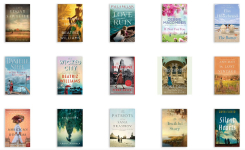
FLIP! For Decorating (which you can get a feel for in the slide show above) by Elizabeth Mayhew is, according to The New York Times “extremely satisfying, like watching a stop-action film, and very, very useful.” (Random House, $24)

When George Washington was born, the New World had virtually no artists. Over the course of his career, Washington became the subject of choice for an emerging band of painters and sculptors. He posed often, if reluctantly, transforming the culture of our country in the process. Hugh Howard, author of The Painter’s Chair: George Washington and the Making of American Art will read from his new book and discuss the process of researching it. (Bloomsbury Press, $26.95)
![]()
With Don’t Cry, Mary Gaitskill, “the onetime mistress of transgression, the former high priestess of literary cool, has written a deeply compassionate book,” according to Claire Dederer, writing for Slate. (Pantheon, $23.95)
![]()
In his moment-by-moment insider’s account of the fall of Bear Stearns and Lehman Brothers, House of Cards: A Tale of Hubris and Wretched Excess on Wall Street author William D. Cohan captures the pervasive Wall Street culture that led to the world-wide financial meltdown. (Doubleday, $27.95)
Enjoy this post? Share it with others.
Posted by Dan Shaw on 01/25/10 at 10:07 AM • Permalink
Beatty Biographer Peter Biskind Talks Shop With Fellow-Author Sheila Weller
Last week—vying with the latest economic, Tiger Woodsian, and failed-Northwest-Airlines-terrorist-bombing-blame-game news that was zinging around the web—was a certain number: 12,775. Specifically, it was the cool surmisal that, if you did “simple arithmetic,” Warren Beatty has likely bedded a total 12,755 women, “give or take,” in his (still incomplete) lifetime. That…pause-inducing…tidbit came from Star: How Warren Beatty Seduced America, the brand-new and long-awaited biography by Columbia County resident Peter Biskind.
Biskind (left) and his wife, author Elizabeth Hess (Nim Chimpsky: The Chimp Who Would Be Human), moved to Chatham fulltime ten years ago (after weekending there a previous ten), and even though it’s made him “grow to appreciate cows more than I ever thought I would,” country living has hardly blunted the edginess of America’s perhaps most authoritative chronicler of the last four decades of American filmmaking, film business, and filmmakers’ misbehavior. Biskind’s previous books include The New York Times bestseller Easy Riders, Raging Bulls and Down and Dirty Pictures, and he’s a contributing editor to Vanity Fair. His work provides a consistently smart, entertaining—and scoop-rich—inside view of how some of the best of American cinema has been created, by often larger-than-life (and large-libido’d) directors, producers, studio executives, and stars.
Biskind has known Beatty since 1989. When in New York, the actor would frequently call the author to have dinner (often very late), and he once told Biskind he liked him because he “looked like Leon Trotsky.” (Since Beatty’s boldest, and some say best, film was Reds, a romantic view of the Russian Revolution improbably produced during the Reagan era, this was no small compliment.) Biskind is the first (‘“and, now, probably the last,” he says) author who’s written a biography of Beatty with his cooperation. Though a complicated, cat-and-mouse-like cooperation it was—and (notwithstanding Beatty’s attorney’s huffy retorts that readers would expect this), Star was certainly not written on the condition that Beatty review and approve it, pre-publication. “I would never do a book like that,” Biskind says. Writing the biography of a complex man—“he’s very smart, manipulative, ambivalent about making decisions, a big tease in every respect; unbelievably charming, and one of the great filmmakers of the twentieth century who really hasn’t gotten his due”—was exhausting. The first line in Star kind of says it all: “Finishing
this book was like recovering from a lingering illness, although admittedly one that I had brought on myself.” Since misery loves company, part-time Berkshires resident Sheila Weller (right), author of Girls Like Us: Carole King, Joni Mitchell, Carly Simon—and the Journey of a Generation, another member of the small tribe of chroniclers of the complicated lives of sexy, brilliantly talented, living cultural icons, spoke to Biskind about his new book for Rural Intelligence.
Weller: So, are you fully recovered from that lingering illness?
Biskind: Let’s just say I’m in remission at the moment. It’s tricky when you write about living people. I do genuinely admire Warren, and I like him, and I suspected he wouldn’t like the book. Looking in the mirror at yourself and then having someone take a photo of you and realizing that the photo doesn’t match your image: it’s hard. I wouldn’t want to read about myself, so I didn’t think he would like to. But he’s a self-reflective and introspective guy, and when time passes I hope he’ll recognize the accuracy of the portrait.
Weller: Okay, that number: 12,775. It certainly got buzz. Were you, like, driving down Route 23 looking at cornfields when you thought: Aha!, I’m going to count his probable lovers?
Biskind: I don’t remember [when I came up with it]. It was a little bit tongue in cheek, and I thought it would be amusing. I was a little taken aback that everybody seized on it as gospel. After all, no one was standing over his bed with a clicker, counting every woman who passed his door. (Also, it was so much less than Wilt Chamberlain’s 20,000 women. I figured: God, Warren’s a piker.) But, from what I know about him, it’s a fair count.
Weller: Yes, you do go into some delicious detail. And you say he had to have sex to get to sleep every night.
Biskind: He did twosomes and threesomes, so that sort of escalates the figure. He could have had the flu and missed a couple of nights, but he made up for it.
Weller: I want all the high-minded readers to know that you provide trenchant analysis of his movies, but, um, keeping on the women for a moment: How many women talked to you on the condition that you not use their names?
Biskind: Maybe seven or eight. Not a huge number, but enough.
Weller: Every author who does this kind of book relishes his or her great “get” sources—the ones who really give insight into the character. Who were yours?
Biskind: One was Joyce Hyser, a sometime actress [who was one of Beatty’s serious but less-known girlfriends]. She’s smart and perceptive, and she was pretty open, so I was very happy to get to talk to her. Warren would introduce her as Bruce Springsteen’s former girlfriend, which she was. He was so controlling in his relationships, he would want to run the women’s lives. Joyce went to New York with him once and she went to Saks,and bought a sweater for herself and when she got back to the hotel there were three identical sweaters in different colors on the bed. She accused him of having her followed. She still doesn’t know how he found out.
There was an age disparity between her and Warren, and Hyser’s shrink was always telling her to get rid of him, that it was not a healthy relationship. So one day Warren insisted on going to her session with her. In five minutes, the shrink [a man] was in the palm of Warren’s hand. He said to Joyce, `Why would you want to get rid of him?’ Warren completely seduced the guy. He did that. Every man and every woman was in love with him. How many people can you say that about? And he was such an important filmmaker, so it was the perfect storm for a biography.
Weller: What’s an example of his meticulousness as a filmmaker?
Biskind: A story I particularly like is: He was shooting Reds [which, like his Heaven Can Wait, earned Oscar nominations in four categories] in Finland. It was hard to find Russian speakers there, because the Finns hated the Russians, and he needed an old woman as an extra in a railroad scene. The line producer proudly took a woman to Warren’s trailer, but Warren said a couple of things to her in Russian and found out she didn’t speak Russian. So in the middle of the night, the line producer had to find, and costume, another Finnish old lady who did speak Russian…as an extra. It was a huge hassle, but that’s how meticulous Warren was—he didn’t take anything for granted.
Weller: Okay, back to the romance gossip, Was Julie Christie a love of his life?
Biskind: I think Christie was The One. People are always asking me, Why Annette Bening? [Beatty met Bening in 1991, during Bugsy, and eventually married her, changing his ways. They have four children.] I think a couple of reasons. Not to detract from Annette’s charms, but I think Madonna [who preceded Bening] was so difficult, and he was so traumatized by the age difference—she was constantly making fun of him for being old; she ran him ragged—that, when the Madonna thing was over, I think he realized he was too old for all this [running around].
Weller: And wasn’t Bening from this straight-ahead solid family? Her mother, a professional church choir singer?
Biskind: Yes. And her father, a Republican insurance man from San Diego. He checked out her family. This was before genome testing, but he would have taken a look at her genome, if he could.
Weller: As you said: Meticulous and controlling, among other things. Did anything in your research surprise you?
Biskind: I’ve known Warren for so long, so there weren’t huge surprises. I was very familiar with his personality, including its inconsistencies. People said to me, “Warren doesn’t like gossip,” which is true—he didn’t like gossip about himself. But he was a great collector of gossip. He would spend a lot of time making calls from L.A. to New York, just collecting the day’s gossip.
Weller: Okay, enough about Hollywood. Back to Columbia County. Where do you like to hang out?
Biskind: I love Swoon, a restaurant in Hudson. And Blue Plate in Chatham. And Muriel’s Chatham Bookstore. And Mado’s pastry shop. Food. Books. Pastry….
Weller: And cows.
Biskind: And cows. I love it up here.
Enjoy this post? Share it with others.
Posted by Marilyn Bethany on 01/09/10 at 05:49 PM • Permalink
Seth Rogovoy Sees Dylan’s Jewish Spirit Blowin’ in the Wind
It’s not hyperbole to say that Seth Rogovoy considers listening to—and performing—the music of Bob Dylan a spiritual experience. Rogovoy, the editor in chief of Berkshire Living who was the rock critic for the Berkshire Eagle for nearly two decades, has been a die-hard Dylan fan since he was a teenager in the 1970s. But it wasn’t until the 1990s, when Rogovoy commenced a decade of studying and practicing Judaism in an intensive manner, that he realized that his musical idol had based more than a few of his poetic and prophetic lyrics on Biblical stories and Jewish liturgy, which helped Rogovoy understand why Dylan had always touched his soul in such a profound way. “The rich surprise that awaited me when turning my attention in midlife toward the rich trove of Jewish texts was that there was significant overlap between the Torah of Dylan and the Torah of Moses,” writes Rogovoy in Bob Dylan: Prophet, Mystic, Poet (Scribner, $26), which was officially published last week. “This wasn’t an echo of previous learning of Jewish texts—of that I had next to none. For me, the texts that I had memorized as a schoolboy—the words that I could access almost immediately in much the same manner that a yeshiva graduate can quote nearly any chapter and verse from the Torah—were the lyrics of Bob Dylan, which I began studying at age 14 in 1974 and have continued to study with a regularity bordering on obsession ever since.”
So what did Rogovoy listen to as a child of the 1960s before discovering Dylan? “I was into Cat Stevens, John Denver, and Seals & Crofts,” says Rogovoy (right.) There was one Dylan album in his mother’s house—Bringing It All Back Home—and he didn’t like it. On a whim, he bought Dylan’s Planet Waves when it was released in 1974, and he loved it. “I would sing and play along with it on my guitar,” he recalls. “It was a fantastic time to discover Dylan. The live album with The Band came out and so did The Basement Tapes and the Rolling Thunder Revue. I was living Dylan in real time, while going back to 1962 to discover what I had missed. By the time I was 17, I was fully up to date.”
Rogovoy, who estimates he’s seen Dylan perform 75 times, still plays Dylan on his guitar. For the past five years, he performed an annual Dylan tribute concert to honor his idol’s birthday at Club Helsinki in Great Barrington, which recently closed but will rise again soon in Hudson. (He says he may bring his guitar to his book signings, and he’ll play when he presents a free, hour-long multimedia presentation of his book at the Mahaiwe on December 12.)
When he talks about Dylan and the Jewish thread that runs through his music, Rogovoy’s eyes begin to sparkle. He loves sharing tidbits that bolster his case like the fact that “Ram’s Horn Music” was the name Dylan chose for the publisher of the songs on Planet Wave. “It’s a reference to the shofar, of course,” says Rogovoy. “If you think of what the shofar does, it’s a call to repentance. The prophets called on people to repent.” He points out that the song “Forever Young” is a variation on a traditional Friday night prayer that an observant father makes for his children. “May God bless and keep you always,” Dylan sings just as Jewish fathers say, “May God bless you and protect you.” Rogovoy allows that he is not the first writer to make many of these connections. “But I think I am the first person to put them into narrative history of Dylan’s career,” he says.
You don’t have to be Jewish to be fascinated by Bob Dylan: Prophet, Mystic, Poet, but you need to believe, as Rogovoy assuredly does, “that Bob Dylan is one of the few rock music artists whose records are worthy of intellectual examination.”
ON THE ROAD WITH ROGOVOY
Signings & Performances in the Berkshires
December 3 @ 6 p.m.
Book signing at Water Street Books, Williamstown
December 4 @ 7 p.m.
Book signing at The Bookloft, Great Barrington
December 8 @ 5 p.m.
Book signing at The Bookstore, Lenox
December 12 @ 3 p.m.
Free multimedia presentation at The Mahaiwe, Great Barrington
December 15 @ 6 p.m.
Book signing at Chapters Bookstore, Pittsfield
(0) Comments
Enjoy this post? Share it with others.
Posted by Dan Shaw on 12/01/09 at 02:48 PM • Permalink
Apples & History: a Q & A with Leila Philip

It’s not the usual reading and book-signing: Instead of taking place at a bookstore or library, it is being held in a restaurant; instead of a glass of white wine, there will be a complimentary apple tasting, courtesy of Philip Orchards, and guests will have the option of buying a dish of homemade apple crisp. The book, A Family Place by Leila Philip, is not a cookbook. It is about the author’s family and the “gentleman’s farm” near Claverack where she and her ancestors from the Philip and Van Ness families have lived since 1732. The reading is a benefit for the Columbia County Historical Society.
After her father’s death in 1992, Leila Philip, a writer and professor of creative writing, her mother, and her siblings faced the imminent loss of the Philip Orchards, their 125-acre estate. In an effort to save the farm and the family home, a sprawling Federal-period mansion called Talavera, Leila took an unpaid leave from her job and set out with her mother to chart a future for their commercial fruit orchard. After fifteen generations of Philip and Van Ness men, it would be up to these two determined women to hold off the twin threats of bankruptcy and urban sprawl. Returning to Talavera led Leila on an unexpected journey into the past. Stumbling upon family letters, belongings, and secrets, she discovered a family history that was inextricably woven into three centuries of U.S. history. In A Family Place, Leila Philip brings to life the people and events that shaped her family and Talavera.
Local 111
111 Main Street, Philmont, NY
Apple crisp, $6
As a preview of Saturday’s event, Leila Philip took time out from her busy teaching-and-farming schedule to talk about her book with Rural Intelligence‘s Marilyn Bethany:
RI: Years of researching three centuries of family history started as a quest to learn about the heyday of Talavera, “when the family was rich and the farm prosperous.” What did you discover?
LP: That is a great question and in many ways it gets to the heart of the book and one of its main themes. I was looking for one thing but found another, and of course, after the initial disappointment of not finding what I was seeking, I would discover that what I found was much more interesting and rich in meaning than what I had been looking for. In A Family Place, I am telling a classic journey narrative—which since Odysseus set sail for Ithaca, has been about a search for home that leads to a search for self along the way.
In my case, I had grown up in the Hudson Valley with the knowledge that my family was strongly connected to the early history here. I mean, there were all these portraits on the walls, swords and other military memorabelia, the black social register in the library, the house, the land—things that conveyed a past era of great wealth, privilege and social status. And there was wealth and certainly great privilege of all kinds, but it was not the almost mythic wealth of the early Hudson Valley Aristocracy. Every family has myths about themselves, a kind of folklore, stories that define who they believe they are. My family was no different but the stories we had were those of the historic Hudson Valley and an era when a certain social class of people, the so-called Hudson Valley Aristocracy—families like the Livingstons who began as manor lords—held a position of great social, economic and political power. Basically the English repeated a kind of feudal system in the Hudson Valley with manor lords on one end and tenants on the other. We hadn’t been tenants so I assumed we were of the manor lord class.
And In the 1800’s, my father’s family had married into the Livingston family so there was a kind of touch at a certain point with that social class, but really my family’s story was not that of glamorous wealth, it was an earlier tale of Dutch arrival and settlement and a lot of it entailed a pretty unglamorous story of hard work and farming and then through education (and a good marriage here and there helped) an ability to rise. In other words, as land-owning Dutch, the Van Ness family represented the beginnings of the middle class in America. If you think about it, that was a profound thing and just as interesting and complex as the story of the elite. What is closer to our hearts as a nation than the possibility of bettering ourselves; it is after all, the heartbeat, however flawed and at times under assault, of the American dream.
So, after my initial shock—I mean, where was the money?—I realized I was sitting on this incredible story, one that was much more interesting really than the story of how a wealthy privileged family lost that wealth. The story of the Van Ness and Philip families, because they were not protected by great wealth, reflected the vagaries of history, economy and war—basically all the invisible forces that have the most impact. As I said in the book, Van Ness sons could rise, but they could also fall. That kind of instability is the fate of the middle class. We sure have seen that in the last year of financial upheaval. So at first, while I as disappointed by the lack of great wealth in our mythic past, it became more and more interesting to track how in each generation Van Ness sons and daughters and then later Philip sons and daughters struggled to hang onto the land in Claverack, which as early as 1858 was felt to be “the homestead.” After all, the farm had been founded in 1732 and the the Van Ness family had been here since about 1650.
RI: Your mother gave herself 5 years. Within that time frame, she not only kept the farm going but brought it to new heights of success and acclaim, winning the blue ribbon at the County Fair. That 5-year mark passed 17 years ago. At 84, she’s still going strong, and doing better than ever, partly through her own prescience in taking up the IPM method of insect control instead of relying solely on toxic sprays, and partly because of the locavore movement. How has that movement impacted your farm’s fortunes and the prospects for Hudson Valley farming in general?
LP: My mother’s fruit won so many blue ribbons at the Columbia County Fair the year that I describe in the end of the book that she was named Grand Champion Fruit Grower for Columbia County. She has continued that practice, not always doing that well, but this year, she won so many blues again that she missed the title of Champion by just one. That spirit of not giving up, of trying her best every year sums up my mother’s attitude toward the farm and is why the farm has been successful. She has gone through hard times. We have gone through hard times. When the book came out in 2001, it was one of the darkest hours for small farms in the valley. But as I write in the epilogue in this new edition, things are turning around, and there is an exciting new moment for small farms here. People are realizing the importance of knowing where their food comes from and the great value of being able to get local food. We are not organic, but our customers get orchard fresh fruit grown with a minimum of pesticides, so our customer base is growing and growing locally. That is huge.
Ever since I was a kid we have had people driving from pretty far distances to pick fruit at our farm—from New Jersey, Long Island, Massachusetts—but now we see many more local people. It makes sense from so many angles but up until now I think many people took local farms for granted and let’s face it, one stop to the super market may not be healthier, but it is still easier and so for working families taking time to get their food more directly from farms has meant a shift of priorities and that has taken effort. It is like cooking, you have to decide to make time for it rather than go for convenience. Everyone is super busy, too busy so making time is not at all easy, it involves a re-evaluation of priorities and goals in an ongoing way. The slow food and locavore movements and all kinds of education programs to help people become aware of local agriculture have helped. I do believe that policy change starts with bumper stickers.
Finally, and maybe most important. My mother was a kid in the depression era. She knows how to save money and how to do without. She didn’t fall into the trap of bigger is better, she didn’t believe in the spend more to make more mantra of the eighties and nineties. She resisted marketing fads and stuck to what she knew how to do best—grow good frult, with an emphasis—to go back to the blue ribbons—of always trying to do better each year. In short, she has been true to herself and that I think has been the key to her success, that and managing the farm on a tight budget.

The author with her brother John, son Rhys, and mother Julia.
To be successful at a small farm, maybe at any farm, you can’t be a worrier, and you can’t be a perfectionist. There are just too many big things like the weather that are out of your control. My mother is a pragmatist and also wonderfully free of pretense. She could have a leak in the ceiling but until she gets money to fix it, she’ll put a bucket under it, move the chairs and have her dinner party anyway. She just won’t care what anybody else thinks about how she does things. I think that is part of what gives her the tremendous energy she needs to do what she does at her age.
RI: You say, “farming is war.” Indeed, the Battle of the Insects your mother wages daily throughout the growing season would bow Patton. Are all crops as difficult as fruit? If not, wouldn’t some diversification be in order?
LP: Well, certainly traditional fruit growing is a kind of war, but it is pretty well understood now that many forms of crop farming invoke that dynamic. It has to do with volume. Once you begin growing a large amount of one thing, you get a concentration of pests. I think we’d all love to see the farm go organic one day, to be able to farm in better harmony with the land and with the environment. But the reality is, without some pesticides, we couldn’t produce apples on the scale we do, and our farm would go out of business. To eliminate pesticide use altogether, we would have to pretty much completely redo the farm and start again with a different pattern of crops and fruit. That would be great, but it would take the kind of capitol investment we don’t have right now. One day, I’d love to see the farm re-invent itself. For now, we are trying to hang on.
RI: You describe the closets at Talavera after your father’s death as being so crammed with the dandyish sports, business and evening clothes of bygone eras that there was no room in them for your generation’s far-less resplendent gear. A nifty metaphor. Much later in the book, your sensible mother declares that the house has been “silly” since the day it was built—presumably too big, too expensive to operate and maintain, maybe even too pretentious. In the future, what if you were to conclude that the farm is viable, but the house is not?
LP: We talk about this issue of the house and the farm all the time. None of us has a clear answer. It’s a dilemna because, on one hand, we are keenly aware that Talavera represents a kind of landscape heritage that is larger than our family. Its architecture and landscaped grounds are a piece of Columbia County history. That history belongs to everyone, so we have a kind of responsibility to steward the house. That is just a fact. But it is also our home, so the idea of selling it, or turning it into a museum in some way, brings up mixed feelings, to say the least. But looking to the future, we will have to make some decisions about it because it is so expensive to maintain and so time consuming. As for me, I love the house because it is home, but I’d rather be out pruning trees than caring for it.
RI: Of course, the question your book leaves dangling is, what does the future hold? Do you ever think about moving fulltime to Talavera to assume your mother’s role, as your father clearly expected or at least hoped you would?
Like most families, we are muddling our way toward the future. Farming the land at Talavera one day is a dream I have, for sure. But the reality is that I have four siblings, and we own the place together. The future is something that we all have to work out together and for a family of keen individuals, that’s not easy!
RI: In your research, you unearthed a family secret: Prior to his marriage to your grandmother, your grandfather had fathered the child of a Talavera servant. Though he appeared to have been in love with her at the time, he not only did not marry her, but eventually abandoned her financially. By the time you discovered this, your step-aunt was 87 years old. Yet, when you visited her and invited her to Talavera, it meant the world to her to finally be “legitimized.” It’s relatively easy now, for us, to do the decent thing. Shame isn’t what it used to be. But how do you think your proud, old-school father would have reacted to this revelation?
LP: My father was old school in many ways and conservative about the things he felt were being abandoned by the the larger culture—protocol, manners, social rituals of all kinds. I remember getting in conflicts with him all the time as a kid over things like table manners and later, as a teenager, for bigger issues of social etiquette. But he also was a keen individual, really as rugged as some old Vermonter on that score. If he felt something was right, he didn’t care a fig what others thought. I mean, after all, many people must have thought he was crazy to leave a prospering job in Manhattan to spend his energy maintaining a family place. So, while he was concerned about maintaining a kind of status quo in many respects, and the discovery of Anna would have triggered all kinds of strong and probably difficult and even conflicting feelings for him, I know he would have put Anna and her humanity first. It is sad to me to think of him never knowing Anna and her not knowing him. I think he would have valued getting to know her as much as my mother had.
RI: One of my favorite characters in your family saga is you. We only get glimpses of that barefoot tomboy with a blonde braid to her waist, tearing around the countryside on her horse, Peter. That under-supervised, almost reckless abandon reminds me of my own childhood. Your son Rhys spends most of his weekends, as you had throughout your childhood before moving there full-time, at Talavera. Does he exercise that freedom, or is that a quality of childhood that is irretrievably lost?
LP: Boy that is a hard question to answer. I hope I can pass on some of the sense of adventure that I was lucky enough to have, but it really is hard to be a parent in today’s world. All of us probably over-parent. One thing both my husband and I stress is giving our son time in the outdoors. Rhys spent a lot of his early years catching frogs and snakes and turtles and, even now, just goofing around in a tree house. You learn invaluable things about yourself and your own capabilities when you are outside and dealing with nature. And your parents aren’t nearby! We hope that gives him something of the sense of freedom and possibility that I was so lucky and privileged, really, to grow up with.
Enjoy this post? Share it with others.
Posted by Dan Shaw on 04/15/09 at 05:50 PM • Permalink
Elizabeth Cunningham Brings Her Latest “Maeve” to Oblong Books
Fans (and you know who you are) of the Maeve Chronicles, Elizabeth Cunningham’s series of novels that combine scholorship, whimsy, and delectable fiction to relate the life, times, and spiritual journey of a Celtic Mary Magdalene, named Maeve, may meet the author and hear her read from her latest, Bright Dark Madonna on Friday evening, April 3, at Oblong Books in Rhinebeck.
For those new to Cunningham’s work, it is, by all accounts, unnecessary to have read her two previous Maeve novels, Magdalen Rising and The Passion of Mary Magdalen, to get swept away by this latest in the series, which takes the reader on a breathtaking journey from the temple porticoes of Jerusalem, to the Temple of Artemis in Ephesus, to the south of France, and, as always, to the treacherous terrain of the human heart. There will be time to catch up later, since Cunningham, a direct descendant of nine generations of Episcopal priests and herself an ordained interfaith minister at the Cathedral of St. John the Divine in New York, balances writing with a counseling practice. Hence, it’s likely to be a while before the author, who lives in Staatsburg, is able to produce the fourth Maeve that the end of this book suggests might be forthcoming.
Elizabeth Cunningham Reading and Book Signing
Friday, April 3rd, 7:30 p.m.
Oblong Books & Music
6422 Montgomery Street; Suite 6
Rhinebeck; 845.876.0500
Enjoy this post? Share it with others.
Posted by Marilyn Bethany on 04/03/09 at 05:55 AM • Permalink
A Conversation with “House of Cards” Author William D. Cohan
Author William D. Cohan, our neighbor in Columbia County, was an investment banker for 17 years before he left Wall Street and wrote his first best-seller, The Last Tycoons. On Saturday evening, March 28, he will be at the Hammertown Barn in Pine Plains to talk about his latest book, House of Cards: A Tale of Hubris and Wretched Excess on Wall Street, a moment-by-moment insider’s account of the fall of Bear Stearns and Lehman Brothers, exactly one year ago. As a preview, Rural Intelligence offers up an exclusive Q&A with the fast-thinking author.
RI: When did you decide to write a book about the fall of Bear Stearns and Lehman Brothers, and how did you get it out so fast? There is an immediacy to the reporting in House of Cards that’s very hard to capture after the fact; it suggests you really were a fly on the wall while it was all happening.
WDC: I started the book literally the weekend Bear Stearns was sold to JPMorganChase. I had been in the middle of another book when my editor, Bill Thomas, at Doubleday, thought it might be worth changing gears to focus on the unfolding financial crisis. For the next eight months, I worked assiduously—did all the research, interviewed some 125 people, and wrote the book—and met the December 1 deadline. The book came out on March 10. Last fall, I remember reading a profile of Tom Friedman in the New Yorker where he talked about coming up with the idea for the World is Flat and then deciding he would do what he had to do to get the book done and published before anyone else came up with a similar idea. There were at least two other books about what happened at Bear Stearns and why in the works within weeks of my getting signed up and I decided, if I could do it, I wanted to be the first book out without sacrificing any—I hope— quality.
RI: Your background is in finance, yet you walked away from Wall Street to become a writer. You’ve done very well with this book and your previous book, The Last Tycoons. But talk about a high-risk gamble. Why?
WDC: It was actually a fairly simple calculus. I was fired from my job as a senior Managing Director at JPMorganChase in January 2004. I was at the prime of my career and was just summarily lopped off in a downsizing. I had been an investigative reporter before I went to Wall Street and I decided that I had had enough of Wall Street and Wall Street had had enough of me. I wanted to write a book about the incredible culture and characters at Lazard, especially since the previous book about the firm was 25 years old and had been written by an outsider. So much had changed at the firm and it was so mysterious to many people that I just couldn’t wait to tell the story. I wrote a proposal, got an agent and sold the book in an auction to Doubleday. Two years later I was done. The book was a New York Times bestseller and the winner of the 2007 Financial Times/Goldman Sachs business book of the year. I could not have imagined a better start to a second career, which I embarked on out of desperation more than anything else.
RI: Where do you stand on the argument that the outsize salaries of the financial services industry are essential “to get and retain the best people.” Was Jimmy Cayne “the best people”? Your sources say he “barely understood” the exotic, mortgage-backed instruments his company Bear Stearns was creating and selling. (And isn’t “barely understood” a euphemism for “was utterly clueless,” as Robert Rubin and Alan Greenspan now admit to being about derivatives?) What about Warren Spector, the brilliant creator of some of those (as it turns out) disastrous instruments? Was he a “best people”? Your book is rife with characters who pull on their bespoke pants one leg at a time, at most. Rather than the much-heralded “incentive,” don’t grandiose salaries just nurture hubris and attract personalities prone to morbid competitiveness?
WDC: As Charles de Gaulle famously said, “The graveyards are full of indispensable men.” The truth is that the compensation and incentive system on Wall Street has been badly broken for a generation since Wall Street firms converted from private partnerships – with shared liabilities and shared profits for the partners – to public companies, where bankers and traders were rewarded lavishly for taking short-term risks with their shareholders’ money. If the bets they took paid off they got paid millions and if the bets they paid did not pay off but generated short-term revenues, they also got paid millions and any liabilities related to those revenues were the burden of the shareholders. There is no doubt the executive committee at Bear Stearns – five men, including both Cayne and Spector – got paid way too much for what they did. In 2007, they split around $150 million among themselves for creating the house of cards that collapsed a year later. There has been no mention of anyone returning that money. The culture on Wall Street of alpha males – mostly – fighting over vast sums of money and then complaining when someone’s bonus is “only” two million dollars is disgusting, grotesque and immoral.
RI: Sorry to harp on this, but don’t you think the outsize starting salaries also highjack some of our best young people on their way to pursuing what might well have turned out to be more satisfying and fruitful (for themselves and society) careers?
WDC: One of the best things that I predict will come out of this crisis will be a sea-change among our best and brightest who will see quickly that there is much more to life than heading to Wall Street to push paper around, in the hope of making millions of dollars before they are 30. That is one of the enduring myths of Wall Street that has been rightly shattered by this current financial calamity that was caused in large part by the greedy behavior of many people on Wall Street.
RI: What do you think of the Obama administration’s bank-rescue plan? Do you think it will restore trust? Do you think it should? Or is the Street as much a casino as ever?
WDC: Obviously the Obama administration was dealt a very bad hand here and, I think, is playing it the best way it can. The only way to get the “toxic assets” off the books of the foolish banks is to find investors who want to buy them at prices the banks want to sell them at. By providing attractive financing to buyers of these assets the last impediment to trading them is removed and hopefully confidence in the market will be restored. I think Secretary Geithner deserves high marks for coming up with a well-conceived proposal that has the potential to help restore confidence to the markets. Only time will tell of course but the tenor of things seems to be improving in the capital markets, which is the first step to an overall recovery.
RI: Wall Street is, on the one hand, the last of the great macho strongholds, and, on the other, so emotional (“Stocks are down of fears of….” Fill in the Blank). Don’t you think if women were running that show, they’d be dismissed with a wave of the hand as a bunch of hysterics?
WDC: No actually, I am of the view that if more women were at the helm of Wall Street firms – there are exactly zero women at the helm at the moment that I know of with the exception of maybe a tiny boutique or two – that this kind of greedy, alpha-male behavior that created this whole dastardly problem could have been avoided. Now, this is probably wishful thinking, along the lines of conventional wisdom that if more women were in charge of governments there would be fewer wars but I believe it nonetheless. And I would welcome what remains of Wall Street to test the thesis.
House of Cards: A Tale of Hubris and Wretched Excess on Wall Street
A conversation and book signing with best-selling author and neighbor William D. Cohan
Saturday, March 28, 6 - 7:30 p.m.
Hammertown Barn
3201 Route 199, Pine Plains; 518.398.7075
(0) Comments
Enjoy this post? Share it with others.
Posted by Marilyn Bethany on 03/25/09 at 06:49 AM • Permalink
Nostalgia Now: “Barns of the Berkshires”
Photographs by Stephen Donaldson
Stephen Donaldson is a photographer who thinks like a cultural anthropologist. His latest book, Barns of the Berkshires (Schiffer Publishing, $24.95), not only documents a significant and vanishing part of our rural landscape but also sounds the alarm for saving barns before it’s too late. “The old post and beam barns don’t stand a chance,’ he says sadly. “They give no value to the farmer anymore.’ Donaldson laments that only wealthy people can afford to maintain the historic barns of the Berkshires, whether they’re kept for farm animals and storage or converted into residences. “If we don’t mobilize, we are going to lose the very essence of what is so appealing about living here,” he says.
Over the past ten years, he has photographed scores of Berkshire barns and he says that when he goes back to photograph them in another season they’ve sometimes disappeared. He thinks the best way to save landmark barns would be to establish not-for-profit roadside trusts dedicated to their maintenance. In his nostalgic photographs, he makes clear that every barn is site specific; he believes barns should be kept in their native landscapes to honor their history. It’s impossible to deny his contention that barns are essential to the “visual fabric of the region that makes it such an appealing place for both visitors and those seeking an alternate lifestyle to the charge-ahead pace of our cities.”
Donaldson, who moved to Great Barrington ten years ago after living in Detroit, England, New York, and LA, traveled around the world from 1995 -1997 to take pictures and establish a stock photography archive. Now he shoots for magazines works on books, and he deejays every Monday night at public radio station WBCR 97.9 (his program is called “The Doctor Nod Sedation Station Program”.) He is taking pictures for his next book, which will chronicle historic Route 7 from Long Island Sound to the Canadian border. And he will continue to champion beleaguered Berkshires barns, which he sees as more than architectural artifacts: “For me the barns are symbols of integrity, wholesomeness, and a down-to-earth ethic that was an essential building block for this country.”
Enjoy this post? Share it with others.
Posted by Dan Shaw on 03/24/09 at 07:16 AM • Permalink
Photographer Annie Leibovitz Signs New Book
The difference between great photographers and the rest of us is that for them life occurs in slow motion and without a distracting sound tract, affording them plenty of mental space and time to appraise a scene, consider camera angles, change lenses, and adjust f-stops, while the rest of us are reacting, often frantically, to the events taking place before our eyes. This detachment has earned photographer Annie Leibovitz both great acclaim and some condemnation, the latter primarily for the pictures she took, then published, of her life partner, the writer Susan Sontag, as she lay dying in 2004, which some critics found chillingly exploitive. In Leibovitz’s new book, Annie Leibovitz At Work, she reveals herself not just through her pictures but, unusually for a photographer, with words. Lots of them, about things as glamorous as the famous nude sitting she did with John and Yoko, and as the mundane as how a young photographer might go about getting started (by sticking close to home and photographing the things and people you know best, such as your family). On Saturday, Leibovitz, who lives part-time in Dutchess County, will be available at two venues in the region so fans of her work can hear her speak, ask questions, and get signed copies of her book. Both bookstores request advance reservations.
Oblong Books & Music
Montgomery Row (Rt. 9), Rhinebeck; 845.876,0500
Saturday, December 20, 10 - 12
Merritt Bookstore
57 Front Street, Millbrook; 845.677.5857
Saturday, December 20, from 12:45
(0) Comments
Enjoy this post? Share it with others.
Posted by Marilyn Bethany on 12/18/08 at 07:32 AM • Permalink
A Serious Conversation About “Scrapbooks: An American History” with Jessica Helfand
When I met Jessica Helfand five or six years ago, I was dumbstruck when she told me that one of the joys of having moved full-time to Falls Village from New York City was having more time to work. (I thought country life was all about recreation, but I’ve come to understand what she meant.) Helfand and her husband, William Drenttel, not only run one of the world’s premiere graphic design firms, Winterhouse, from northwestern Connecticut, but they also maintain one of the design community’s most influential blogs, Design Observer. What’s more, Helfand also manages to find time to teach at Yale, raise two children, and research and write books, including her latest, Scrapbooks: An American History (Yale University Press; $45). It’s one of those rare coffee-table books that is scholarly and accessible; it’s informative, fun with a near universal appeal.
RI: The scrapbooks in your book seems to be unselfconscious. Do you think that it is possible to keep unselfconscious scrapbooks today?
JH: I think it is indeed possible, if you think of a scrapbook as you do a camera: funny that scrapbooks might be considered self-conscious while people think nothing of taking countless numbers of snapshots. (Some serious photographers refer to this phenomenon as “fire-hosing” — literally, brandishing the digital camera as one would a fire hose, without self-censorship or self-editing.) Part of the problem stems from the emphasis on “getting it right” that’s largely been a consequence of all the merchandising surrounding “scrapbooking” as an industry. Some of the supplies are really quite extraordinary, and my point is not to denigrate them — on the contrary, they’re actually pretty great, some of them — but that, while they support the method, they don’t replace the motive, which is to make something extremely personal, not duplicative or generic.
I would say, too, that the whole idea of making something from limited means has long been of interest to artists and theorists because more isn’t now, nor has it ever been a way to necessarily make something better. So if we equate “un-selfconscious” with “limited means” (which I suppose I do, given that scrapbook-makers of long ago had no embellishments but drew from their own immediate orbit) then there’s probably an argument to be made, today, on behalf of a kind of sustainable scrapbooking: using what you have, emptying your pockets at the end of the day, saving all those post-it notes and things you might be inclined to toss. Less to the landfill, more a reflection of your everyday life — banal, perhaps, but also quite genuine, and in no small way, an authentic snapshot of who you are, where you live, what you do and value and experience. Ergo: unselfconscious.

Zelda Fitzgerald scrapbook, Auburn, AL, 1919
RI: One hundred years from now, will a visual historian like yourself be able to find scrapbooks from our era that will be as valuable historical documents?
JH: I certainly hope so. There will no doubt be more of them, since contemporary scrapbookers tend to work with archival materials more and more, while generations ago this was NOT the case. Librarians and archivists struggle with how to house and archive old scrapbooks, which are by their very nature extremely fragile. Many more scrapbooks will survive in coming years, so this will be less of a problem. Libraries may even upload and make them keyword-searchable. They’ll be easier to access and find: part of the difficulty I encountered during my research was due to the fact that they’re currently impossible to index. That will probably change, and soon.
RI: I save tickets stubs, birthday cards, thank you notes, invitations, Playbills, and name tags in a box. Do I have the makings of a contemporary scrapbook or do I just have a lot of paper?
JH: You’re in good company: I hear this from a lot of people, and to me it suggests there’s a scrapbook in your future. The difference between a box of paper and a scrapbook is the narrative you produce: there’s something about cementing something on a page that’s a kind of gesture of permanence— rather a meaningful thing in our frenetic, modern world. Bear in mind that even pasting something on a page does not, in and of itself, mean you can’t go in and edit: indeed, some of the most fascinating scrapbooks I looked at during the course of my research were compelling precisely because you could see someone’s perspective shifting: names crossed out, dates revised, items added, annotated, removed, concealed, and so forth. Messy. Just like life.
RI: Do your children keep scrapbooks?
JH: Our son does not, although he’s a pretty good photographer, and he’s obsessed with news: he’s building his own news-aggreggator and probably sees his blog as a kind of scrapbook. Our daughter’s a consummate maker, sort of a junior member of our studio (and our muse) — and, very much like I was at her age, a serious collage person. We keep a notebook together as well as several of our own: Fiona calls mine a scratchbook — part sketchbook, part scrapbook — very much inspired by the journals kept by Candy Jernigan (who is featured in my book). Jernigan, who died at 39, left over 500 notebooks filled with what she called “rejectimenta” — literally, things she rescued around her. I think the secret to keeping a scrapbook that’s meaningful is keeping it with you at all times, which means it has to be small enough to be portable.
RI: I suspect that more than a few people are keeping Obama scrapbooks. Do you think that it is possible that they will be valuable historical documents?
JH: I think they’ll be like any political scrapbooks — there are thousands of scrapbooks on JFK, the family, the assassination and more, for instance — sort of a time capsule that frames a moment in time. That said, I think there may be political scrapbooks out there that are not so momentous: some years ago, Bill and I were in Washington, DC back when Bob Kerrey was in the Senate. (He’s now the head of the New School in New York.) This was way before I wrote this book, but I remember that in the corner of his office — somewhere between the closed-circuit TV to the floor of Congress and his conference table — he had an old-fashioned drafting table and a glue pot. Open on the table was a 18x24 inch sketchpad, and a copy of that day’s Washington Post. And he told us that every day he’d read the paper and find one seminal thing — an cut it out, and paste it in that sketchpad. Now, you have to imagine how unusual this seemed at the time, in that place: a senator with a drafting table, keeping a scrapbook! But he was devoted to it, and the process of adding something every day seemed an almost meditative act for him. For future Kerrey biographers, I suspect that scrapbook will absolutely be a meaningful historical document, framing his days in the senate, life in Washington in the late 1990s, and so on.
Kelley scrapbook, Briarcliff Manor, NY, 1929
RI: Your book focuses on history, but have you seen any contemporary scrapbooks that make your heart race?
JH: Refer to question 4, above: Jernigan’s scrapbooks were life-changing for me because in them I saw an entire approach to making work. As a practicing designer who makes things, they seemed an unusual genre: part sketchbook, part journal, portable, personal, meaningful. But the longer answer is that many artists work in collage and in book form, and I share some of their work in my book — The Moleskine Project, for instance, or the 1000 Journals Project. They’re formally more interesting to me than the 12x12-inch scrapbooks in vogue today: ironically, I wrote my thesis in graduate school on the history of the square — a format that circumscribed every project I ever engaged in as a student, and that for a long time was thought to frame modernist design thinking — so I’ve actually spent quite a lot of time thinking about that format, that fascinating yet largely unforgiving aspect ratio. I am currently of the opinion that a more biased shape—6 x 9, for example—lends itself to more dramatic page compositions, and I would also say that what “makes my heart race” about many artist scrapbooks are the efforts to engage in a real narrative, to tell a story from page to page. And that’s kind of the point, isn’t it — to tell a story?