What Makes Birria Tacos Worth Seeking Out
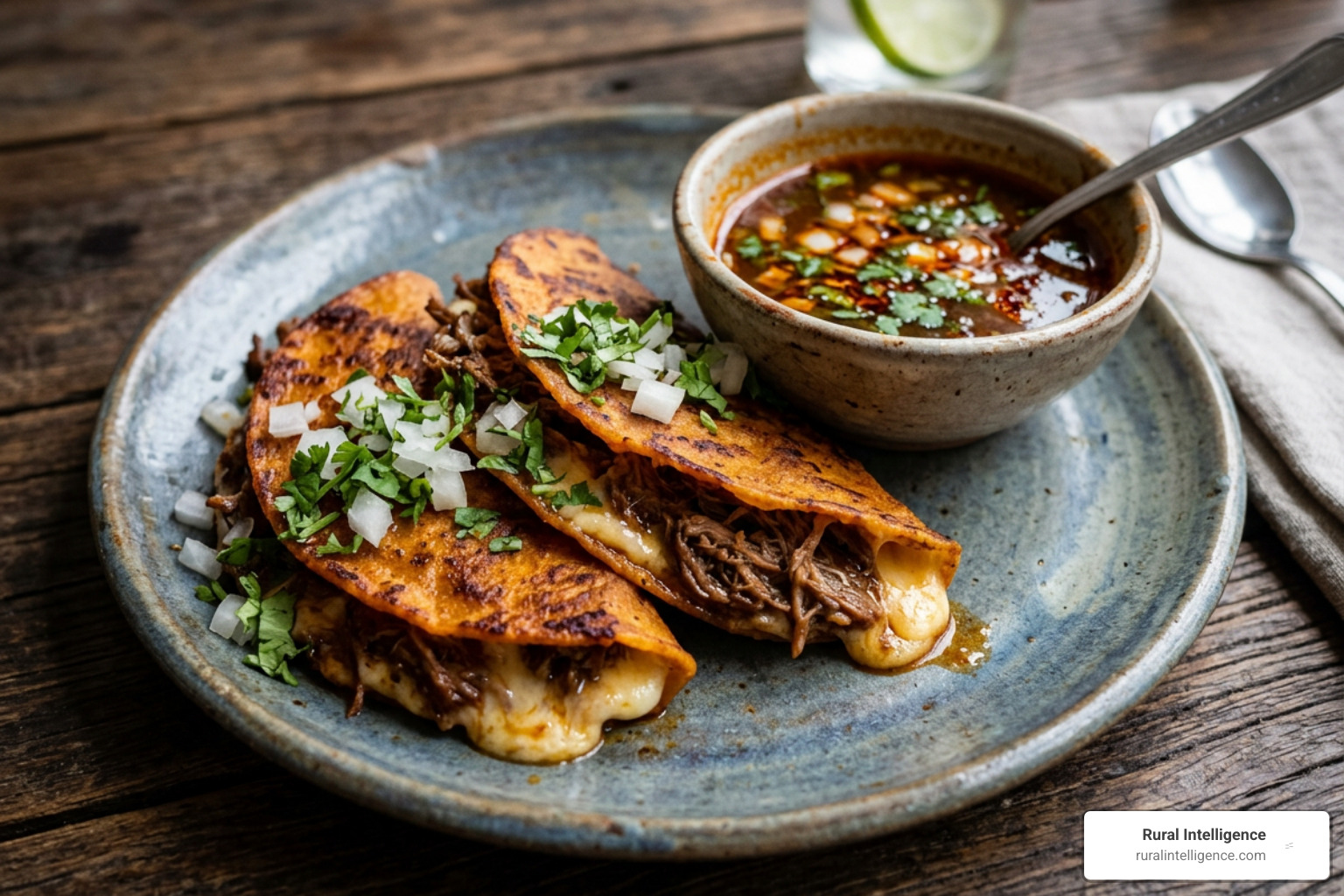
Birria tacos are crisp corn tortillas filled with slow-braised meat, often melted cheese, onion, and cilantro, then served with a rich red consommé for dipping. The best versions balance a crunchy, chile-stained shell with tender, savory meat and a broth that is deep, bright, and not overly greasy.
Originally, birria was a celebratory stew from Jalisco, Mexico, commonly made with goat or lamb and served in its broth. Today's popular quesabirria format turns that stew into a taco: meat is tucked into a tortilla brushed or dipped with the rendered red chile fat, fried until crisp, and paired with consommé.
| What to look for | Why it matters |
|---|---|
| Tender, slow-cooked meat | It should shred easily and stay juicy |
| A red chile consommé | This delivers much of birria's savory, fruity, lightly spicy flavor |
| Corn tortillas fried in birria fat | This creates the signature crisp, orange-red exterior |
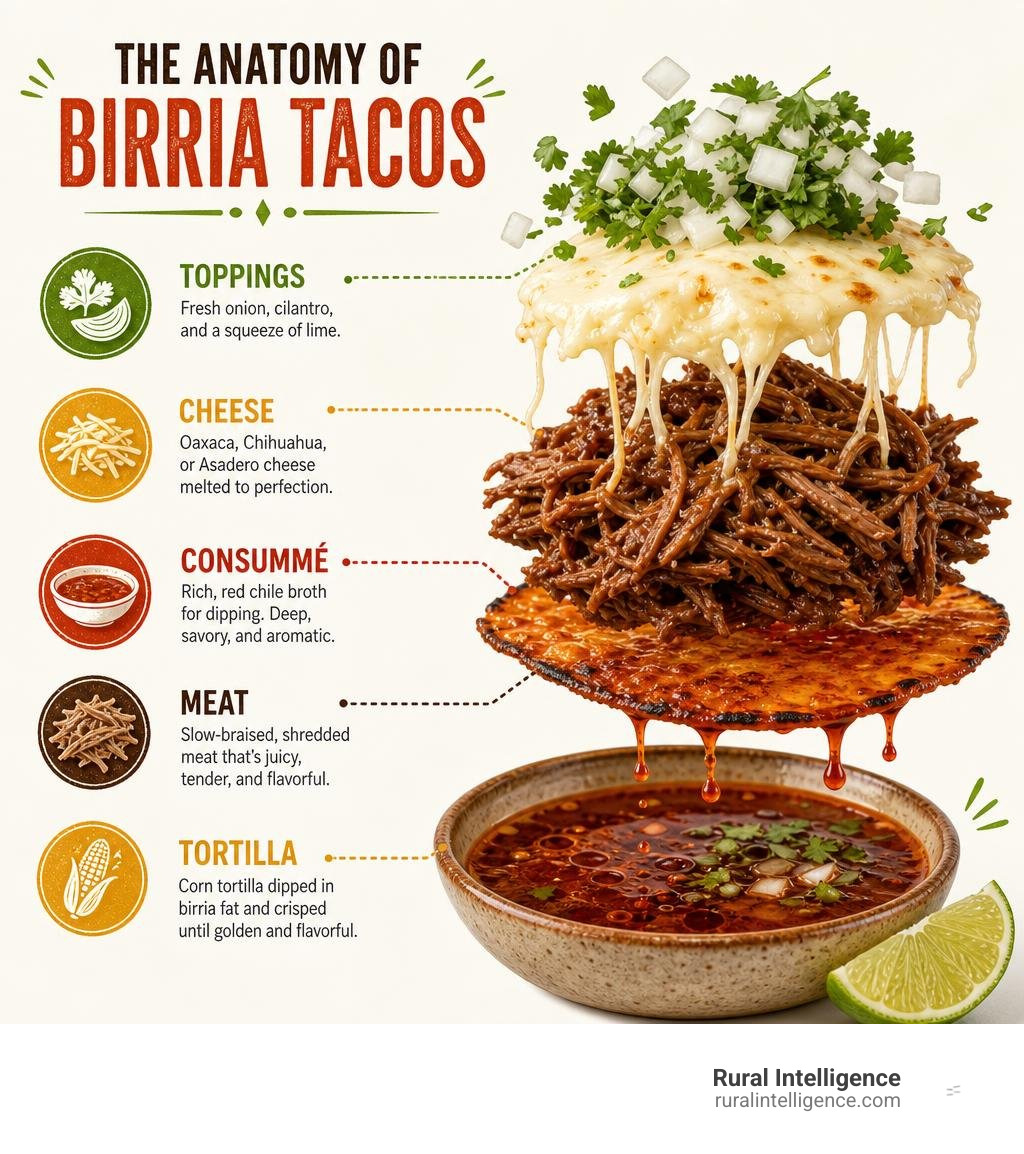
| Oaxaca, Chihuahua, or Asadero cheese | These cheeses melt smoothly without overwhelming the meat |
| Fresh onion, cilantro, and lime | They cut through the richness of the beef and broth |
Birria has moved far beyond its regional roots, from family celebrations in Mexico to taco shops, food trucks, and home kitchens across the U.S. Its rise is clear in search behavior, too: trend data for 2026 puts interest in birria tacos at roughly 74,000 monthly searches and still growing.
This guide will help you recognize a great restaurant order, understand what makes a reliable recipe, and know the small details that separate a crisp, flavorful taco from a soggy one.
Understanding the Origins and Science of Birria Tacos
To truly understand why birria tacos have captured the culinary imagination across North America, we have to look back to 16th-century Jalisco, Mexico. When Spanish conquistadors introduced livestock to the region, overpopulated herds of goats created a practical problem: the meat was lean, tough, and gamey. Local Mexican cooks responded with culinary genius. They marinated the goat meat in strong vinegar, warm spices, and deeply flavorful dried chiles, then braised it slowly underground or in sealed clay pots until it became impossibly tender. This fragrant creation was named birria, a colloquial Spanish term meaning "valueless" or "trifle"—a humorous nod to the humble origin of transforming tough meat into a royal feast.
For generations, birria remained a celebratory stew served out of deep bowls at Mexican weddings, baptisms, and holiday gatherings. The shift toward modern quesabirria began across the border in Tijuana during the mid-2010s. Local street vendors began taking the slow-braised meat, tucking it inside tortillas with stringy Mexican melting cheese, dipping the whole creation into the red oil floating on top of the stew, and crisping it on a hot flat-top grill. When food trucks brought this technique to Los Angeles around 2018, it sparked a viral sensation that blew up on social media, turning a local Jalisco tradition into a global obsession.
Traditional Birria Stew vs. Modern Quesabirria
While traditional birria is enjoyed with a spoon as a rich meat stew (birria de res or birria de chivo), modern birria tacos—frequently called quesabirria—are an active, hands-on dining experience.
The main star of the show is the consommé, which acts not as an optional side sauce, but as an essential participant in every single bite. In quesabirria, the corn tortilla is coated in the shimmering red chile fat skimmed off the top of the braising pot before being toasted on a griddle. This creates a remarkable texture contrast: an exterior shell that is satisfyingly snappy and golden-crisp, cradling a center of gooey, melted cheese and succulent shredded beef.
Spice Ratios, Heat Levels, and Flavor Profiling
One common misconception is that birria tacos are melt-your-mouth spicy. In reality, authentic birria is designed for complex, deep flavor rather than searing heat. The backbone of the adobo paste relies on mild dried chiles that contribute fruity, earthy, and chocolate-like notes rather than direct burn.
To achieve optimal balance, acidity plays a crucial role. Apple cider vinegar, fresh tomatoes, and a generous squeeze of fresh lime juice cut through the rich collagen and rendered animal fat. Warm aromatic spices—such as cinnamon, cloves, cumin, and Mexican oregano—add warmth without sweetness. If you want higher heat levels, you can simply adjust the proportion of spicier chiles in the blend.
Essential Ingredients, Chiles, and Cuts of Meat
Creating exceptional birria at home or recognizing a high-caliber restaurant version comes down to ingredient choices. The braising liquid relies heavily on fresh garlic bulbs, yellow onions, bay leaves, and whole spices.
A key secret among top Mexican cooks is using true Mexican cinnamon (canela or Ceylon cinnamon) rather than standard Cassia cinnamon. Mexican cinnamon is soft and brittle, allowing it to blend directly into the adobo sauce without leaving hard woody fragments. Furthermore, authentic recipes call for Mexican oregano, which offers bright, citrusy, floral notes that differ distinctly from Mediterranean oregano.
The Essential Chile Blend and Flavor Profiles
The unique color and aroma of birria come from a carefully calculated trio or quartet of Mexican dried chiles. Measuring dried chiles by weight on a digital scale rather than simply counting them ensures consistent flavor, as dried chile sizes can vary wildly. Culinary guides like Isabel Eats highlight how combining distinct chile varieties establishes the ultimate adobo base.
| Chile Variety | Heat Level | Flavor Profile & Purpose |
|---|---|---|
| Guajillo | Mild (2,500–5,000 SHU) | Tangy, fruity, and slightly sweet; essential for the vibrant brick-red color |
| Ancho | Mild (1,000–2,000 SHU) | Earthy, sweet, and raisin-like; provides rich body and depth to the consommé |
| Pasilla | Mild to Medium (1,000–2,500 SHU) | Dark, chocolatey, and subtle smokiness; adds dark color and complexity |
| Chile de Árbol | Medium-Hot (15,000–30,000 SHU) | Sharp, fiery, and grassy; used sparingly to control overall heat levels |
Selecting the Best Meat Cuts for Birria Tacos
While traditional Mexican birria relied on goat or lamb (which benefits greatly from vinegar marination to temper gamey tones), beef birria (birria de res) is the gold standard for modern tacos.
To achieve tender shredded beef and a gelatin-rich dipping broth, we recommend using a combination of marbled meat and bone-in cuts:
- Boneless Chuck Roast: The foundational workhorse. It offers excellent intramuscular fat, shreds effortlessly into long juicy strands, and remains budget-friendly.
- Bone-In Beef Short Ribs or Oxtail: Essential for building the broth. As the connective tissue and marrow break down over hours of slow braising, they melt into natural gelatin, giving the consommé its signature velvety lip-smacking richness.
- Beef Shank or Brisket: Great additions that add beefy flavor and melt-in-your-mouth tenderness when combined with chuck roast.
Using purely lean beef cuts (such as sirloin or round roast) is a common mistake; without adequate connective tissue and fat, the braised meat will end up dry and tough.
Step-by-Step Technique: Cooking, Assembling, and Frying
Making authentic birria tacos at home is a rewarding culinary project. The secret to success lies in handling the chiles correctly and separating the floating rendered oil from the watery broth.
Making the Adobo Paste and Braising the Beef
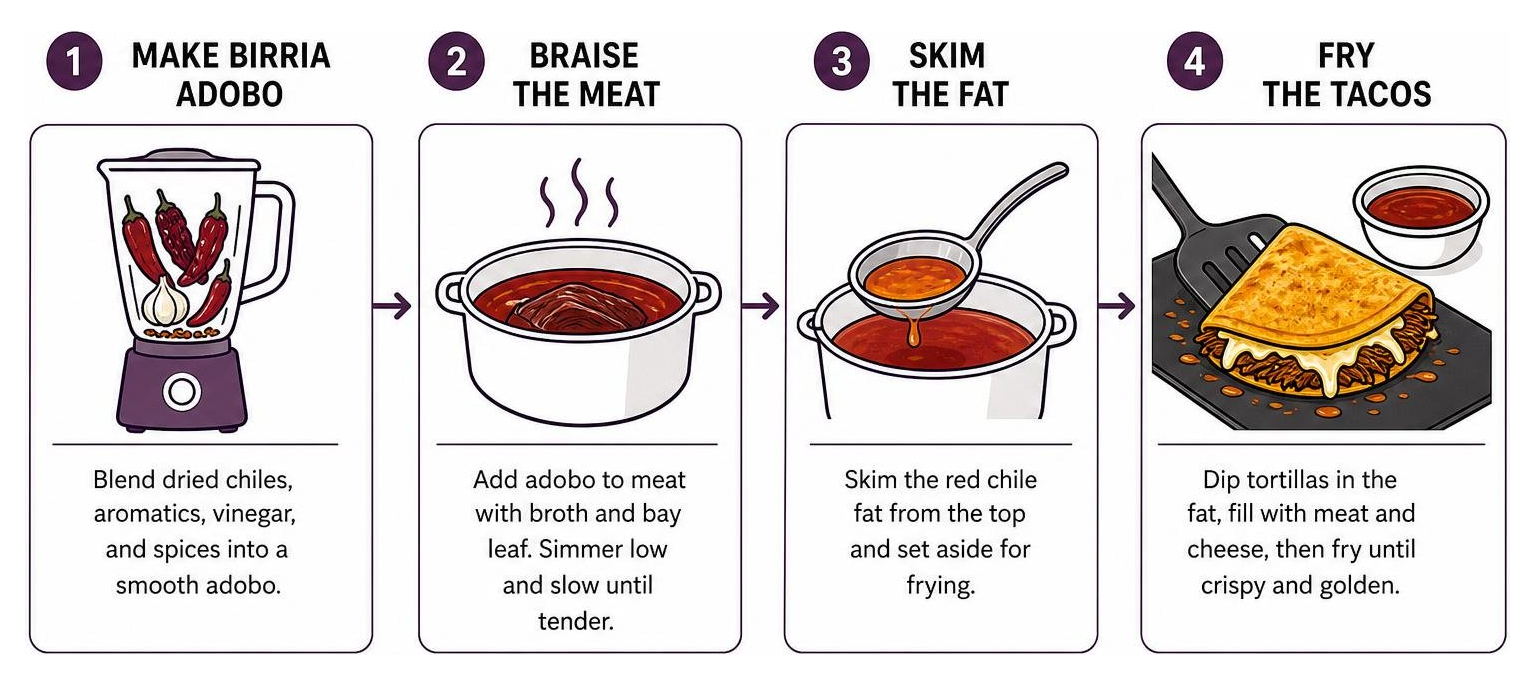
- Deseed and Toast Chiles: Split open your guajillo, ancho, and árbol chiles to remove seeds and stems. Briefly dry-toast them in a heavy Dutch oven for 30 to 60 seconds per side until fragrant. Take care not to burn them, as scorched chiles turn bitter.
- Rehydrate: Transfer toasted chiles to a pot of boiling water along with quartered tomatoes, onion, and whole garlic cloves. Simmer for 10 to 15 minutes until softened. Discard the bitter soaking liquid.
- Blend and Strain: Blend the softened chiles and aromatics with fresh beef broth, apple cider vinegar, cumin, Mexican oregano, cloves, and a small piece of Mexican cinnamon until completely smooth. Strain the paste through a fine-mesh sieve to catch lingering skins.
- Sear Beef: Generously salt large chunks of chuck roast and short ribs. Sear them in hot oil in your Dutch oven until a deep brown crust forms on all sides.
- Braise: Pour the strained adobo paste over the seared meat, top with additional beef stock and bay leaves, and cover tightly. Braise in a 300°F (150°C) oven or simmer on the stovetop for 3 to 3.5 hours until the beef falls apart under a fork. For another warming braised dish, explore our Recipe: Vegetarian Tortilla Soup.
How to Assemble and Crisp Birria Tacos
Once the beef is fully braised, remove it from the pot and shred it with two forks. Toss a cup of warm consommé back into the shredded meat to keep it exceptionally juicy.
Let the remaining pot liquid settle for 10 minutes. A vivid bright-red oil layer—often called "birria oil"—will float to the top. Skim this oil off into a wide bowl.
To assemble the crispest tacos:
- Heat a heavy cast-iron skillet or griddle over medium-high heat.
- Quickly dip a yellow corn tortilla into the skimmed red oil (do not submerge it in the watery broth beneath the fat, or your shell will get soggy).
- Lay the tortilla flat on the hot skillet. Sprinkle shredded Oaxaca cheese over the entire surface.
- Add a generous portion of shredded birria beef to one half of the tortilla.
- Once the bottom turns golden-red and the cheese begins to melt, fold the tortilla over into a half-moon taco shape.
- Fry for 1 to 2 minutes per side until crunchy and browned.
For extra durability, double up on corn tortillas if your shells are especially thin. Top your finished tacos with:
- Finely diced white onion (soaked in cold water for 10 minutes to take off the harsh raw bite)
- Chopped fresh cilantro
- Freshly squeezed lime juice
- Slices of radish or pickled jalapeños
Recipes from culinary publications like NYT Cooking and guides like Bobby Berk reinforce that crisping dipped tortillas on hot cast iron is the key to mastering this street-food technique.
Storage, Reheating, and Side Pairings

One of the best attributes of birria tacos is that the stewed meat tastes even better the next day as the spices meld. If you are hosting a gathering, you can complete the braising phase 24 to 48 hours in advance, keeping the shredded beef and consommé in separate airtight containers in the refrigerator.
When cooled, the red fat will solidify into a disc on top of the broth, making it effortless to lift off and reserve for frying day.
Storing and Reheating Without Losing Crispiness
- Refrigeration: Prepared beef and consommé keep in the fridge for up to 4 days.
- Freezing: You can freeze the shredded meat and broth in sealed containers or freezer bags for up to 3 months. Portion extra consommé into ice cube trays for easy single-serving flavor boosts in future soups or rice dishes.
- Reheating Assembled Tacos: Whatever you do, avoid the microwave, which turns fried corn tortillas soft and rubbery. Instead, reheat leftover tacos in an air fryer set to 375°F (190°C) for 3 to 5 minutes, or in a dry skillet over medium-low heat for 2 to 3 minutes per side until the shell snaps again.
Complementary Side Dishes and Beverages
Birria tacos are famously rich, making refreshing, crisp sides essential companions. Excellent side dishes and drinks include:
- Mexican Red Rice & Refried Beans: Classic comforting staples that absorb leftover consommé.
- Fresh Cucumber & Radish Salad: Crisp radishes tossed in lime juice and sea salt offer a clean, crunchy contrast.
- Cold Mexican Lager: An ice-cold Pacifico or Modelo cuts right through the savory fat.
- Sweet Horchata: The cinnamon-rice milk offers a cooling sweetness that tames spice.
If you enjoy seafood taco nights as well, take a look at our guide to Fish Tacos With Creamy Radish and Cabbage Slaw.
Frequently Asked Questions
Can you make birria in a slow cooker or Instant Pot?
Yes, absolutely! While stovetop Dutch oven braising provides deep reduction, modern appliances yield fantastic results:
- Instant Pot / Pressure Cooker: Sear the meat using the Sauté function. Pour the blended adobo paste and broth over the meat, lock the lid, and cook on High Pressure for 45 to 50 minutes. Allow a natural pressure release for 20 minutes.
- Slow Cooker: Sear your seasoned beef in a skillet first for best flavor. Transfer meat, adobo paste, and broth into a slow cooker and cook on LOW for 7 to 8 hours (or HIGH for 4 to 5 hours) until fall-apart tender. Simplified crockpot variations are also covered in resources like Oh Clary and Taste of Home.
What is the best cheese for quesabirria?
The absolute best choice is authentic Oaxaca cheese (quesillo), a traditional Mexican stretched-curd cheese that melts into stringy, creamy ribbons similar to mozzarella but with a richer, saltier profile.
If Oaxaca cheese is unavailable at your local market, high-quality alternatives include:
- Chihuahua or Asadero Cheese: Excellent Mexican melting cheeses with mild, buttery flavors.
- Monterey Jack or Low-Moisture Mozzarella: Widely accessible grocery store substitutes that melt smoothly without overwhelming the spiced beef.
Avoid pre-shredded bagged cheeses, as their anti-caking cellulose coatings prevent a silky melt.
Why are my corn tortillas breaking or turning soggy?
Tortilla breakage usually stems from three common missteps:
- Dipping in broth instead of red fat: Submerging the tortilla in water-heavy broth saturates the corn masa. Make sure you dip only in the oil layer floating on top.
- Using cold corn tortillas: Cold corn tortillas are brittle. Warm them briefly on a dry skillet or in the microwave for 15 seconds before dipping and folding.
- Frying at low temperatures: Fry your tacos over true medium-high heat on cast iron so the exterior crisps rapidly before the inner filling softens the shell. You can also consult comprehensive guides like Simply Recipes for further troubleshooting on taco assembly techniques.
Conclusion
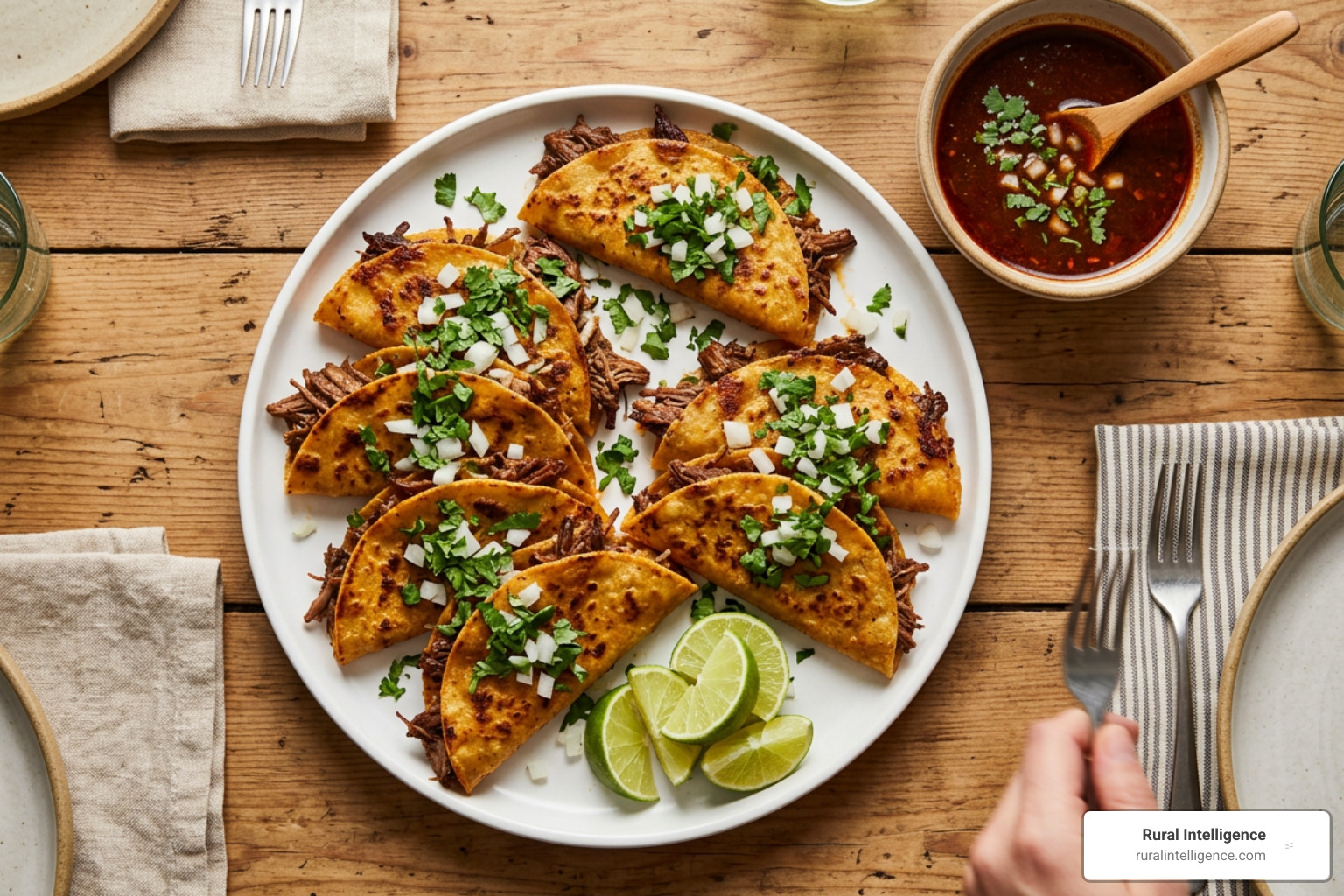
Whether you choose to spend a rewarding weekend afternoon simmering a batch of homemade adobo sauce or head out to sample a celebrated regional taco truck, birria tacos represent one of the most satisfying culinary experiences in modern dining. The combination of slow-braised beef, stringy melted Oaxaca cheese, crispy chile-lacquered tortillas, and deeply spiced dipping consommé creates an unforgettable meal.
For food lovers exploring regional dining options across the Berkshire countryside and Hudson Valley, finding exceptional comfort food is part of the joy of local food culture. Explore our curated recommendations in our Berkshire Restaurant Guide to discover top regional culinary destinations, seasonal menus, and local food spots worth visiting next!