Step 1: Medical Facts Revealing How Did Michael Jackson Die
To truly grasp how did michael jackson die, we have to examine the official findings from the Los Angeles County Department of Medical Examiner. Following a thorough autopsy, forensic pathologists determined that the King of Pop passed away from acute propofol intoxication, exacerbated by benzodiazepine toxicity.
When emergency personnel arrived on the scene, Jackson was in full cardiac arrest and profound respiratory depression. The medical examiner’s report confirmed that his lungs had stopped receiving adequate oxygen because his central nervous system had been severely depressed by intravenous drugs.
According to the Coroner's autopsy details, the concentration of propofol in Jackson's blood was comparable to levels used for patients undergoing major surgical procedures in a hospital.
Step 1.1: The Lethal Drug Combination Explained
The primary agent responsible for Jackson’s death was propofol, a potent, short-acting intravenous surgical anesthetic marketed under the brand name Diprivan. Due to its milky white appearance, Jackson frequently referred to it as his "milk" or "milk of amnesia."
Propofol is meant exclusively for hospital operating rooms and intensive care units. It quickly slows brain activity and breathing, allowing surgeons to perform major operations without patient pain or movement. To ease the burning sensation caused by intravenous propofol injection, it was mixed with lidocaine, a local anesthetic.
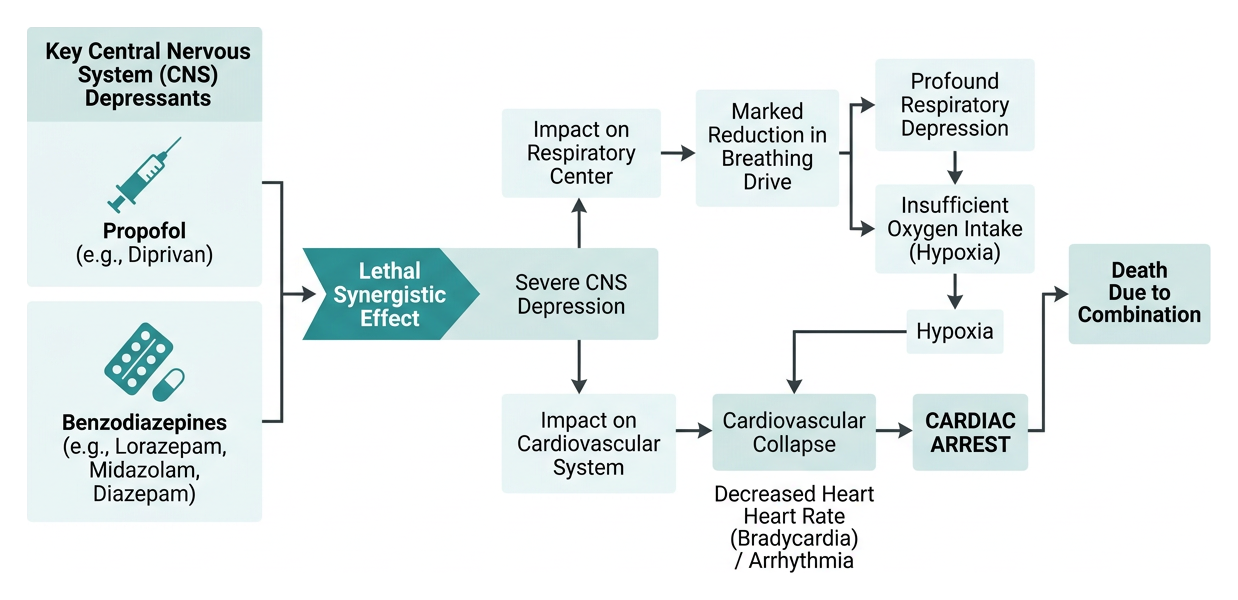
On the morning of June 25, propofol was not acting alone. It was introduced into a central nervous system already heavily sedated by a cocktail of benzodiazepines, including lorazepam, midazolam, and diazepam. When combined, these anti-anxiety drugs and sedatives created a lethal synergetic effect, completely shutting down his drive to breathe. Using surgical anesthetics off-label as a residential sleep aid violated fundamental medical protocols.
Step 1.2: Physical Autopsy Findings and Pre-Existing Health
Public speculation initially suggested that Jackson was frail, diseased, or suffering from a terminal illness. However, the comprehensive 51-page autopsy report painted a different picture:
- Weight and Build: Jackson weighed 136 pounds (62 kg) and stood 69 inches tall, which was thin but within a normal range for his frame.
- Heart Health: Forensic pathologists noted that his heart was remarkably strong and free from significant blockages or underlying heart disease.
- Skin and Cosmetic Conditions: The autopsy officially confirmed his diagnosis of vitiligo, showing distinct patches of skin depigmentation. It also noted dark ink tattoos on his scalp to cover frontal balding, as well as tattooed eyebrows and lips.
- Lungs: He suffered from chronic lung inflammation (respiratory bronchiolitis), though this was not a direct cause of death.
- Trauma: There was zero evidence of physical trauma or foul play.
To understand why his treatment was so dangerous, we can compare how propofol is supposed to be administered versus how it was delivered in Jackson's home:
| Medical Parameter | Standard Hospital Protocol | Jackson's Home Setting |
|---|---|---|
| Primary Indication | Surgical anesthesia induction | Off-label chronic insomnia treatment |
| Monitoring Gear | Continuous EKG, pulse oximetry, blood pressure monitors | None (no continuous oximeter or alarm systems) |
| Airway Equipment | Supplemental oxygen, intubation kits, resuscitation carts | Missing proper oxygen delivery and suction gear |
| Personnel | Board-certified anesthesiologist present at all times | Single physician leaving patient unattended |
| Surface for CPR | Firm operating table or backboard | Soft, yielding mattress |
Step 2: Trace the Timeline of Events on June 25, 2009
The events culminating in Jackson's death began late in the evening on June 24, 2009. Jackson was in high spirits during his final rehearsal at the Staples Center for his upcoming 50-date residency, This Is It. Magician Ed Alonzo and other crew members noted he had high energy as he rehearsed past midnight.
After returning to his rented mansion at 100 North Carolwood Drive in Holmby Hills around 1:00 AM, Jackson found himself unable to sleep. Over the next nine hours, his personal physician, Dr. Conrad Murray, administered a series of sedatives to induce sleep:
- 1:30 AM: Murray gave Jackson 10 mg of diazepam.
- 2:00 AM: Murray administered 2 mg of lorazepam intravenously.
- 3:00 AM: Murray administered 2 mg of midazolam.
- 5:00 AM: A second 2 mg dose of lorazepam was injected.
- 7:30 AM: A second 2 mg dose of midazolam was delivered.
Desperate for rest, Jackson repeatedly requested his "milk." At 10:40 AM, Murray injected 25 mg of propofol diluted with lidocaine into Jackson's IV drip. Jackson quickly fell asleep, and Murray later claimed he stepped away briefly to use the restroom and make phone calls.

When Murray returned, he found Jackson un-breathing with a faint pulse. Instead of immediately dialing emergency services, Murray attempted to administer CPR on the bed.
It was not until 12:21 PM—nearly 82 minutes after finding Jackson unresponsive—that security staff member Alberto Alvarez finally dialed 911 from a cell phone. Paramedics arrived in 3 minutes and 17 seconds at 12:26 PM, finding Jackson unresponsive with no pulse.
Resuscitation efforts continued in the ambulance and at Ronald Reagan UCLA Medical Center, where emergency room doctors attempted to revive him for over an hour. Michael Jackson was officially pronounced dead at 2:26 PM PDT.
Step 2.1: Critical Errors During Resuscitation
When examining how did michael jackson die, medical experts during subsequent court hearings pointed to a staggering series of basic errors made during the emergency response inside the bedroom:
- Delayed Emergency Contact: Murray wasted critical minutes making private cell phone calls and collecting drug vials rather than calling 911 immediately.
- Improper CPR Technique: Murray performed chest compressions with a single hand while Jackson lay on a soft bed. CPR requires a firm, hard surface to compress the sternum effectively against the spine.
- Flumazenil Administration: Murray injected flumazenil in an attempt to reverse the benzodiazepines, which experts noted did nothing to stop the respiratory depression brought on by propofol.
- Omission of Information: When paramedics and hospital staff asked what drugs had been given, Murray failed to disclose that he had administered propofol, depriving doctors of critical medical context.
Step 3: Understand the Legal Trial and Homicide Ruling
Given the gross deviations from standard medical practice, the Los Angeles County Department of Medical Examiner officially classified Jackson's death as a homicide. The LAPD Robbery-Homicide Division, working alongside the Drug Enforcement Administration (DEA), launched a massive criminal investigation tracking prescription trails across multiple doctors.
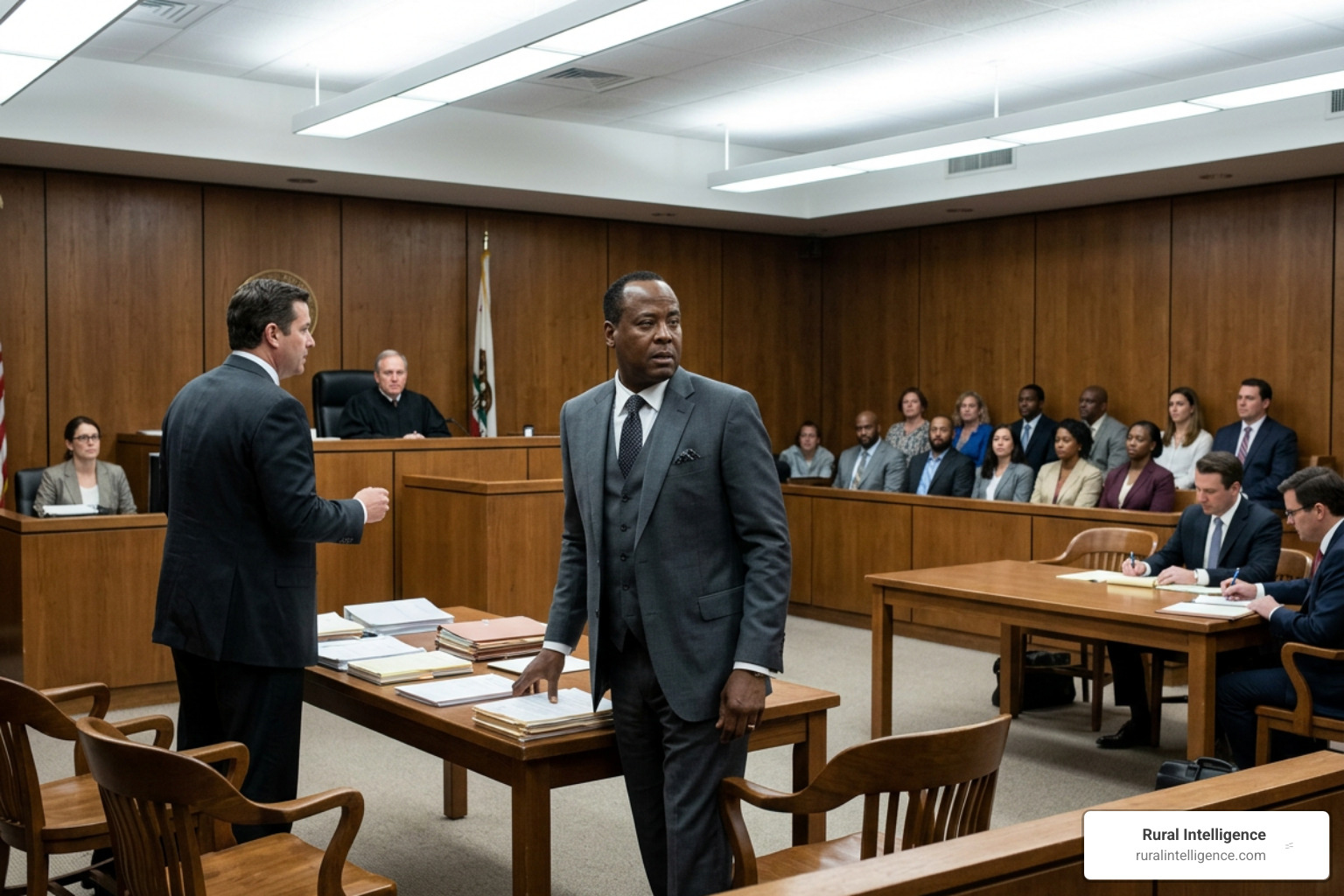
In February 2010, Dr. Conrad Murray was formally charged with involuntary manslaughter. Prosecutors argued that Murray had demonstrated criminal negligence by giving surgical anesthetics without appropriate safety equipment or monitoring.
Step 3.1: Medical Negligence in How Did Michael Jackson Die
The prosecution's medical experts established that Murray committed several severe violations of the basic medical standard of care:
- No Continuous Monitoring: Murray lacked a continuous pulse oximeter equipped with an audible alarm to track oxygen saturation in the blood.
- Absence of Emergency Gear: No suction apparatus, intubation tools, or defibrillators were present in the bedroom.
- Abandonment: Leaving a patient heavily sedated with propofol unattended is considered severe medical negligence.
- Flawed CPR: Failing to place the patient on a hard floor during CPR negated any chance of mechanical resuscitation.
Murray's defense team claimed that Jackson had self-administered the lethal dose of propofol while Murray was out of the room. However, expert testimony proved that even if Jackson had self-injected, Murray was directly responsible for creating the incredibly dangerous environment that made such an event possible.
Step 3.2: Conviction and Sentencing of Dr. Conrad Murray
On November 7, 2011, after a high-profile trial lasting six weeks, the jury found Dr. Conrad Murray guilty of involuntary manslaughter. Judge Michael Pastor sentenced Murray to the maximum allowed sentence of four years in county jail, describing his actions as an "unacceptable medical experiment."
Due to California prison realignment policies designed to relieve facility overcrowding, Murray served 1 year and 11 months before being released in October 2013. His medical licenses were revoked in California and Texas, and suspended in Nevada. For full details on the court proceedings, you can review the Official legal records on the death of Michael Jackson.
Step 4: Examine His Health History and Long-Term Struggles
To understand how did michael jackson die, we must look back at his physical health and medication history across his career. His struggle with sleep and severe pain was not an overnight development, but rather a decades-long struggle.
A major turning point occurred on January 27, 1984, while filming a Pepsi commercial at the Los Angeles Shrine Auditorium. A pyrotechnic accident sparked an explosion that ignited Jackson's hair, causing severe second- and third-degree burns to his scalp.
The injury required painful reconstructive surgeries, laser treatments, and skin grafts, introducing Jackson to heavy prescription painkillers like pethidine (Demerol). Over time, he developed a high tolerance to prescription sedatives and analgesics.
Step 4.1: Medication History and How Did Michael Jackson Die
By the mid-1990s, the pressures of global touring exacerbated Jackson's chronic sleep disorders. During his 1996–1997 HIStory tour, Jackson was reportedly treated with intravenous anesthetics in hotel rooms in Germany by medical personnel hired to force sleep between shows.
In the months leading up to his death in 2009, Jackson approached several medical professionals asking for propofol:
- Cherilyn Lee: A certified nurse practitioner who treated Jackson for fatigue in early 2009 testified that Jackson explicitly begged her for propofol, telling her it was the only drug that could knock him out. Lee repeatedly refused, warning him that the drug was unsafe for residential home use.
- Multi-Physician Trails: Investigations by the DEA revealed that Jackson was seeing multiple physicians simultaneously, receiving heavy doses of painkillers (such as Demerol) and anti-anxiety drugs like alprazolam (Xanax).
- Family Interventions: Relatives, including Janet Jackson, attempted to organize interventions at his home in Las Vegas, but security turned them away.
When Murray agreed to serve as Jackson's personal physician for the This Is It tour for a promised fee of $150,000 per month, he inherited a patient with severe, untreated chronic insomnia and a high tolerance for sedatives.
Step 5: Measure the Global Reaction, Posthumous Sales, and Estate Value
The sudden loss of the King of Pop triggered an unprecedented wave of global grief, causing technical strain across the internet:
- Digital Traffic Overload: When news broke, websites like TMZ and CNN experienced massive outages. Google's security systems mistook the millions of simultaneous searches for "Michael Jackson" as a distributed denial-of-service (DDoS) attack and blocked searches for 30 minutes. Twitter crashed repeatedly as Jackson's death accounted for roughly 30% of all global tweets.
- Global Memorial Service: On July 7, 2009, a public memorial service was held at the Staples Center in Los Angeles. Over 1.6 billion people entered the ticket lottery, and an estimated 2.5 billion viewers tuned in to watch the televised broadcast worldwide.

The tragic passing also reignited interest in his music catalog, sparking historic sales figures and financial recovery for his estate:
- 1.1 Million Albums: Sold in the US alone during the single week following his death.
- 8.2 Million Albums: Sold in the US by the end of 2009, making him the best-selling artist of that year.
- $1 Billion Revenue: Generated by the Michael Jackson Estate within the first 12 months following his passing.
- $250 Million Deal: Signed with Sony Music Entertainment in 2010 to retain music distribution rights through 2017.
Frequently Asked Questions About Michael Jackson's Death
What was the official cause of Michael Jackson's death?
The official cause of death was acute propofol intoxication, exacerbated by benzodiazepine toxicity (specifically lorazepam and midazolam). This lethal combination caused fatal respiratory depression, which stopped his heart.
Was Michael Jackson's death ruled a homicide?
Yes. The Los Angeles County Department of Medical Examiner ruled his death a homicide due to improper administration of anesthetics in a non-clinical setting without necessary monitoring gear.
What prison sentence did Dr. Conrad Murray receive?
Dr. Conrad Murray was convicted of involuntary manslaughter in November 2011 and sentenced to four years in county jail. He served 1 year and 11 months before being released early under California prison realignment laws.
Conclusion
When we break down how did michael jackson die, the story moves past rumor and lands squarely on clear medical facts. A potent surgical anesthetic was improperly administered outside a hospital setting without basic monitoring gear, leading to a preventable tragic collapse.
Understanding this tragedy serves as a sober reminder of the strict medical standards required when handling dangerous prescription sedatives. At Rural Intelligence, we regularly bring clear, thoughtful coverage to complex issues, cultural stories, and local developments. If you enjoy grounded reporting on arts, community news, and regional lifestyle, take a moment to Explore new Berkshire dining destinations and cultural updates with us!