A beautiful country house tends to announce its charms immediately. Wide-plank floors, deep window sills, old stonework, a wood-burning fireplace, a porch facing the landscape-these are the details that make people fall in love with a property.
The systems behind the walls are less romantic.
Yet in an older rural home, few things affect daily comfort as quickly as plumbing. A slow leak behind a cabinet, an aging shutoff valve, a pipe running through an unheated crawl space, or a water heater beginning to fail can turn from a minor inconvenience into a much larger problem once cold weather arrives.
For homeowners in regions where winters are long and older houses are common, fall is a useful time to look beyond finishes and furnishings and pay attention to the infrastructure that quietly keeps the house functioning.
Start With the Main Water Shutoff
One of the simplest plumbing preparations is also one of the most important: know how to stop water from entering the house.
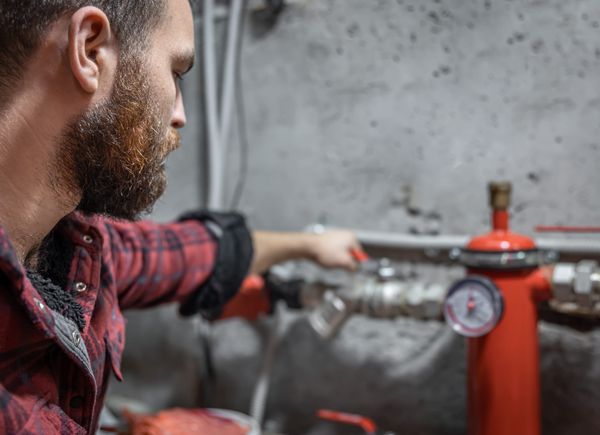
Every homeowner should be able to locate the main shutoff valve and understand how it operates. In an emergency, the difference between finding it immediately and searching for it while water is spreading across a floor can be significant.
Older properties sometimes have valves that have not been operated in years. Corrosion, mineral buildup, or age may make them difficult to move.
That does not mean an old valve should be forced. If it appears damaged, heavily corroded, or begins leaking when touched, it is better to have it evaluated before an emergency requires it.
It is also worth locating smaller shutoffs serving toilets, sinks, washing machines, and other fixtures.
A house becomes much easier to manage when its basic controls are known before they are needed.
Pay Attention to Plumbing in Unheated Spaces
Country houses often have complicated histories.
A farmhouse may have gained an addition. A porch may have become an enclosed room. Plumbing may have been extended into spaces that were never part of the original heated envelope.
That can create vulnerable sections of pipe.
Areas worth checking include:
- crawl spaces;
- unfinished basements;
- garages;
- exterior walls;
- additions;
- utility rooms;
- spaces near foundation vents or drafty openings.
Pipes in these locations may be more exposed to freezing temperatures than plumbing located in the conditioned center of the house.
Past problems are particularly informative. If a pipe froze during a previous winter, treating that event as a one-time accident may be a mistake. The same combination of cold air, poor insulation, and pipe placement may still be present.
Before winter, it is better to understand why a vulnerable pipe gets cold than to wait for another freeze.
Disconnect Outdoor Hoses Before the Freeze
Garden hoses have a way of remaining attached long after gardening season ends.
Leaving one connected to an exterior faucet can trap water in the assembly. When that water freezes and expands, damage may occur in places that are not immediately visible from outside.
Disconnect hoses, drain them, and inspect exterior faucets before sustained freezing weather begins.
Look for:
- persistent dripping;
- loose fittings;
- cracked components;
- damaged handles;
- moisture where the faucet enters the wall.
Homes with irrigation systems or other seasonal water lines may require additional winterization depending on how those systems were designed.
This is one of those fall chores that takes only a few minutes and is easy to forget until the temperature drops.
Small Leaks Deserve More Attention Than They Usually Get
A dramatic pipe failure is obvious. A slow leak is easier to live with-and therefore easier to ignore.
Check beneath sinks, around toilet bases, behind accessible appliances, and near exposed plumbing.
Signs of trouble may include:
- damp cabinet floors;
- mineral deposits;
- discoloration;
- swollen wood;
- peeling finishes;
- corrosion;
- musty odors.
The amount of water visible at any one moment does not necessarily reflect the amount of damage occurring over time.
A connection that releases only a small amount of water each day can eventually affect cabinetry, flooring, framing, or nearby finishes.
In an older home, where original materials may be difficult or expensive to replace, early detection matters even more.
Look at the Water Heater Before It Becomes an Emergency
Water heaters are easy to forget when they work properly.
They become impossible to ignore when they stop.
Before winter, observe whether the system is behaving differently than it did a year ago.
Possible warning signs include:
- inconsistent water temperature;
- reduced hot-water capacity;
- unusually long recovery times;
- new noises;
- visible moisture;
- corrosion;
- recurring error codes on newer equipment.
Cold-weather demand can make an already marginal system feel noticeably worse.
In a second home or weekend property, water-heating problems can also be harder to notice because the equipment may go unused for stretches of time.
A simple visual inspection before winter can reveal deterioration that would otherwise remain unnoticed.
Do Not Ignore a Drain That Keeps Slowing Down
A single slow drain is often treated as a small housekeeping problem.
Sometimes it is.
But recurring drainage problems deserve closer attention, particularly when several fixtures begin showing symptoms.
Watch for:
- drains that repeatedly slow down;
- gurgling toilets;
- unpleasant drain odors;
- water backing up into another fixture;
- clogs that return shortly after being cleared.
Several fixtures behaving strangely at once may point to a problem farther down the drainage system rather than an isolated sink or shower clog.
Older properties can also have drainage systems assembled from different generations of materials and repairs. What appears simple from inside the house may involve a much more complicated history underground.
Repeatedly addressing the symptom without identifying the cause can turn maintenance into a recurring ritual.
Rural Properties Add Another Layer: Where Does the Water Come From?
Urban plumbing discussions often begin at the meter and end at the sewer connection.
Rural homes can be more complicated.
Some properties rely on private wells, septic systems, pumps, pressure tanks, water-treatment equipment, or combinations of systems installed at different times.
That makes it useful to think about water as a complete path through the property.
Consider:
- where the water enters;
- how pressure is maintained;
- whether it is treated;
- how it is heated;
- how wastewater leaves the building;
- where major shutoffs are located.
Understanding the sequence makes troubleshooting easier.
For example, low water pressure may not automatically mean a problem with a faucet. Depending on the property, the cause might lie somewhere much earlier in the system.
This is where documentation helps. Keep records of equipment models, installation dates, service history, and past repairs along with other property information.
Renovations Are a Good Time to Think Beyond the Visible Room
Renovating a kitchen or bathroom naturally focuses attention on finishes.
Cabinetry, stone, tile, lighting, and fixtures are what transform the way a room looks.
But opening walls also creates an opportunity to assess what will soon disappear behind them again.
Before closing up a major renovation, it may be worth considering:
- the condition of accessible supply piping;
- aging shutoff valves;
- drain configuration;
- pipe insulation;
- fixture locations;
- water pressure;
- whether previous alterations were done cleanly.
The goal is not to replace functioning infrastructure unnecessarily.
It is simply sensible to inspect difficult-to-access systems while they are temporarily exposed.
Nothing undermines the pleasure of a newly finished room quite like reopening it soon afterward to repair something that could have been addressed during construction.
Know the Limits of DIY Plumbing
There are plenty of plumbing-related tasks homeowners can reasonably handle.
Looking for visible leaks, disconnecting hoses, learning the shutoff locations, monitoring drains, and keeping mechanical spaces accessible are all useful forms of preventative maintenance.
Other problems require more judgment.
Recurring backups, hidden leaks, pipe replacement, water-heater problems, sewer issues, significant pressure changes, and alterations to supply or drainage systems may require professional diagnosis.
For homeowners trying to understand the range of issues a plumbing contractor typically handles, an overview of residential plumbing services can help distinguish routine household maintenance from work that calls for specialized equipment or experience.
Knowing when not to improvise is part of maintaining an older house well.
Seasonal Houses Need a Different Routine
Second homes present a particular challenge: problems can develop while nobody is there to notice them.
A dripping connection in a full-time residence may be discovered quickly. The same leak in a house that sits empty for two weeks can cause considerably more damage.
Before leaving a rural property during cold weather, consider checking:
- thermostat settings;
- exposed plumbing;
- exterior faucets;
- water-heater condition;
- visible leaks;
- sump-pump operation;
- the location and condition of the main shutoff.
The appropriate winter strategy depends on how the house is used and how its plumbing is configured.
A house occupied every weekend requires a different approach from one closed for several months.
The important thing is to have a plan rather than assuming that maintaining minimal heat alone solves every cold-weather plumbing risk.
Keep a Simple House Systems Record
Old houses frequently come with incomplete histories.
Future owners may know who built the porch but have no idea when the water heater was installed. A previous owner may remember replacing a pipe but not what material was used or exactly where the repair was made.
Creating a simple home systems record gradually solves this problem.
Document:
- equipment make and model;
- approximate installation dates;
- major repairs;
- plumbing materials where known;
- shutoff locations;
- well or septic information if applicable;
- service dates;
- photographs of mechanical spaces.
This information becomes increasingly valuable as the years pass.
It also makes conversations with contractors more productive because fewer decisions begin with guesswork.
The Best Maintenance Is Often Uneventful
Good home maintenance rarely produces a dramatic before-and-after photograph.
Its success is often measured by what does not happen.
A pipe does not freeze. A small leak does not damage a cabinet. A deteriorating valve gets replaced before it fails. A recurring drain problem is diagnosed before a holiday weekend.
For older and rural homes, this kind of preventative attention is particularly important because the building's infrastructure often reflects decades of additions, repairs, and changing technology.
The character of a country house may come from its beams, stone, landscape, and history.
But living comfortably in one depends just as much on the quiet systems behind the walls-and fall is a good time to make sure those systems are ready for another winter.