Trakt Pop-Up Brings Chef Josh Cohen to The Hereafter in Hudson November 29
The New Paltz native returns to the Hudson Valley with a menu exploring the foodways of Eastern Europe, Central Asia, and the Caucasus.

The New Paltz native returns to the Hudson Valley with a menu exploring the foodways of Eastern Europe, Central Asia, and the Caucasus.
Josh Cohen went looking for his family’s culinary roots and found a geography lesson. The New Paltz native grew up with stuffed cabbage, gefilte fish, and matzo ball soup on the holiday table, dishes that connected his American upbringing to his family’s Russian Jewish heritage. As a young chef, he wanted to follow those connections further. He dug through historical cookbooks, searching for recipes and techniques that could give his cooking a deeper connection to the past.
“Really early on in my culinary career, I wanted to cook food that was honest and truthful,” Cohen says. His research led him across Eastern Europe, Central Asia, and the Caucasus, tracing the distinct traditions and intersecting foodways that had often been gathered under the broad heading of Russian cuisine. Conversations with immigrants in New York, including his wife, helped him understand how those traditions continued to evolve far from their places of origin.
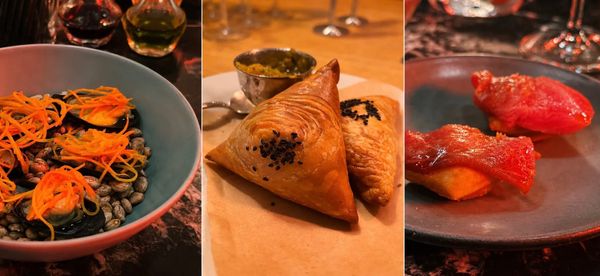
That fascination drives Trakt, the culinary project Cohen launched in June and brings to The Hereafter in Hudson on November 29 for a one-night, a la carte dinner. (The name trakt means “route” or “path” in Russian, fitting for a project that follows food across borders and generations.) The menu includes pickled mussels with Korean carrot salad, celery root pelmeni, and chicken tabaka with carrot adjika and vinegared onion. Small plates and appetizers range from $8 to $22, with entrees from $26 to $35. The restaurant will tailor selections from its cocktail and wine programs to the meal.

Cohen grew up in New Paltz, where his parents ran the iconic tie-dye shop Groovy Blueberry for 25 years. He washed dishes at Mountain Brauhaus in high school, later helped open a restaurant concept at Bearsville Theater, and eventually moved to New York, working at and helping open restaurants including Luksus, The Flower Shop, and Gem. He now works full time as a private chef, fitting Trakt dinners into his schedule roughly once a month. The Hudson engagement came through chef Morgan Brill of 27 Cafe in Catskill, who connected with Cohen while developing a guest-chef series for The Hereafter.
The project has an earlier local precedent. Around 2014, Cohen staged an Eastern European pop-up at Mexican Kitchen in New Paltz. In New York, he continued the research at Kitchen Arts & Letters bookstore, combing its historical cookbook section for recipes and techniques. His family had arrived in America more than a century ago, and he wanted to understand what generations of assimilation had obscured. The inquiry kept expanding as he learned how much the cuisines he was studying had influenced one another.

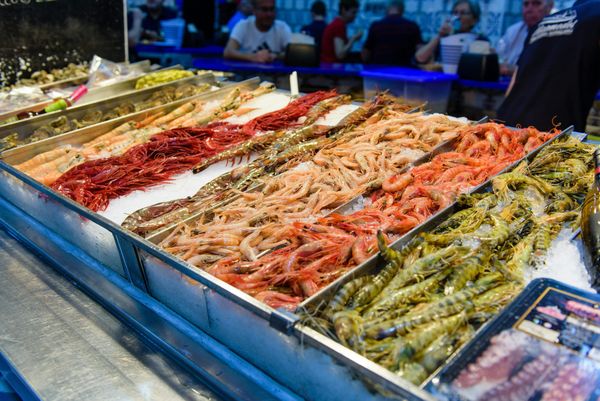
For a picture of how those influences meet in New York City today, he points to Tashkent Supermarket, which has multiple locations across the city. At its prepared-food counter, dishes from Ukrainian, Uzbek, Georgian, Armenian, and other traditions sit shoulder to shoulder. “All of these cultures are packed shoulder to shoulder in these enclaves and communities in New York City,” Cohen says. “You can’t shop for Russian ingredients, Ukrainian ingredients without happening upon these Uzbek ingredients and Uzbek techniques.” For Cohen, the store offers a working model for TRAKT. “That’s what the cooking is.”

The pickled mussels offer a particularly telling example. Cohen draws on the widespread tradition of putting cured or pickled fish on the table, pairing the shellfish with a Korean carrot salad whose history, he explains, follows ethnic Korean communities displaced within the Soviet Union. The salad became familiar across an enormous geographic area. On his plate, two foods with long, intersecting journeys meet again.
His chicken tabaka takes another route. Cohen debones a whole chicken leg, cooks it confit until tender, then crisps the skin. For the adjika, he roasts carrots hard in walnut oil and purees them with fermented chilies, blue fenugreek, dill seeds, coriander, and cumin. He also makes an oil with charred chilies, onions, and Georgian spices, then dehydrates the strained solids into a powder. White onions tossed in white vinegar supply a sharp finish. “Everyone always asks me, ‘What did you do with those onions?’” he says.
Elsewhere, the menu pairs pampushky rolls with black butter and tuna kindzmari with apple and tarragon. Winter greens come with whipped sheep’s cheese, tkemali, and poppy seeds. Kabocha tempura gets svanuri salt and sunflower aioli, while celery root pelmeni arrive with brown butter and brandied onion jus. Rye-glazed pork collar comes with zakuson mustard and cabbage. Dessert is smetana panna cotta with cognac caramel.

Cohen welcomes diners who recognize these flavors and tell him when an interpretation resonates—or when a dish has traveled far enough to need another name. “It’s an ongoing conversation,” he says. Behind familiar food, he adds, “is a real history, which is a tangible thing.” Trakt gives him a way to keep following it.
Trakt pops-up at The Hereafter on Sunday, November 29 from 5 to 10pm. Reservations available via Resy.