"All Is Not Lost:" A Six-Story Waterfall Leads You To The Wassaic Project
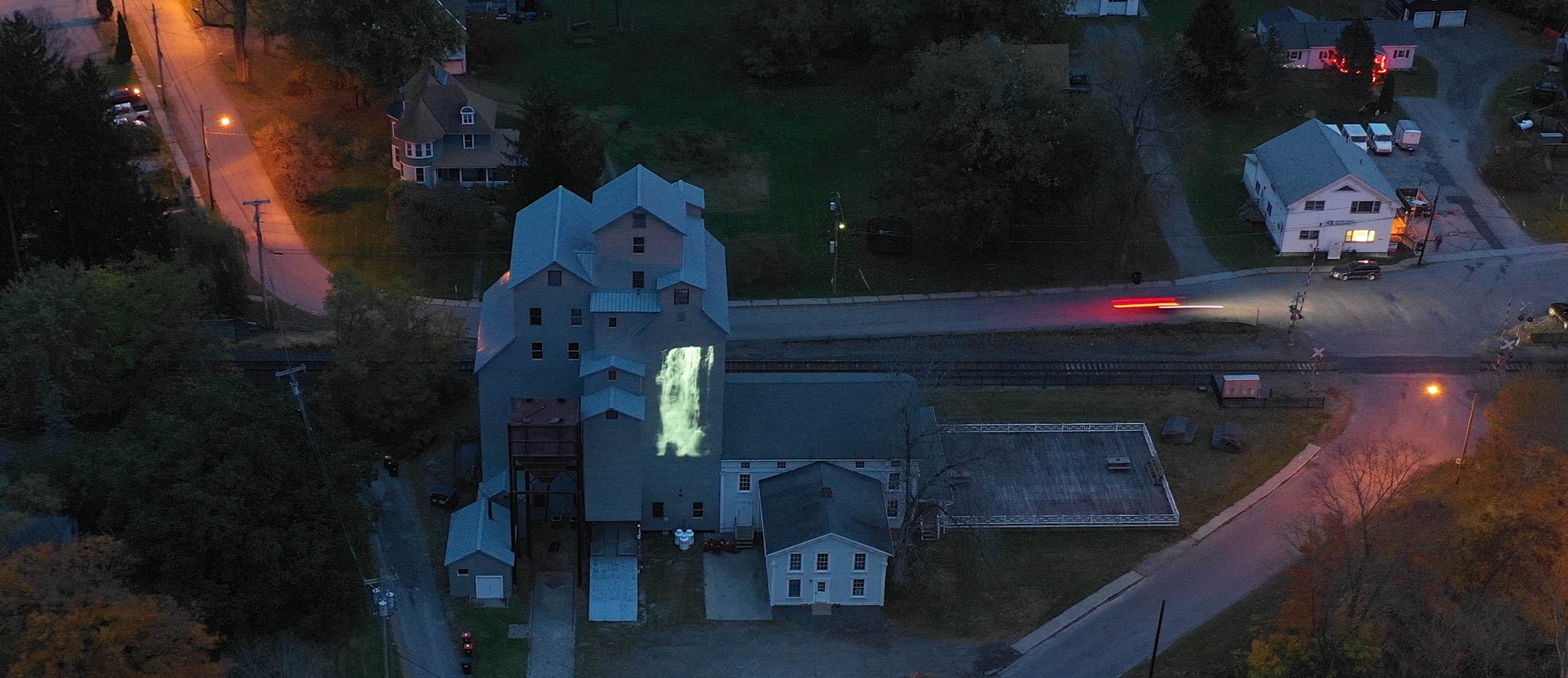
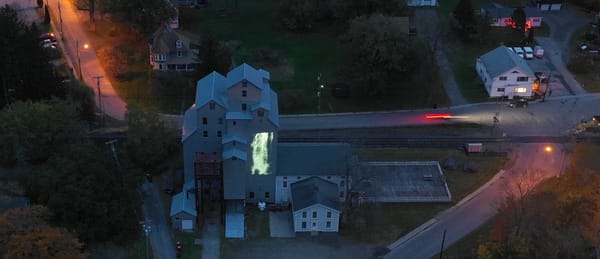
A projected backwards waterfall glows in the dark on the side of Maxon Mills.

A projected backwards waterfall glows in the dark on the side of Maxon Mills.
Wonder.
We need wonder right now. Something unexpected, something to marvel at, a spectacle. Something to take us out of the quotidian, which is not very nice right now, and allow us a few moments of awe and appreciation.
That wonder is here, in Wassaic, New York, the quirky hamlet in Dutchess County, known by many as the last stop on the Metro North, but recognized also for the Wassaic Project and its creative community. One of the Wassaic Project’s artists-in-residence, the multidisciplinary artist Christy Chan, has created a bit of awe. All is Not Lost is a site-specific, six-story video projection on the exterior tower of the historic Maxon Mills grain mill.
What’s projected is a waterfall. But not your regular rush of falling water. This waterfall is not flowing downwards, but slowly creeping backwards at 1/200th the normal speed of a waterfall responding to gravity. It’s partly real and partly fantasy. It glows in the night, a beacon to passersby, and it’s mesmerizing.
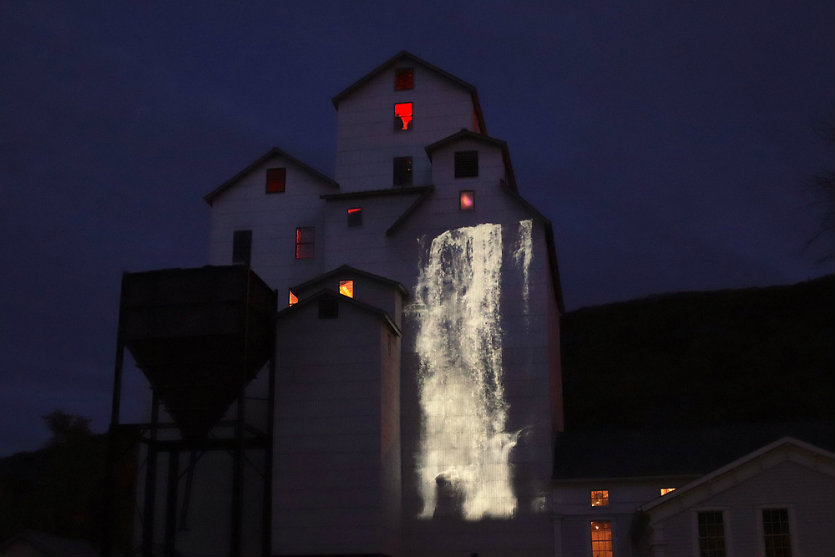
Photo by Christy Chan
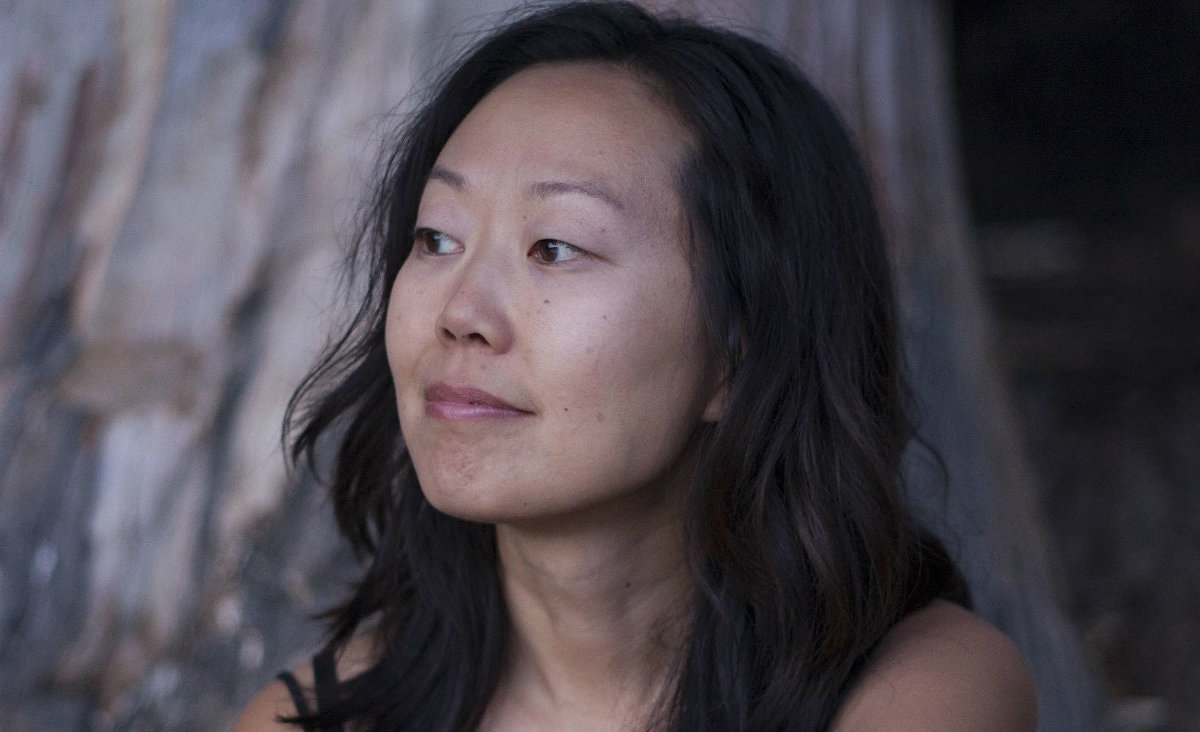
Chan, a Northern California-based artist, has spent several residencies at the Wassaic Project. In 2016, during a period of uncertainty in her personal life amid the intensity of the presidential election, Chan felt a pull to filming waterfalls. She applied for a residency at Wassaic, knowing that it was located close to a host of waterfalls. When she got there, she began exploring the area’s falls and also realized the Maxon Mills building was technically ideal for a video projection. In mid 2017, she and Eve Biddle, co-executive director of the Wassaic Project began talking about how to make the project happen.
“We got funding for its premiere from the New York State Council on the Arts as part of a public art grant,” said Biddle. “It was created specifically for this building and fits with the architecture really beautifully."
The planning and creative development for All is Not Lost took place over two and half years. The projection was designed to be in visual harmony and scale with the architecture of Maxon Mills and the surrounding town of Wassaic. The video itself is a composite of videos of many waterfalls the artist filmed from 2017–2018.
“It felt like the right time,” Chan said. “It’s meant to offer a moment of pause within the uncertainty we’re living in. The environment in Wassaic is so magical, and it felt like the right kind of surroundings.”
And the osbscure title? It went through many iterations, Chan said. She wanted to name it something that was both hopeful yet veiled. Like all good art, the viewer brings his or her own interpretation to the viewing.
All is Not Lost presents an opportunity to make Wassaic a destination. Biddle suggested an itinerary: Get there in the afternoon, take a stroll or bike ride on the sparsely populated Harlem Valley Rail Trail, which begins at Wassaic Station (its construction was completed, somewhat miraculously, during the quarantine). Check out the outdoor sculptures placed throughout the hamlet, take the self-guided walking tour, have dinner at The Lantern Inn (the pizza is widely renowned) and enjoy it in the outside seating. Or just stay in your car as the sun sets and contemplate the backwards waterfall.
“It’s very informal — a safe and relaxing thing to do right now. No one knew this would be the context it would be shown in, but it’s a remarkable for where we are,” Biddle said.
All is Not Lost opened at the end of August and is projected every Friday and Saturday until October 24 from 7:30 to 9 p.m., weather permitting. For those coming from NYC, Metro-North has, in response to COVID-19, suspended train and bus service to Wassaic on Saturdays, but eight trains arrive per day on Fridays. Timetables are updated frequently, so check MTA’s website for more information. To view the installation by appointment, contact hello@wassicproject.org.
“It’s contemplative and beautiful, sort of possible but impossible,” Biddle said. Just the kind of wonder the times call for.