Chickpea Diplomacy: 7 Local Falafel Spots from 5 Different Cultures
Israeli, Palestinian, Lebanese, Turkish, and Greek—however they mix it and fry it, falafel is a binder.

Israeli, Palestinian, Lebanese, Turkish, and Greek—however they mix it and fry it, falafel is a binder.
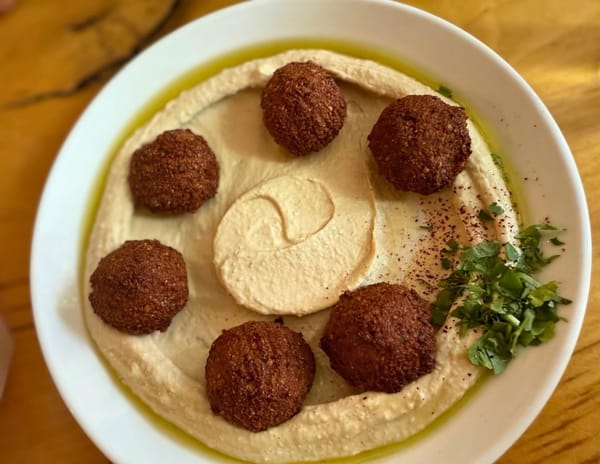
At a moment when the news from the Middle East is so horrific, small reminders of our shared, borderless humanity still surround us. Something as simple as a cross-cultural dish like falafel reminds us that people have always exchanged ideas, ingredients, and traditions. Long before modern politics and dogmas divided the region, food traveled freely.
“We have Palestinian customers, Jordanian, Lebanese, Israeli of course, Egyptian—you name it,” says Cathy Noar, co-owner of Aba’s Falafel in Rhinebeck. She and husband Roy Noar left Israel for New York in 2005. “It’s a shared dish. Falafel brings us together.”
Falafel’s origins remain contested. Egyptians point to ta’ameya, their fava-bean fritter eaten for breakfast, while Levantine cuisines rely primarily on chickpeas and herbs. But wherever it began, falafel has long since outgrown any particular national identity.

“There really is no singular ‘Lebanese cuisine’ in the traditional sense,” says Julie Hamrah Fels, owner of Hamrah’s in Kinderhook. Raised in Columbia County in a Lebanese-American family, she describes a cuisine shaped by geography and migration. “There is food that is eaten throughout the geography of the Middle East with variations that have to do with location—like seafood by the coast or lamb in more mountainous regions.” Those subtle variations, she adds, are part of what makes the food so fascinating. “I love talking to people about what they grew up with and the differences.”
Here are seven restaurants across the region serving their own version of falafel, each rooted in a slightly different culinary tradition.
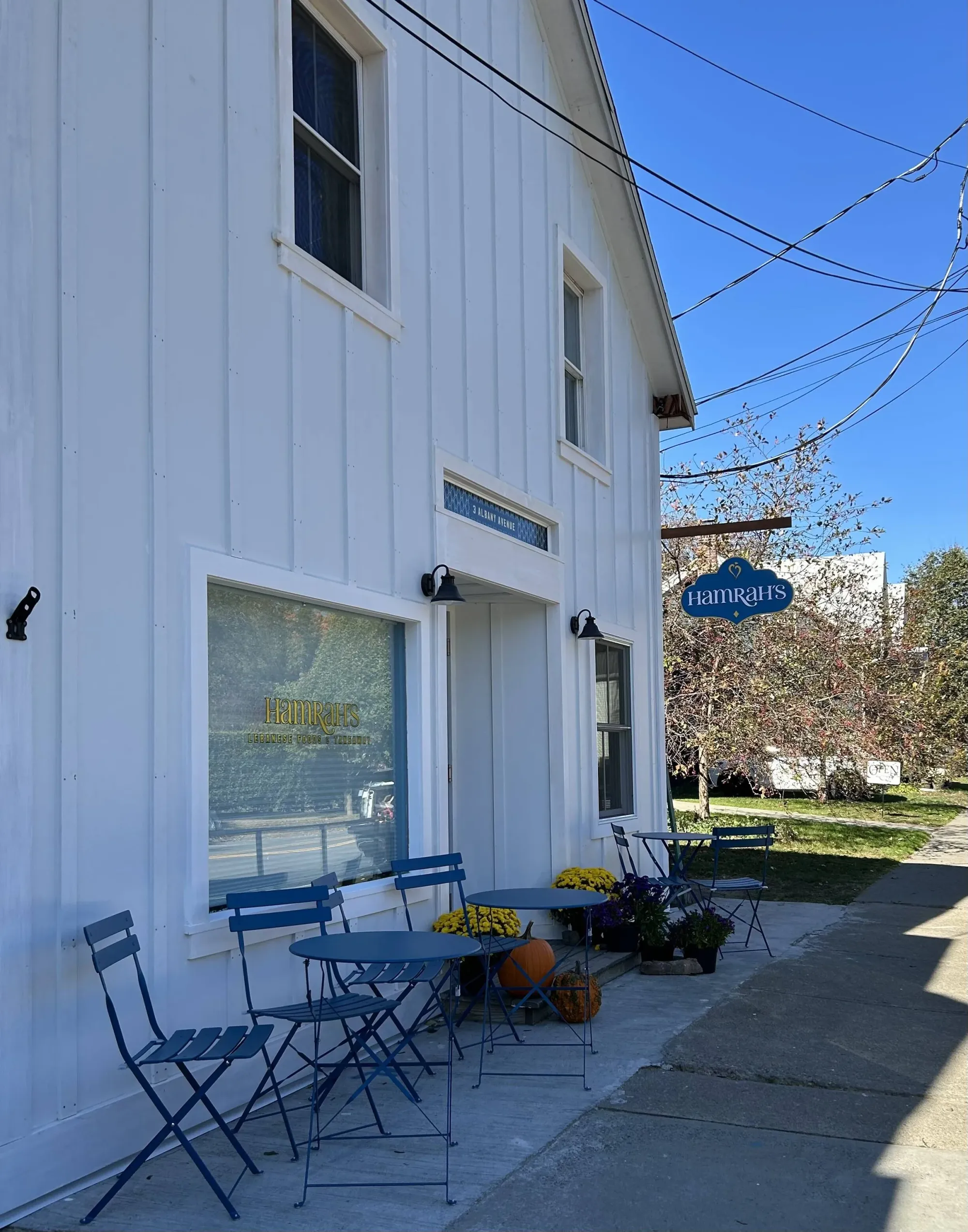
3 Albany Avenue, Kinderhook
Hamrah’s brings Lebanese and Eastern Mediterranean cooking to Kinderhook from a small storefront near the village green. Owner Julie Hamrah Fels began selling Lebanese dishes at local farmers markets before opening the restaurant as a brick-and-mortar in 2024. Her menu emphasizes the bright, herb-forward flavors common across the region—pita wraps, rice bowls, salads, and savory hand pies alongside staples like hummus and shawarma. Many ingredients come from nearby farms, including meat from Kinderhook Farms and seasonal produce sourced locally.
Falafel here follows the Levantine approach: dried chickpeas are soaked overnight, then ground with parsley, garlic, onion, and spices before frying. The method produces the telltale green interior that signals a fresh herb mixture and a texture that stays light and crisp rather than dense. Served with tahini, pickled vegetables, and warm pita, the fritters fit naturally alongside hummus or baba ghanoush.
54 East Market Street, Rhinebeck
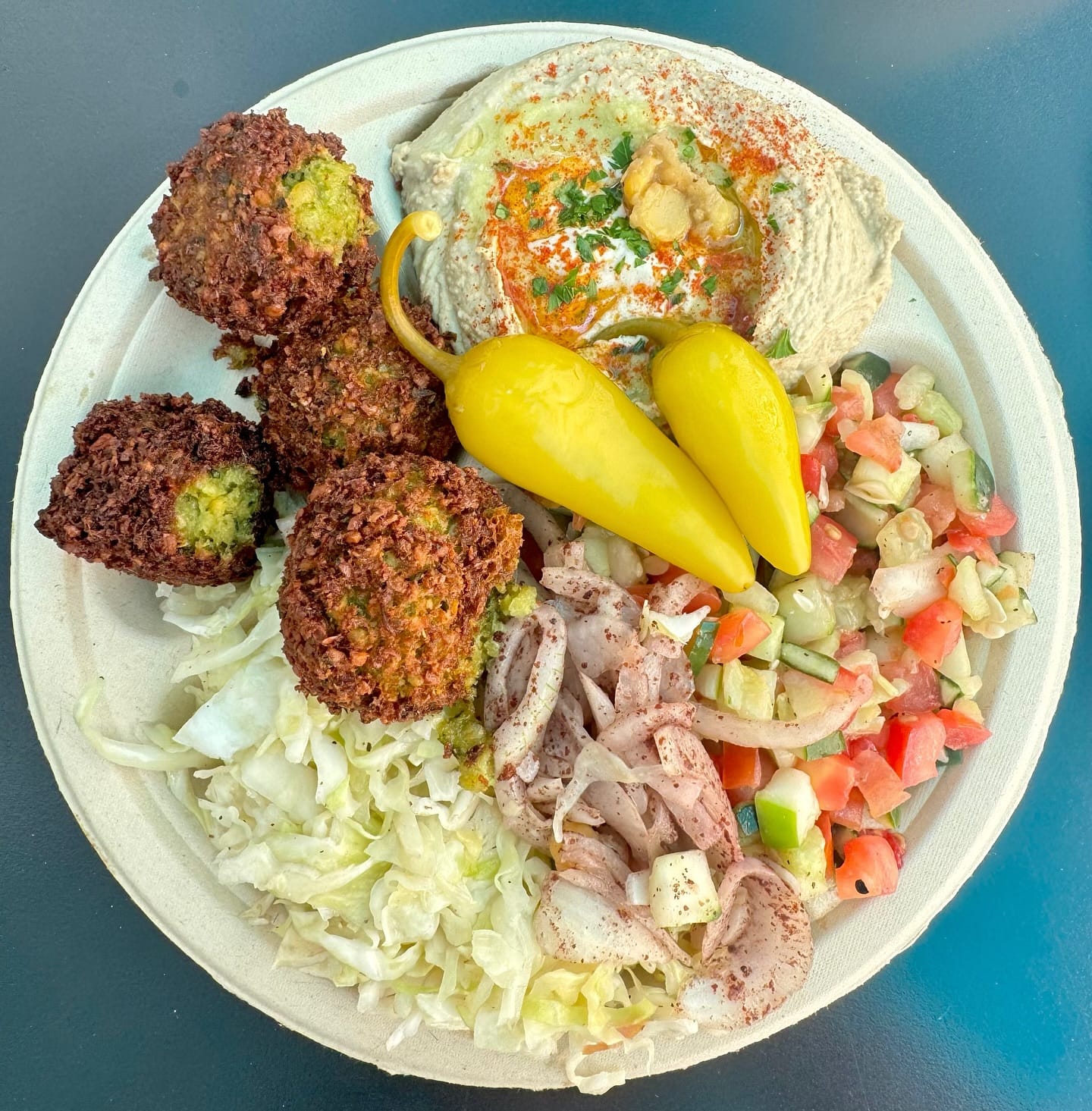
Aba’s Falafel may be the Hudson Valley’s most focused expression of the dish: a small lunch counter devoted almost entirely to falafel and the salads that accompany it. Cathy and Roy Noar first introduced their recipe at Hudson Valley farmers’ markets before opening their Rhinebeck storefront, where the menu remains intentionally minimal—falafel, hummus, salads, and roasted eggplant called sabich.
Noar first developed the falafel recipe with her own dietary needs in mind, eliminating flour and fillers entirely. The result is a mixture made primarily from chickpeas, herbs, and spices that happens to be naturally gluten-free and vegan. With the quality of the falafel at the core of the business it is consistently delicious and addictive, served with tahini and Israeli-style salads like cucumber-tomato, cabbage, and onion with sumac.
436 Main Street, Winsted, CT
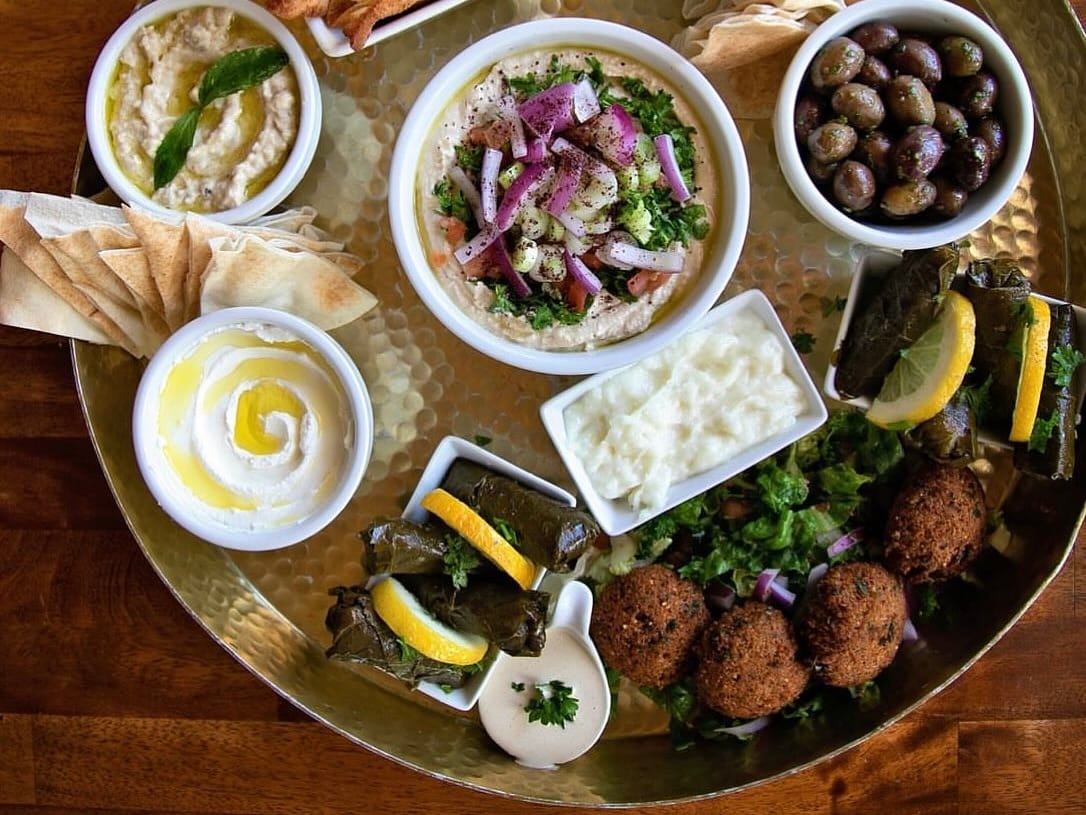
Noujaim’s Bistro reflects the Lebanese heritage of chef-owner George Noujaim, whose cooking draws on traditions from across the Mediterranean. The restaurant grew out of Noujaim’s longtime catering and food production business and focuses on fresh, scratch-made dishes rooted in Lebanese flavors.
Falafel appears as a full plate served with tahini, vegetables, and pita. The fritters are made with cumin and coriander before frying, creating a deeper spice profile than some other regional styles. Alongside dishes like kibbeh, shawarma, and grilled kebabs, the falafel acts as a vegetarian anchor within the broader mezze tradition.
75 Spring Street, Williamstown
Plates Mediterranean Bistro blends Turkish and broader Eastern Mediterranean influences in a menu that features traditional dishes and contemporary café fare. Falafel appears in wraps with tahini, tomato, and onion, sometimes alongside salads or vegetable plates built around Mediterranean ingredients.
The falafel mixture reflects Turkish-leaning seasoning—coriander and paprika added to the chickpeas along with garlic and herbs—which gives the fritters a deeper spice profile and a darker crust when fried.
244 Main Street, Beacon
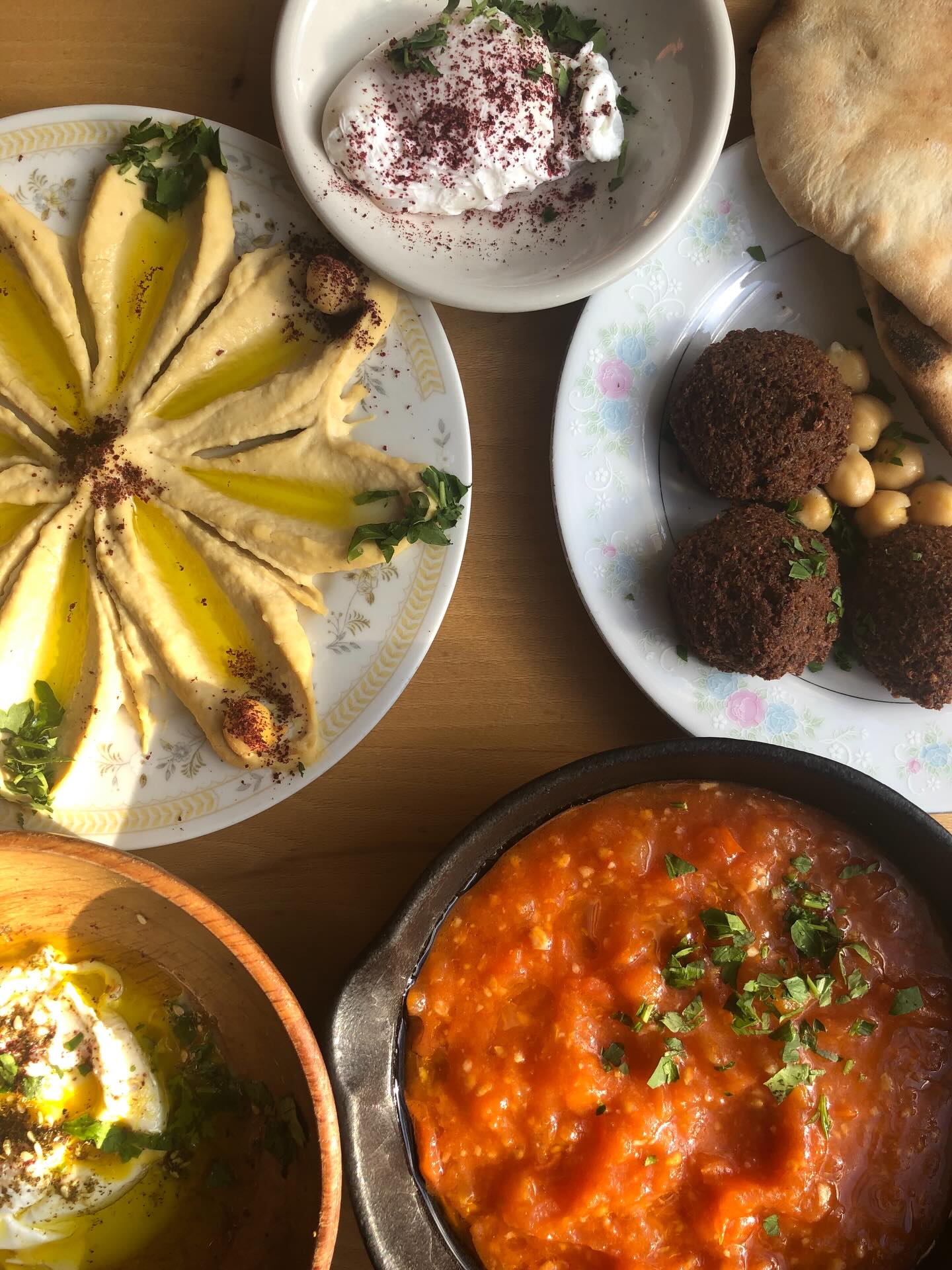
A bit far from the core of the RI Region but worth the trip, Ziatun brings Palestinian cooking to Beacon’s lively Main Street. The restaurant centers its menu on Levantine staples—hummus, baba ghanoush, grilled meats, and mezze spreads designed for sharing.
Falafel appears both in pita sandwiches and as part of larger mezze platters paired with olive oil, pickled vegetables, and warm bread. Palestinian falafel tends to lean heavily on parsley and cilantro along with cumin and garlic, creating a fragrant mixture that fries into deeply aromatic fritters. The bright herbal flavor contrasts nicely with creamy tahini and the sharp bite of pickled turnips.
1057 East Main Street, Torrington, CT
Yiayia’s Greek Kitchen is a small Greek taverna founded by husband-and-wife team Yanni and Kaitlyn Gogo. Named for the Greek word for grandmother, the restaurant draws inspiration from family recipes and the warm hospitality associated with traditional Greek cooking.
The menu focuses on classics such as souvlaki, spanakopita, gyros, and house-made dips. Falafel is served in pita sandwiches or as part of a mezze plate alongside hummus and salads. In keeping with Greek culinary traditions, the fritters are often paired with tangy yogurt-based tzatziki rather than tahini, bringing the cool, creamy element.
327 Stockbridge Road, Great Barrington
Aegean Breeze has been serving Greek and Mediterranean cuisine in Great Barrington since 2002, drawing inspiration from the seaside tavernas of the Greek islands. The menu emphasizes grilled meats, seafood, and a range of small plates designed for sharing.
Falafel appears among the mezze offerings served with hummus and vegetables. In this setting the dish functions less as a sandwich filling and more as a shared appetizer, arriving alongside other plates like saganaki or stuffed grape leaves. The presentation reflects the communal style of Mediterranean dining where a table gradually fills with dishes meant to be passed around.