What Is Dubai Chocolate and How Is It Made?
The origins of dubai chocolate trace back to 2021 when Egyptian-British engineer Sarah Hamouda conceptualized a unique confection alongside pastry chef Nouel Catis Omamalin in Dubai. Originally created to satisfy pregnancy cravings by recreating the signature taste and crispy texture of traditional Middle Eastern knafeh, the bar was officially released in 2022 under the playful name "Can't Get Knafeh of It" by Fix Dessert Chocolatier.
What began as a modest kitchen operation producing just 25 hand-piped bars a day—crafted by a team working six to eight hours per shift—quickly erupted into a worldwide phenomenon. Driven by social media influencer reviews on TikTok and Instagram highlighting the vibrant green center and loud crunch, demand exploded globally in 2024.
This viral explosion reshaped global trade dynamics within the confectionery sector. As demand skyrocketed, global pistachio prices rose 34 percent. Major international manufacturers, boutique chocolatiers, and local bakeries worldwide began rushing to formulate their own versions of knafeh-stuffed chocolate bars.
Despite the rapid influx of mass-produced alternatives and viral imitators, food critics and industry analysts note that the core concept endures because it rests on genuine Middle Eastern culinary traditions. For an in-depth analysis of the trend's cultural impact, you can read Can Dubai Chocolate Stay Relevant in a World That Isn’t So Sweet Right Now?.
Key Ingredients of Authentic Dubai Chocolate
The signature appeal of authentic dubai chocolate relies on a precise balance of contrasting textures and rich, nutty flavor notes. Unlike standard filled candy bars that use light nougats or liquid caramels, a genuine Middle Eastern knafeh chocolate bar relies on five key components:
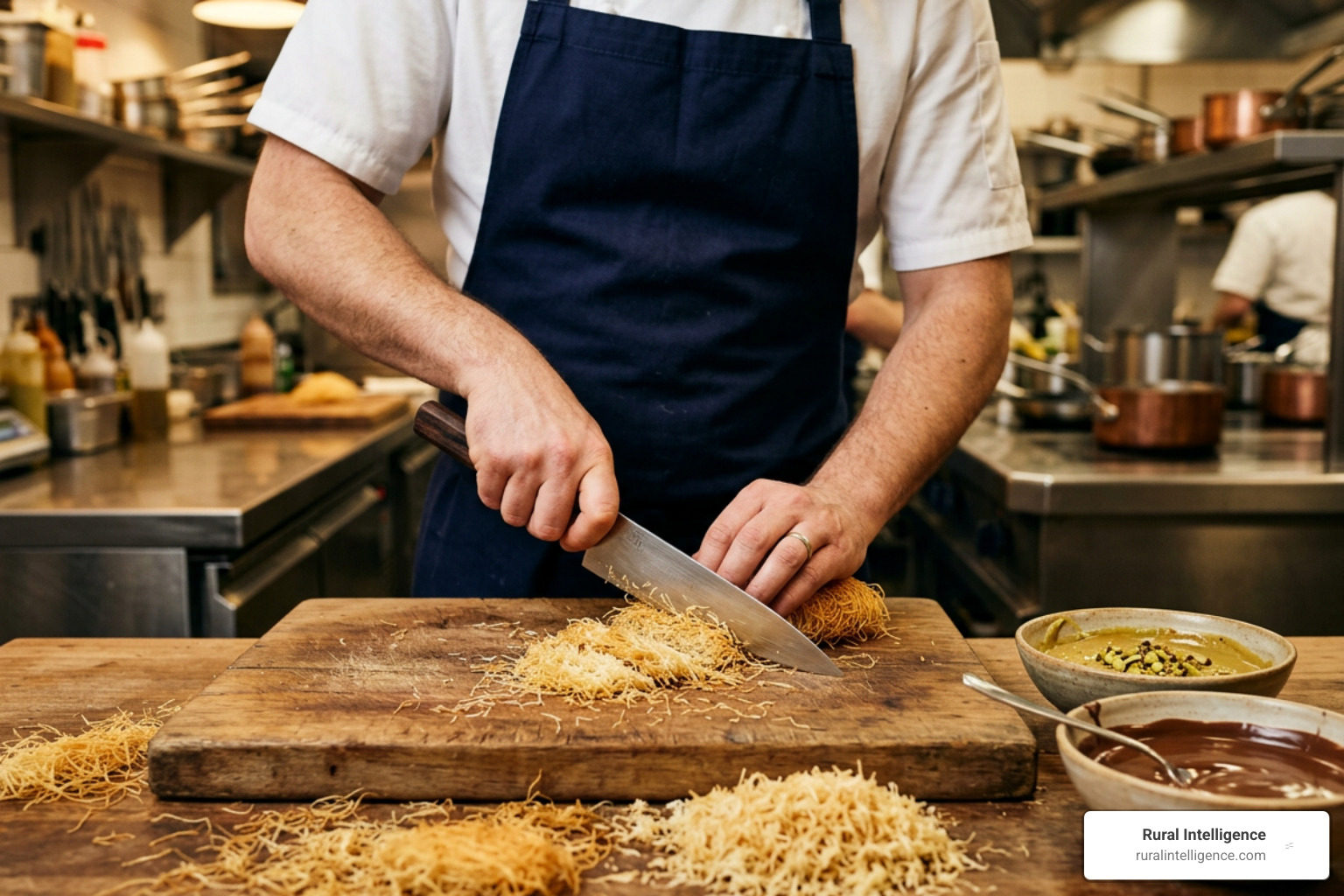
- Kadayif (Kataifi) Pastry: Extremely thin, shredded wheat dough strands that are finely chopped and slow-roasted in butter until deeply golden and brittle. This provides the bar's trademark snap and crunch.
- Pistachio Butter or Cream: Pure ground pistachio paste or sweetened pistachio cream, which gives the filling its velvety mouthfeel and distinctive emerald-green appearance.
- Tahini: Sesame seed paste added in precise proportions to balance the sweet nut cream with a subtle, earthy, roasted bitterness.
- Cocoa Butter & Milk Chocolate Shell: High-quality chocolate (typically 34% to 44% cocoa solids) that encases the soft filling, maintaining structure without overpowering the interior flavors.
- Pinch of Sea Salt: A essential mineral accent that cuts through the richness of the nut butter and chocolate shell.
Variations in Modern Confectionery
As the original trend matured, confections evolved well beyond the classic milk chocolate and pistachio pairing. Artisan chocolatiers across the globe now incorporate high-percentage dark chocolate (such as 70% Swiss dark cocoa) to complement rich hazelnut gianduja, Damascene rose jelly, saffron praline, or cardamom spices.
Others have streamlined the concept into single-layer chocolate barks topped with dry-roasted pistachios and sea salt for easier shelf stability and shipping.
| Feature | Artisanal Knafeh Bars | Commercial & Mass-Market Barks |
|---|---|---|
| Interior Filling | Soft pistachio cream, tahini, & shredded kadayif pastry | Solid chocolate base sprinkled with dry nuts & pastry bits |
| Texture Profile | Oozing, creamy center with distinct pastry crunch | Firm snap with dry crunch surface |
| Primary Fat Source | Pure cocoa butter & nut oils | Cocoa butter, sometimes supplemented with vegetable fats |
| Shelf Life | Short (typically 4 to 6 weeks for fresh batches) | Extended (6 to 12 months in packaged consumer goods) |
| Serving Prep | Best served slightly chilled (60°F–68°F) | Room temperature or ambient retail storage |
Quality Standards, Safety, and Nutritional Profile
Because the global appetite for dubai chocolate overwhelmed supply chains, product quality varies widely across the market. Consumers should inspect product packaging carefully for quality markers, clear allergen statements, and fat compositions.
A single standard 1.1 oz (31g) mini serving of a Dubai-style bar typically delivers around 170 calories, 10g of total fat (7g saturated fat), 15g of carbohydrates, and 12g of total sugars. Larger full-sized gourmet bars (ranging from 3.5 oz to 4.2 oz) contain significantly higher caloric density due to concentrated pistachio butter, butter-toasted pastry, and cocoa fats.
When buying imported or non-certified specialty bars, food safety compliance is a crucial consideration:
- Tree Nut and Sesame Allergens: Authentic recipes rely heavily on pistachios, tree nuts, and sesame (tahini). Cross-contamination in shared facilities frequently involves almonds, hazelnuts, dairy, soy, and wheat flour (gluten from the kadayif pastry).
- Fat Adulteration Concerns: Pure chocolate relies exclusively on cocoa butter. However, rigorous testing conducted by consumer protection agencies in Europe revealed that several low-cost imported "Dubai-style" bars substituted cheap palm oil or non-cocoa fats for cocoa butter.
- Contaminant and Mold Risks: Pistachios are sensitive to environmental moisture and improper post-harvest storage, which can lead to high levels of aflatoxins or mold toxins. Additionally, refined low-grade palm oil substitutes can introduce unwanted processing contaminants like 3-MCPD esters. Always look for reputable producers who display full ingredient transparency.
How to Buy and Experience Gourmet Confections
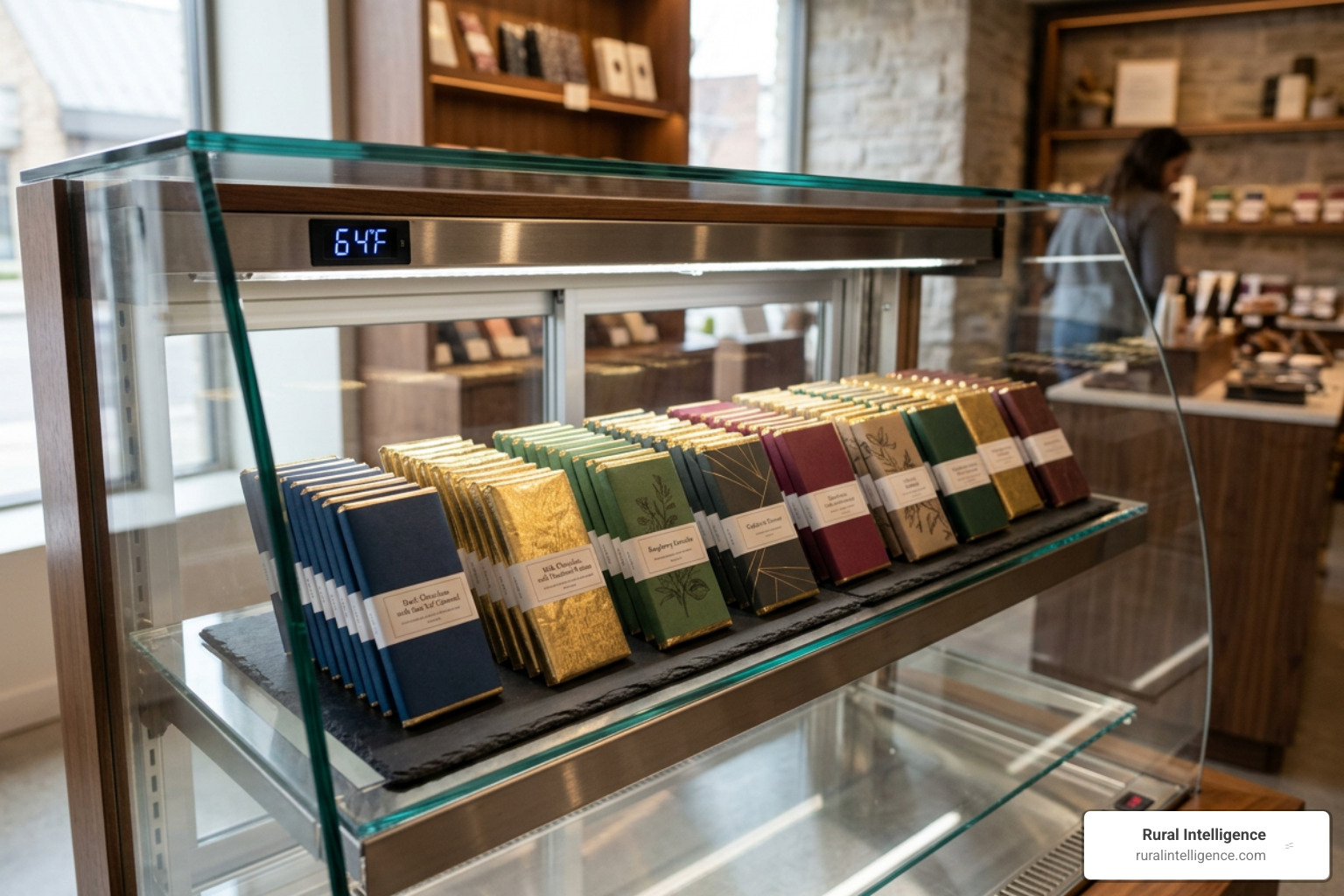
Buying high-end filled chocolate requires attention to temperature controls during transport and storage. Because pistachio butter and nut pastes melt at lower temperatures than pure cocoa butter, exposing these delicate bars to heat above 70°F can cause the interior filling to soften prematurely and ruin the crunch of the toasted kataifi dough.
To maintain the optimal eating texture:
- Storage Temperature: Store unopened bars in a dry, cool space between 54°F and 65°F.
- Serving Guidelines: Chill the bar briefly before serving so that it reaches 60°F to 68°F. Serving at this temperature ensures the outer milk chocolate shell snaps crisply while keeping the internal nut filling firm yet smooth.
- Freshness Window: Preservative-free craft confections should ideal be consumed within six weeks of production to enjoy the kataifi pastry at peak crispness.
For consumers seeking high-quality confections crafted with verified Dominican Republic single-origin cocoa and authentic regional fillings, you can explore luxury option selections directly through Explore Luxury Middle Eastern Treats.
Crafting Homemade Dubai Chocolate
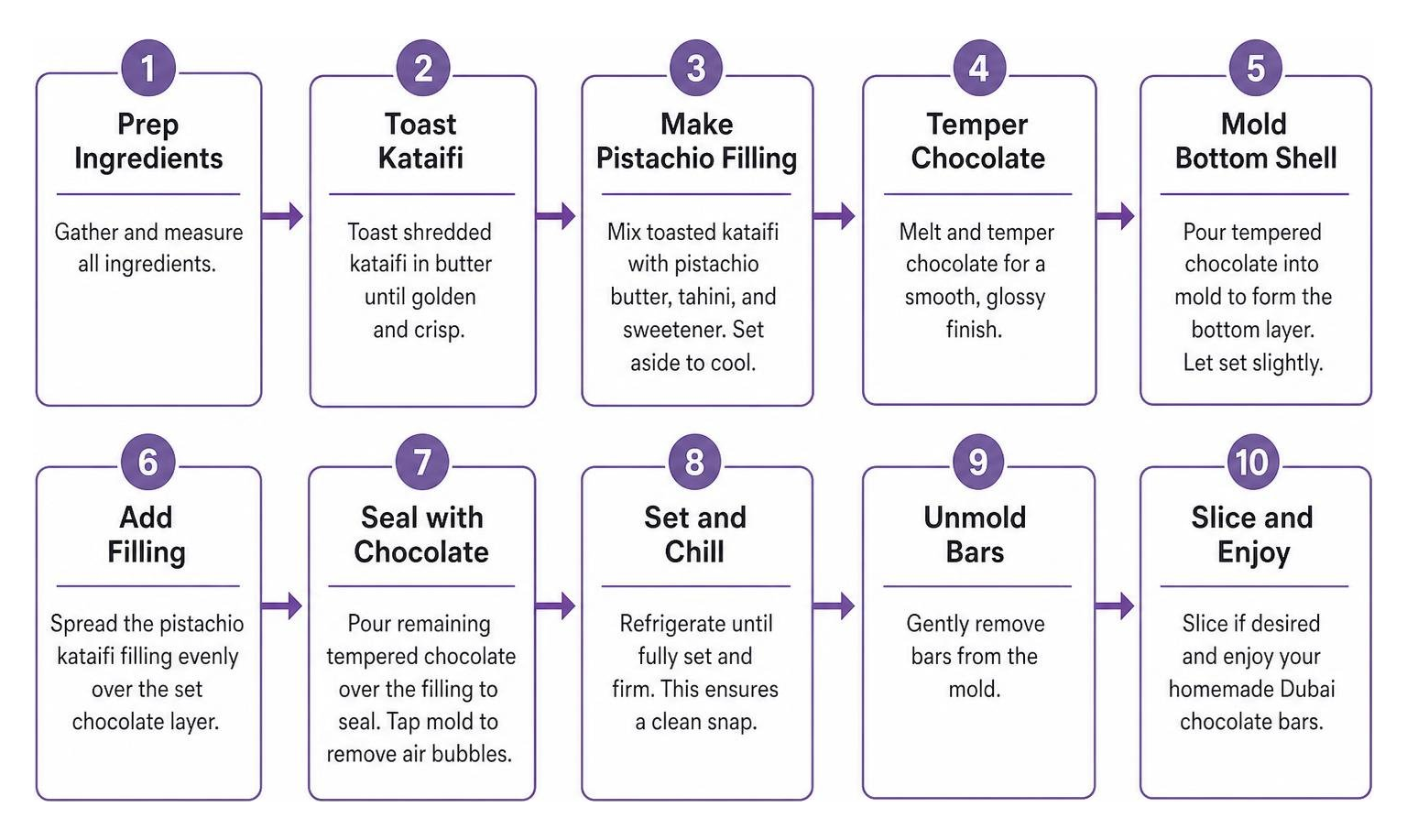
Making your own dubai chocolate at home allows complete control over ingredient freshness and sweetness levels. The process involves three main phases: crisping the pastry dough, tempering the chocolate shell, and setting the blended filling.
Essential Home Kitchen Equipment
- Polycarbonate or silicone chocolate bar molds
- Heavy-bottom skillet for pastry roasting
- Double boiler or heat-safe glass bowl over simmering water
- Digital food thermometer
- Piping bag or offset spatula
Step-by-Step DIY Recipe Assembly
- Toast the Kadayif Pastry: Finely chop 1 cup of raw kadayif (kataifi) pastry strands. Melt 1.5 tablespoons of unsalted butter in a skillet over low heat. Add the pastry and cook for 8 to 10 minutes, stirring continuously until the strands turn a deep golden brown. Transfer to a bowl and allow to cool completely.
- Prepare the Pistachio-Tahini Cream: Once the pastry is cool, stir in 1/2 cup of sweet pistachio cream, 1 tablespoon of pure tahini, and a small pinch of sea salt until the mixture holds together.
- Temper the Chocolate: Melt two-thirds of your chopped milk or dark chocolate in a double boiler until it reaches 110°F. Remove from heat, stir in the remaining one-third of finely chopped un-melted chocolate to seed it, and stir until smooth and cooled to 86°F–88°F.
- Mold and Set: Pour tempered chocolate into your molds, swirl to coat all sides evenly, pour out excess, and chill for 10 minutes until set. Pipe or spoon the cooled pistachio pastry filling into the shell, leaving room at the top. Cover with the remaining tempered chocolate, smooth with an offset spatula, and refrigerate for 20 to 30 minutes until fully set.
Frequently Asked Questions about Dubai Chocolate
Who created the original viral knafeh chocolate bar?
The original bar was developed in 2021 by Sarah Hamouda alongside pastry chef Nouel Catis Omamalin for Fix Dessert Chocolatier in Dubai. It originated as a home kitchen experiment designed to satisfy a pregnancy craving for traditional Middle Eastern knafeh pastry.
How should knafeh-filled chocolate be stored and served?
Keep the chocolate in a cool, dark environment kept between 54°F and 65°F. For the best flavor and texture, serve slightly chilled between 60°F and 68°F so the outer chocolate shell provides a clean snap while protecting the crunch of the toasted pastry filling inside.
What makes authentic knafeh chocolate different from imitations?
Authentic versions use pure cocoa butter, high-grade toasted kataifi pastry, real pistachio paste, and a hint of tahini. Imitation or mass-produced commercial versions frequently replace pure cocoa butter with palm oil, substitute artificial flavors or coloring for real pistachios, or omit the shredded pastry strands entirely.
Conclusion
The transformation of dubai chocolate from a local specialty craving into an international phenomenon reflects the evolving nature of modern food culture. By wrapping the traditional, time-honored flavors of Middle Eastern pastry making into a handheld gourmet format, artisan makers created an enduring icon of modern confectionery.
At Rural Intelligence, we celebrate culinary innovation, whether originating in global food capitals or crafted locally by regional artisans across our countryside communities. To discover more stories about local food cultures, independent makers, and seasonal guides, visit Discover Regional Food and Artisanal Guides.