By Sarah Ellen Rindsberg
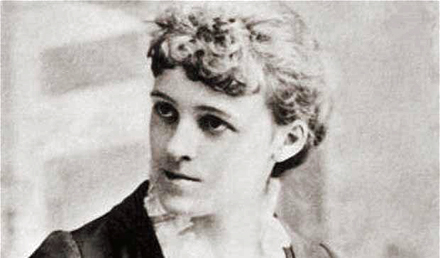
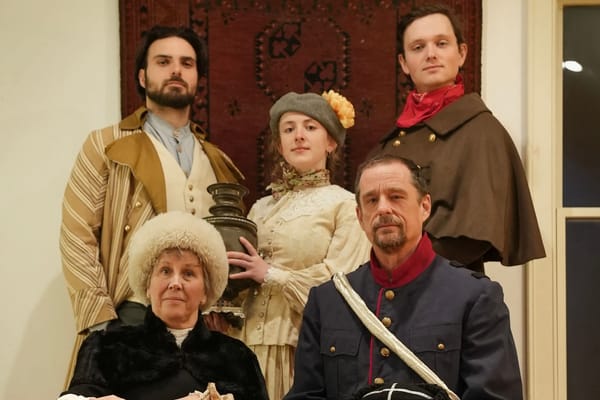
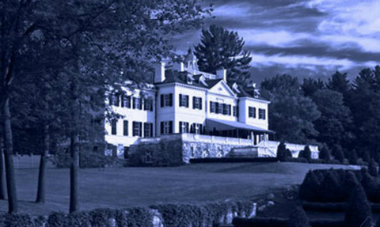
It’s time to visit your stately but inviting neighbor in the Berkshires: Edith Wharton. Although the esteemed writer will not be there in the flesh to greet you, her spirit reigns in more ways than one. Which is a good thing: she was a lovely and wise woman; the vibe might be different if one was visiting Dostoevsky's digs or Bayrueth for example. The Mount, Wharton’s home in Lenox, is a hub of literary, dramatic, and intermittent paranormal activity. Her words jump off the page in dramatic renditions of her short stories adapted by The Wharton Salon, a company dedicated to the presentation of her works in site-specific locations. At the same time, members of the Mount staff give actual ghost tours. The plays, Two by Wharton: The Quicksand and The Looking Glass, adapted by Alison Ragland and Elaine Smith, run through August 25. The current version of the ghost tours is held until August 26, and then resumes September 6 through October 25, at which point they get spookier in anticipation of Halloween. There's also a frequent invitation to tea, though that's normally attended only by mortals. "We’re performing a play in a place that has a connection to the person who wrote it," says Catherine Taylor-Williams, Executive Director of the Salon. “You can feel that Wharton is there."
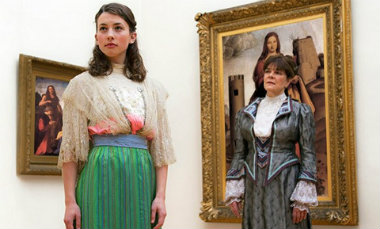
During an evening performance in the stable, the play's director, Daniela Varon, came on stage to deliver a welcome that was, appropriately, both humorous and a tad foreboding. She explained that the actress in the second play was a recent substitution. Varon mentioned a “tradition" of last-minute replacements. “This may have to do with the spirits," she said, gesturing around the room. Wharton’s short story, “The Quicksand," appears first on the bill. The creation of this compelling play adaptation has its own literary tale to tell. Taylor-Williams reread several of Wharton’s stories and selected “Quicksand" for the current season, then contacted Alison Ragland and prepared to wait the requisite amount of time for the script. In an odd but fortunate coincidence, it turned out that Ragland already “had an adaptation in a drawer; she just polished it and sent it up." "Quicksand" is a story that, while about past lives, has very modern reverberations. A young lady named Hope Fenno, played by Ava Lindenmaier, finds herself mired in an unenviable position. If she accepts a marriage proposal from the man she loves, Alan Quentin, she will be compromising her principles. The obstacle standing in her way is Quentin’s ownership of The Radiator, a vehicle of yellow journalism whose articles, while designed to attract an avid readership, are destined to malign their subjects. Quentin (Wesley Cooper) asks his mother to plead his case with Fenno by demonstrating how she herself has lived a life separate from that of the paper. "I determined to ignore the paper altogether--to take what it gave as though I didn't know where it came from," Mrs. Quentin says. “And to excuse this I invented the theory that one may, so to speak, 'purify' money by putting it to good uses. I gave away a great deal in charity..." Here, we see evidence of Wharton’s own philanthropic actions during World War I. While living in Paris, she provided food and housing for 600 orphaned Belgian refugees.
After a spot of tea and cookies at intermission, we're offered the richness of Wharton’s witticisms in “The Looking Glass." The line, “A sin unrevealed is a sin uncommitted," is greeted with a rousing chuckle from the audience. The protagonist, Cora Attlee (Jane Nichols), seeks to make the offstage attendees complicit in the telling of her tale: “Why shouldn’t you have the truth? You’ll not tell the good father," she tells them. Attlee, a retired masseuse to the wealthy, proceeds to describe her transformation from her initial profession to that of clairvoyant. Many of her clients are desperate for “news" of their loved ones on the front, and she is happy to oblige. In one case, she takes more than a few liberties in creating a story to appease her favorite client who longed for news of a lover, drowned in the Titanic. “I knew it was wrong and immoral to help the love-making between a sick woman and a ghost," Attlee acknowledges cheekily. Even in such elegant surroundings, death is a frequent leitmotif.
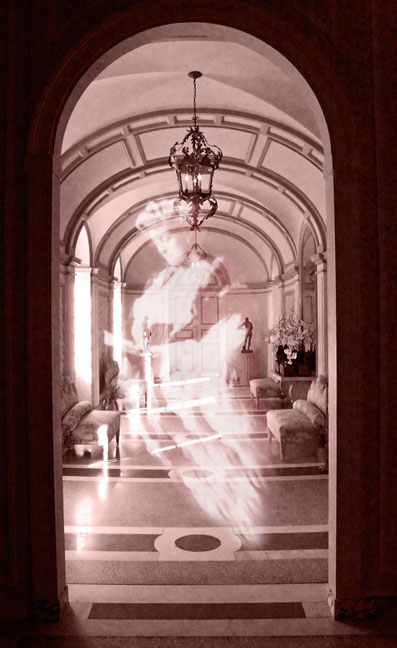
And now for the ghosts themselves. In 2009, investigators from the television series Ghost Hunters arrived at the Mount to determine the likelihood of the many reported sightings over the years. Their findings provide the inspiration for the ghost tours now on course at the Mount. Grace Leathrum, one of the intrepid guides, recalls a sensation felt while waiting on the other side of a doorway while another guide was giving his spiel. (She prefaces her remark by mentioning Wharton’s fear of doorways.) “It distinctly felt like a hand on the back of my head," Leathrum recalls. During her tours, cellphones, whose batteries appear to be fully charged, suddenly experience a decrease in energy when carried to the top floor of the stable. When attendees descend, power is magically restored. Leathrum also recounts the experience of a visiting building inspector. When he went upstairs, he saw a black figure crouching in the corner, watching him. His parting words: “You have your permit. I’m not coming back." Reports of mysterious happenings in Wharton’s husband’s den also abound. Women on the tour often feel a hand on their back or the sensation that their hair is being pulled or parted. Leathrum provides insight from the findings of a team of psychics summoned to the Mount, “They said they'd never been in a room with so much paranormal activity," she says. To sum up, Leathrum says, “We’re here to tell you fascinating stories that've happened over the years. But we let you draw your own conclusions." The Mount, Edith Wharton's HomeThe Wharton Salon performs Two by Wharton: The Quicksand and The Looking GlassNow - August 25 Ghost ToursMonday, August 26 @ 7:30 p.m.; Friday evenings at 5:45 p.m. and 7 p.m. from September 6 through October 25.