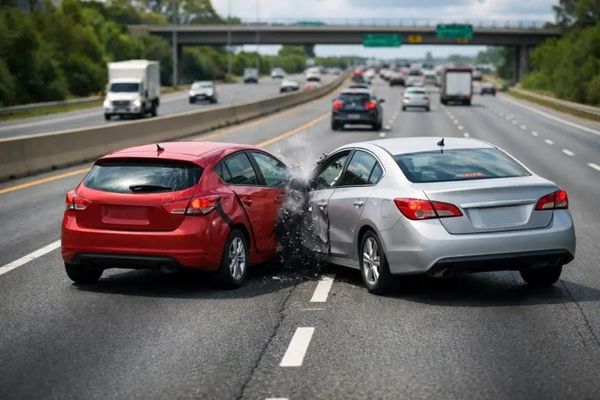
It starts with a sound most drivers never forget, that sharp scrape of metal on metal. Two cars traveling side by side on the Long Island Expressway touch for maybe half a second. No one is going particularly fast for that road, and the contact itself barely looks like anything.
Then everything happens at once. One driver yanks the wheel, the other slams the brakes, and suddenly the cars behind them are scrambling. What began as a glancing touch between two mirrors can turn into a pileup stretching across three lanes in a matter of seconds.
That's the sneaky thing about side-to-side collisions. The initial impact often looks small, almost forgivable. But at highway speed, small has a way of growing up fast, especially when panicked reactions and heavy traffic get added to the mix.
Why Side-to-Side Contact Can Be So Destabilizing
Cars are built to handle forces from the front and rear far better than from the side. A sideways shove, even a gentle one, pushes a vehicle in a direction its tires and suspension aren't expecting. The result can be a sudden wobble, a skid, or a full spin.
Human reactions often make things worse. When a driver feels that jolt, the instinct is to jerk the steering wheel away from the other car. At 60 miles per hour, an overcorrection like that can send a vehicle careening across lanes or straight into the median.
That's why sideswipe accidents are far more dangerous than the scratches suggest. Loss of control is the real threat, and once a car starts spinning or veering, the driver may have very little ability to steer it back to safety.
How One Lane Change Can Set Off a Chain Reaction
Imagine a hypothetical driver merging into the center lane without checking a blind spot. The car clips a sedan already in that lane. The sedan's driver swerves right to escape, drifting into the path of a delivery van that has nowhere to go.
The van brakes hard and fishtails. A pickup behind it rear-ends the van, while the original merging driver, startled, overcorrects left and taps a car in the far lane. In about five seconds, one careless lane change has involved five vehicles.
Scenarios like this are why secondary collisions often cause more damage than the first contact. Each reaction creates a new hazard for someone else, and drivers further back may have only a heartbeat to respond. The chain keeps growing until someone finds open space.
The Common Mistakes Behind Sideswipe Collisions
Blind spots top the list. Every vehicle has them, and a quick glance at the mirror simply isn't enough to clear them. Drivers who skip the over-the-shoulder check or ignore their blind-spot warnings are rolling the dice every time they change lanes.
Distraction is another big one. A driver glancing at a phone or fiddling with the GPS can drift out of their lane without even realizing it. Drowsy drivers do the same thing, slowly wandering across the line until metal meets metal.
Merging errors cause plenty of trouble too, especially at busy on-ramps where drivers misjudge gaps or refuse to yield. Improper lane changes, like cutting across several lanes at once to make an exit, round out the list. Most of these mistakes come down to impatience or inattention.
Why Determining Fault Can Be More Complicated Than It Looks
Sideswipes often turn into a classic he-said, she-said. Each driver may insist the other drifted over, and both may sincerely believe it. With two cars moving in the same direction, figuring out who crossed the line first can be surprisingly tricky.
Physical evidence helps settle the debate. Damage patterns show where vehicles made contact and at what angle, while paint transfer can reveal which car moved into the other. Roadway markings, skid marks, and debris can also point toward where the collision began.
Dashcam footage has become a game changer in these cases, capturing exactly who moved where. Witness accounts from other drivers can fill in gaps. In New York, fault can be shared among multiple drivers, so careful evidence often determines how responsibility gets divided.
Conclusion
A sideswipe might start as a scrape, but it doesn't always end there. Lateral forces, panicked steering, and crowded highways can turn a brief touch into a multi-car crash before anyone has time to process what happened.
Most of these collisions are preventable. Checking blind spots, signaling early, merging patiently, and staying focused on the lane ahead can keep a quick lane change from becoming a highway headache for everyone involved.
The bigger lesson is that small impacts can carry big consequences. When contact does happen, staying calm and avoiding sudden overcorrections may be the most important thing a driver can do to keep one mistake from becoming several.