Mackenzie Shirilla Case: The Key Facts at a Glance
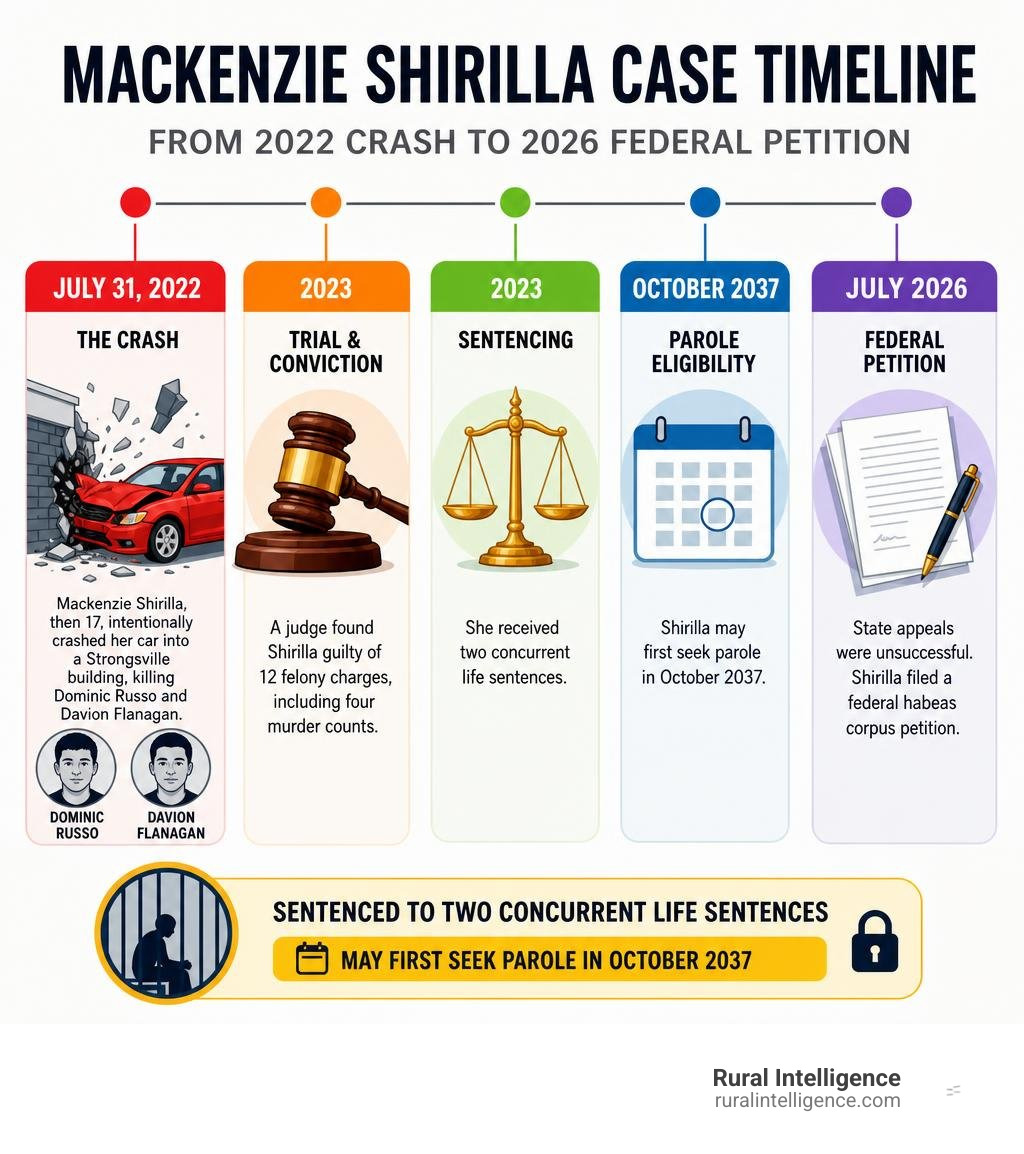
Mackenzie Shirilla is an Ohio woman convicted of murdering her boyfriend, Dominic Russo, and friend, Davion Flanagan, by intentionally crashing her car into a Strongsville building on July 31, 2022. She was 17 at the time. Prosecutors said vehicle data showed she drove at more than 100 mph, held the accelerator down and did not brake before impact.
In 2023, a judge found Shirilla guilty of 12 felony charges, including four murder counts. She received two concurrent life sentences and may first seek parole in October 2037. Shirilla has maintained that she cannot remember the crash and has argued that a medical condition, POTS, may have caused her to black out. Her state appeals were unsuccessful, and she filed a federal habeas corpus petition in July 2026.
The case has remained in the public eye because of the evidence debated at trial, the lasting grief of both victims' families, and renewed attention after Netflix's The Crash.
Who Is Mackenzie Shirilla and What Happened in the 2022 Crash?
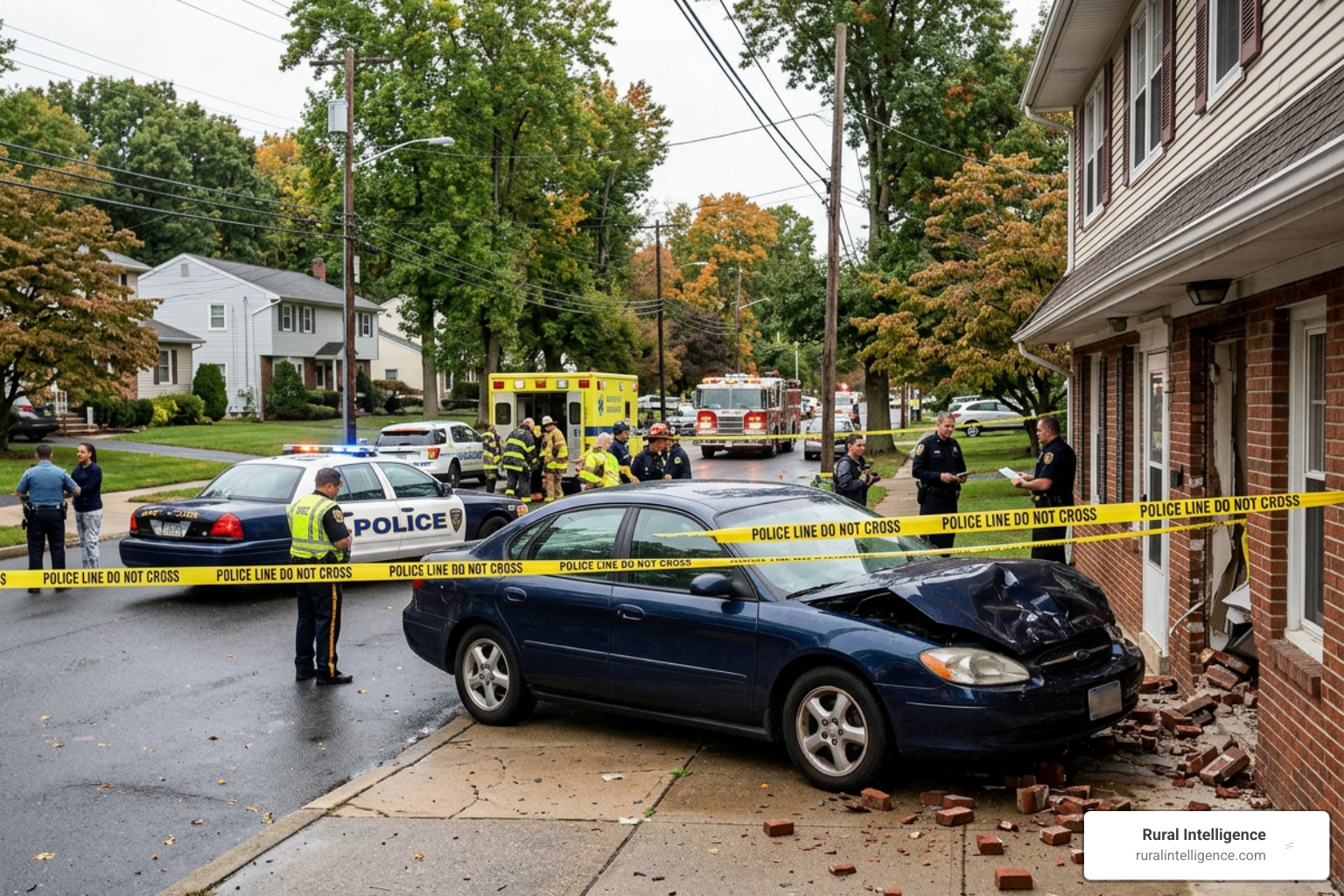
During the early morning hours of July 31, 2022, a quiet commercial district in Strongsville, Ohio, became the setting for a horrific, fatal collision. Mackenzie Shirilla, then 17 years old, was behind the wheel of her 2007 Toyota Camry carrying two passengers: her 20-year-old boyfriend, Dominic Russo, and their 19-year-old friend, Davion Flanagan.
At approximately 5:35 a.m., the vehicle accelerated down Progress Drive into an industrial park, reaching speeds exceeding 100 mph before slamming directly into the brick wall of the PLIDCO commercial building. The impact instantly killed both Dominic Russo and Davion Flanagan. Shirilla was rescued from the mangled wreckage and rushed to the hospital with serious injuries.
Investigators quickly realized this was no ordinary tragic accident. Forensic crash reconstruction and digital evidence revealed a disturbing sequence of events preceding the impact. The relationship between Shirilla and Russo had been volatile and toxic for months, marked by severe arguments and previous threats. Just two weeks before the fatal wreck, a witness saw Shirilla physically strike Russo and threaten to crash the car while driving.
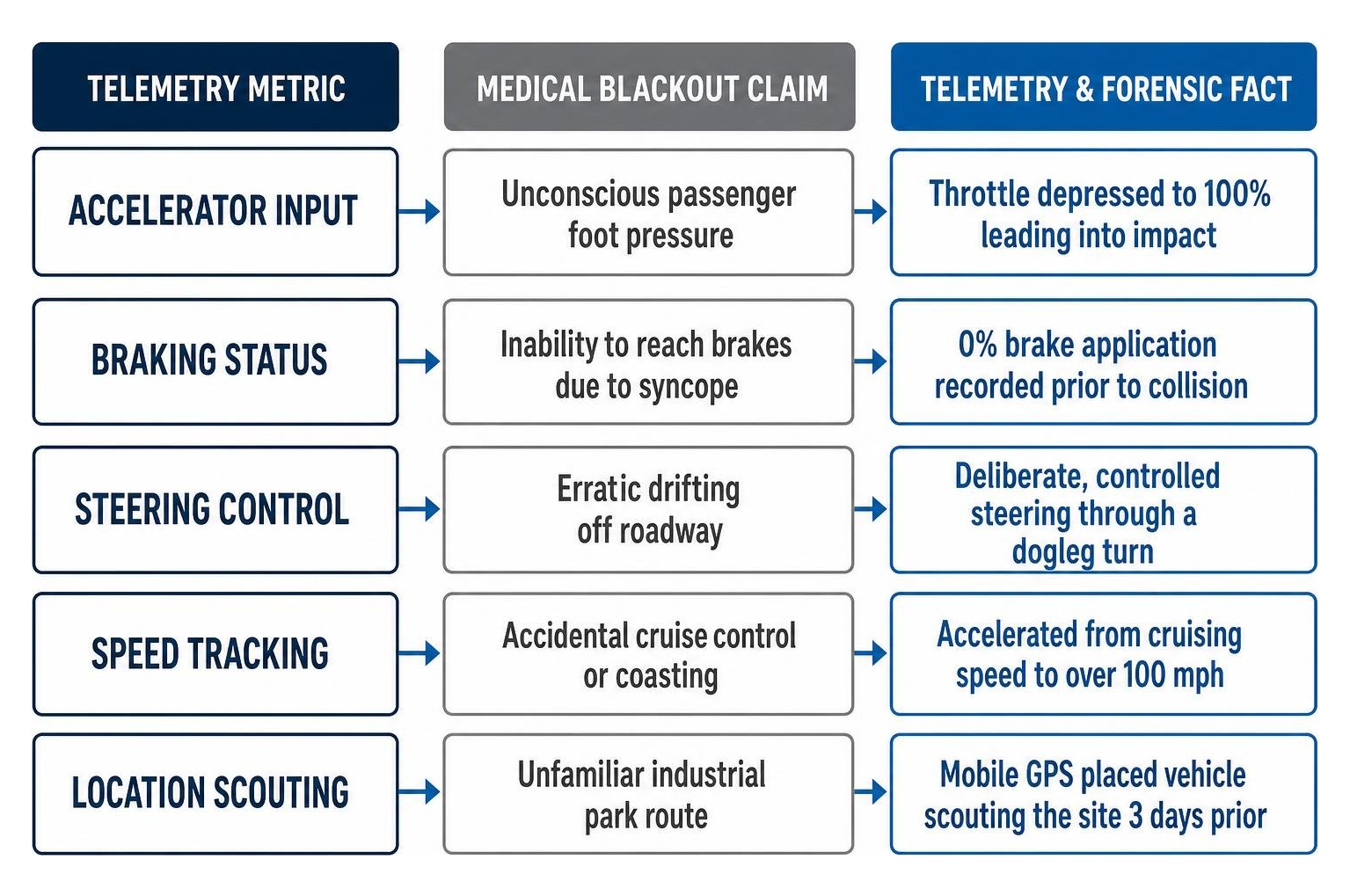
At trial, the defense claimed Shirilla had experienced an involuntary medical blackout. However, prosecutors systematically dismantled this claim using vehicle telemetry, video footage, and location data:
| Metric / Evidence Category | Defense Medical Blackout Claim | Telemetry & Forensic Fact |
|---|---|---|
| Accelerator Input | Unconscious passenger foot pressure | Throttle depressed to 100% leading into impact |
| Braking Status | Inability to reach brakes due to syncope | 0% brake application recorded prior to collision |
| Steering Control | Erratic drifting off roadway | Deliberate, controlled steering through a dogleg turn |
| Speed Tracking | Accidental cruise control or coasting | Accelerated from cruising speed to over 100 mph |
| Location Scouting | Unfamiliar industrial park route | Mobile GPS placed vehicle scouting the site 3 days prior |
The Trial and Conviction of Mackenzie Shirilla
In August 2023, Shirilla opted for a bench trial before Judge Nancy Margaret Russo in the Cuyahoga County Court of Common Pleas. Forgoing a jury trial meant that the judge evaluated the complex electronic control module (ECM) data and circumstantial evidence directly.
The digital footprints left behind told a devastating story. The vehicle's Event Data Recorder (EDR) showed that the accelerator was pressed completely to the floorboard with zero brake engagement. Mobile data from the Life360 app and security cameras demonstrated that the vehicle made deliberate steering adjustments to maneuver through an intersection before targeting the brick wall. Furthermore, GPS records confirmed Shirilla had driven the identical route just days before the crash.
Judge Russo delivered a scathing verdict, characterizing the defendant as "literal hell on wheels" who embarked on a deliberate mission of death and destruction. Shirilla was convicted on all 12 felony counts:
- 4 counts of Murder (unclassified felonies)
- 4 counts of Felonious Assault (second-degree felonies)
- 2 counts of Aggravated Vehicular Homicide (first-degree felonies)
- 1 count of Drug Possession (fifth-degree felony)
- 1 count of Possessing Criminal Tools (fifth-degree felony)
Judge Russo sentenced Shirilla to two concurrent life sentences with the possibility of parole after 15 years. You can read broader retrospectives and legal analyses on Mackenzie Shirilla - to understand how digital diagnostics continue to shape modern vehicular homicide prosecutions.
The Aftermath and Impact on Victims' Families
The trial and its aftermath left the Strongsville community and the victims' families shattered. Dominic Russo and Davion Flanagan were remembered by friends and loved ones as vibrant young men with promising futures ahead of them. In the wake of the loss, Davion Flanagan's loved ones established the Davion Flanagan Memorial Scholarship to honor his memory, warmth, and artistic spirit.
During the sentencing hearing, family members delivered emotionally raw victim impact statements. Their grief was compounded by Shirilla's behavior in the months between the crash and her arrest. Rather than demonstrating remorse, Shirilla posted satirical videos on TikTok from her hospital bed and attended social gatherings. On Halloween 2022, she dressed up with friends using decorative corpse makeup—an act Flanagan's family described as deeply callous and disrespectful.
Detailed coverage regarding When Was Mackenzie Shirilla Arrested? Inside Fatal Car Crash illustrates how investigators carefully compiled evidence over several months before taking her into custody on November 4, 2022.
Defense Medical Claims and Ongoing Legal Appeals
Throughout her legal proceedings, Shirilla maintained that she suffered sudden memory loss and had no conscious intention of harming anyone. Central to her post-trial legal strategy has been the diagnosis of Postural Orthostatic Tachycardia Syndrome (POTS), a disorder of the autonomic nervous system that can cause rapid heart rate increases, lightheadedness, and fainting spells upon standing or under stress.

Her appellate attorneys argued that her original trial counsel provided ineffective assistance by failing to call medical experts to evaluate whether a POTS-induced syncope episode caused her to lose consciousness behind the wheel. The defense also presented an alternative explanation for her presence at the industrial park: a local grocer had reportedly left produce for her at a 24-hour pickup spot nearby, which they argued accounted for her driving route without suggesting premeditated murder.
However, state appellate courts rejected these arguments, citing the definitive telemetry data showing sustained, deliberate steering inputs that directly contradicted an unconscious driver. An attempt to seek state postconviction relief was subsequently dismissed after the petition was filed one day past the mandatory statutory deadline. When her team appealed to the state high court, the Ohio Supreme Court formally declined to review the case.
Mackenzie Shirilla in Prison: Daily Life and Disciplinary Record
Today, Mackenzie Shirilla (Inmate W111780) is serving her life sentence at the Ohio Reformatory for Women in Marysville, Ohio.
State corrections records confirm that she works in the institution's food service department, an assignment where inmates earn nominal monthly wages. Reporting on her daily routine from Mackenzie Shirilla, Convicted in 2022 Fatal Crash, Secures... notes that she will remain under this institutional schedule for years to come. Her earliest possible parole eligibility date is scheduled for October 29, 2037, with an initial parole review hearing set for September 2037.
Shirilla's time behind bars has not been without controversy. Institutional records reveal multiple disciplinary infractions during her incarceration. In 2024, she was cited for possessing unauthorized altered clothing and nude magazine clippings. In 2025, she faced further disciplinary action following an incident involving an inappropriate video call. Investigative reporting on her incarceration can also be explored via coverage from Verifying Device .
Federal Habeas Corpus Petition Filed in 2026
Having exhausted standard state appellate remedies, Shirilla’s defense team took their battle to federal court. On July 28, 2026, her attorneys filed a formal petition for a writ of habeas corpus in the U.S. District Court.
The federal petition contends that her constitutional rights under the Sixth and Fourteenth Amendments were violated during state proceedings. Key arguments raised in the filing include:
- Ineffective Assistance of Counsel: Trial attorneys failed to introduce expert testimony on POTS or investigate exculpatory evidence regarding the late-night grocery pickup.
- Insufficient Evidence of Intent: The state failed to prove beyond a reasonable doubt that Shirilla acted knowingly and purposely rather than recklessly.
- Improper Juvenile Transfer: The bindover process transferring her case from juvenile court to adult court lacked sufficient procedural safeguards given her age at the time of the incident.
As documented in Mackenzie Shirilla Challenges Conviction, Demands New Trial , the federal court must now decide whether state trial errors deprived her of due process.
Media Fallout and Controversy Surrounding 'The Crash' Documentary
The case captured widespread national attention once again following the release of the 90-minute Netflix documentary The Crash. The film revisited the collision through forensic animations, trial footage, and candid interviews with community members and family.
The documentary sparked fierce public discourse across social media platforms, reigniting discussions about teen relationship violence, vehicular telemetry forensics, and accountability. While many viewers found the digital evidence against Shirilla incontrovertible, others scrutinized the defense's claims of trial oversight.
Steve Shirilla's Defense and Administrative Leave
One of the most controversial elements emerging from the documentary was the participation of Mackenzie's father, Steve Shirilla. Throughout the media coverage, her father vehemently defended her innocence, publicly asserting that his daughter was a confused teenager who never intended to kill anyone.
His public statements, however, generated intense backlash. In one widely circulated interview, he offered an unconventional argument to dispute premeditation, claiming that if his daughter truly wanted to harm Dominic Russo, she could have accessed firearms in the home rather than crashing a vehicle at 100 mph. For further context on these claims, see Mackenzie Shirilla's dad reveals bizarre reason he believes killer daughter is innocent .
At the time, Steve Shirilla was employed as an art and digital media teacher at Mary Queen of Peace School, a Catholic elementary school operating within the Diocese of Cleveland. Following parent complaints and widespread media uproar after the documentary aired, school administrators placed him on administrative leave. The diocese subsequently confirmed that he would not be returning to his teaching position. Steve Shirilla expressed deep frustration with the documentary producers, arguing that selective editing removed critical context from his remarks.
Frequently Asked Questions About the Case
When is parole eligibility scheduled in this case?
Mackenzie Shirilla is serving two concurrent terms of 15 years to life. According to the Ohio Department of Rehabilitation and Correction, her aggregate minimum sentence makes her eligible for her first parole hearing in September 2037, with an official expected release eligibility date of October 29, 2037.
What medical condition was cited during the defense?
The defense cited Postural Orthostatic Tachycardia Syndrome (POTS), an autonomic nervous system condition that can cause dizziness and fainting. Her appellate lawyers argued that a sudden blackout could explain the crash. However, trial evidence showing full accelerator depression, active steering through an intersection, and zero braking contradicted an involuntary fainting episode.
Why was the defendant's father placed on administrative leave?
Steve Shirilla was placed on administrative leave from his teaching position at Mary Queen of Peace School following public outcry over controversial statements he made on podcasts and in the Netflix documentary The Crash. School leadership and the Diocese of Cleveland determined he would not return to the classroom amid the community fallout.
Conclusion
The Mackenzie Shirilla case stands as a sobering intersection of digital forensics, legal accountability, and community tragedy. What began as a catastrophic wreck in an industrial park was revealed through vehicle black box data and digital tracking to be a calculated double murder. As federal courts review her 2026 habeas corpus petition, the families of Dominic Russo and Davion Flanagan continue to honor the lives of two young men taken far too soon.
At Rural Intelligence, we believe in telling stories that explore how communities heal, and seek justice in the face of profound loss. To discover more about cultural storytelling and community reflection across our region, explore our regional visual art and cultural stories.