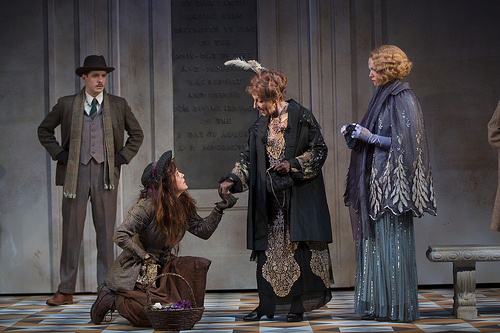
Photos by T Charles EricksonBy Scott Baldinger An impressively scaled neoclassical facade representing the opera house at Covent Garden, painted in a combination of pastel colors with mauve-toile surrounds, is the foreground of the first scene of Williamstown Theatre Festival’s brilliantly fresh and tantalizing production of Pygmalion, where Professor Higgins and his crowd are first accosted by the ungainly expressive flower girl, Eliza Doolittle.
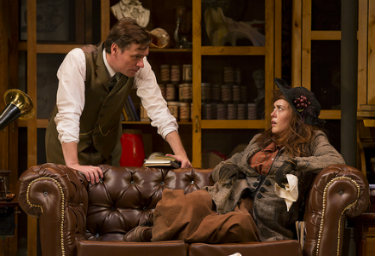
This is just one hint that this centenary version of the play by George Bernard Shaw, first presented in 1913, is thinking outside the My Fair Lady box. While certainly not treated like Major Barbara, with its grim Salvation Army milieu, neither is it an all-white, Cecil Beaton-costumed affair with stylish scenes at Ascot or grand fetes at Dutchess’s palaces; it’s a cooling in-between vision of style and incipient change. And that is very much in the spirit of Shaw’s genius: his ability to be deftly loquacious about incendiary topics such as arbitrary class distinctions, the heartlessness of so-called reformers and do-gooders, and, most importantly, the impossible position of women at that time, when equality of the sexes remained more of a crazy concept than anything close to reality. Everything is changing: Rich aristocrats can’t find taxis and have to take the bus, the poor think nothing of accosting, yelling, lecturing, and bilking their beautifully dressed “superiors," and the upper crust actually seem to be enjoying the interaction. All are harbingers of far more drastic changes to come, both in the play and in the world at large.
Whatever people may think of him now, Shaw was (and remains) the closest thing the British ever had to a Friedrich Nietzsche (of whom Shaw was a champion, with some objections), questioning the “herd morality" and creating social and philosophical paradoxes that form the very definition of Nietzsche’s revaluation of all values, particularly middle class ones. But, following in the footsteps of his artistic forbear, fellow Irishman and friend Oscar Wilde, Shaw did the Nietzsche thing with brilliant verbal acrobatics and all within the comedy-of-manners genre. (Sharp cookie though he was, Nietzsche himself could hardly be called a comedy-of-manners kind of guy; the poor man hardly ever hung out with anyone, whereas Shaw actually spent the night with Wilde before his conviction for "gross indencency," trying to convince him to leave the country.)
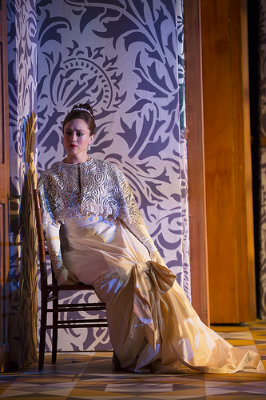
Director Nicholas Martin goes back to the spirit of the 1913 original, the version that first shocked everyone with the use of the expletive “bloody" and that had the temerity to suggest that even a guttersnipe like Eliza could be made to be as enchanting as the rest of ‘em. Martin gives it a stylishness that does Cecil Beaton and George Cukor (director of the film version of the musical) one better — from the dazzling Edwardian costumes by Andrea Hood to the ever more handsome revolving set pieces, designed by Alexander Dodge. But the play now is not just a romp with Freddie and company (he’s a surprisingly small character in the original); Martin strips away all vestiges of the musical in it, which, to my mind at least, is a good thing: My Fair Lady, wildly acclaimed in its time, has become just an everlastin’ brain worm that obscures Shaw’s original intentions.
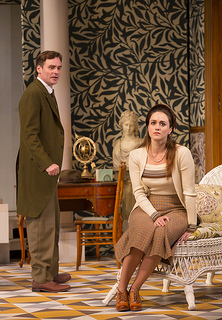
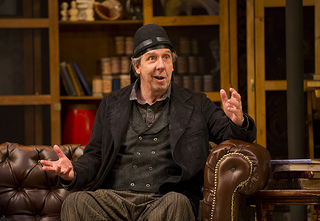
What we see here, particularly in the second act, is an almost August Strindberg-like struggle between a man and a woman: funny, painful, and infuriating at turns. In the role of Higgins, Robert Sean Leonard is, on the one hand, genuinely sexy and, on the other, almost Asperger’s-like in his inability to read social cues. Heather Lind, who plays Eliza, does Audrey Hepburn, Julie Andrews, and even Wendy Hiller one better. (Hiller starred with Leslie Howard in the wonderful 1938 film adaptation, the screenplay of which was penned by Shaw himself.) Lind gets funnier, and more formidable, the more ladylike she becomes, while maintaining a very unique, almost diminutive personality all her own. Paxton Whitehead, in the role of Colonel Pickering, is a charming rock of Gibraltar amongst the tumult. As Mr. Dolittle, Eliza’s father, Don Lee Sparks briefly steals the show, grandstanding against middle class morality. The rest of the cast are picture perfect as well. If only, like the wonderful Barrington Stage production of On the Town, its run now over, the play could run somewhere else forever. Pygmalion ends this Saturday, July 27, but, by hook or by crook, it must be seen. If you do, it will give you a buzz that will last for days. PygmalionWilliamstown Theatre FestivalNow - July 27, 2013