She's Reimagining the Rhinecliff Hotel With Art, Style, and Historic Care, One Room at a Time
The business’s new owner Michaela Carpenter is commissioning original work from regional artists for every room, then designing around it—and building a communal gathering space downstairs meant to turn the historic hotel into a home base for local makers.
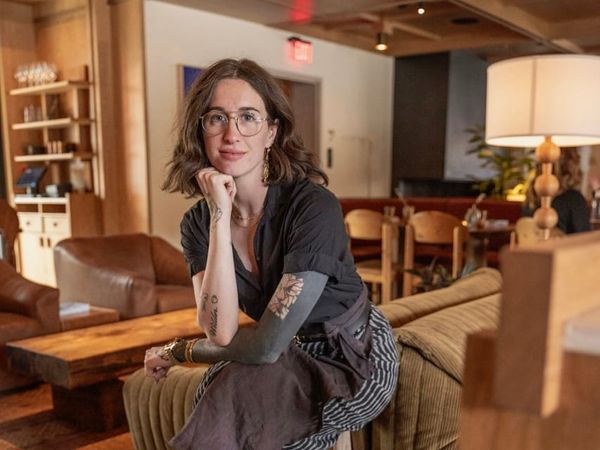
Pictured: Michaela Carpenter. Photo by Rachel Bock.
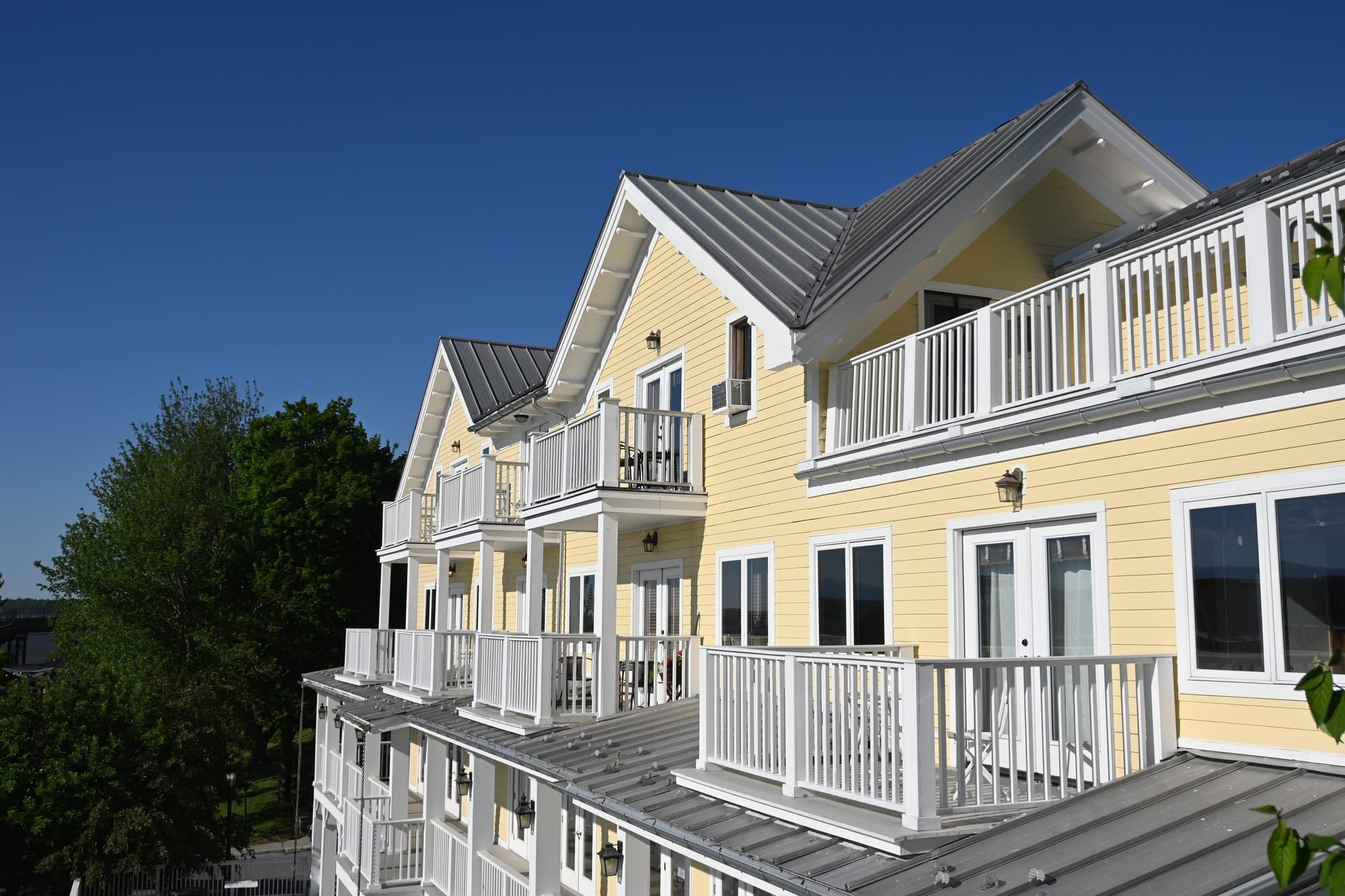
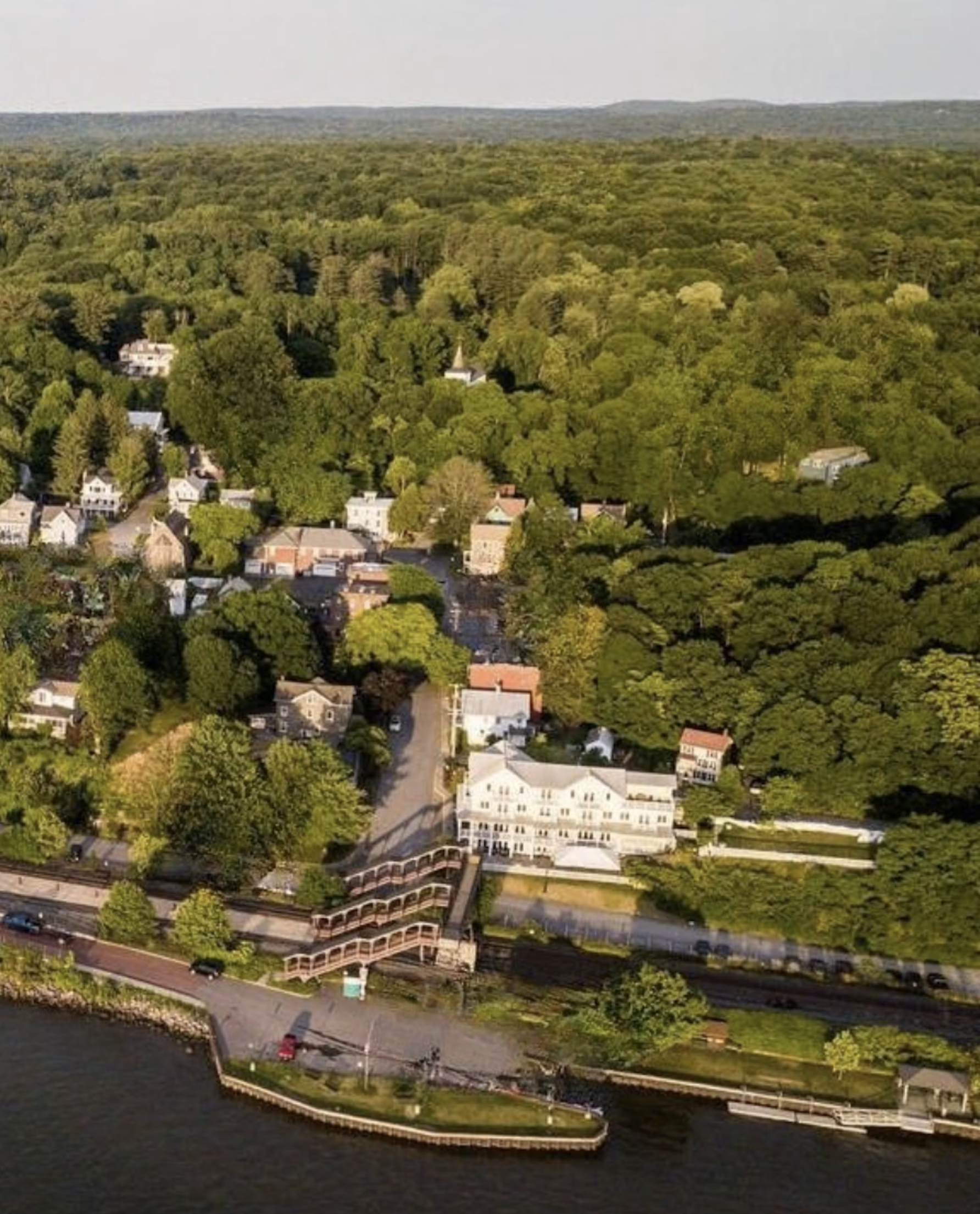
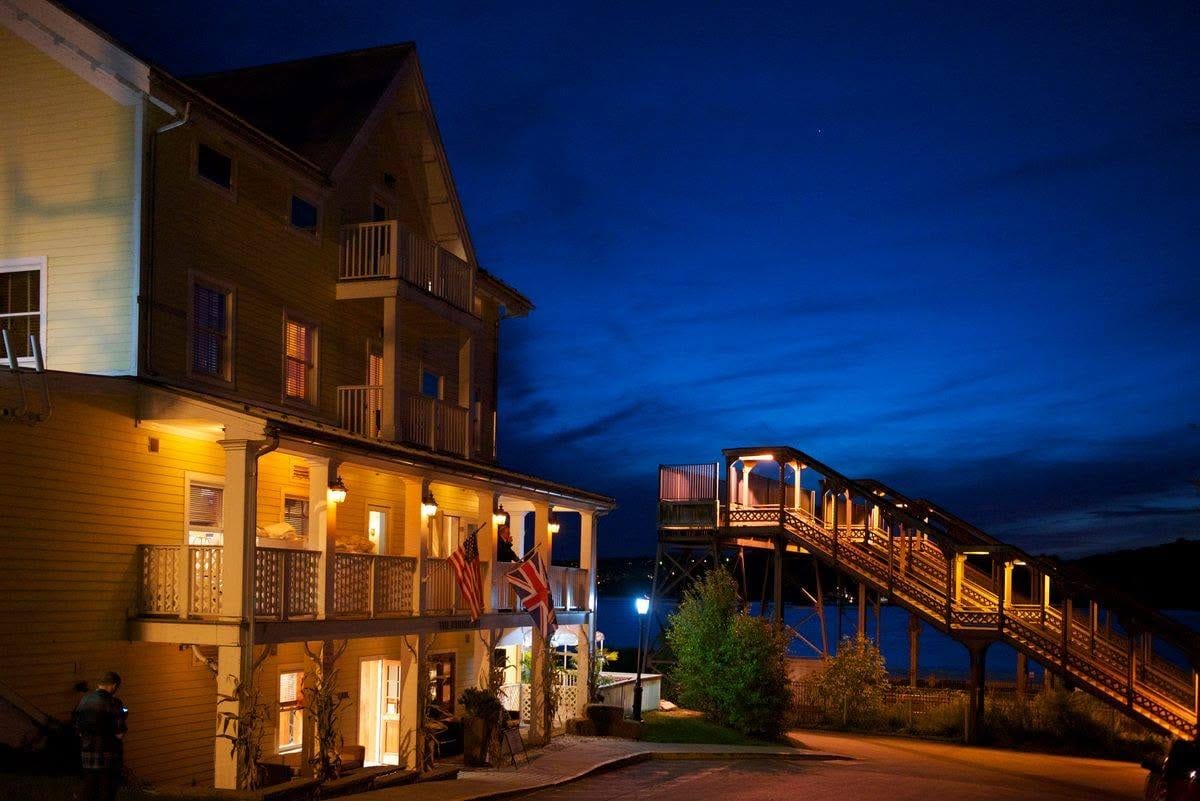
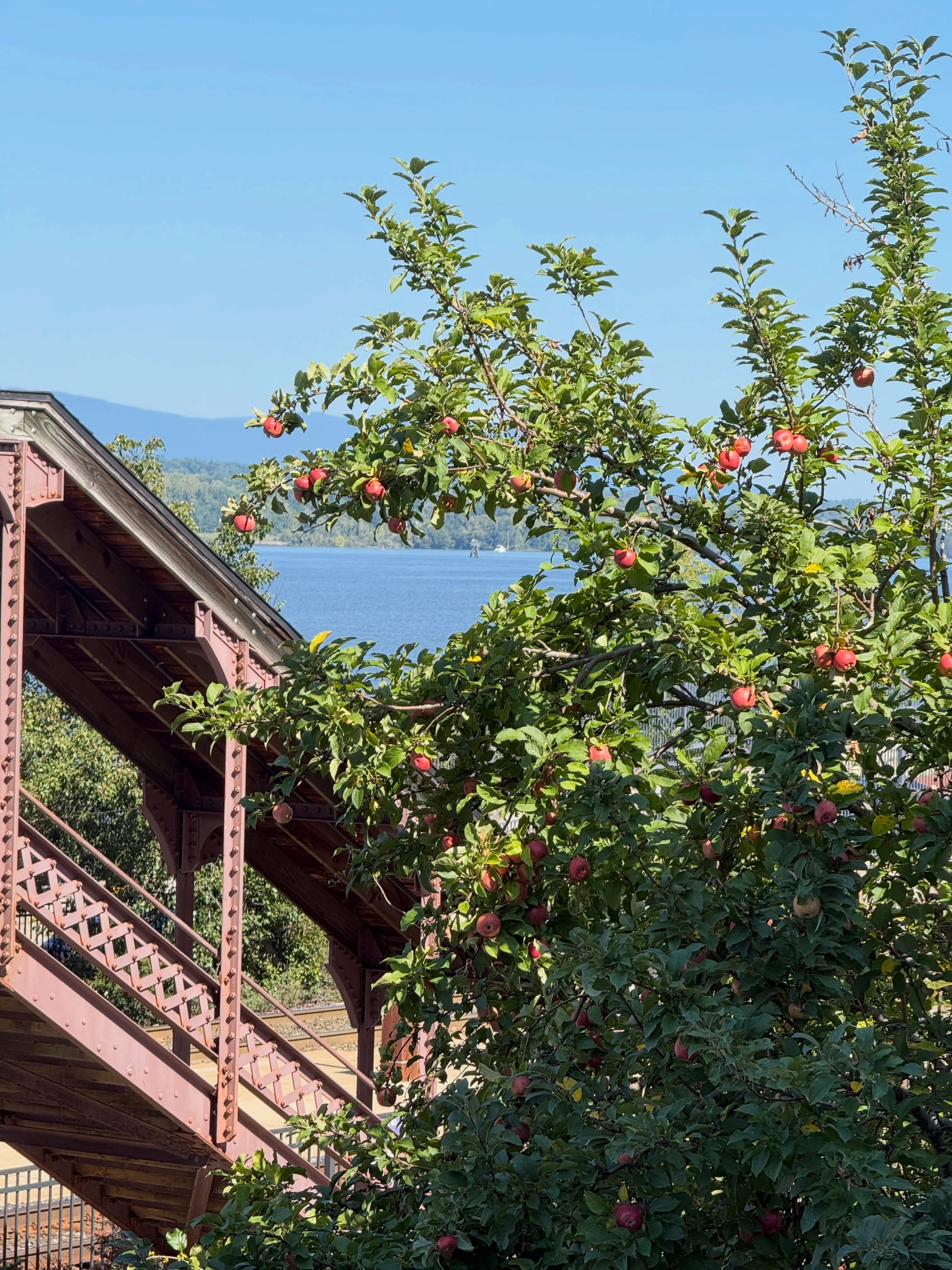
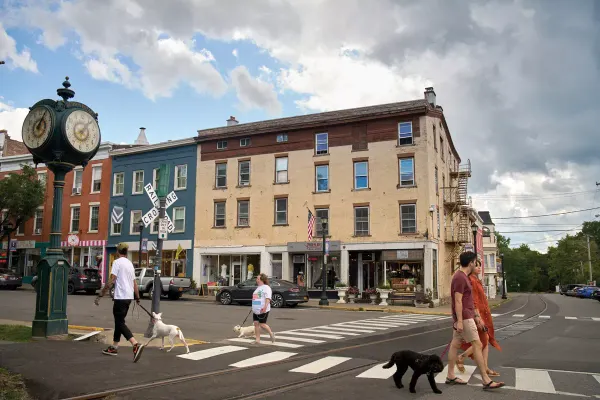
Outside the recently reopened historicRhinecliff Hotel, the Hudson River dominates your field of view, the Amtrak station creates kinetic energy, and the surrounding hamlet provides on-the-nose charm. Inside, the art comes first.
Each of the nine guest rooms is being restored, refreshed, and decorated around a commissioned piece by a regional artist, one room at a time. "Art is usually the thing that's bought at the end and slapped up on the wall," says Michaela Carpenter, who took over operations of the inn, built in 1854, earlier this year. "We're really putting the art and the artist at the center of the concept."
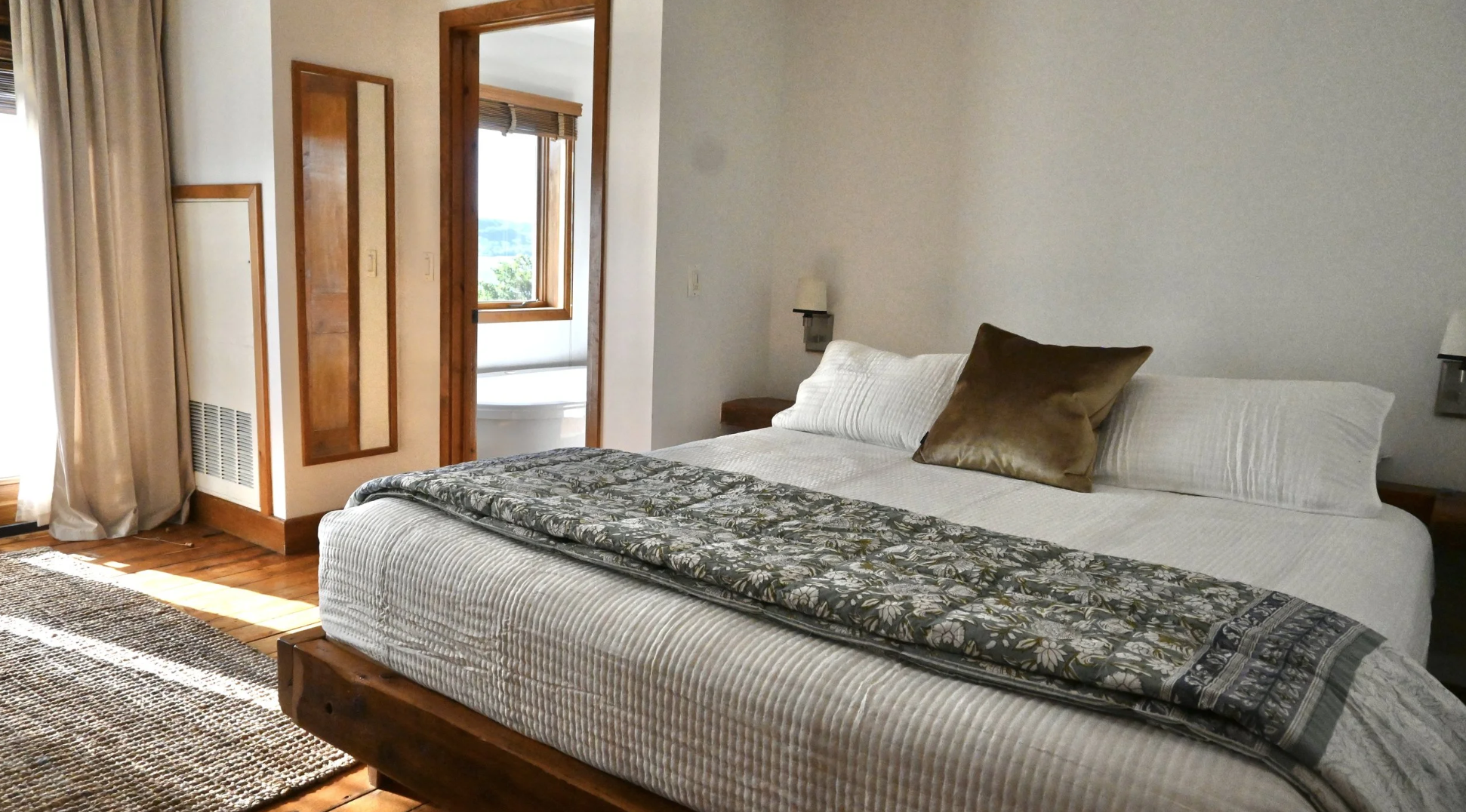
One suite, Room 204, is built entirely around work by photographer Matt Johnson: Carpenter pulled the greens and blues out of his pieces to paint the walls and choose the furnishings. Other commissioned artists include sculptor and woodworker Jordan Rosenau and New York carpenter Luke Mullaney, with more added as the collection grows. None of the work is for sale. "The property is investing in a collection of regional established and emerging artists," Carpenter says.
In the main floor former banquet room Carpenter is building the piece of the hotel she describes as its center of gravity: a communal gathering space she calls "the commons." The plan includes a cafe serving breakfast and lunch, a retail and gallery area, lounge and bistro seating, a wraparound porch, and a 28-person table built for group dinners, workshops, and artist talks. "We want the really cool community gathering, third-space vibe," she says, without the formality of a membership model she'd run in a previous business in Aspen. The commons is aimed at both hotel guests and the neighborhood. "That space is going to be open to the public, open to the community," Carpenter says.
The response to an open call for artists to fill that collection surprised her. "Our open artist call received over 600 submissions in a matter of three weeks," she says, "and we were completely unknown at that point." She takes it as confirmation of something she already believed about the region before she moved here a year ago. "I wholeheartedly believe that the Hudson Valley is the most creatively dense region outside of a metropolitan area in the country," she says.
Still Open, Not Closing
That vision is unfolding in real time rather than behind a closed door. If you'd heard the hotel planned to shut down this fall and winter for renovations, that plan has changed. "We’re not doing that anymore," Carpenter says. Rooms are open now at a reduced rate, and will stay open through the fall and winter, with Carpenter redoing them one at a time as she goes rather than closing the property down. The commons and cafe are still on track for a spring opening, alongside a slate of winter retreats meant to bring people to the property during the slower months.
Her Life Is Here Now
For Carpenter, the project is now her life. She and her family have put down roots in the region, making it much more than a hospitality venture."I really wanted to be somewhere that felt more creatively aligned with who I am," she says of the move from Aspen, where she'd spent most of her adult life running design and hospitality businesses. "Aspen doesn't have a lot of the same creative density that the Hudson Valley has. That for me was the biggest draw."
She'd never visited the region before the trip that convinced her and her partner, chef Barry Dobesh, to move. "It was a completely new area for me," she says. They landed in Rhinecliff last fall with their six-year-old son, Wilder, who's since started at the local elementary school. "He loves New York," Carpenter says. "The fact that there's so many other young families has been a profound shift in our day-to-day experience." She describes her own draw to the region as the same thing she's now trying to build into the hotel. "I think my reason for being right in the Hudson Valley is also what I'm translating into the hotel," she says, "which is highlighting and really championing artists and makers, so visitors are given the opportunity to encounter that within their hotel stay."
Five Years Empty
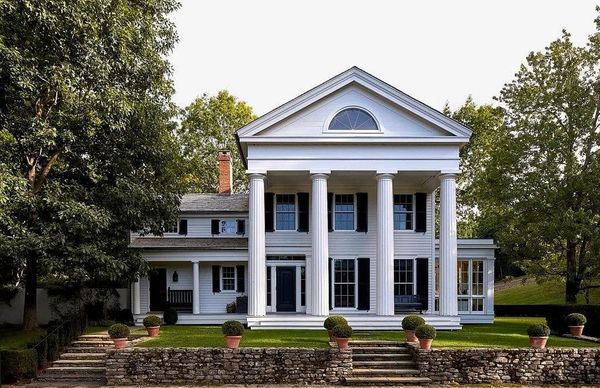
The Rhinecliff has been a hotel in one form or another since 1854, when architect George Veitch built it as a rooming house to serve travelers off the Rhinecliff-Kingston ferry and the newly arrived Hudson River Railroad. It fell into disrepair by the early 2000s, nearly condemned, before British brothers James and David Chapman bought it in 2003 and spent five years and roughly $5 million restoring it into a boutique hotel, reopening in 2008. The Bender family, longtime Rhinebeck-area developers, acquired the property around 2015. When the pandemic hit in 2020, the hotel stopped taking overnight guests entirely and sat that way for five years, used only occasionally for community events while owner Elijah Bender worked to secure enough on-site parking to attract a new operator.
Carpenter and Dobesh signed a 10-year lease with Bender this past May, with an option to renew for another 10. The two met working in hospitality in Aspen; Dobesh, a Michelin-trained chef, spent 14 years as culinary director for Aspen's CP Restaurant Group and has opened roughly 16 restaurants over his career. Carpenter had run a design boutique, a coffee shop, and a members' social club there before becoming creative director at the Aspen hotel Mollie.
What's Here Now
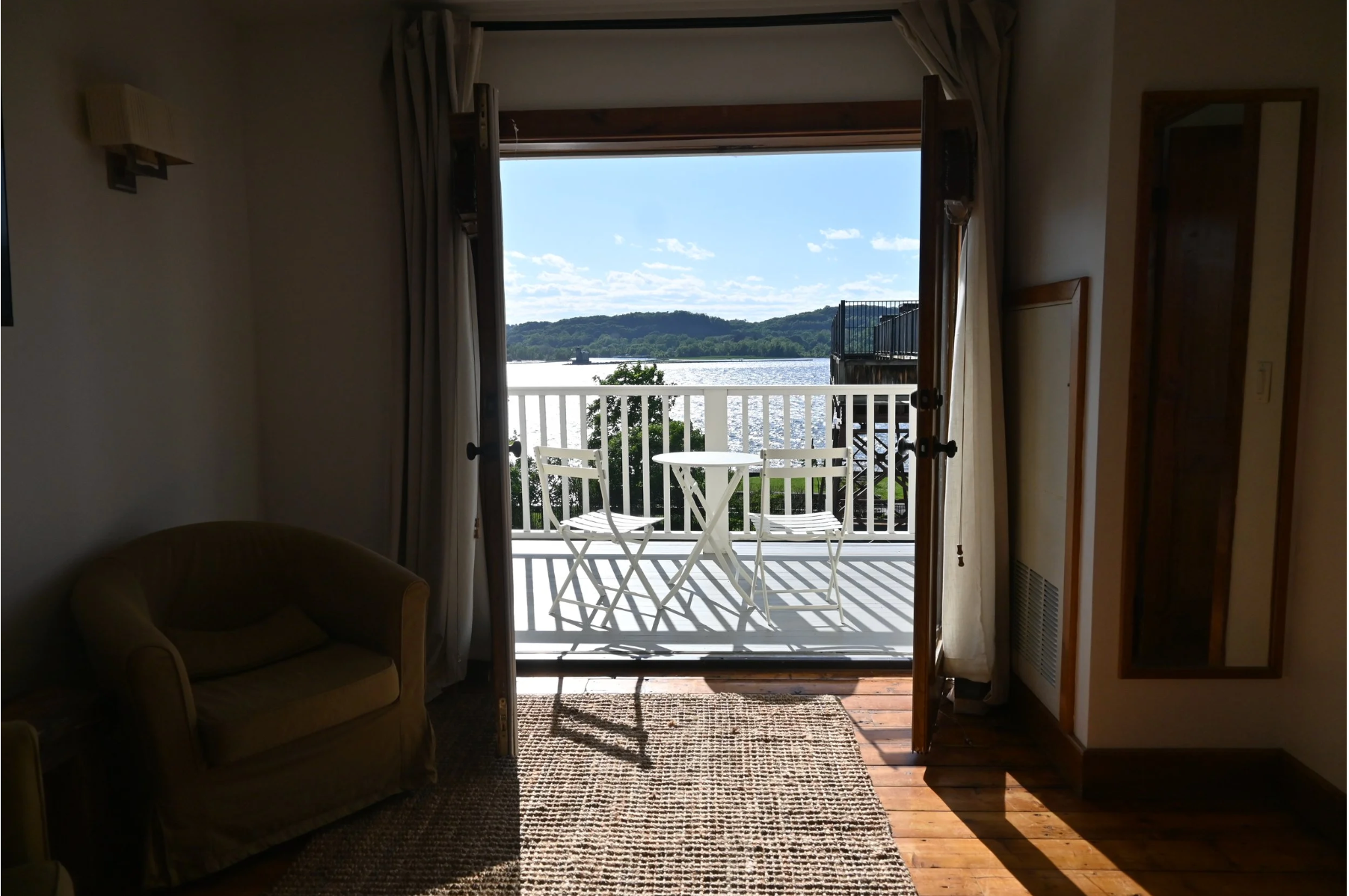
The nine guest rooms have been open through the summer, each with original wood flooring, exposed beams, a private patio, and a panoramic river view. Carpenter describes the current pricing as intentionally modest while the hotel is just starting it's transformation. "We've just been underpricing our rooms, and it seems to really work for our guests," she says. "You still have a beautiful room, you still have the view." The building's proximity to the Amtrak tracks below, once a liability, is seen these days as a selling point. "Ninety-five percent of our guests find the train very charming and romantic and are not bothered at all," Carpenter says, noting there are earplugs available for light sleepers and clear communication before arrival. The hotel’s modest lawn is being converted into a relaxing space and a site for small ceremonies and “elopements,” a niche Carpenter thinks suits a nine-room property better than a full wedding operation. "If someone wants to elope, they don't need a 20-room block," she says.
That same instinct toward doing less, more deliberately, shapes how she talks about the building's most recent past. The 2008 renovation, while well received in its time, isn't entirely what she wants to preserve. "Some of it needs to be un-renovated," she says. "It was the time period, but it’s time for an update." Her approach going forward is largely subtractive before it's additive: stripping back toward the hotel's original character, then layering in the commissioned art and antiques around it.
The Rhinecliff Hotel, 4 Grinnell Street, Rhinecliff, NY 12574
Rooms are open now; the commons and cafe are targeted for a spring opening, alongside a winter retreat calendar to be announced. Book attherhinecliff.com.
After a decade of writing for RI (along with many other publications and organizations) Jamie took over as editor in 2025. He has a masters in journalism from NYU, a wonderful wife, two kids and a Carolina dog named Zelda.