Sonny Rollins Dies at 95: Jazz Legend Lived Over 50 Years in Germantown
The jazz giant passed May 25. He had moved to Woodstock late in life, after half a century in Dutchess County.

The jazz giant passed May 25. He had moved to Woodstock late in life, after half a century in Dutchess County.
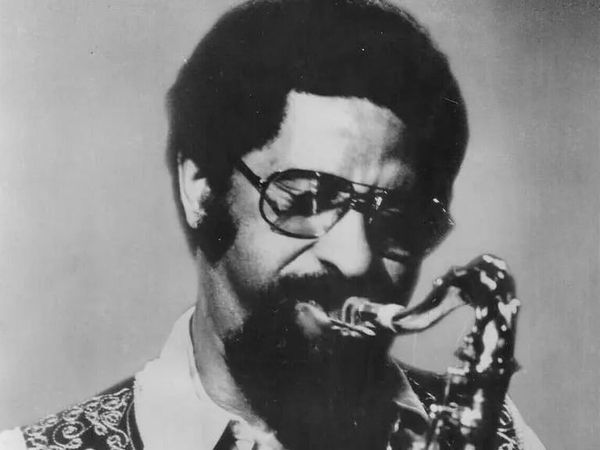
The Colossus has left us.
Sonny Rollins, one of the greatest jazz musicians of all time, passed away at his Woodstock home on May 25. He was 95 years old.
The most important tenor saxophonist of the bebop and hard bop eras, Rollins was also frequently called “the greatest living improviser.” His robust tone and personalized style of building on and stretching themes while introducing into them notes and turns that were unfailingly surprising has influenced generations of musicians. As a composer, he crafted several works that would become jazz standards, among them “Oleo,” “St. Thomas,” “Doxy,” and “Airegin,” and his groundbreaking 1950s albums like Work Time (1955), Tenor Madness, Saxophone Colossus (both 1956), and Way Out West (1957), the latter featuring then-novel adaptations of the country and western classics “I’m an Old Cowhand (From the Rio Grand)” and “Wagon Wheels,” are touchstones. Discovering them on my own in the 1980s, when I was in my early 20s, greatly widened my understanding of music, as I know they did for many others.
Interviewing Rollins, who was then living in the house in Germantown that he and his late wife, Lucille, purchased in 1972, for the May 2011 issue of Chronogram remains a high point of my life. Running into the jazz giant occasionally at the health food store in Hudson when I lived there was magic as well. In 2013, when his health began to decline and he started to wind down his playing, Rollins moved to Woodstock, a few minutes from Opus 40, where he had played the memorable 1986 concert captured for the 1988 film Saxophone Colossus (the movie will be shown by Upstate Films at the site of the performance on June 5).
But before leaving the eastern side of the Hudson River, one of the characteristically altruistic things that Rollins did was play an event at the late, great Club Helsinki to benefit Columbia Memorial Hospital. After delivering an incredible 90-minute set, the saxophonist, then 81, retreated to the venue’s green room, where the only other living being was Helsinki owners’ Marc Schafler and Deborah McDowell’s dog. With Schafler surreptitiously listening through the cracked door, the jazz master gave a private encore concert for the curious animal that lasted for several minutes. Then he packed up his horn, went out to say goodnight to his sidemen and the club’s staff, and left.
“I’ll know when I find the ultimate sound,” he told the New York Times in 1984. “Because I’ll be completely fulfilled just by the sound of it and by what I’m able to do with it instrumentally.”
And now Sonny Rollins is off on the next phase of the search for that ultimate sound. Something tells me he’ll find it.