“Technologies of Relation” at MASS MoCA: Techno-Organic Symbiote, Know Thyself
the exhibition does not attempt to adjudicate AI’s moral standing. Instead, it situates contemporary technological systems inside the most intimate architectures of daily life.
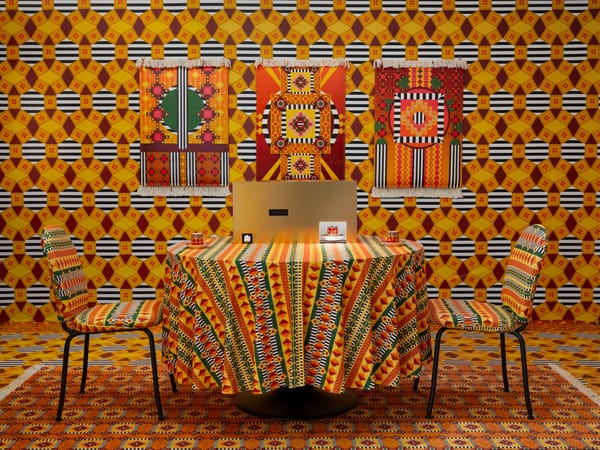
Բաժակ Նայող (One Who Looks at the Cup). Mashinka Firunts Hakopian with Dahlia Elsayed, Andrew Demirjian, and Danny Snelson. Installation view from All Watched Over By Machines of Loving Grace, REDCAT, 2025. Photo by Yubo Dong.
The rhetoric around artificial intelligence calcified quickly in public discourse around extremes. For some it’s a liberator from mundane tasks, for others it’s the fiddle we all play as Rome burns. But we all know, through our own personal relationships with technology, that this is not a binary issue. Are we allowed to appreciate AI’s efficiency and jaw-dropping complexity while it syphons real resources, empowers the surveillance state like never before, and imperils the creative economy? “Technologies of Relation,” a group exhibition opening at MASS MoCA this weekend, is not interested in supplying audiences with an answer. But the artists are glad we’re asking.
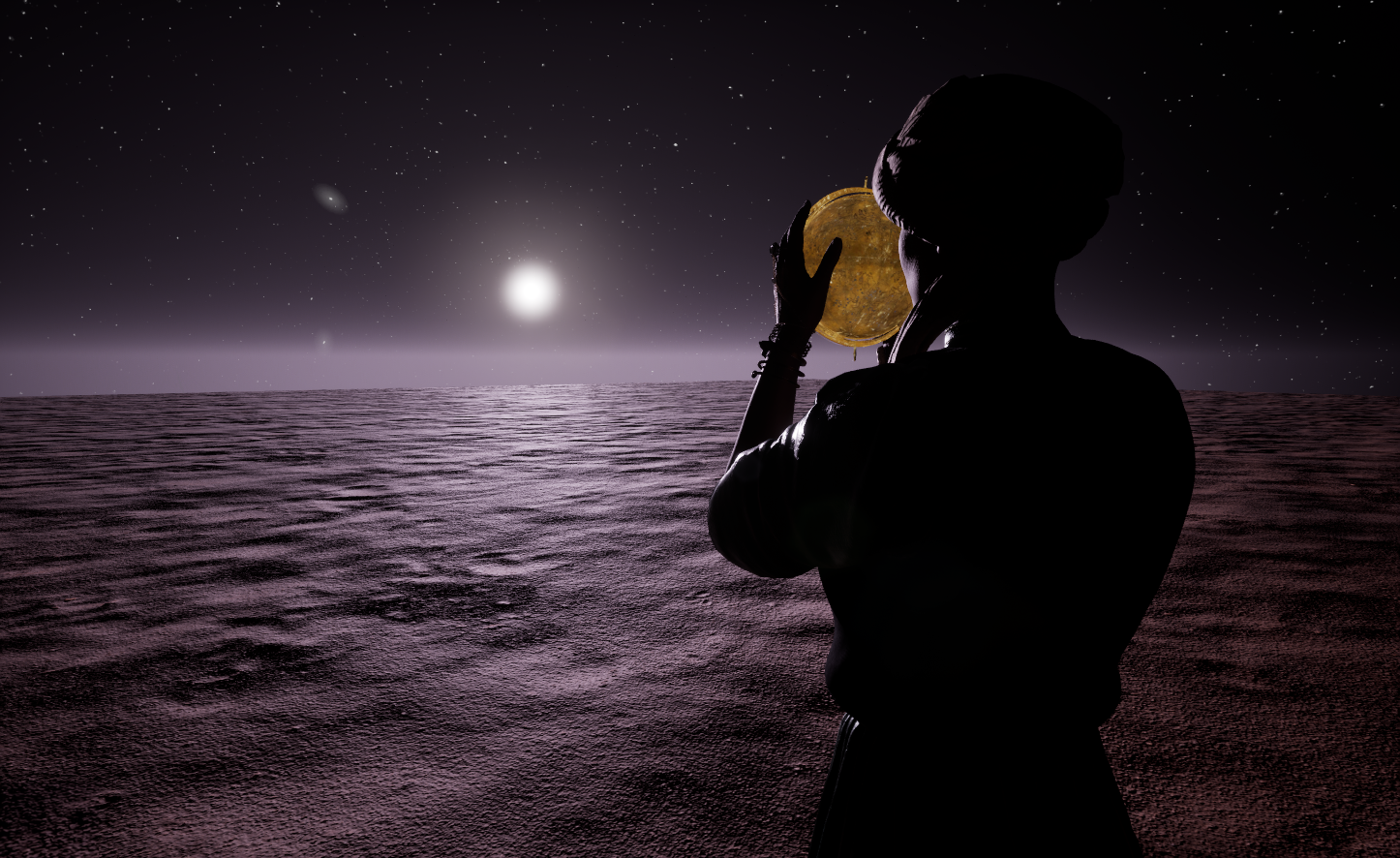
Morehshin Allahyari, Speculations on Capture, snapshot from film, 2024, courtesy of the artist and V&A.
Curated by Susan Cross, MASS MoCA’s director of curatorial affairs, the exhibition does not attempt to adjudicate AI’s moral standing. Instead, it situates contemporary technological systems inside the most intimate architectures of daily life—kitchens, living rooms, shared cultural memory—and asks viewers to use the gallery to consider what kind of relationship they are already in with this new, invisible force.
“Technology is embedded in our lives,” Cross says. “But I think some of us just accept it without kind of poking it and examining it. Is it God or a devil? Is it an existential threat to humanity, or is it like an economic driver, or even more so, like a savior?
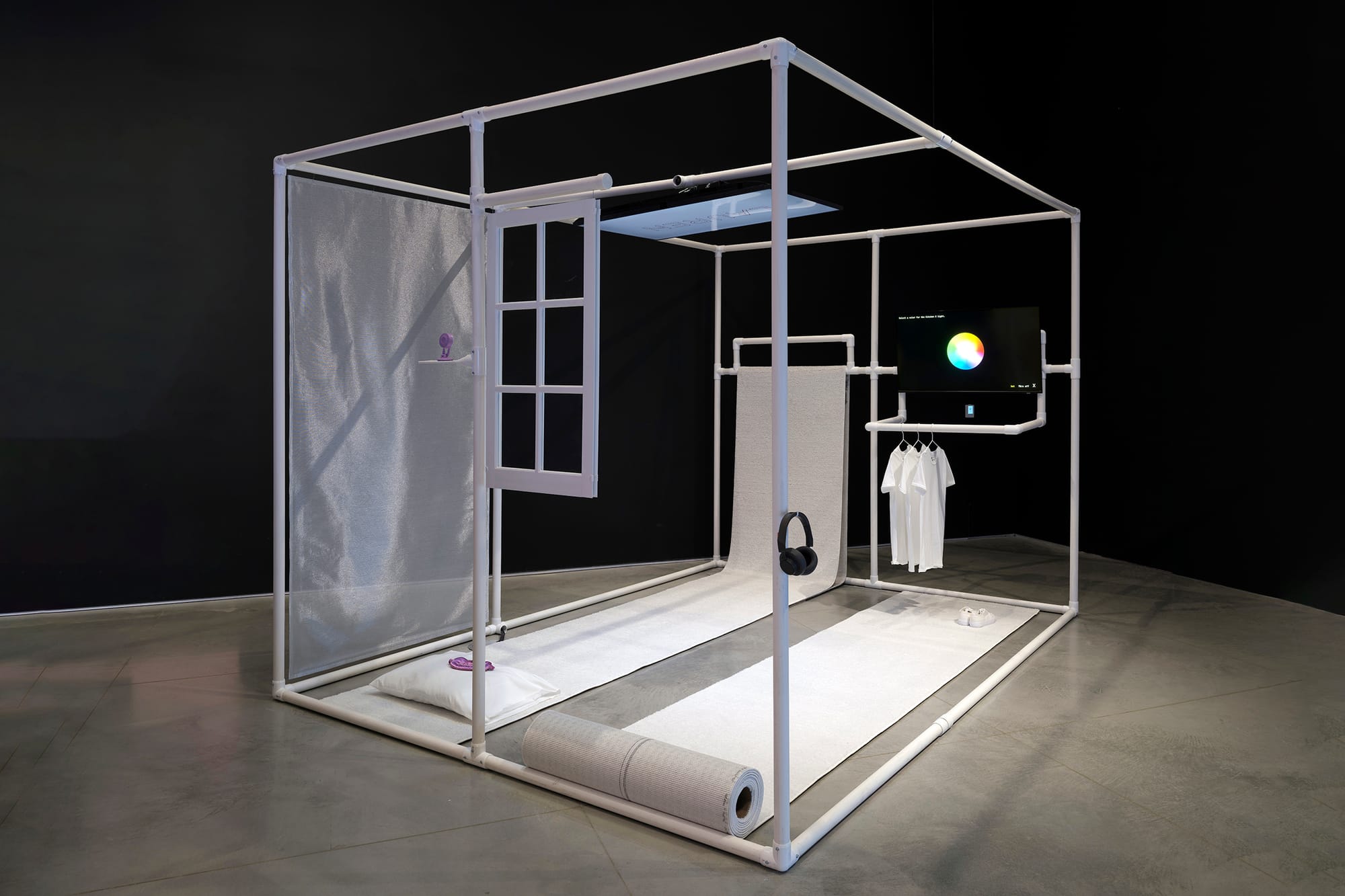
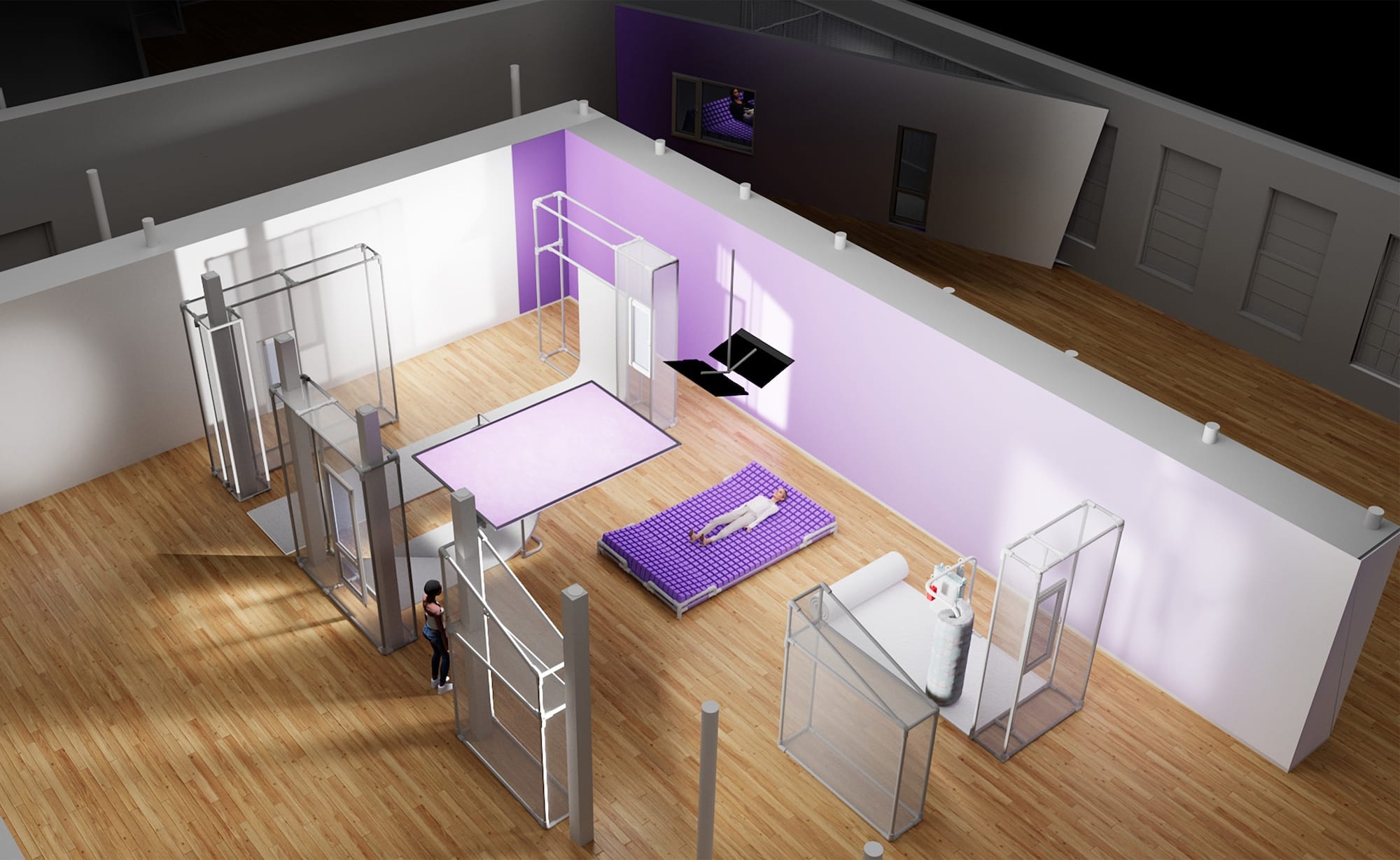
Lauren Lee McCarthy. LAUREN, 2017-2023. “Smart home” in gallery, with custom-designed, networked smart devices (cameras, microphones, light switches ) and bed, furniture, lights, along with video, and human “smart device.” 7 x 6 x 6 feet. Installation view in the exhibition "What Models Make Worlds, Critical Imaginaries of AI" at the Ford Foundation Gallery, 2023. Courtesy of the artist.
“I don’t think the works in this exhibition lead to one answer,” she continues. “But it makes [visitors] think about it, and they can have their own viewpoint at the end of it.”
On view beginning February 21, “Technologies of Relation” brings together more than a dozen artists working across installation, performance, textile, sculpture, video, and code to examine how digital systems shape—and are shaped by—human relationships. It runs through spring 2027.
Intelligence in the Living Room
The gallery is strewn with installations of medium-bending work by artists like Morehshin Allahyari, whose multi-channel film projects trace technological histories through colonial and diasporic lenses. Elsewhere, Pelenakeke Brown links Samoan tattooing traditions onto to digital networks and Taeyoon Choi’s poetic coding practice bridges comics, textiles, and computation. Neema Githere’s speculative “Data Healing” environments invite participants to rethink algorithmic care, and Kite engages Lakota ontologies to reimagine artificial intelligence. Among these and other arresting works is a near-future living room for you to speak with.
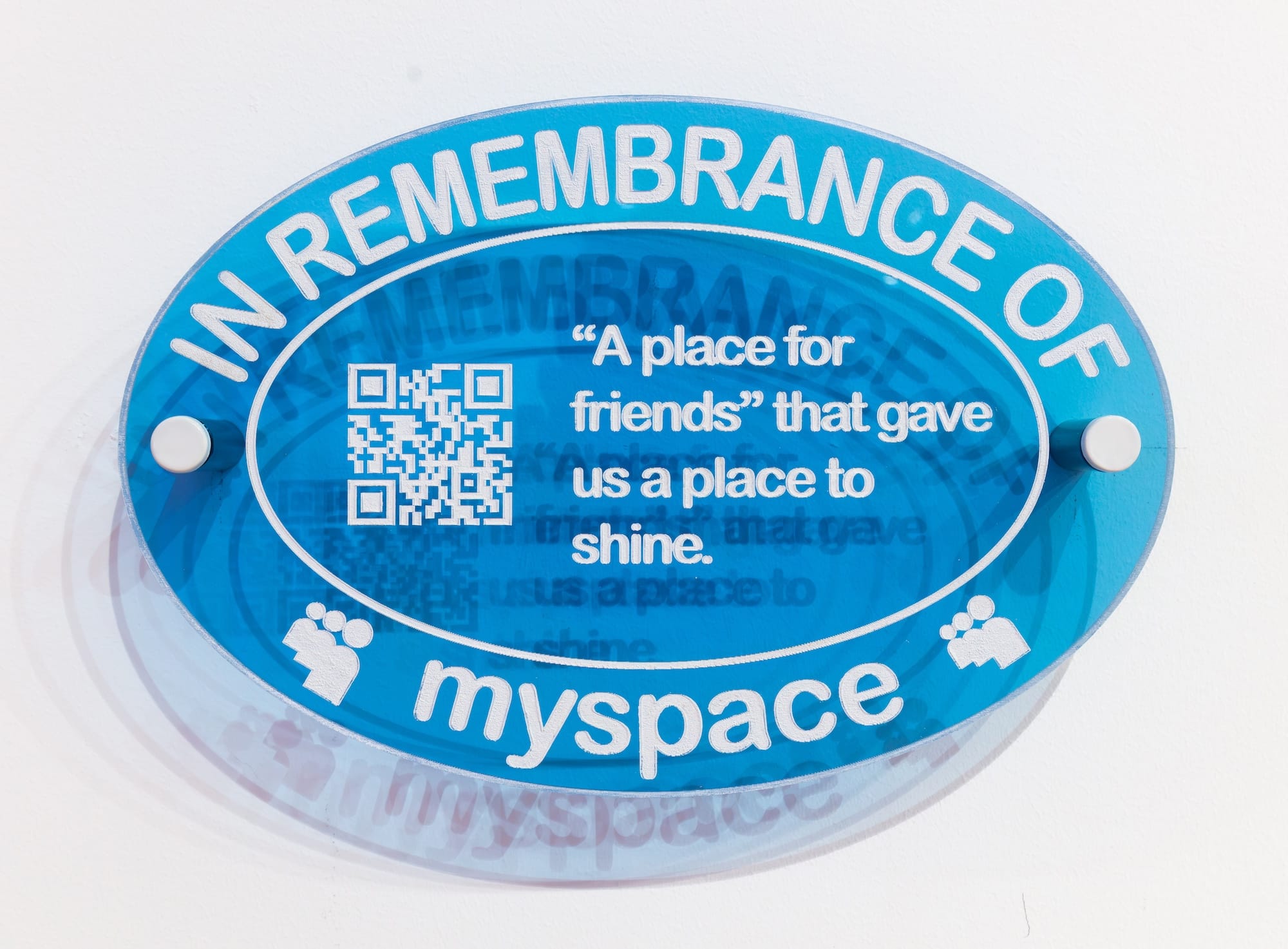
Roopa Vasudevan, Requiem for the Early Internet, 2022/2026. Acrylic plaque, mobile website. 8 × 12 inches. Courtesy of the artist. Photo: Jon Verney.
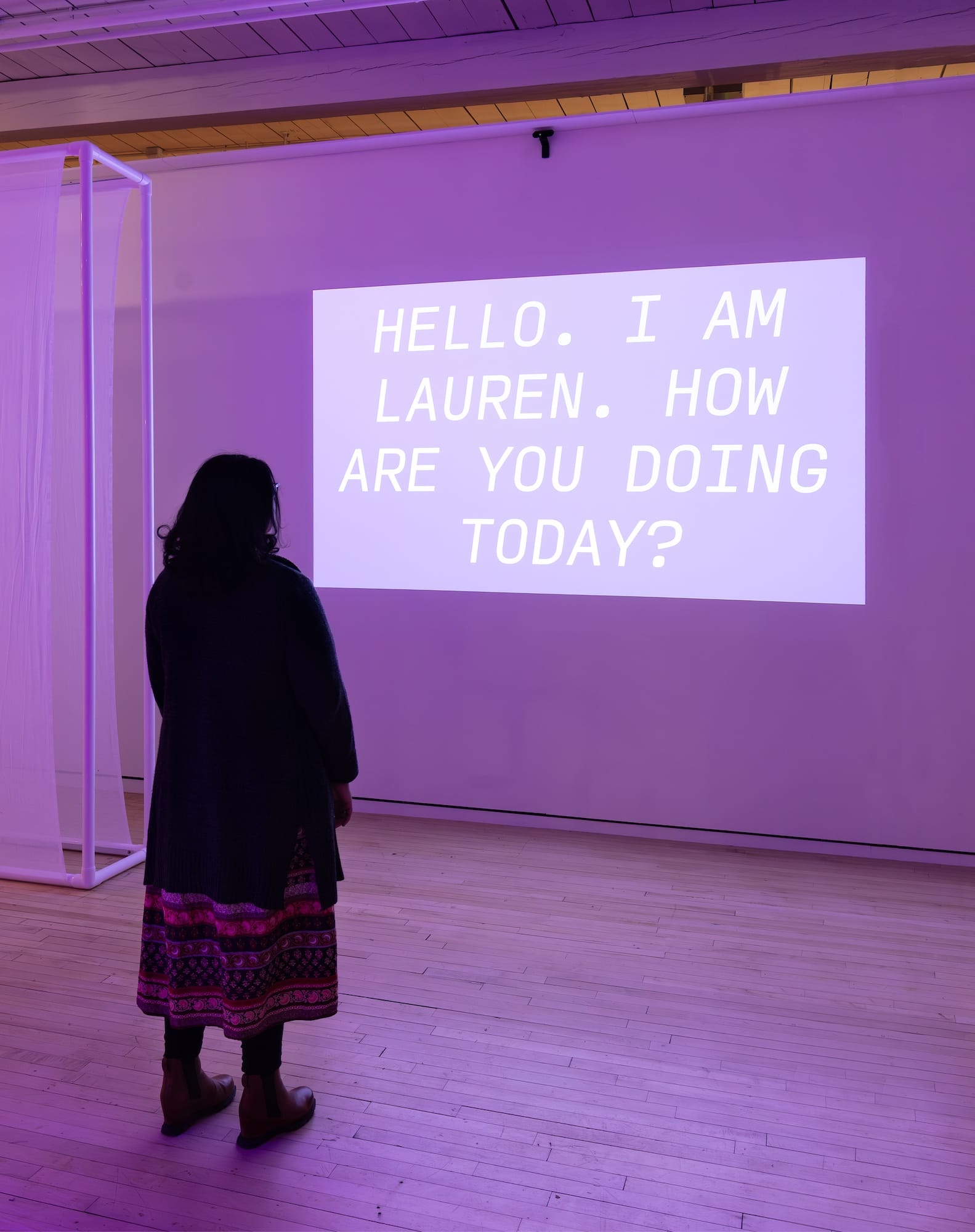
Lauren Lee McCarthy’s Lauren: Anyone Home? puts human response back in control of an automated system already widely accepted to disquieting effect. Part of a decade-long body of work in which McCarthy explores replacing Amazon’s Alexa with herself, the installation constructs a near-future domestic environment inside the museum. Visitors enter a space (daily activation from 12 to 3pm) that resembles a living room. Lights shift. Music adjusts. Text appears. Behind a wall, in view from other vantage points, a real human attendant monitors cameras and microphones, responding to the guest in real time.
No longer automated, McCarthy is reembodied. In earlier iterations of the project, McCarthy entered private homes, installing devices and remotely controlling lights, appliances, and sound. At MASS MoCA, the domestic space is re-sited in the gallery, but the central tensions remain.
Lauren Lee McCarthy, LAUREN: Anyone Home? (detail view), 2024 – 2026. Performance-based installation with smart devices (cameras, microphones, lights, computers, speakers) with bed, seating mats, clothing, and video, with sound. Photo: Jon Verney.
“It’s really important to me that it’s not didactic,” McCarthy says. “I have my own opinions about technology and where it’s going and all of that, but I think what I want from these installations is to create a space where people can ask their own questions and form their own opinions.”
The work’s restraint instigates a flurry of electrical stimuli in our human brains, now forced to contemplate the trade-offs between convenience and intimacy, automation and attention, consistency and care.
“I think we are starting to understand that it takes so many forms,” she says. “It touches us in so many ways, throughout our days and throughout our life.”
The gallery serves as an arena in which viewers can experience, in an unhidden way, the subtle choreography of surveillance. Are we now living in a world where we’d rather be helped by a machine that is constantly monitoring us than interact with another person?
Lauren Lee McCarthy, LAUREN, rendering courtesy of the artist.
For McCarthy, the installation is also about agency. “It’s about autonomy,” she says. “It’s about this idea that technology doesn’t have to be something that we just have to consume as is. It can be something that we kind of poke around at, or misuse, or interpret for ourselves, or hack, or break.”
Dwelling with Uncertainty
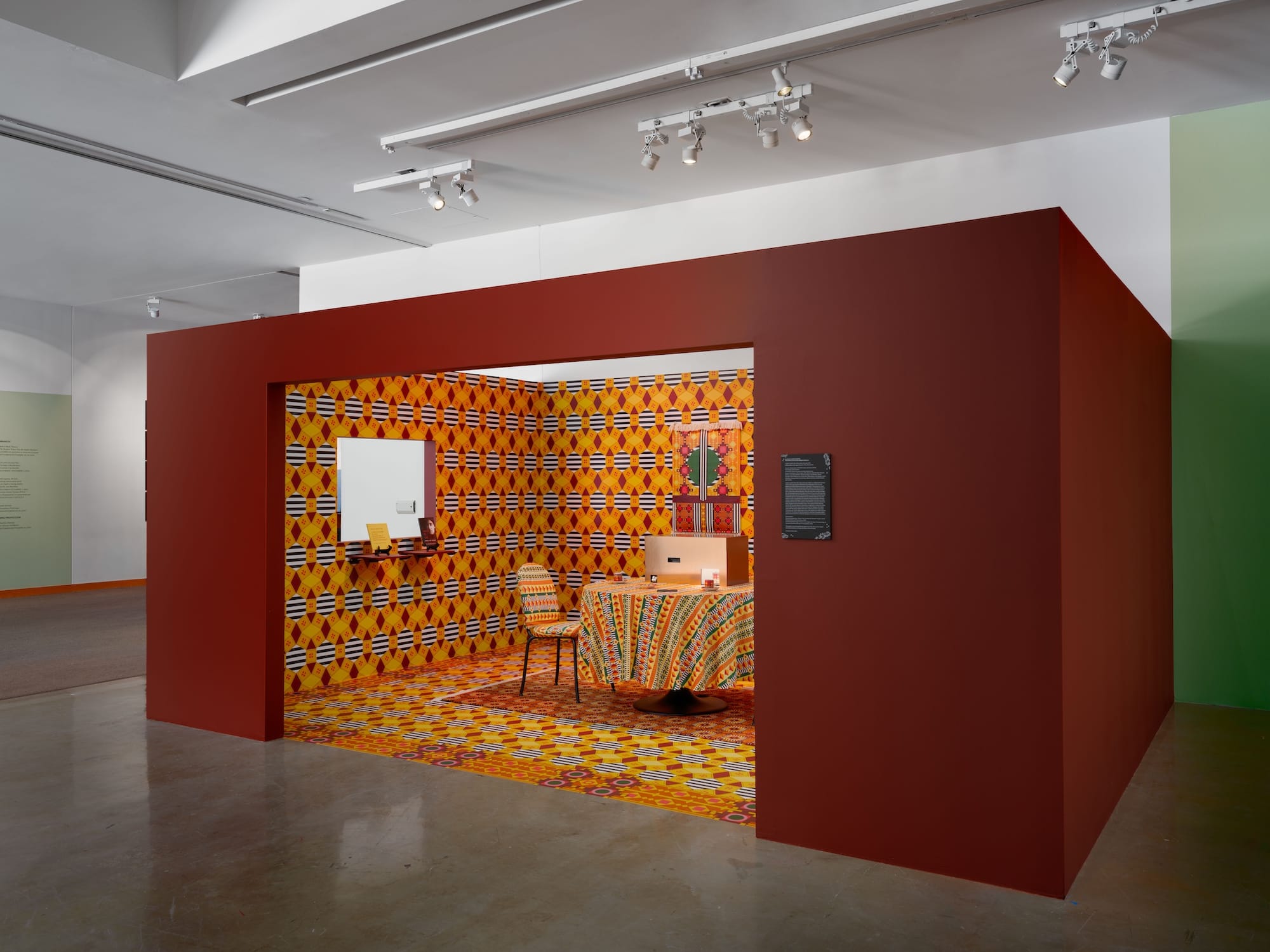
If McCarthy’s work dramatizes the interpersonal dimensions of AI, Mashinka Firunts Hakopian’s installation interrogates its structural and spiritual underpinnings. Created in collaboration with Danny Snelson, Dalia Elsayed, and Andrew Demirjian, the piece draws on the tradition of Armenian coffee grounds reading. In a disembodied kitchen drenched in historic Armenian patterns, a program analyzes patterns left in the bottom of visitors’ cups and retrieves pre-authored “predictions” compiled by Hakopian from interviews and poetry within specific diasporic communities.
Բաժակ Նայող (One Who Looks at the Cup). Mashinka Firunts Hakopian with Dahlia Elsayed, Andrew Demirjian, and Danny Snelson. Installation view from All Watched Over By Machines of Loving Grace, REDCAT, 2025. Photo by Yubo Dong.
Hakopian resists algorithmic neutrality. The model is neither generative nor autonomous in the conventional sense; its outputs are scripted, collated, and community-sourced. Authorship remains visible.
“We’re certainly at a place in our socio-technical landscape where questions are being generated at a rate much faster than we can answer them,” she says. “And what I so appreciate about this show is that it is leaving space open for those questions and for both the artists and the visitors to the show to dwell with those questions and with the uncertainties that they invoke.”
Dwelling itself stands in contrast to what she describes as the “logic of techno solutionism”—the belief that complex social and political problems can be resolved through new tools like the increasingly pervasive, passive surveillance apparatus.
Her analysis reaches beyond paying attention to your individual privacy settings. “We live in a moment where the dominant narrative is that we’ve been stripped of the power to refuse being watched” she says.
The right to opt out, to withhold consent, has eroded through normalization and is already, functionally gone.
By foregrounding collaborative authorship and community-generated data, Hakopian’s installation proposes a different model of technological imagination.
The Myth of Progress
Throughout “Technologies of Relation,” artists look backward as often as they look forward. The exhibition gestures toward earlier technological moments—the utopian promise of the early internet, pre-digital forms of inscription and ritual—creating a symphony of counterpoints. Examined in this light technological progress and evolution looks less like an unstoppable train on a straight track and more like a trillion pollywogs all wriggling out of the water at once.
Many of the artists, Cross notes, are themselves technologists, writing code and teaching digital systems even as they return to painting, drawing, and textiles. The exhibition’s material range, including analog and digital creations, both handcrafted and computational, shows it’s reductive to choose a side.
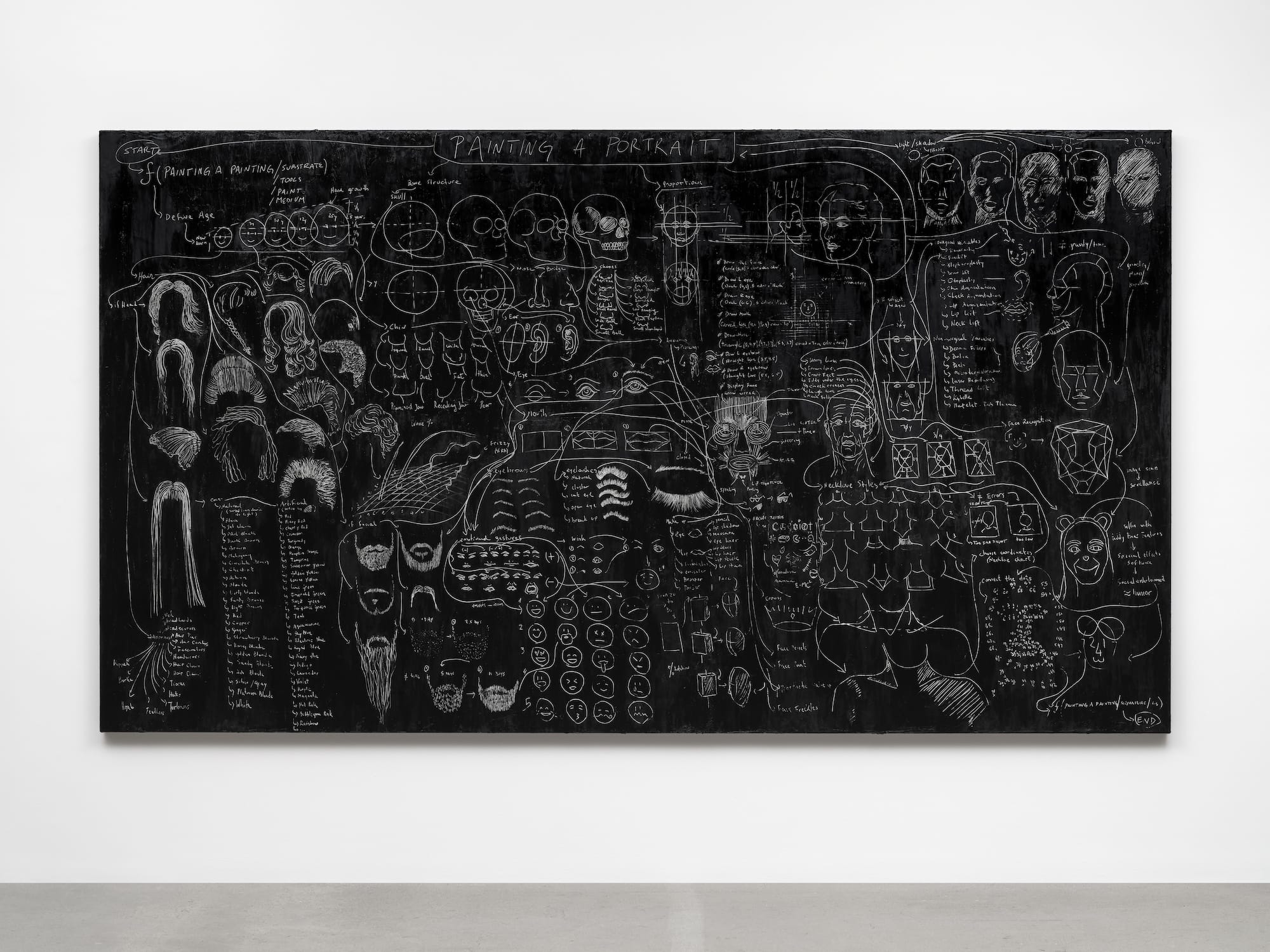
Analia Saban, Flow Chart (Painting a Portrait), 2023. Oil stick on encaustic paint on canvas, 72 x 128 x 2 inches. Courtesy of the artist, Tanya Bonakdar Gallery, and Sprüth Magers.
The exhibit’s openendedness is also a product of Cross’s explicit curatorial stance. “A group exhibition should never be a collection of illustrations for an idea that the curator already had,” she says. Meaning emerges in the encounters between artists, viewers, and the work itself.
At a moment when both corporate and governmental technology infrastructures are seeking our data 24/7, “Technologies of Relation” insists that our relationship to technology is neither abstract nor inevitable. It is lived, it is intimate, and it is still open to revision.
“Technologies of Relation” is open Wednesday through Monday from 10am to 5pm at MASS MoCA, 1040 MASS MoCA Way, North Adams with additional talks and activations scheduled throughout the run of the exhibition.
After a decade of writing for RI (along with many other publications and organizations) Jamie took over as editor in 2025. He has a masters in journalism from NYU, a wonderful wife, two kids and a Carolina dog named Zelda.