The Understory Invests $4 Million in Hudson Valley Resilience
The Understory’s H.E.R.E. initiative connects local knowledge, grantmaking, and storytelling to strengthen the Hudson Valley.

The Understory’s H.E.R.E. initiative connects local knowledge, grantmaking, and storytelling to strengthen the Hudson Valley.
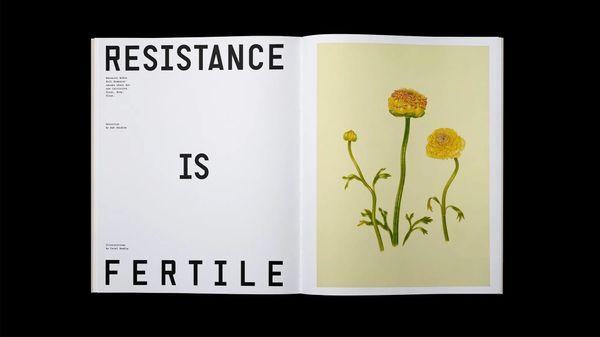
“Resistance Is Fertile,” an interview with botanist Robin Wall Kimmerer, appears in the inaugural issue of H.E.R.E. Journal, The Understory’s new publication exploring the people, species, and possible futures of the Hudson Valley. Illustration by Carol Woodin.
What would it take for the Hudson Valley to remain a viable place to live?
The question encompasses a daunting collection of problems: housing costs driving residents from their communities, farms struggling to survive, biodiversity loss, social isolation, and increasingly volatile weather. Those pressures are usually addressed separately, divided among government agencies, nonprofit specialties, and philanthropic portfolios. Recently launched nonprofit The Understory begins from the premise that they belong to the same regional system—and that the people closest to them should help decide what happens next.
Formerly known as Partners for Climate Action Hudson Valley, The Understory supports locally led efforts to care for the region’s communities and ecosystems. Its new Hudson Estuary Resilience Effort, or H.E.R.E., brings together practitioner networks, a $4 million grant program, and a print journal devoted to exploring the people, species, history, and possible futures of the Hudson Valley.
“Resilience” is broad enough to accommodate almost anything. The Understory cofounder Matt Stinchcomb defines it first as a community’s ability to prepare for and recover from the shocks already arriving. “What happens when it’s the next extreme rain event and our streets get flooded out?” he asks. “What happens when it’s the next major heat storm or wildfire—things that people aren’t totally even accustomed to here yet, but are coming for sure?”

The Hudson Valley, he argues, is not especially well prepared. Physical infrastructure is part of the problem, along with the region’s social and economic divisions. Recovery depends partly upon whether people know their neighbors. “Do we know each other?” Stinchcomb asks. “Are we going to take care of each other?”
Over time, that idea transformed the organization. Stinchcomb and Bob Dandrew founded Partners for Climate Action in 2019, initially supporting climate policy, building decarbonization, habitat creation, stream restoration, and other environmental work. Their guiding question was, “What does a localist approach to a global issue look like?”
The answer grew beyond conventional climate action. “We pretty quickly realized that it was disconnection that was at the root of all these problems,” Stinchcomb says. “Disconnection from ourselves, disconnection from our neighbors, disconnection from the earth.”
The organization increasingly focused on ecological work that also built relationships: restoring streams, developing pollinator habitats, and helping people care for shared spaces. “Getting people to put their hands in the earth and get connected to their place and meet their neighbors—that’s also going to be the most important thing,” Stinchcomb says.

That broader mission prompted the transition to The Understory. The name refers to the shrubs, saplings, and other vegetation growing beneath the forest canopy—the life closest to the ground and the source of the forest’s future. “What hasn’t changed about any of our work is it’s about what’s on the ground,” Stinchcomb says. “It’s the forest of the future.”
Much of that ground-level stewardship is performed by people serving on local committees, municipal boards, and volunteer projects. “There are all of these small groups for whom $10,000 or $20,000 is a game changer,” Stinchcomb says.
The Regional Resilience Grants put that philosophy into practice. The $4 million pilot program will award nonprofits between $10,000 and $200,000 for projects involving culture, ecology, food and farming, and shelter. Applications are open through November 18, with grants announced in January 2027.
The priorities emerged from several years of gatherings that brought regional practitioners and philanthropists into parallel conversations. The Understory then organized 32 practitioners and subject-matter experts into four guilds that helped shape the program and will participate in reviewing applications.

“Rather than just a funder deciding, it’s like, let’s talk to people who are closest to farming—to the farmers and the people supporting farmers—and say, ‘What’s most needed here?’” Stinchcomb says.
The categories overlap by design. Housing affects whether farmworkers, artists, teachers, and nonprofit employees can remain in their communities; land-use policy shapes food production, affordability, and biodiversity. Cultural organizations create gathering places, strengthen civic participation, and help people understand where they live. The Understory is encouraging proposals that cross sectors and municipal boundaries. More than 400 people registered for the first informational webinar in July.
The organization covers the fund’s operating expenses, allowing all donations to be distributed as grants. Stinchcomb hopes it will eventually combine major philanthropic investments with smaller contributions from residents. “I want to make it easy for people to put $25 in, or $50, or $100,” he says, “so it really is also of this place and for this place.”
The pilot may also reveal needs beyond the capacity of individual grants. Food and farming groups, for example, could identify gaps in processing or distribution infrastructure requiring tens of millions of dollars. The Understory could then bring those priorities to foundations and government agencies.
“We’re identifying some bigger regional needs,” Stinchcomb says. “That’s not $4 million. That’s way more than that that’s going to be needed to build these things. But we can take that information to these funders.”

In that sense, the program will do more than distribute money. Looking across hundreds of applications could produce a sharper picture of what the region needs and where organizations repeatedly encounter the same obstacles. The grants could support immediate work while helping direct larger investments in the future.
Stinchcomb’s circuitous career provides some context for this combination of convening and funding. He toured internationally with the indie-rock band the French Kicks before becoming Etsy’s first employee and, eventually, its vice president of values and impact. In 2015, he used Etsy stock valued at $3 million to establish Etsy.org, a nonprofit devoted to teaching business leaders to incorporate social impact into their work. That organization became the Good Work Institute, which now supports socially and environmentally regenerative work in the Hudson Valley.
Stinchcomb says the Good Work Institute generated promising ideas and connected people pursuing them, but lacked a fund to help turn those ideas into sustained projects. “There was so much great work and so many good ideas,” he says, “and sometimes you needed just infusions of financial capital to be catalytic, to actually fix something into place.”
H.E.R.E. Journal adds storytelling to The Understory’s combination of convening and funding. Published this summer, the print journal uses reporting, photography, and essays to explore the Hudson Valley’s people, species, history, and possible futures. (Full disclosure: I contributed an article to H.E.R.E. Journal‘s inaugural issue.)
Stinchcomb wanted a physical publication that people could hold and keep, with a design reflecting the region it describes. He also wanted to communicate The Understory’s ideas through accessible stories and images alongside the reports and white papers common in the nonprofit sector.
“How do we know our place and how do we actually love this place so that we can be the stewards of this place?” he asks. “Why is the Hudson Valley like it is? Who are the people that make this place? What are the species that make this place? What’s the history of this place, and what are the potential futures of this place?”
The journal’s inspiration includes Wendell Berry’s essay “It All Turns on Affection,” which connects imagination, sympathy, affection, and stewardship. People must be able to picture their relationship to a place before they can develop the attachment necessary to care for it. Stinchcomb envisions the publication as a starting point for public conversations, salons, and other gatherings that deepen that connection.

The three components of H.E.R.E. form a progression: The journal helps people see the Hudson Valley more fully, the guilds connect those who understand its systems, and the grants provide resources to act. The approach rests on the belief that the region already contains many of the people, ideas, and institutions needed to address its problems, though they are frequently disconnected from one another and from the capital required to act.
Stinchcomb describes the desired future through greater biodiversity and protected habitat, along with affordable homes, good jobs, strong schools, vibrant downtowns, and residents engaged in civic life. The Understory cannot produce those outcomes alone. Its role is to help the people already caring for the Hudson Valley coordinate their knowledge, resources, and efforts.
“Our common ground is our common ground,” Stinchcomb says. “Most people want the same things.” Clean air, clean water, secure housing, accessible food, and healthy communities carry broad appeal across political and economic divisions. The Understory’s wager is that organizing around those shared needs can help the people caring for the Hudson Valley build its future.