The Rural Storey: How to chat with a chicken
A new feature! Excerpts from Storey Publishing's catalog of how-to and inspirational books we love.

A new feature! Excerpts from Storey Publishing's catalog of how-to and inspirational books we love.
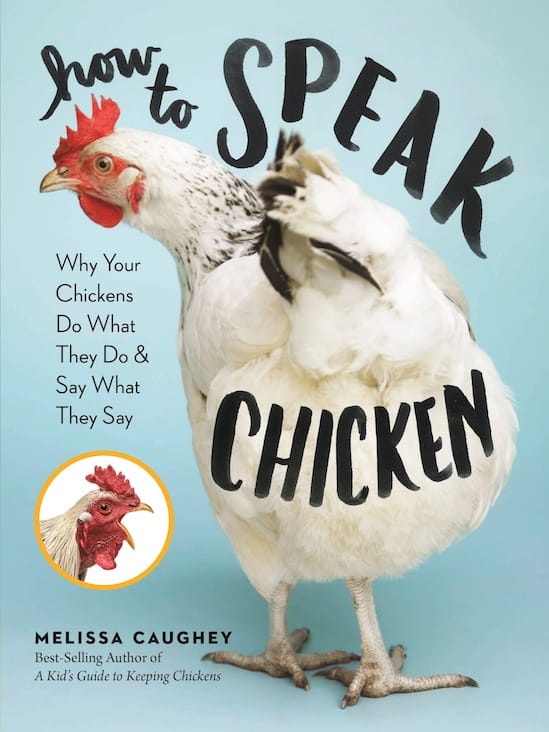
As we usher in our new website, we are pleased to introduce a brand new feature for RI readers' pleasure and edification. We've partnered with Storey Publishing, that North Adams, Mass. powerhouse creator of some of the most informative, intriguing and just plain gorgeous books that help, advise and inspire. We plan to alternate The Rural Storey with The Rural We each week, and hope these excerpts bring a smile to your face.
If you spend any time in the Rural Intelligence region, you’re going to come across some real, live chickens, whether in your neighbor’s backyard or at the farm where you pick up your CSA basket. They may look as if they’re running around like, well, you know…but it turns out, what they’re vocalizing and how they move have real meaning.
Chickens use their language to communicate about food, to warn of predators or other threats, and converse among themselves about what’s going on. For instance:
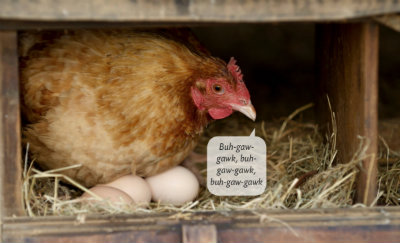
“Buh-dup” This greeting sound is heard among members of the flock as they come and go during the day. They also say it to humans.
“SCREE-oop-oop-oop” When feeling threatened on her nest, a broody hen makes a sort of a yell that trails into a grumble. It sounds like a tiny dinosaur roaring.
Sneezing Don’t be alarmed if a chicken near you starts sneezing. It doesn’t mean it’s sick. Chickens sneeze to clear nostrils that are clogged from inhaling dirt and food debris. (Or, it could be an infection.)
And one final chicken nugget: It’s hard to outrun a chicken. Chickens can run as fast as 9 mph, while humans average just over 8 mph. Of course, they never seem that fast when they’re just crossing the road.
Source: How To Speak Chicken: Why Your Chickens Do What They Do & What They Say, by Melissa Caughey. Published by Storey Publishing, North Adams, Mass.