Things to Do in Columbia County: Art, History, and Outdoor Destinations
Art, performance, history, and outdoor destinations that reward wandering and long attention across Columbia County.

Art, performance, history, and outdoor destinations that reward wandering and long attention across Columbia County.
Columbia County invites movement. Not the rushed, box-checking kind, but the slow circulation between art, landscape, history, and performance that reveals itself over the course of a day. You can walk fields filled with sculpture, sit inside a 19th-century painter’s vision of the Hudson Valley, ride a rail trail that stitches towns together, or watch contemporary performance unfold in barns and former factories. These destinations don’t compete for attention; they accumulate meaning through time spent there. The places below reward wandering, looking, listening, and lingering—and together sketch a county where culture is embedded in the land as much as the calendar.
Art Omi
1405 Route 22, Ghent
More than a sculpture park, Art Omi is a sprawling international arts campus where large-scale work and open landscape collide without pretense. Walk the fields and wooded edges to encounter site-responsive sculpture and installation from artists around the world; the scale feels calibrated for the sky and the seasons rather than a gallery wall. Its architecture and design residencies generate temporary and permanent interventions that reward repeat visits, and summer weekends bring performances, artist talks, and community programs that make the place feel active rather than curated. It’s the kind of stop where wandering counts as part of the experience.
Olana State Historic Site
5720 Route 9G, Hudson
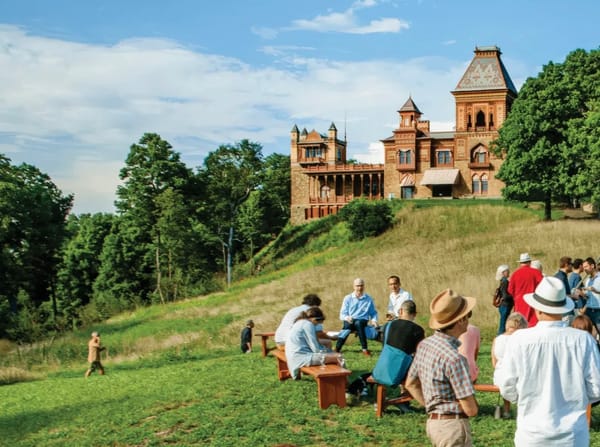
Perched high above the Hudson River with sweeping views of Catskills and Taconic ridges, Olana is both a masterpiece of 19th-century design and a continuing hub for the visual arts. The estate was conceived and created by Frederic Edwin Church, the American landscape painter who turned his home into a living canvas: a Persian-inspired villa set within a carefully orchestrated landscape that reads like one of his paintings. In 2026, Olana marks the 200th anniversary of Church’s birth with exhibitions, talks, and events that deepen engagement with his work and legacy while foregrounding contemporary responses to landscape, ecology, and visual culture.
Catamount Mountain Resort
78 Catamount Road, Hillsdale
Straddling the New York–Massachusetts line, Catamount has long been a practical, no-nonsense mountain for Columbia County skiers: close enough for half-day trips, big enough to feel like a real hill. In winter, its mix of beginner terrain, cruisers, and steeper runs keeps locals coming back without the pageantry of larger resorts. When the snow melts, the mountain shifts gears, opening trails, chairlift rides, zip lines, and an alpine slide that make use of the elevation and views. It’s less about spectacle than access—a year-round outdoor option that adapts to the season without pretending to be something it’s not.
FASNY Museum of Firefighting
117 Harry Howard Avenue, Hudson
One of the Hudson Valley’s more genuinely surprising cultural stops isn’t an art gallery at all but the world’s largest museum dedicated to the history of firefighting. Housed in more than 50,000 square feet of exhibit space, the collection spans colonial-era hand-drawn hose carts to massive 20th-century engines and gear, with interactive stations and artifacts that make the evolution of firefighting gear and practice surprisingly absorbing for all ages. And yes—the museum has a resident Dalmatian named Molly, named for an early 19th-century firefighter, who pops up on weekdays and at special events to greet visitors and lend a bit of canine charm to the history on display.
Clermont State Historic Site
One Clermont Avenue, Germantown
This Hudson River estate was the seat of the Livingston family for seven generations and today reads less like a theme-park museum and more like a long-running family saga set in stone, wood, and gardens. The Georgian-style mansion, rebuilt after being burned by the British during the Revolution, contains period rooms interpreted to reflect life in the early 20th century, while the visitor center and grounds explore the intertwined lives of Livingstons, tenant farmers, and the people they enslaved and employed. Walking trails, expansive river views, and formal and informal gardens offer plenty to absorb beyond the central house, making Clermont a place to slow down and look closely at how power, labor, and landscape shaped this stretch of the Hudson.
The Ruins at Sassafras Museum
194 Darrow Road, New Lebanon
Set on the remnants of the Shaker “Second Family” settlement in New Lebanon, this unusual property blends visible relics of Shaker daily life with layers of later adaptation and design. The site includes what’s believed to be the last standing Shaker chair factory in America, scattered foundations of workshops and farm buildings, a small cemetery, and trails that let you piece together how this industrious community lived and worked. Guided tours (spring–fall) walk through restored spaces and artifacts, giving a feel for Shaker ingenuity without the trappings of a larger historic village. It’s a place best visited slowly, letting the quiet stone walls and open fields raise questions about labor, belief, and what “ruin” means in a landscape that’s always on the move.
PS21 Center for Contemporary Performance
2980 Route 66, Chatham
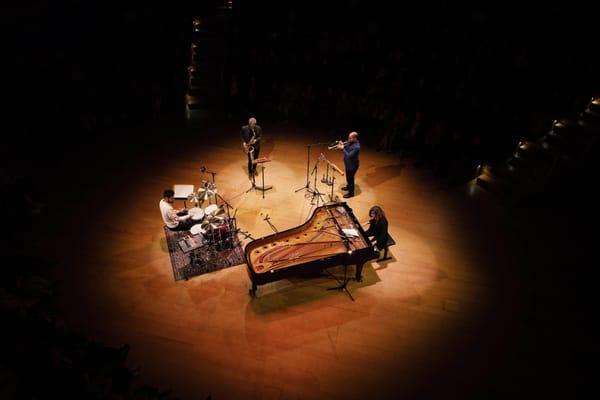
Set on 100 acres of rolling fields and woodlands, PS21 has become one of the region’s most interesting performance sites. It commissions and presents contemporary music, dance, theater, and interdisciplinary work that feels neither boutique nor institutional—artists are given room (literally and figuratively) to try things that might not fit conventional venues. Summer’s Outdoor Stage and indoor Salon Series bring different audiences to the campus, but the real draw is the sense of discovery: unfamiliar performers, unexpected collaborations, and site-specific moments that unfold best when you let the rhythms of the place sink in. It’s the kind of institution that makes a day trip feel like a cultural odyssey.
Time and Space Limited
434 Columbia Street
Since 1991, this artist-run performance space has quietly functioned as one of Hudson’s cultural load-bearing walls. Founded and operated by artists Linda Mussmann and Claudia Bruce, Time and Space hosts an eclectic calendar of contemporary dance, experimental theater, new music, and interdisciplinary performance that often feels years ahead of broader trends. The space favors rigor over polish and process over spectacle, attracting artists who are more interested in pushing forms than packaging them. For audiences, it offers something increasingly rare: work that trusts viewers to meet it halfway. Long before Hudson became a destination, Time and Space was already doing the work of building a serious, sustained arts community.
Crandell Theater
48 Main Street, Chatham
Open since 1926, the Crandell is one of those rare small-town movie houses that still functions as a cultural anchor rather than a nostalgia piece. It screens a steady mix of first-run independent films, repertory titles, documentaries, and live events, drawing audiences from across Columbia County who want something more thoughtful than the multiplex circuit. Each fall, the theater becomes ground zero for FilmColumbia, a long-running festival known for smart programming, filmmaker appearances, and a crowd that actually sticks around to talk about what they just watched. It’s a working cinema with a real sense of purpose—and a reminder that moviegoing can still feel communal.
Warren Street Galleries
Warren Street, Hudson
Hudson’s main drag doubles as one of the densest, most walkable gallery clusters in the region. Within a few blocks, spaces like Carrie Haddad Gallery, Susan Eley Gallery, 510 Warren Street Gallery, Limner Gallery, Front Room Gallery, Robin Rice Gallery, Philip Douglas Fine Art, Turley Gallery, and Hudson Milliner Art Salon present a cross-section of contemporary, regional, and emerging work. Add in exhibitions and performances at Hudson Hall, and the street becomes less a shopping strip than an ongoing survey of what artists are making right now. The pleasure is in wandering: pop in, step back out, compare notes, repeat.
Harlem Valley Rail Trail
Wassaic to Copake Falls
This paved rail trail runs roughly 26 miles along the former New York & Harlem Railroad corridor, beginning at the Metro-North station in Wassaic and heading north through eastern Dutchess and Columbia counties to Copake Falls, just outside Taconic State Park. Flat and wide the whole way, it’s built for distance rather than drama, which is exactly the point. Cyclists use it to rack up real mileage; walkers, runners, and families appreciate the lack of traffic and gentle grades. The scenery shifts gradually from farmland to wetlands to woods, with Millerton serving as the most obvious midway stop for food or supplies. It’s not a destination in the theme-park sense—it’s a reliable, well-used route through the landscape that rewards time more than speed.