6 of Our Favorite Not-So-Secret Gardens of Summer
These scenic wonderlands are serene, but in a pretty ebullient way.

These scenic wonderlands are serene, but in a pretty ebullient way.
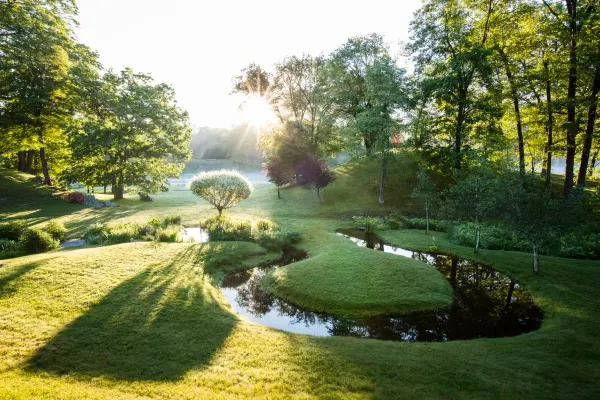
Innisfree landscape architect Lester Collins created “the Meadow” as a visual center piece of the property. Photo: Claire Takacs, courtesy of Innisfree.
Go outside. The RI region in July is an argument for being alive, and some of the most compelling cases are made not on stages or in galleries but in places where someone spent thirty or forty years moving dirt around, coaxing a bog into something beautiful, or translating 8th-century Chinese scroll paintings into 150 acres of glacial New York landscape. Gardens here are not amenities. They are the life's work of serious people, and they show.
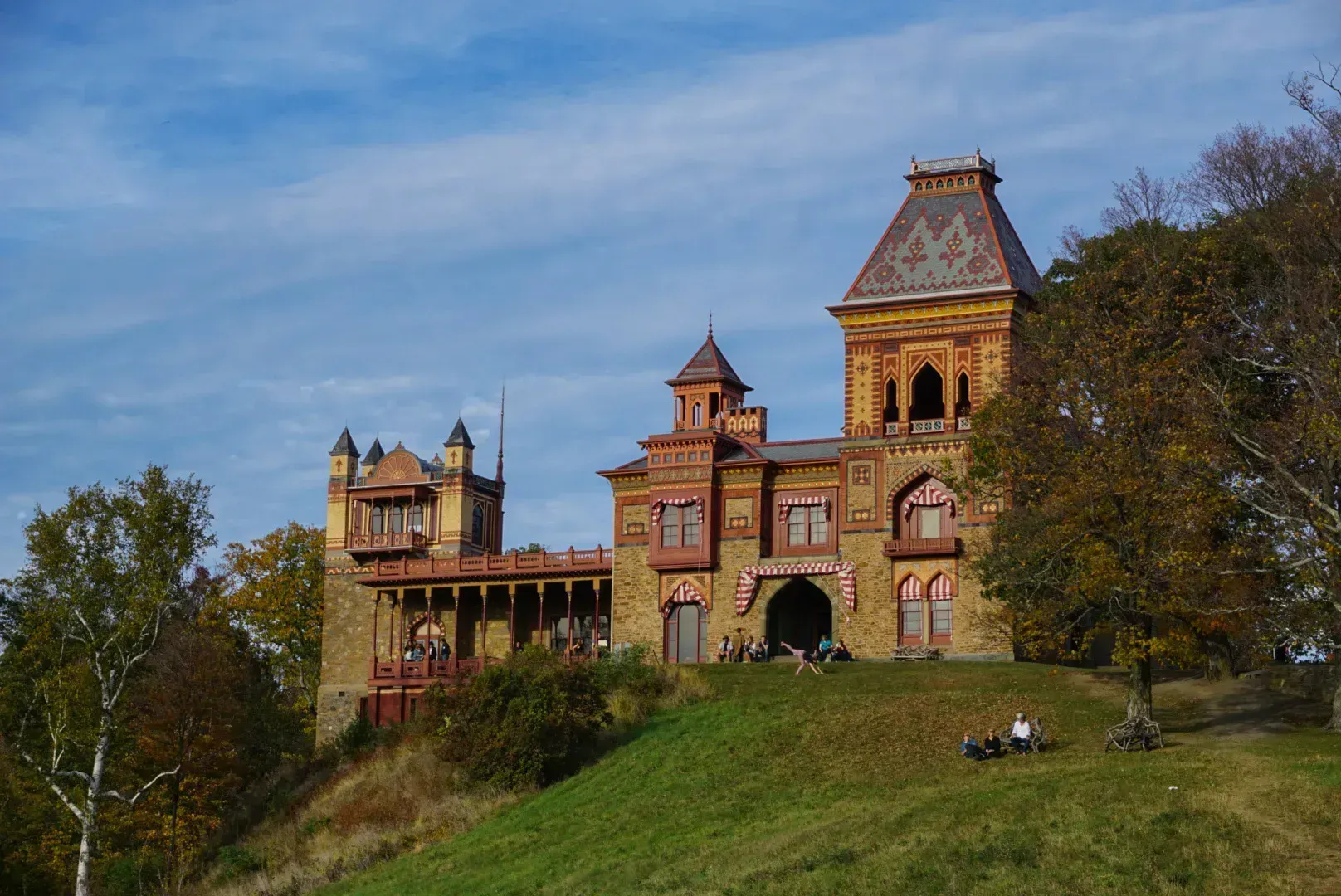
5720 Route 9G, Hudson
In 1872, Frederic Edwin Church finished designing his 250-acre estate on a bluff above the Hudson, and the result is considered by many to be the most important artist-designed landscape in the United States. Five miles of carriage roads reveal vistas of the Catskills and river composed as deliberately as his paintings. At the summit sits his magnificent house, filled with sketches and objects gathered over a lifetime of travel. 2026 marks the 200th anniversary of Church's birth; The Olana Partnership is celebrating with expanded programming throughout the season. The landscape is free. Come early, stay long.
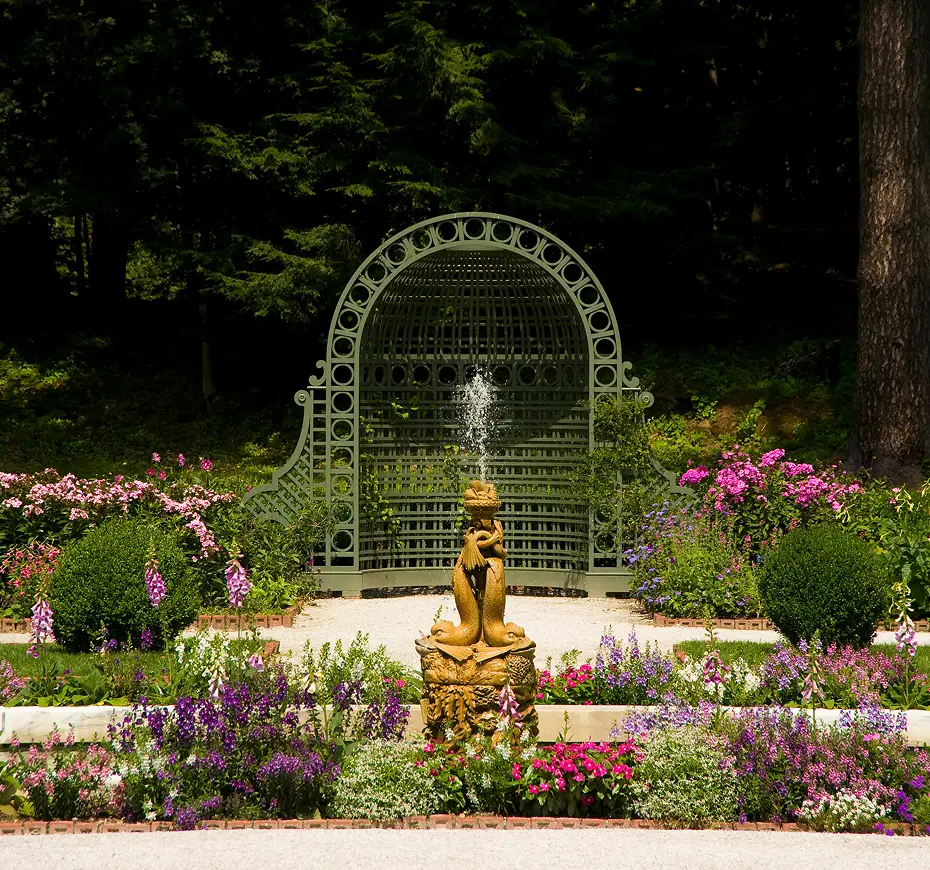
2 Plunkett Street, Lenox, Massachusetts
Wharton designed the gardens here herself beginning in 1901, drawing on the great gardens of England and Italy she'd studied on her many trips abroad. She wrote The House of Mirth in the upstairs study while the grounds took shape around her. The formal gardens—terraced, symmetrical, built for walking—are at their fullest in summer. Twenty contemporary sculptures from the annual "Flourish" exhibition are installed throughout the woods and gardens through October as well. A remarkable layering of literary history, horticultural ambition, and living art.
362 Tyrrel Road, Millbrook
Walter Beck discovered the scroll paintings of 8th-century Chinese poet and garden-maker Wang Wei and spent three decades translating them into 150 acres of glacial landscape around Tyrrel Lake. He called the concept "cup gardens": self-contained vignettes designed not to be admired from a distance but entered and lived in. One is a meadow bisected by a stream. Another is a managed bog. In 1938, landscape architect Lester Collins arrived and spent 55 years weaving Beck's cups into a whole. Chairs are placed at carefully chosen viewpoints throughout—the suggestion being that you stop, sit, and look.
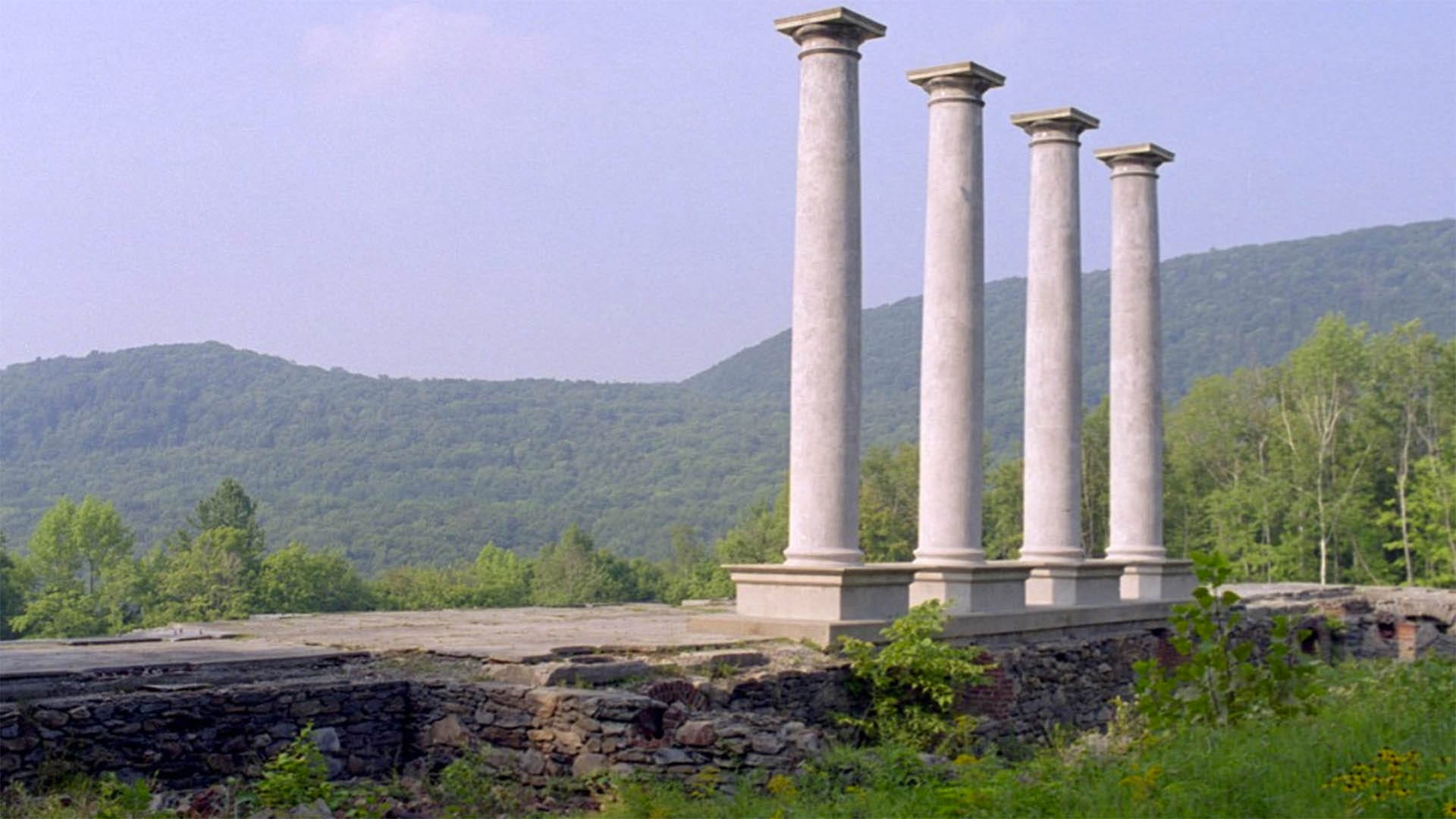
27 Sodem Road, Tyringham, Massachusetts
Tucked into the Tyringham Valley, Ashintully combines formal and informal gardens with a half-mile woodland trail to the ruins of a 35-room Georgian mansion—a Marble Palace built in 1903 whose Doric columns still stand on the brow of the hill. The gardens were created over thirty years by composer John McLennan and are maintained now by the Trustees of Reservations.
Also worth your time: White Flower Farm in Morris, CT (17-acre display grounds, open through the season). Cricket Hill Garden in Thomaston, CT (specialty nursery for peonies and tree peonies).
5 West Stockbridge Road, Stockbridge
Founded in 1934 where Routes 102 and 183 meet, the Berkshire Botanical Garden's twenty-four acres are organized around what a serious zone 5b gardener can actually do at home. The 1937 Herb Garden—the oldest continuously planted section, tended by the Herb Associates, who produce mustards, dressings, and jellies sold in the visitor center—is a study in useful plants made beautiful. The Daylily Walk, with more than two hundred cultivars organized by date of introduction, is at peak in July and August.
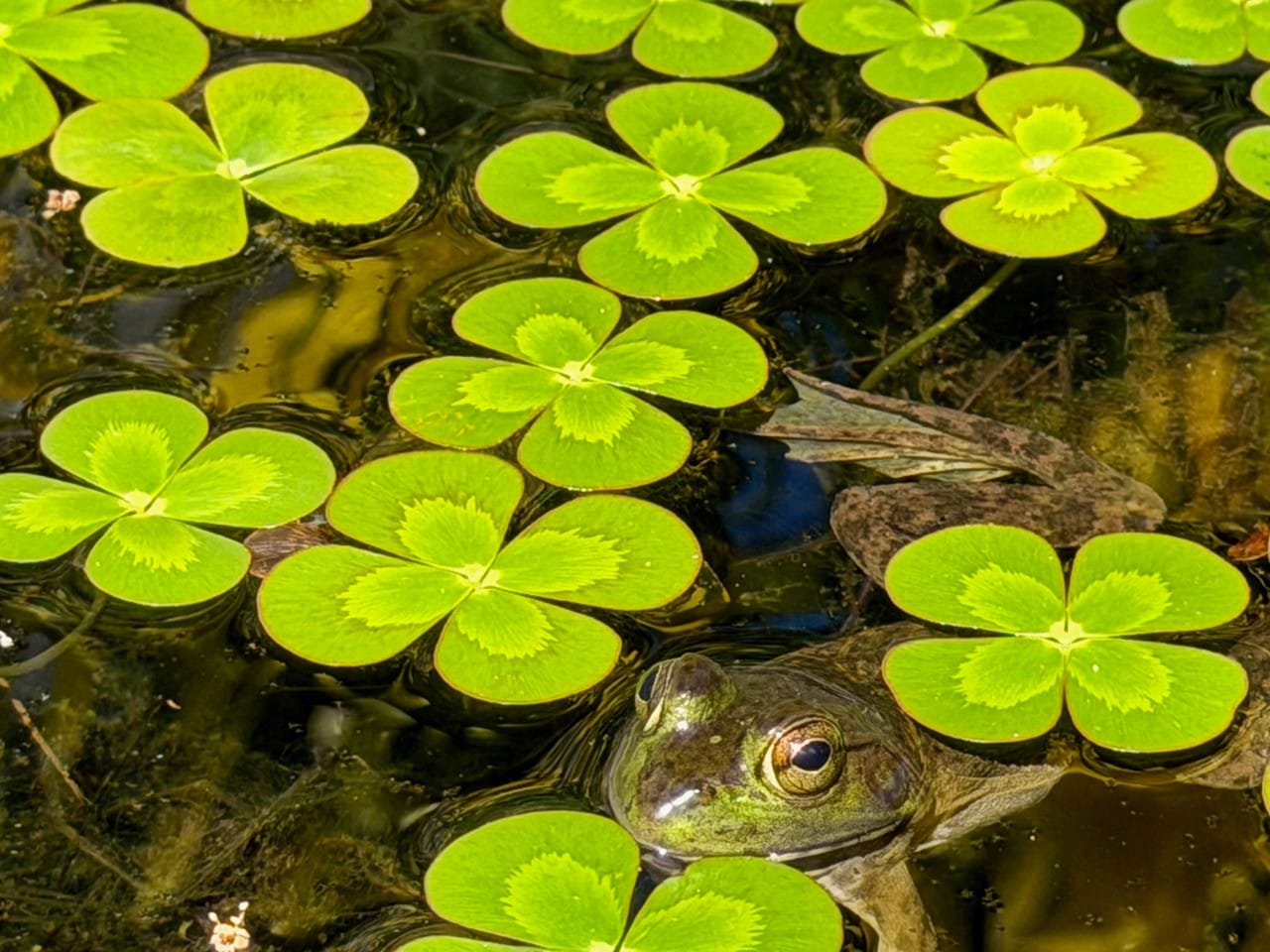
300 Nettleton Hollow Road, Washington, Connecticut
George Schoellkopf began building this garden in 1979 around an 18th-century farmhouse on 25 acres. It is English in structure and wild in planting. Eight to ten foot walls and hedges frame plantings that spill over everything they're given: daylilies, hydrangeas, old-fashioned phlox, Japanese maples and a calm pond.