End of an Era: Hammertown Is Closing, But It's Not Over Yet
Joan Osofsky, the former New Jersey schoolteacher turned regional design matriarch who founded the store in a Pine Plains barn in 1985, announced the closure last week.

Joan Osofsky, the former New Jersey schoolteacher turned regional design matriarch who founded the store in a Pine Plains barn in 1985, announced the closure last week.
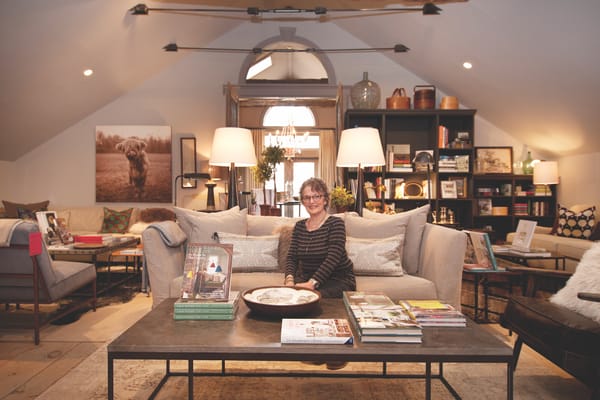
Hammertown Founder Joan Osofsky in 2016, photographed for Upstate House by Deborah DeGraffenreid.
The news landed like a stone in still water. Hammertown, the barn-born home store that has defined the look and feel of Hudson Valley and Berkshire interiors for four decades, is closing its doors. Joan Osofsky, the former New Jersey schoolteacher turned regional design matriarch who founded the store in a Pine Plains barn in 1985, announced the closure last week—but she is not going out without one last party.
Everything at the three stores in Pine Plains, Rhinebeck, and Great Barrington is currently 40 percent off. The shelves are being restocked from the warehouse as inventory moves. And Osofsky, who stepped away from day-to-day operations two years ago, is back orchestrating the barn-busting weekends, holding court, and clinking glasses with customers to send off the business in style.
"On Friday and Saturday, between 3pm and 4:30pm, we're going to share a glass of Prosecco with customers,” Osofsky says. “We want to say ‘cheers’ to what we did here for 40 years and be thankful for the people who we met along the way."
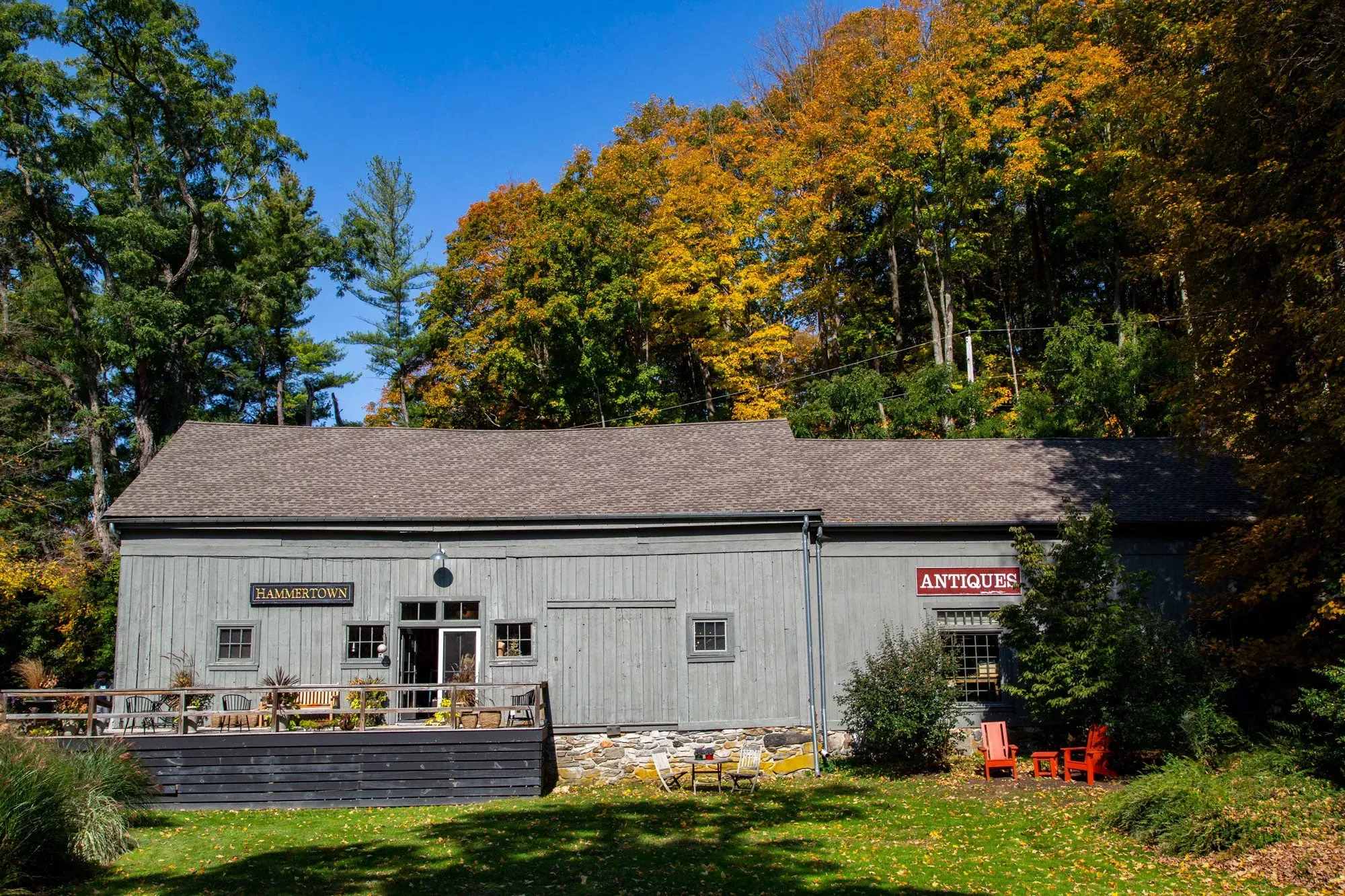
When Osofsky and her then-husband relocated from suburban New Jersey to Pine Plains in the mid-1980s, he went to work with his brothers at Ronnybrook Farm in Ancramdale. She, a former teacher with two kids in middle school, looked at the old horse barn next to her house on Route 199 and saw a possibility.
"I spent $10,000 to fix up the barn, there were still horse stalls in one half, and $5,000 on inventory," she recalls. She also ran a bed and breakfast in the house to keep cash flowing. The early store was humble: crafts, gift items, quilting workshops, and it turned out, her instincts about the region proved correct. City people were just starting to rediscover the Hudson Valley and Berkshires, buying up old Colonials and farmhouses, and they needed someone who understood both the bones of these homes and the life being lived inside them.
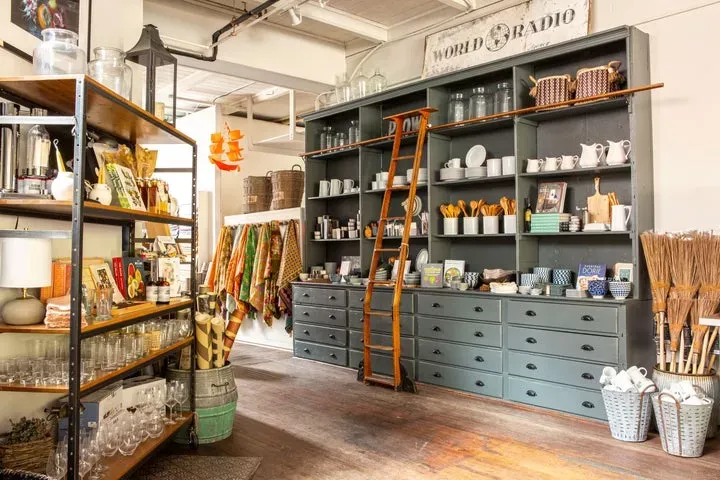
She started traveling to England and France, bringing back linens, dishes, and accessories that felt at home alongside wide-plank floors and exposed beams. She partnered with a neighbor to buy and sell antiques. In 1998, a fraying sofa arm, where her dog liked to rest his head, led her to discover Mitchell Gold's slipcovered furniture. That leap of faith transformed Hammertown from a charming country shop into a comprehensive lifestyle destination.
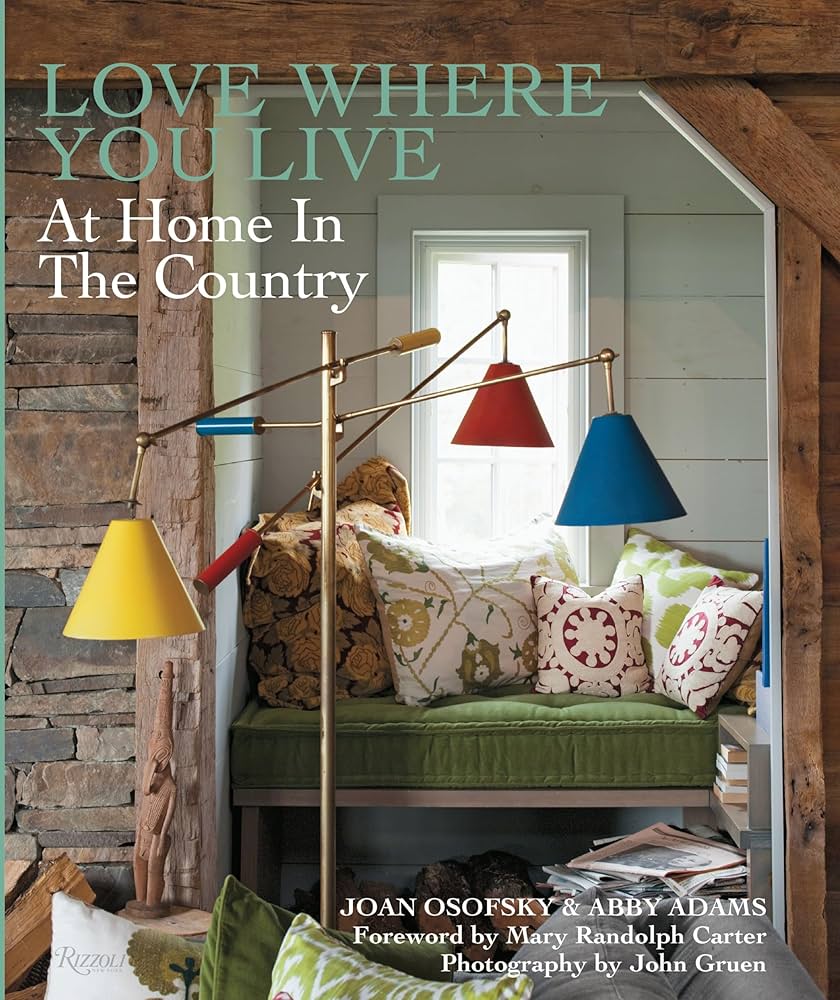
From there came the Rhinebeck store, then Great Barrington. Three stores across two states, a warehouse, a design consultancy, a living showroom in her converted former home adjacent to the Pine Plains barn, and an online presence that shipped orders across the US. Cottage Living and House Beautiful both named Hammertown one of the country's top design stores. Two books followed: Love Where You Live: At Home in the Country (2013, now in its fourth printing), co-written with Abby Adams, and Entertaining in the Country: Love Where You Eat (2017), a celebration of potlucks, potagers, and the kind of easy, generous hospitality that is Osofsky's signature.
Ask Osofsky what Hammertown style is, and she still has a hard time reducing it to a sales pitch. She says she was always guided aesthetically by feeling, not formula.
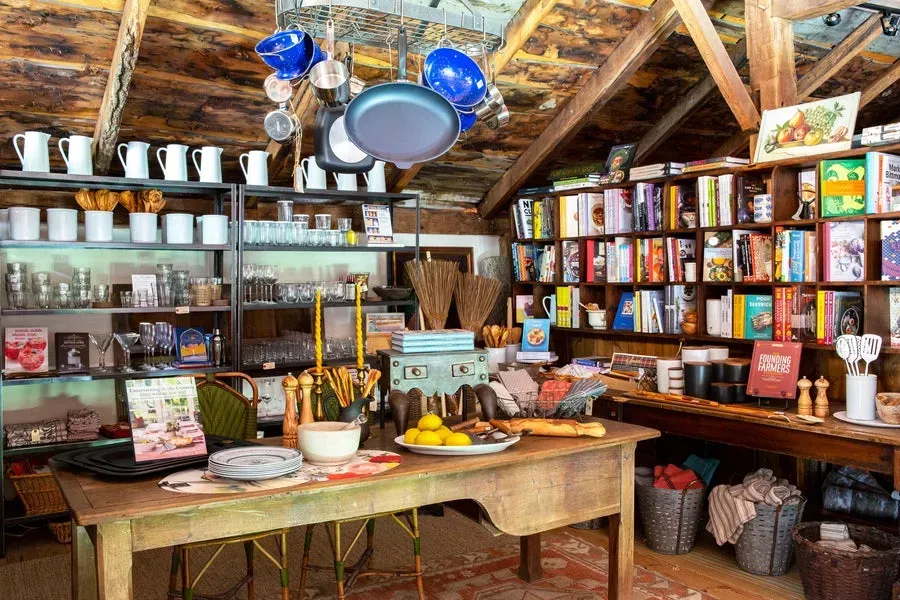
"Warm, timeless, living, personal with heart, classic Hudson Valley, modern country, authentic, collective, cozy and quietly beautiful," she says. "People felt it wasn't just walking into a store, especially the barn in Pine Plains. You were walking into a setting of something that was, you know, intrinsically beautiful and special."
The Hammertown look has always been about confident eclecticism: a mid-century table alongside a modern sofa, an old pie safe in a contemporary room.
Osofsky herself describes her eye as instinctive. "I look for something—I can't explain it — something that's very classic about it that could go with something modern," she says. "I love homespun. I love textiles. I love things from France, and I love some art deco stuff. I just think out of the box."
That philosophy turned out to be remarkably prescient. Younger shoppers today, she notes, are hungry for exactly what Hammertown has always offered. "They're seeing beyond IKEA and West Elm and Pottery Barn. They want to thrift, they want to go to antique shops, they want to repurpose things and do it in a modern, comfortable way." The things she sold 30 years ago are now turning up in antique shops and auctions, still in excellent condition. "I think they call it maybe a trend of ‘country-core,’" she says with a hint of amusement. "I don't know if I would. We're not cutesy."
Hammertown's influence on this region was never just about what was for sale. Osofsky threw open the barn for years to raise money for Berkshire Taconic Community Foundation. Now in her 80s, she still volunteers weekly at the Northeast Community Center and serves on its advisory board. She helped save the locally beloved Thompson Finch Farm by organizing matching funds and working with Columbia Land Conservancy.
"We raised a lot of money for them," she says. "And it ended up that Columbia Land Conservancy and people's donations helped save that strawberry farm and make it something that will be strawberry fields forever."
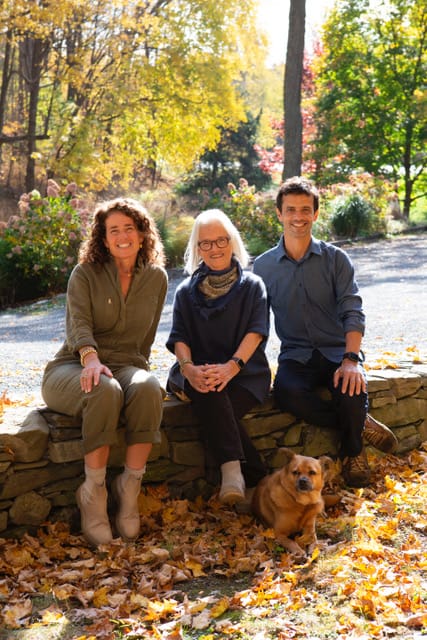
She says she was also proud of the way Hammertown took care of its employees. One of her managers stayed with her for 38 years. "I tried to pay people as well as I could," she says. "I just looked at the people that helped define Hammertown as part of the core of the brand, the heart of the brand." Those employees, many of whom have been at the stores for decades, are the ones largely running the closing now. "My staff is pretty much running this whole thing," she says.
Succession planning for Osofsky’s retirement had been on the table since Covid, when, despite (or because of) the pandemic, Hammertown thrived. The store's appeal to people newly invested in their homes and rural lives made the brand feel timely. Two years ago, Osofsky stepped back and her daughter Dana, who has her own eye for design, took over with the explicit goal of getting the business ready for a sale. They worked on it for a while. Two or three deals were in motion. Then, a few weeks ago, the last one fell through.
"As a family, we decided that we should close Hammertown," Osofsky says, "and that I should be the one to go in and close it. And get closure for a chapter that I started over 40 years ago."
She says there was no extended planning for a liquidation, no imported bargain bin. Inventory is “what it is” and at a stunning discount. "We were mobbed last weekend," she says. "Stuff is flying out of the stores." She's taking it a week at a time, refreshing the floor from the warehouse as it sells down. She expects the process to take at least a month or two.
And yet, the barn door is not entirely closed on Hammertown’s survival.
"Maybe someone's gonna say, 'Oh my God, we want to save Hammertown,'" Osofsky says. "I would explore opportunities. So far there’s nothing."
Osofsky says customers have been coming into the store with tears in their eyes. "They say, ‘I've been coming here since my kids were little and now they've got kids of their own,’" she says. "It makes you feel old, but it certainly makes me feel loved."
Hammertown has three locations: the original Hammertown Barn at 3201 Route 199 in Pine Plains; Hammertown Rhinebeck at 6420 Montgomery Street; and Hammertown Great Barrington at 15 Bridge Street. Everything is currently 40 percent off.