Guiding Light: Quittner Rethinks and Recrafts Vintage Warmth
At Quittner in Germantown, Ben Davidson and Pippa Biddle restore antique fixtures and design new ones around a few firm convictions: good design disappears until you notice it, ornament has to be earned, and a light should last forever.
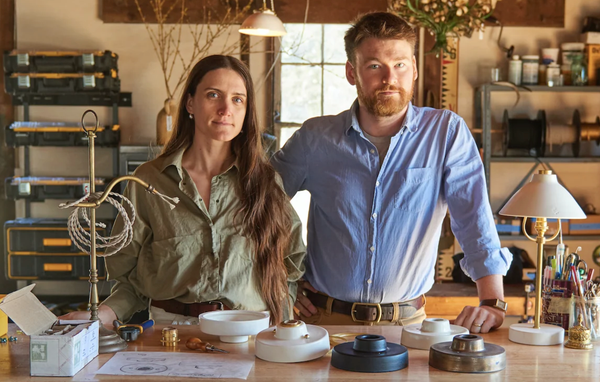
Pippa Biddle and Ben Davidson, founders of Quittner in Germantown. Photo courtesy of Quittner.
For Ben Davidson, a light fixture is a connection point between people and the primal sensation of illumination: from the warmth of a candle and the glow of a hearth to bespoke decorative objects that become cared for and kept. Davidson and his wife, designer Pippa Biddle, foundedQuittner, the Germantown antiques and lighting studio that has become known as a go-to source for regional designers looking for curated vintage lighting and a line of Quittner’s own elegant and elemental fixtures.
His path there began with restoration. After college, Davidson became the live-in caretaker of a historic arts-and-crafts house in Rose Valley, Pennsylvania, and helped restore it. Back in the Hudson Valley, he restored furniture found at auction and then turned to lighting, first for his own home. When visitors noticed the fixtures on the walls and asked about them, he began sourcing them for the store, too. Quittner, founded in 2018, grew from those small moments and from the couple’s deeply studied knowledge of historic and modern design.
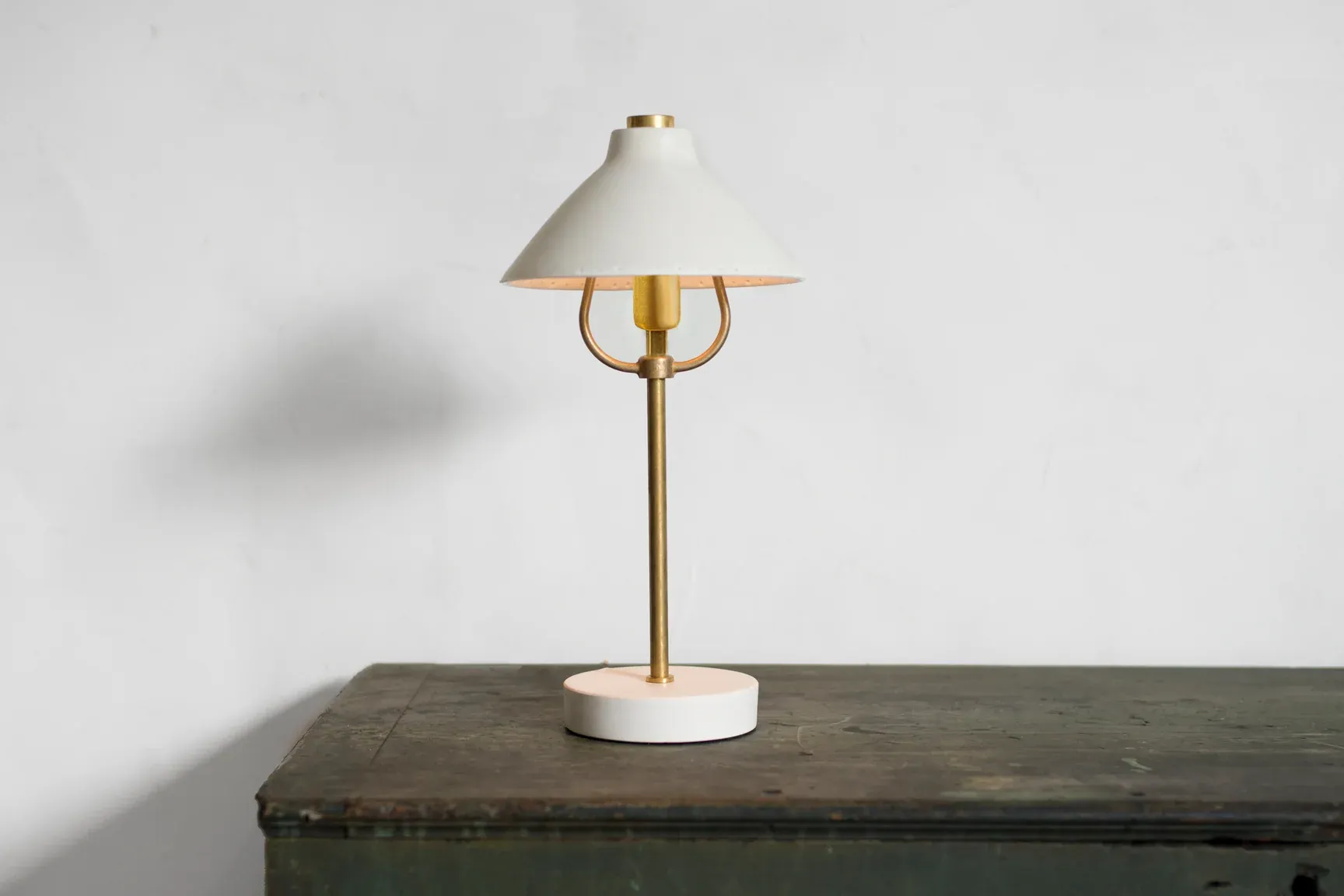
The next step in that evolution was working with a ceramicist to make their own line of fixtures that are functional while nodding to the shapes and proportions of the classics.
Davidson says Biddle likes to point out that they repaired 1,000 lights before they ever designed one. That self imposed apprenticeship shaped their taste. The fixtures they make now are grounded in ideas about elegance, ornament, durability and the history of light.
A Lineage of Good Taste and Pants
Davidson traces his taste for things that last to his father. When Davidson turned 14, his dad told him it was time to own a good pair of gray wool dress pants that he could keep forever (or until he grew out of them). "Staples should be really well made," Davidson says. "Then they should, in many ways, kind of disappear into the background." He cites Beau Brummell, the Gilded Age dandy, for the idea that "to be truly elegant, something should never be noticed." He wants Quittner's core collection to work that way: simple, approachable, and lovely when you notice it. The cloth-covered cords he favors for rewiring lamps makes the case for him. It feels more in keeping with the complete vintage aesthetic and ages in a more distinguished way. "If it does show wear, it shows it a bit more elegantly,” he says. Adding plastic cords don’t cut it: "when they get gross, it's gross."
While the couple’s new pieces are humble, the antiques they restore follow a different rule. A piece that has survived this long, Davidson says, has earned the right to be loud. "It can strut now."
"Our best designs essentially take a Victorian or Edwardian design, remove three to four cherubs, and then it's good to go," he jokes. He explains that machine-made ornament flooded Victorian interiors, and the 20th century reacted with a long streamlining: modernism, brutalism, surfaces meant to be wiped down. "We don't all want to live in a hospital or a cruise ship," he says. A house, he thinks, should feel "soft, interesting, and have intricacy." Quittner leans into a combination of basic pieces that stand on their own and decorative flourishes that embolden a warmly lit visual moment.
Built to be Fixed
Quittner holds new work to the antique standard. By the federal customs definition, Davidson notes, an antique has to be more than 100 years old, and "whatever we make has to be able to last that same amount of time, if not longer." Every component can be replaced. He sees a growing group of companies making things that can't be taken apart, which pushes buyers to replace them when the style changes. His approach is the opposite. "If they invest in it they can always fix it," he says. "It's theirs for life." He thinks that honesty pays off. People who know they can repair a fixture, he says, will return to buy another for a different room.
Repairability affects how he designs, too. Hardwired lighting will be installed by someone else, so he designs for the worst case scenario, asking "what's the dumbest electrician going to do with this?" and "how is this construction going to be legible to everyone?" Quittner's workshop is also UL certified, which means it can rewire a strange antique chandelier found in Paris and certify it for any licensed electrician to install.
Aleah Stewart-Souris throws a porcelain lampshade. Image courtest of Quittner.
Porcelain, Brass and Walnut
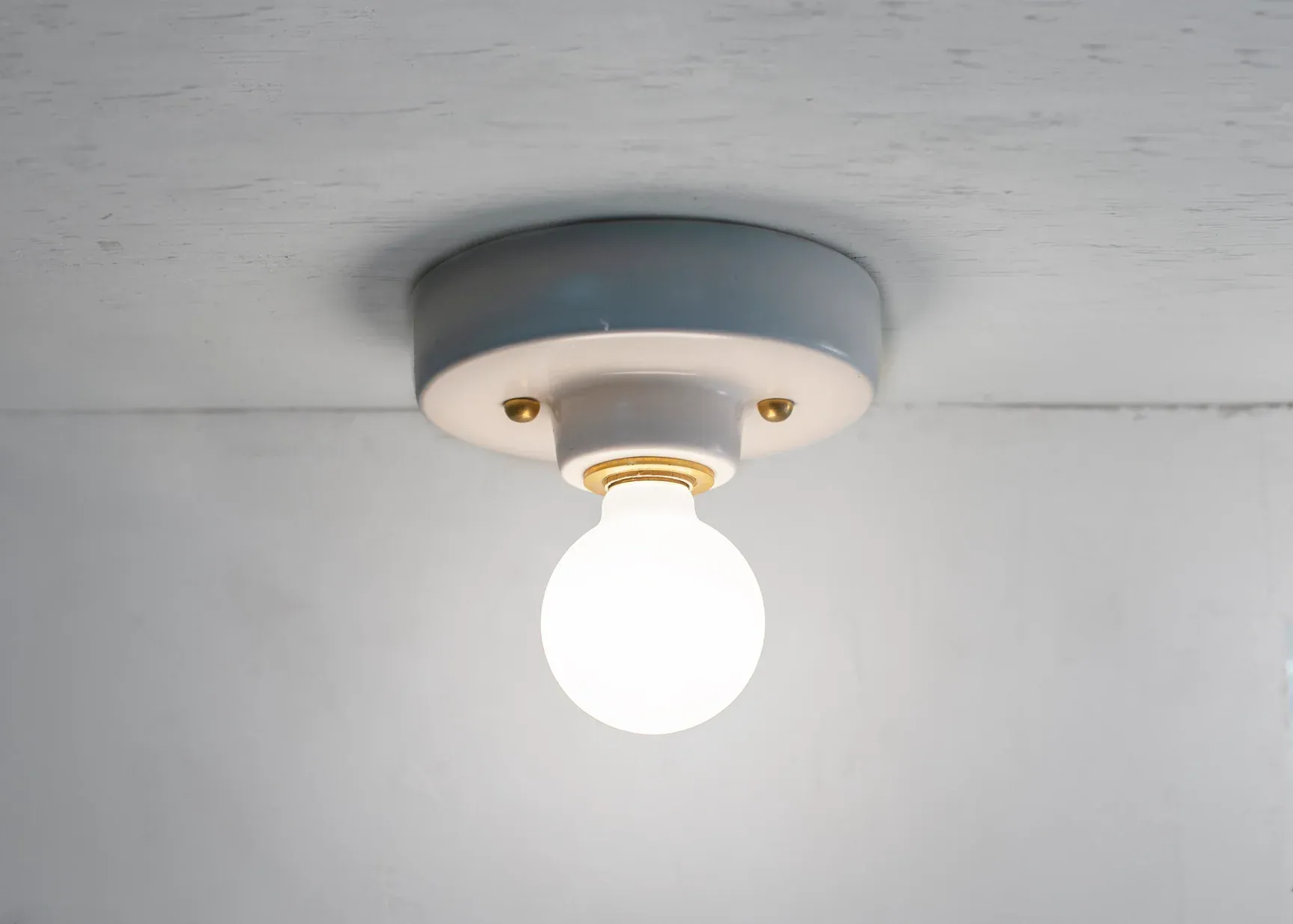
Quittner works in brass, porcelain and black walnut, and is soon branching out into ash. The porcelain comes from the East Durham studio of ceramicist Aleah Stewart-Souris, a friend from Davidson's college years who made tableware for restaurants before she started turning delicate lampshades that evoke classic and natural forms. Davidson's mother was a potter, and he repeats her line that porcelain "remembers everything you've ever done to it." Stewart-Souris takes advantage of that and throws it thin enough that light passes through her work like a sunbleached seashell. In the shades the places where she pressed harder are revealed as faint lines, "almost like stratigraphy and geology," Davidson gushes.
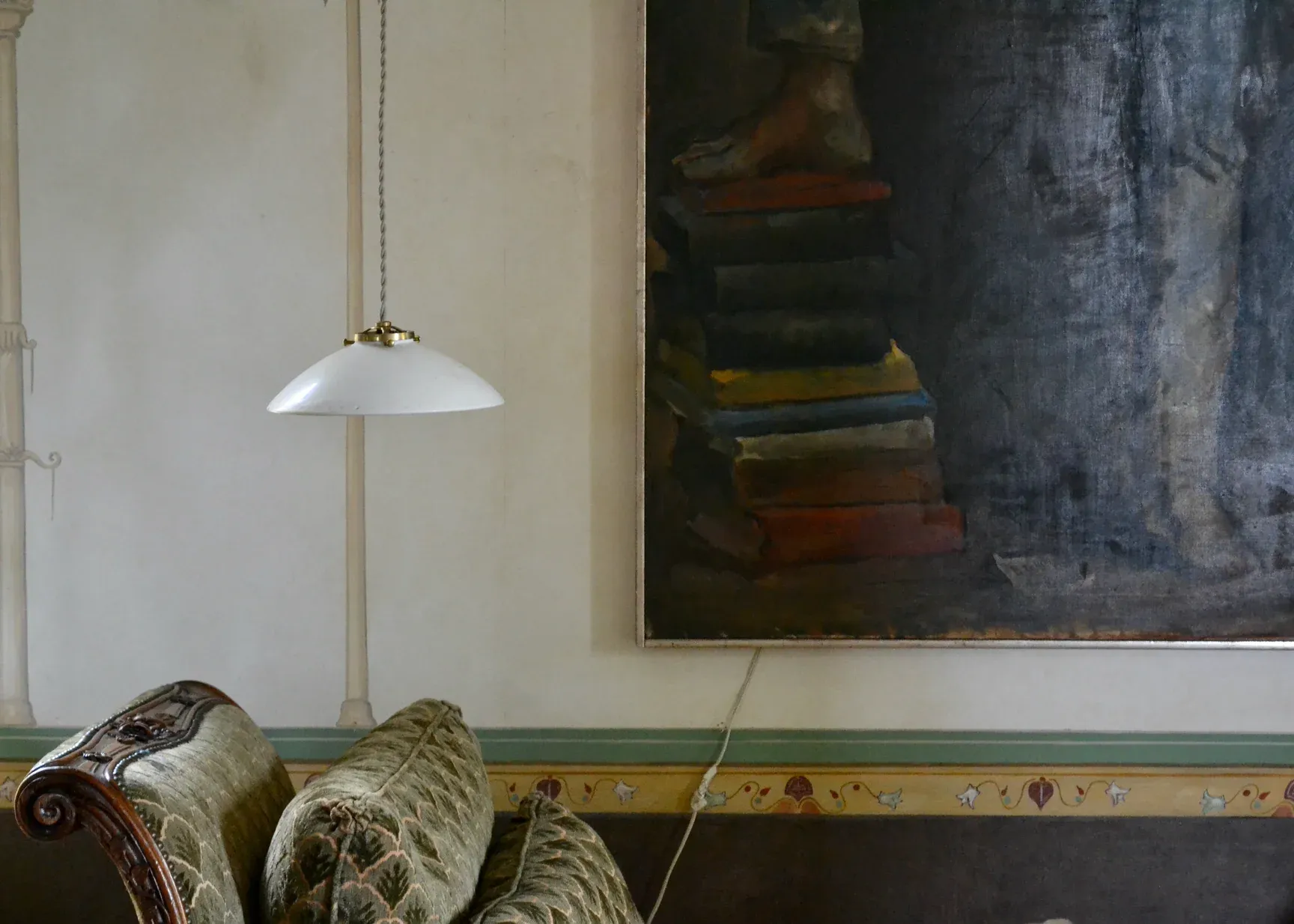
One of Quittner's molded porcelain fixtures began when designerHallie Goodman wanted to use a milk glass form that had been a single part of a much larger 1920s chandelier. Davidson liked its low profile, which suits the low ceilings in many historic area homes, avoiding the need for generic recessed lighting. He rounded its harsher lines and had it recast it in porcelain.
What Light Means
Davidson studied medieval history, and he talks about light almost like a symbiotic living entity that's developed alongside civilizations. People, he says, have always grown attached to the particular qualities of the light they know, and that affection has a long lineage. Medieval monasteries kept bees because their wax made the cleanest-burning candles. When whale oil arrived with a brighter, whiter flame, people complained that it wasn't the same as a good candle, and Davidson finds it remarkable how early that nostalgia for homey warmth began. "As soon as we were able to actually have choice in the way we illuminate spaces," he says, "we immediately started that conflict."
He thinks we're drawn to warm light for these old reasons. Around the turn of the last century, he says, architects often placed the fireplace so that visitors could see it from the front door. "That is what welcome is to the stranger, to the traveler," he says. "Come to the fire, warm up," the room says. "You're safe here." He believes that feeling is cultural, not instinctive, but deeply ingrained. It is why a softer interior "can be immediately broken by" a harsh white bulb, and why Quittner's display fixtures use LED bulbs, hand-blown by a British company, that mimic an incandescent glow but are rated to last 100,000 hours.
Puddles of Visual Interest
The same thinking shapes his view of recessed lighting. "I think that everything is a tool," he says, "and so long as you use it with thought, and care, and premeditation, you can make something beautiful." But blanketing a modern home in uniform white LEDs is anathema to Quittner’s world view. Davidson and Biddle like "puddles of light," pools that draw a person through a space the way a distant fire does.
He applies the same discipline to views and natural light. He would rather have one window framing a meadow just right than a wall of glass taking in everything. "I'd rather you were curating what I'm looking at than just throwing up a bunch of glass," he says. "That's where someone can really show themselves."
Quittner, at 4655 Route 9G in Germantown, is open Saturdays and Sundays from 10am to 5pm, and Thursdays and Fridays by appointment. Davidson and Biddle also consult on lighting for homes and historic sites, and write a recurring column for The Magazine ANTIQUES.
After a decade of writing for RI (along with many other publications and organizations) Jamie took over as editor in 2025. He has a masters in journalism from NYU, a wonderful wife, two kids and a Carolina dog named Zelda.