Namai Opens: Jackets Made from Traditional Indian Quilts and Sweaters Knit from Saris, in Rhinebeck
Bianca Kuttickattu turns vintage Indian kantha quilts into jackets and sweaters. Her first shop is open on West Market Street, and the official party is November 13.
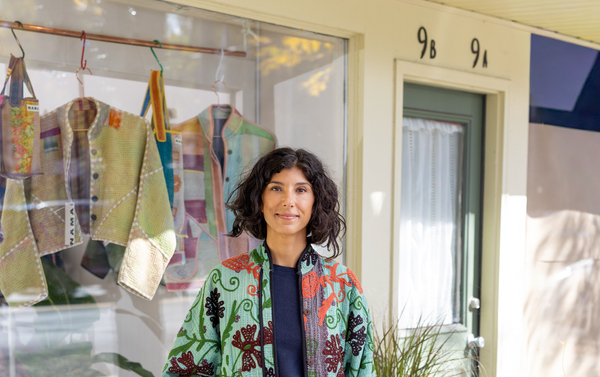
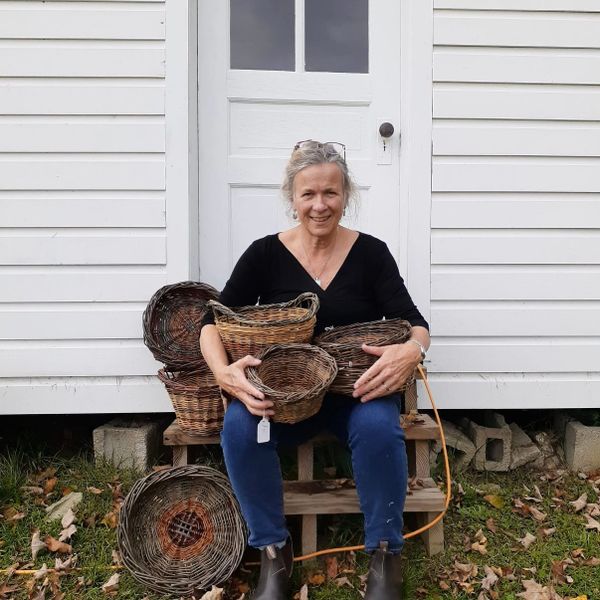
Namai Founder Bianca Kuttickattu. Photo by Abigail Fenton.
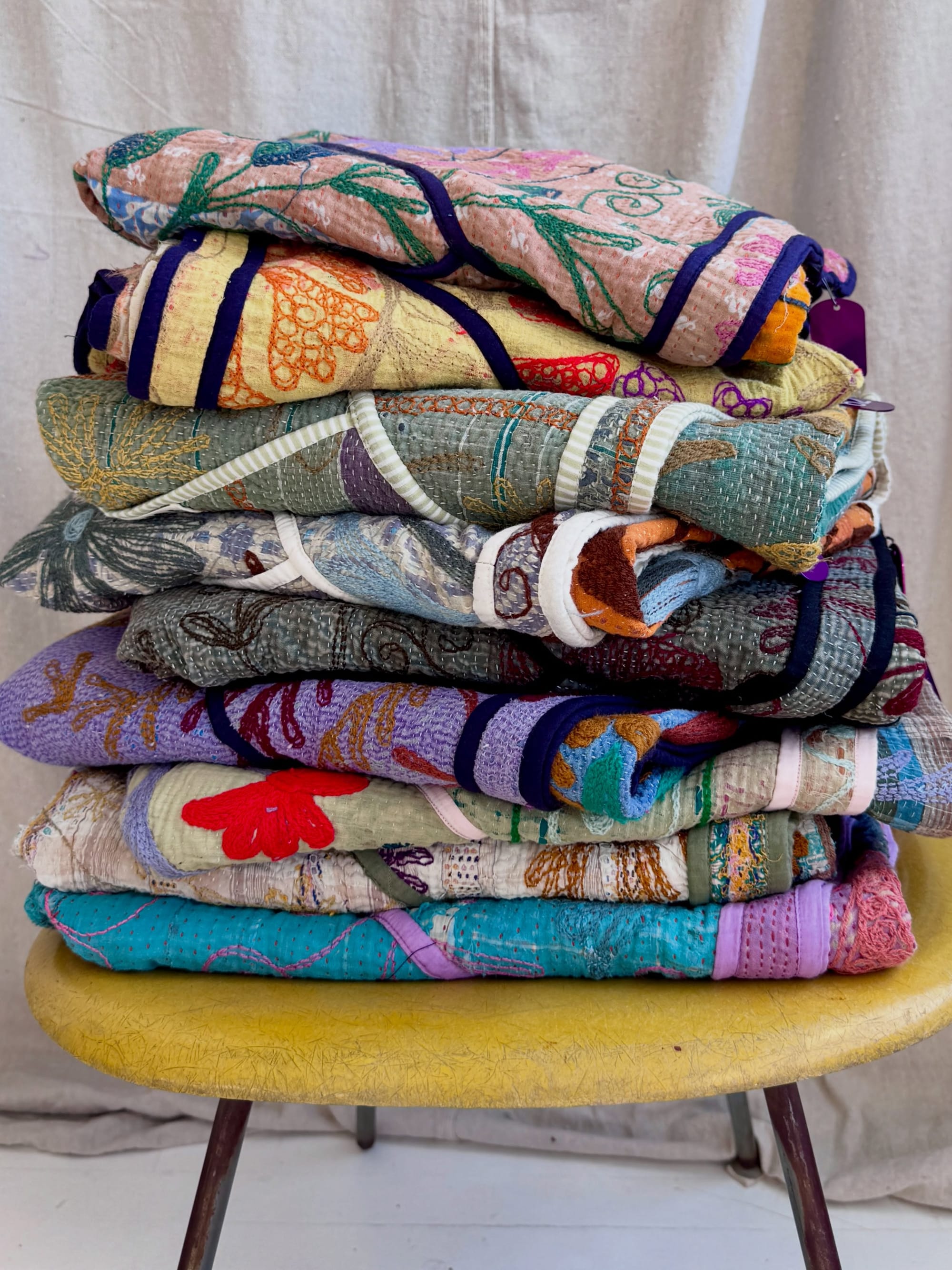
Traditionally, as Bianca Kuttickattu tells it, a kantha quilt began with a walk. The women making one would go from house to house in the village and ask for scraps of fabric, then gather them into a patchwork and hold the layers together with a hand-sewn running stitch. The quilt was usually a gift for a wedding, a christening or a birthday.
Kuttickattu, the founder and designer ofNamai, now repurposes this style of quilts into jackets. On September 12 she opened the brand's first shop, at 11 West Market Street in Rhinebeck, after years of selling online, wholesale and at artisan markets around the region. An official opening celebration is scheduled for Friday, November 13.
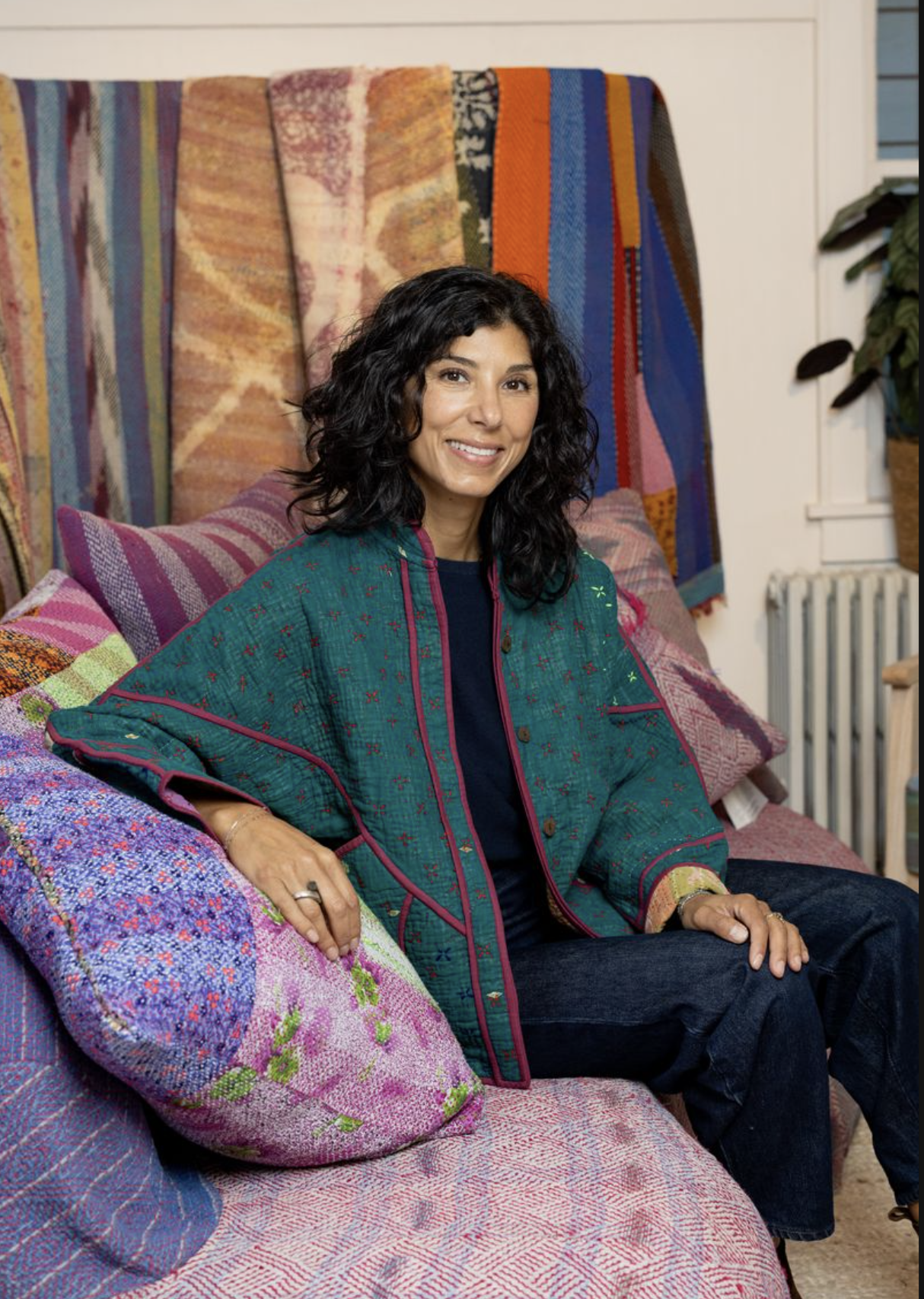
Bianca Kuttickattu in her new Rhinebeck store. Photo by Abigail Fenton.
A third life
The quilts come mostly from Bengal, travel through Calcutta and reach her suppliers in Delhi and Jaipur. The traditional textile has existed for thousands of years, Kuttickattu says, but she discovered them only a few years ago, on Etsy, "while I was stuck in my boring corporate job." She bought them for herself and gave them to friends. "They just brought me so much joy and gave me a feeling of connectedness to my Indian roots, which I hadn't really grown up with," she says. She found surprisingly little written about these everyday quilts she found so alluring.
By the time she buys a quilt, it has already been used, and she says that is the point: "The jackets are literally the third life cycle of these fabrics." The idea has a personal root. "I like things that have a story," she says. "I grew up wearing second-hand clothes because that’s what we could afford. I was used to the idea that what I was wearing had a life before I had it."
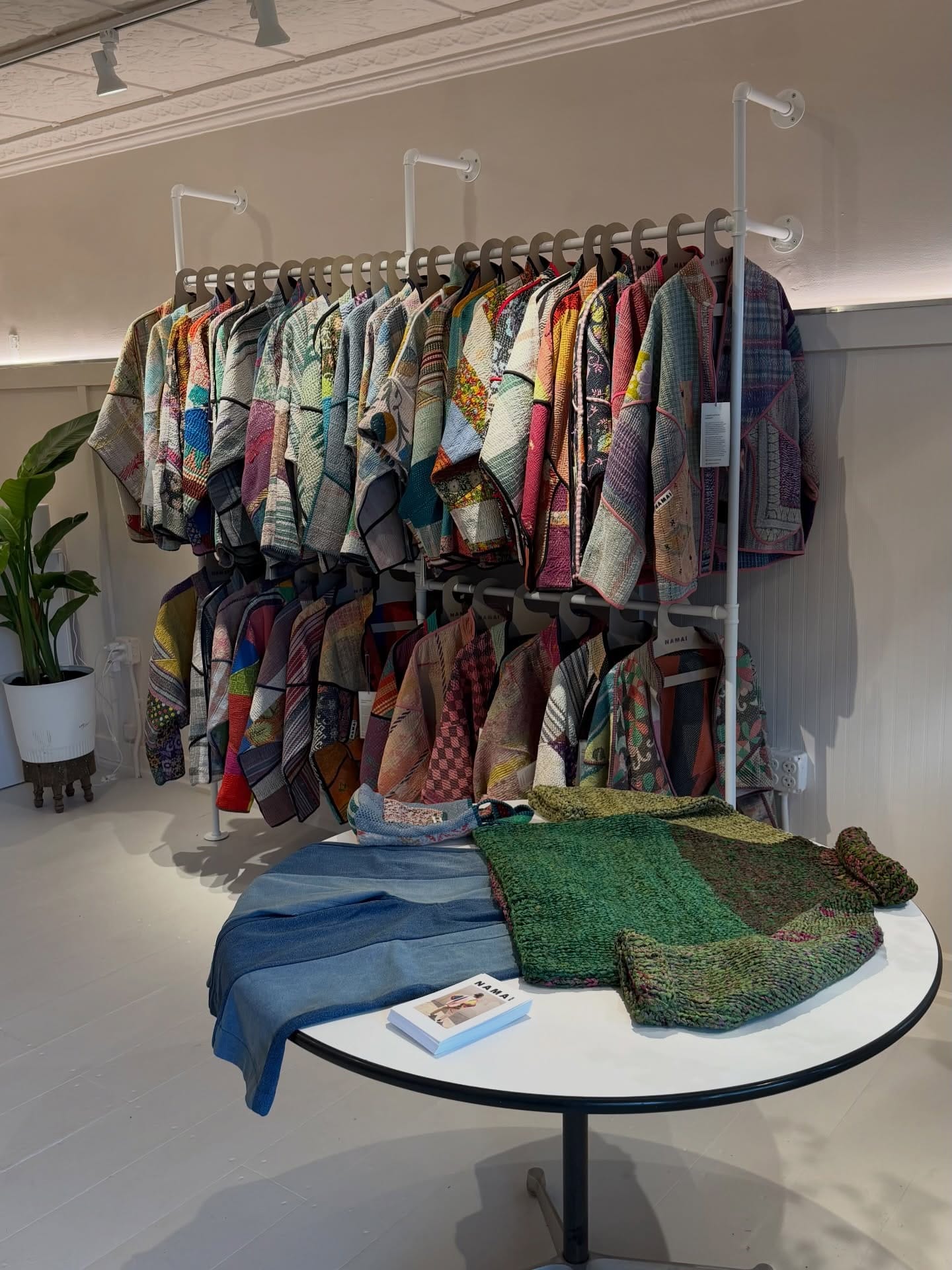
Photo by Abigail Fenton.
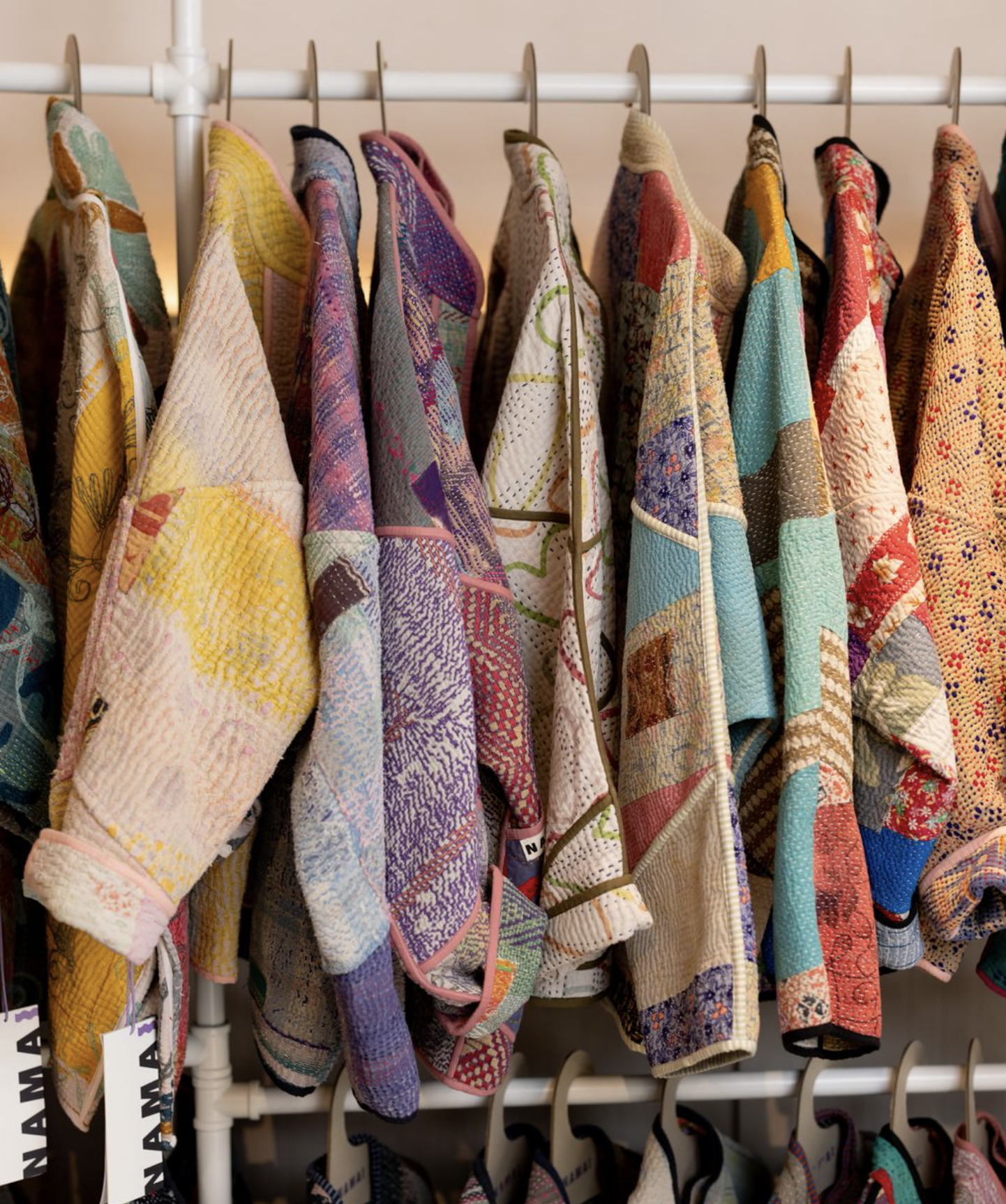
She wants the jackets to convey their multiple reincarnations. "There's so much history in the fabrics," she says, "and I love the idea that we're creating objects that have meaning, and that the new owner of them will create more meaning and memories with them. So they're just going to become richer over time and more special."
Loose, bold, reversible
A Namai jacket is built to be generous in fit and shaping. Kuttickattu trained in fashion in London and Paris, spent years designing luxury footwear in London, Sweden and, from 2012, New York. It was a job where style was defined in minute measurements. She says she "spent hours of my day staring at a model's foot, perfecting the fit, and working on millimeters." For her own label she wanted the opposite: "something more expansive that fit a lot of people and wasn't one gender, and just had really generous pockets and a generous fit." She was after "a graphic and bold look.”
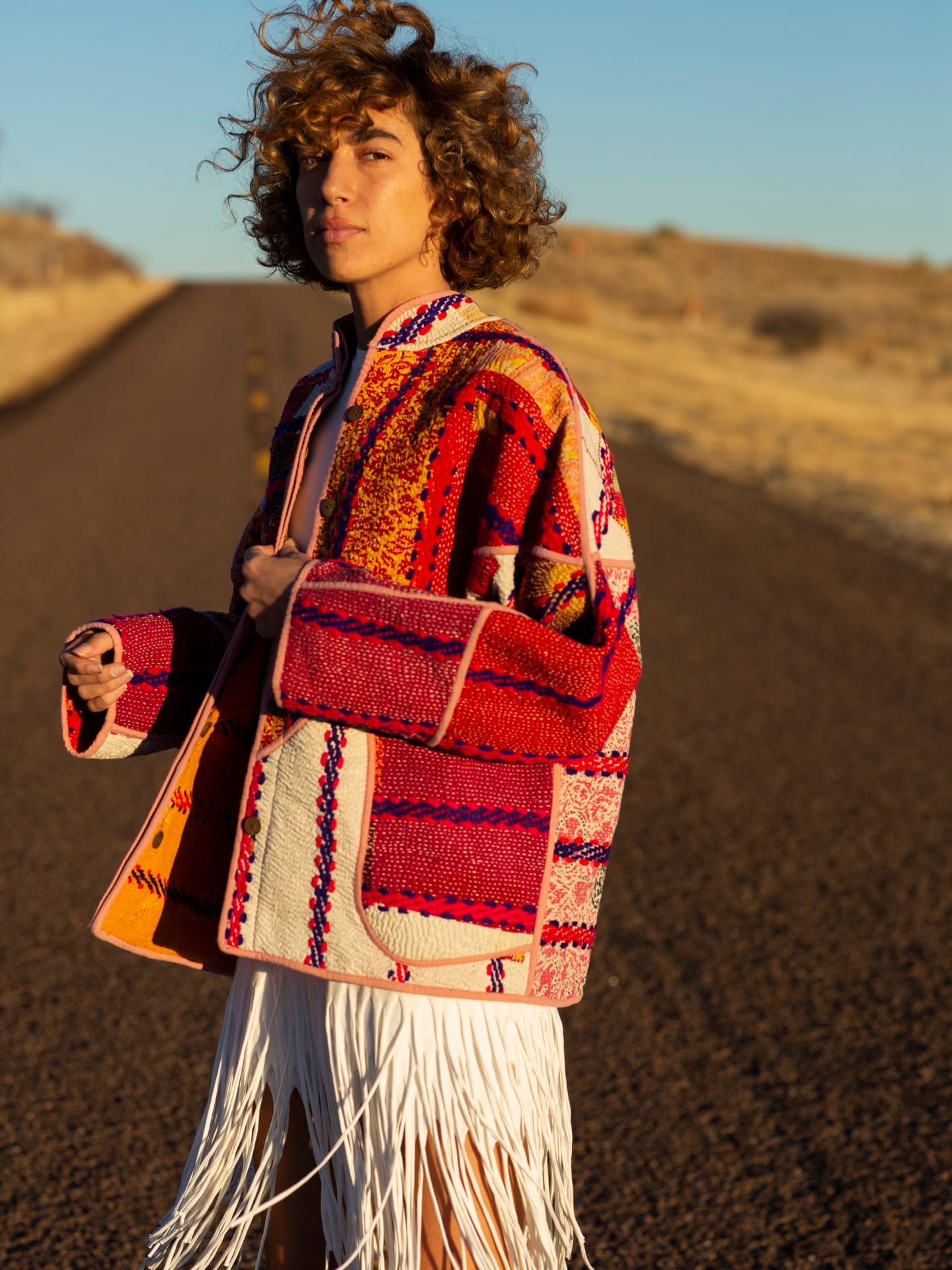
The pattern has barely changed since. Her best sellers, the Ladhiya jacket and the cropped Kaira jacket, have been refined slowly, based on customer feedback and on watching how they fit people at markets. Product listings for the two describe a loose, one-size-fits-most cut, a mandarin collar, coconut-shell buttons and full reversibility, with cotton bias binding on one side that picks out the seams. The quilt, not the pattern, supplies the variety. "Because the quilts are so unique and continually different, the jackets are just endlessly new and different," she says, while the fit stays the same no two are alike.
The same logic runs through the sweaters, which have become very popular this year. Each takes six recycled silk saris. The workshop sorts them into color combinations, rips them into strips and winds the strips into balls of “sari wool,” which women then knit by hand. "Each one is like a total work of art and completely one of a kind," Kuttickattu says.
Few shapes, many hands
Keeping the designs few is a deliberate choice. "Sustainability for me is about using recycled fabrics," she says, "but it's also about creating conditions that are beneficial for the workshops that I collaborate with." An artisan paid by the piece, or by the hour, does better making a shape she has made many times, Kuttickattu says, so she doesn't add new designs for the sake of it.
Her main workshop is in Jaipur. The owner made her first ten jackets in 2020 from a small storefront on a busy road outside the city, working with no international clients. Through the partnership, she says, he has built a fourstory factory and employs a lot of people. "It's been amazing growing together with someone and just creating such a meaningful partnership," she says.
Photo by Abigail Fenton.
A shop of her own
Kuttickattu left her footwear job in 2023 to run Namai full time. The brand is sold in more than 75 stores across the US, as well as in China, Japan, and Europe, and she designs, photographs and ships from her studio in Kingston. A brick-and-mortar shop, she says, makes the community she has built online tangible: "It felt like having a store would make that feeling of home and community more real." She wanted it near the studio, and "Rhinebeck just seemed like the perfect fit."
The November 13 celebration is co-hosted by Gretchen Jones of the creative advisory practiceWeird Specialty and will feature drinks by C. Cassis and light bites. "It was really important for us to just be hyper local," Kuttickattu says. The shop is open daily from 11am to 6pm.
After a decade of writing for RI (along with many other publications and organizations) Jamie took over as editor in 2025. He has a masters in journalism from NYU, a wonderful wife, two kids and a Carolina dog named Zelda.