Jill Duffy Teaches the Alchemy of Turning Earth and Flora into Paint and Ink in Chatham
At her 200-acre farm outside Chatham, a former advertising designer forages bricks, indigo, and creek rocks to make paint and ink the way it was done before synthetics took over—and teaches it to anyone curious enough to spend a day learning how.
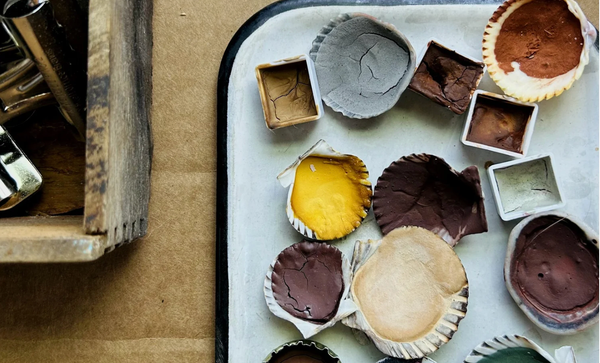
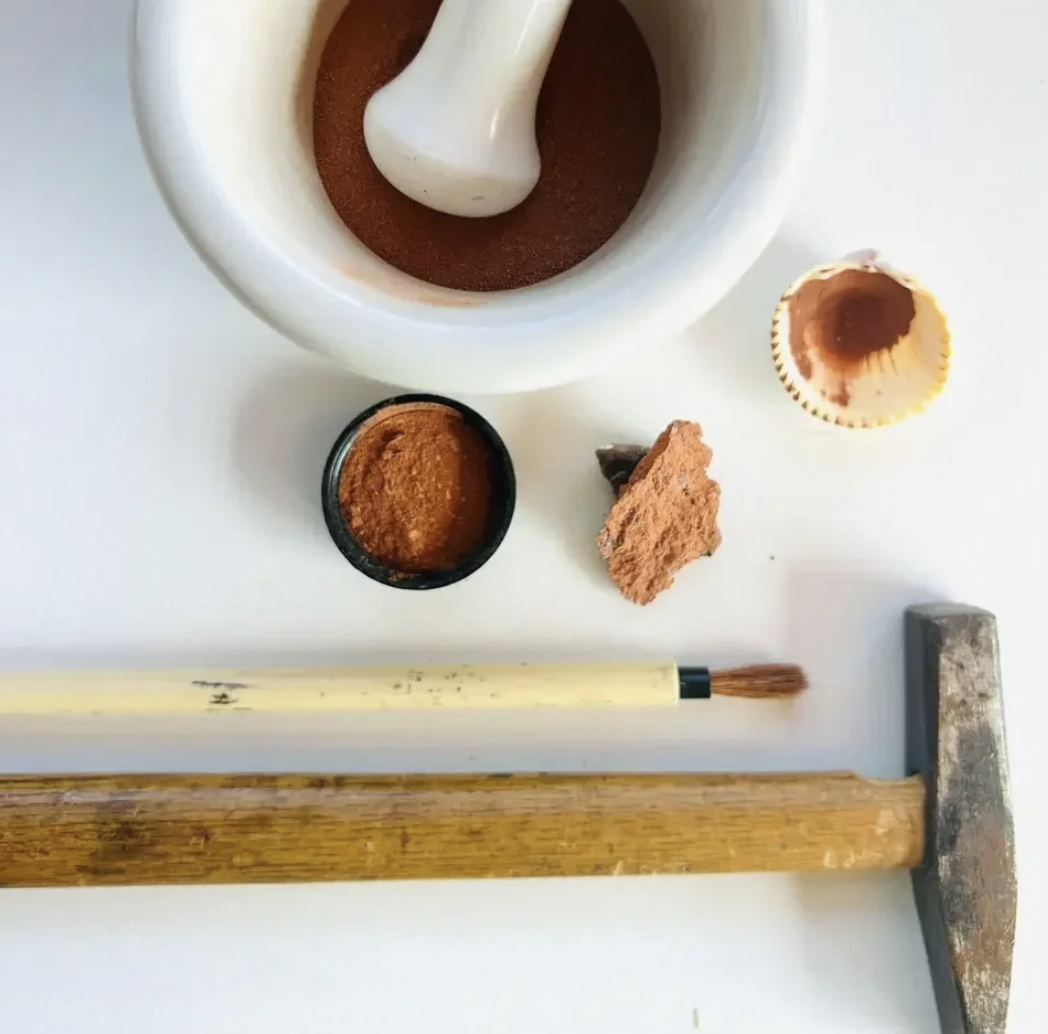
On a farm outside Chatham, Jill Duffy keeps a pile of old bricks salvaged from old repairs to chimneys and foundations. She grinds them into a deep red-umber pigment she then uses to interpret the trails on her farm into abstract expressionist paintings. The time and energy of making those bricks from clay, their historic employment, their decay, and finally their reformation into pigment, is now imbued in Duffy’s paintings.
She makes her oil paints, watercolors, and inks almost entirely from material like this—dug up, foraged, or grown on the property atFarm & Field, the 200-acre farm and studio she and her husband moved into in 2019.
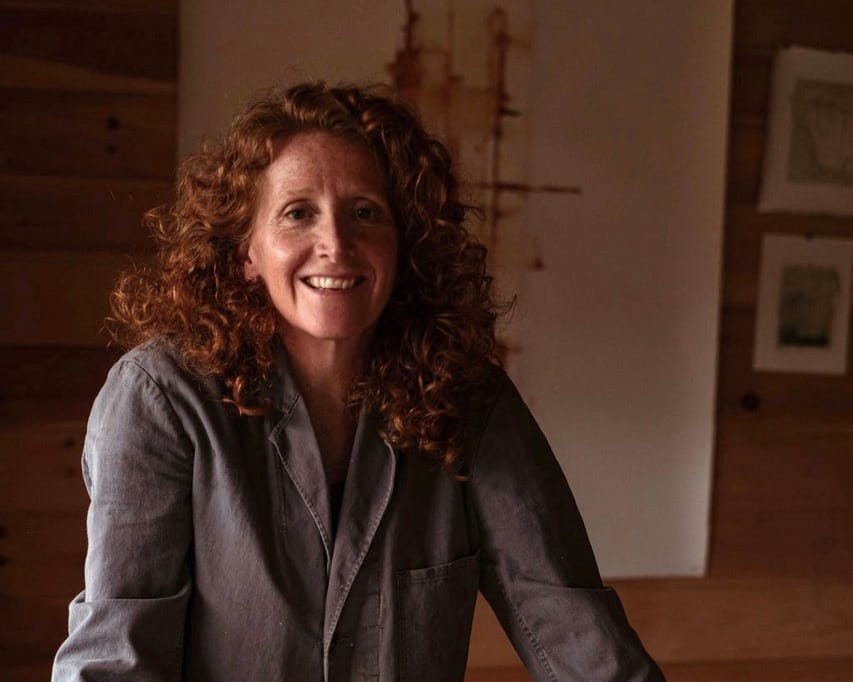
Jill Duffy. Photo courtey of the artist.
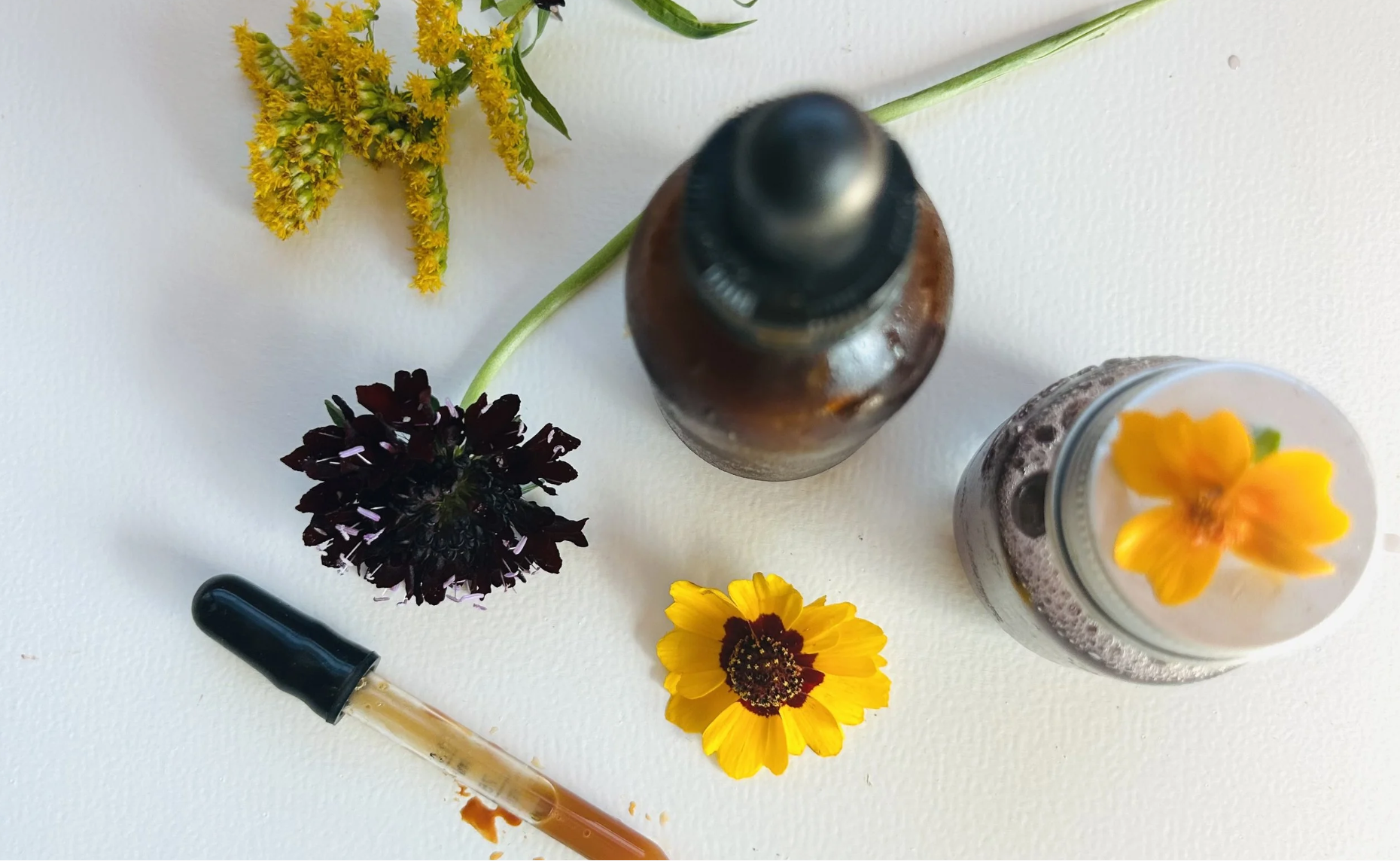
Duffy teaches what she knows in two workshops at the farm, both staged in the hayloft of an old dairy barn. Her “Botanical Inks,” class runs next on September 19, and “Earth, Charcoal & Paint,” will be held on November 7. Both events start with a foraging walk across the property before moving into the studio, where whatever participants find gets processed into finished paint, ink, and charcoal to take home.
Duffy had a fine arts degree and a career in advertising and design before any of this. She and her husband moved to the Hudson Valley in 2013, and her children went toHawthorne Valley, the Waldorf school and biodynamic farm in Ghent, on land that at the time abutted their own property. "I became more and more connected to the land," she says. As her design client list narrowed toward less appealing luxury-brand work, her own art forefronted itself in her desires.
Around that same period she read an article about Jason Logan, an illustrator who was making his own ink from black walnuts. Logan is the founder of Toronto Ink Company and his 2018 book Make Ink helped popularize the practice. "It just opened this massive door for me, and I went down this rabbit hole," Duffy says. Ink led to wanting watercolor, then oil paint, which led to a week-long trip to London to study with a professional pigment maker.
That trip is where the real spark happened, and not for the reason she expected. The pigment maker brought in dried botanicals and old London bricks to work with. "Fascinating material," she says. But what stayed with Duffy was a creek rock she'd carried from home, one her sons had already been rubbing into makeshift war paint. "When I started working with those rocks all the way across an ocean in London, I felt something ignite for me," she says. "It was like this spark that really came alive when I started working with earth that had a connection to my place."
An Ancient Process
Back home, Duffy leaned into recipes that predate synthetic pigment. "Right now my primary medium is oil paint, and I'm making paint the way it would have been made before the late 1880s, when synthetics revolutionized the color industry," she says. She works with linseed oil and cleans brushes with olive oil soap. "My studio smells better,” she says with a laugh. “It’s a lot cleaner, and it just feels in line with what we're doing on the farm."
Every brick has local history. "They're also, from a conceptual standpoint, a deep connection to the people that held this legacy before us," she says. Duffy and her husband are only the third owners of the farm since the 1800s.
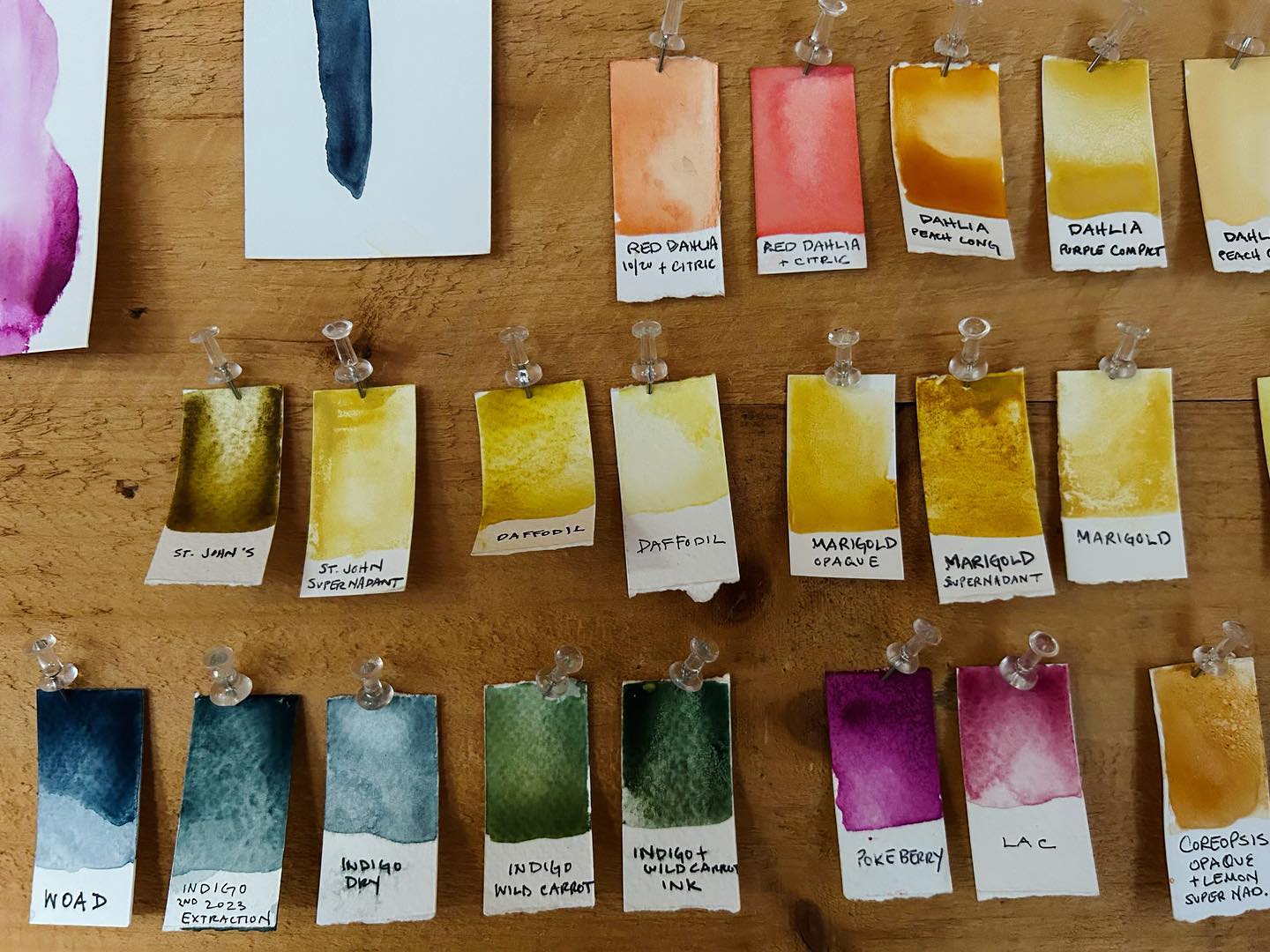
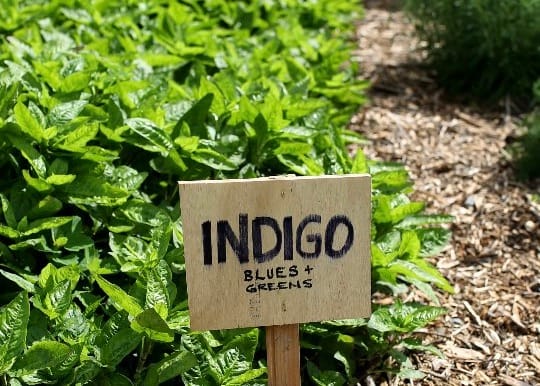
Indigo is the other color Duffy thinks of making most fondly, though she grows it rather than forages it, saving seed from year to year. Turning it into deep blue dye takes days to weeks of fermentation, a process with a history that can be traced from ancient Egypt through Maya and Zapotec dye-making in Mesoamerica to Japan. "There's definitely a thread," she says. "Oftentimes the color that I'm most interested in has a history beyond my farm or the Hudson Valley." Buckthorn berries, another farm find, shift from purple to blue to green depending on which metal salt is added to adjust the pH; sumac turns from light brown to black with the addition of iron.
A Day on the Farm
Both workshops begin the same way: a walk through the fields to forage, then into the hayloft, where the barn's old milking parlor now serves as Duffy's studio. In the ink workshop, participants steep foraged plant material, manipulate it naturally to the color they want, and bottle five to seven finished inks to take home. In the earth pigments workshop, students will bring soil from a place that means something to them or forage it on-site, burn grapevine down into artist's charcoal over an open fire, and collect eggs from the farm's chickens to bind into traditional egg tempera.
She says About half the people who sign up for her classes call themselves artists; the other half are, in Duffy's words, "makers, or nature lovers, or people looking for an opportunity to connect outside and meet new people."
Duffy is sharing a practice that now defines her life and her art. "I don't think I'd be making the art that I'm making now without the natural pigments," she says, but pigment-making itself, however immersive, isn't the end goal. "Maybe one could call pigment-making the craft of color, but I'm also making fine art that I'm ready to put out in the world." That work—abstract, built around the paths she walks across the farm, traced in walnut ink and vine charcoal—was curated by Linda J. Park for "Tracing Paths," her Upstate Art Weekend show this past June. It heads to Pinkwater Gallery at Kingston Social in October, in a show curated by Anne Sanger.
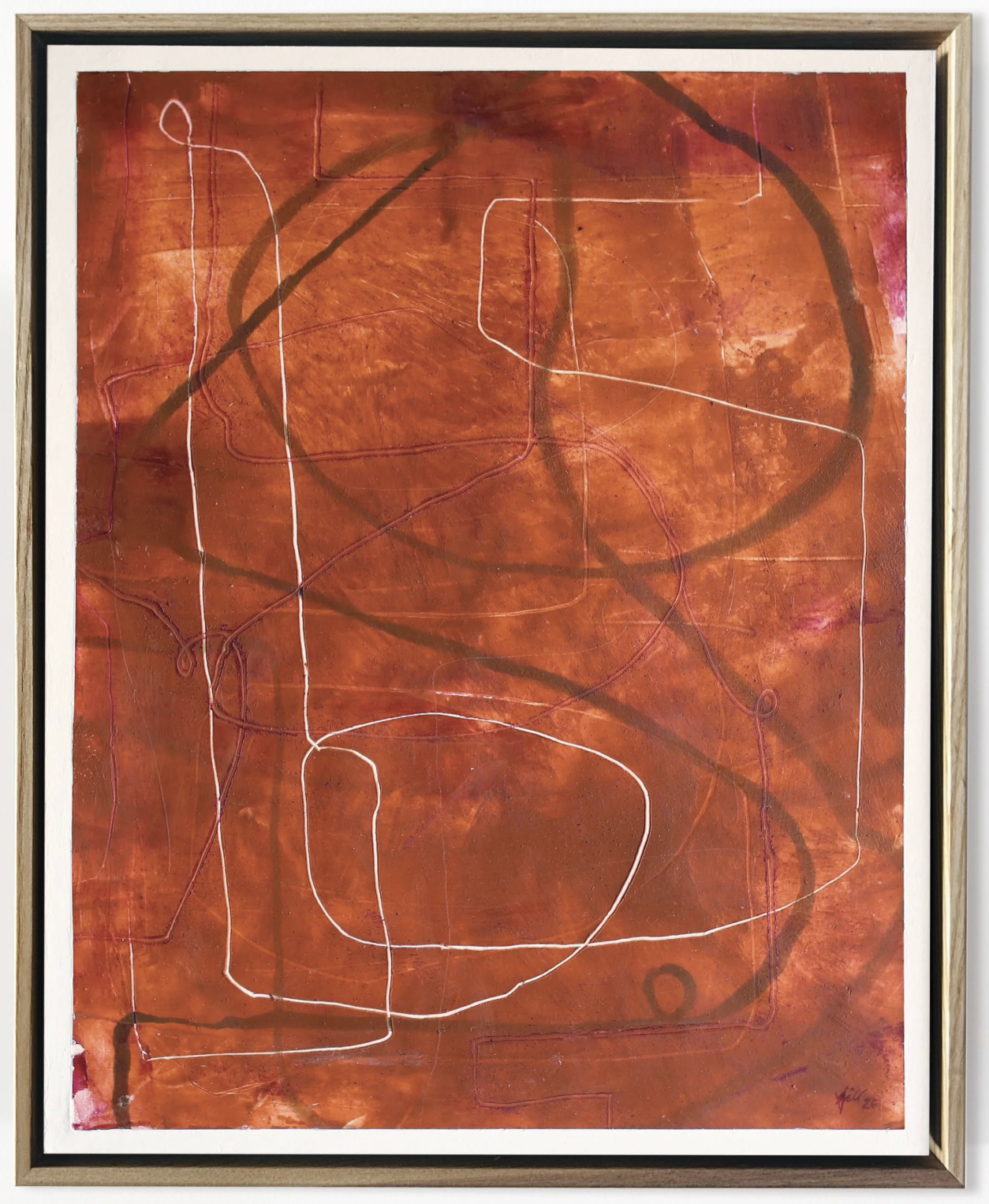
"She’s Walking With Me," by Jill Duffy. 12 by 16 inches, Oil and wax over ink on panel mounted on wood, 2026. Made from farm house brick, cochineal, and walnut pigments sourced on-farm and in Oaxaca, and processed into paints and inks by hand.
The workshops and the paintings end up circling the same idea from opposite directions. A brick that helped build the farmhouse gets ground into pigment; the pigment becomes paint; the paint traces a path across the same land the brick came from. These very specific pathways and this very specific patch of earth, now art everlasting.
After a decade of writing for RI (along with many other publications and organizations) Jamie took over as editor in 2025. He has a masters in journalism from NYU, a wonderful wife, two kids and a Carolina dog named Zelda.