"Red Flags for Everyone": What Performance Leaves Behind at Re Institute
A new group show in a Millerton hayloft asks what remains after the moment of encounter has passed—props, traces, and the residue of something unresolved.

A new group show in a Millerton hayloft asks what remains after the moment of encounter has passed—props, traces, and the residue of something unresolved.
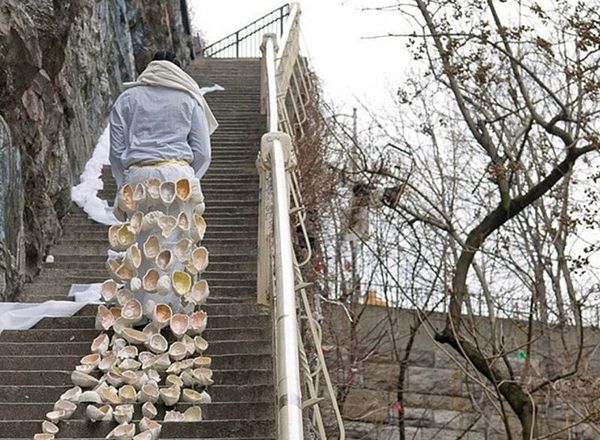
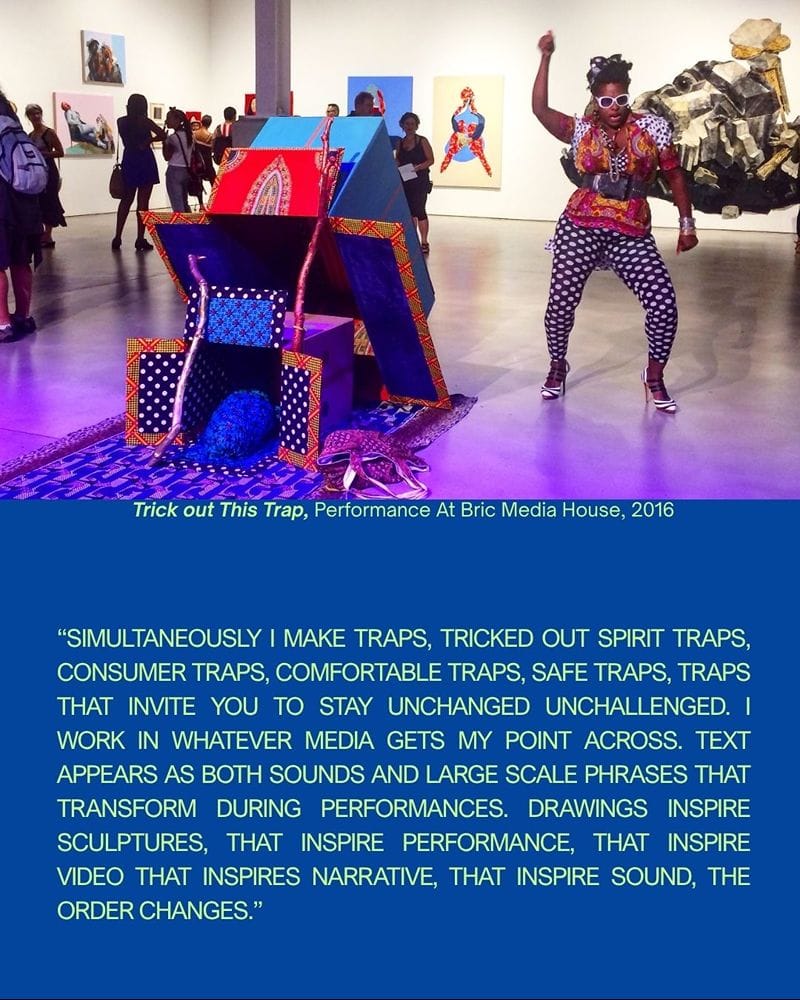
Aisha Tandiwe Bell performs "Breaking Heads." Image provided by Re Institute.
Most art shows display finished work. “Red Flags for Everyone,” opening July 18 at The Re Institute in Millerton, is interested in what's left over after the moment of making—the props, residues, and traces that remain when a live encounter ends. Curated by Tara Foley, a Hudson-based artist and educator, the show treats those leftovers as uncovered artifacts.
"The 'red flags' are not warnings to turn away," the exhibition text announces, "but signals to engage with something you might not completely understand."
The Re Institute, a 2,000-square-foot hayloft gallery in a 1960s barn at 1395 Boston Corners Road, has been run since 2009 by sculptor and curator Henry Klimowicz, who has shown artists including Judy Pfaff, Todd Chandler, and Letha Wilson. Klimowicz expects the artists he invites to find a specific reason for being there. "There has to be something in the process of showing an artist that brings depth to the artist's understanding of their own work or the process of exhibiting their work," he says. The seven artists Foley has assembled—Alison Pebworth, Foley and her collaborator Alex Theodoropulos, Ace Lehner, John O'Donnell, Aisha Tandiwe Bell, Lukaza Branfman-Verissimo, and Christy Gast—each have that reason.
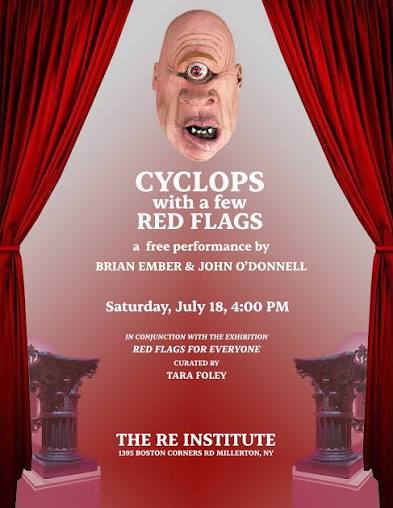
"Red Flags for Everyone begins with artists engaging in live interactions and then lingers in what those moments leave behind," the Re Institute statement continues. "The exhibition is composed of the remnants of action and interaction: props, materials, thoughts, traces, and residues. These objects are not documentation so much as artifacts—evidence that something vulnerable, experiential and unresolved took place. The title points to the unexpected imperfections that engagement so often reveals. Here, the 'red flags' are not warnings to turn away, but signals to engage with something you might not completely understand."
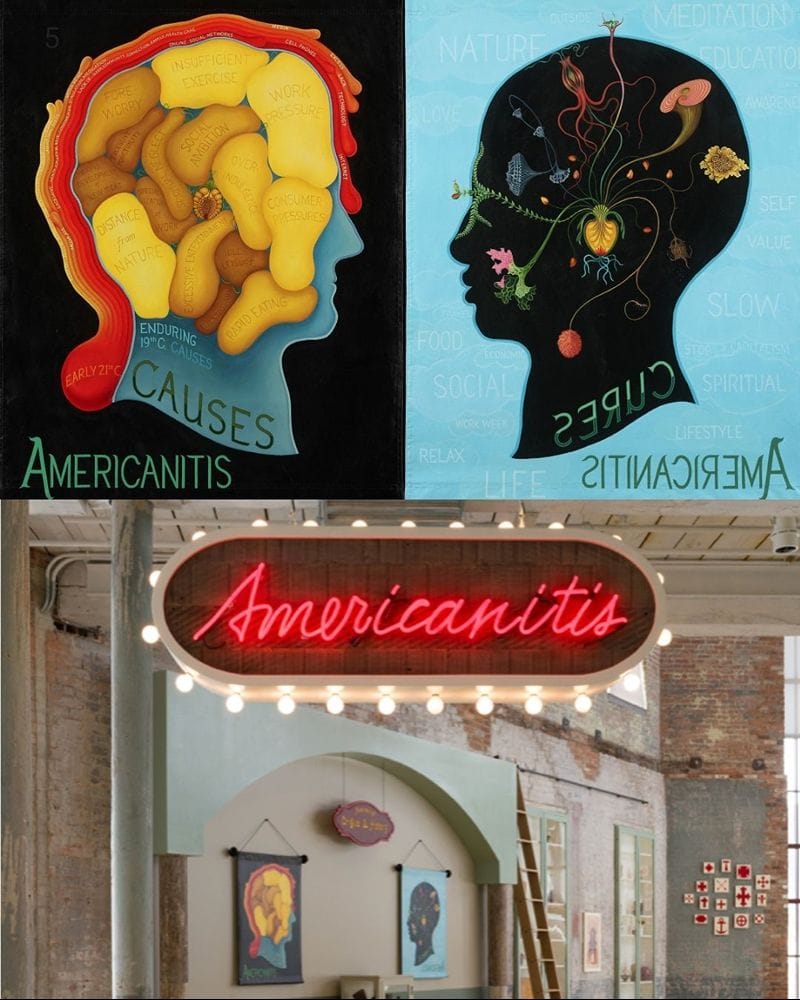
Alison Pebworth is a Louis Comfort Tiffany Award winner and MacDowell Fellow who spent years traversing the country, her work revolves around observing and commenting on contemporary culture through re-imagined prototypes of early American histories and practices. Her recent multi-year residency at MASS MoCA in North Adams produced “Cultural Apothecary,” an installation exploring "Americanitis."
"It's not about being anesthetized. It's about being compassionate. It's about extending a remedy for what ails us as a way of caring about a stranger," Pebworth says.
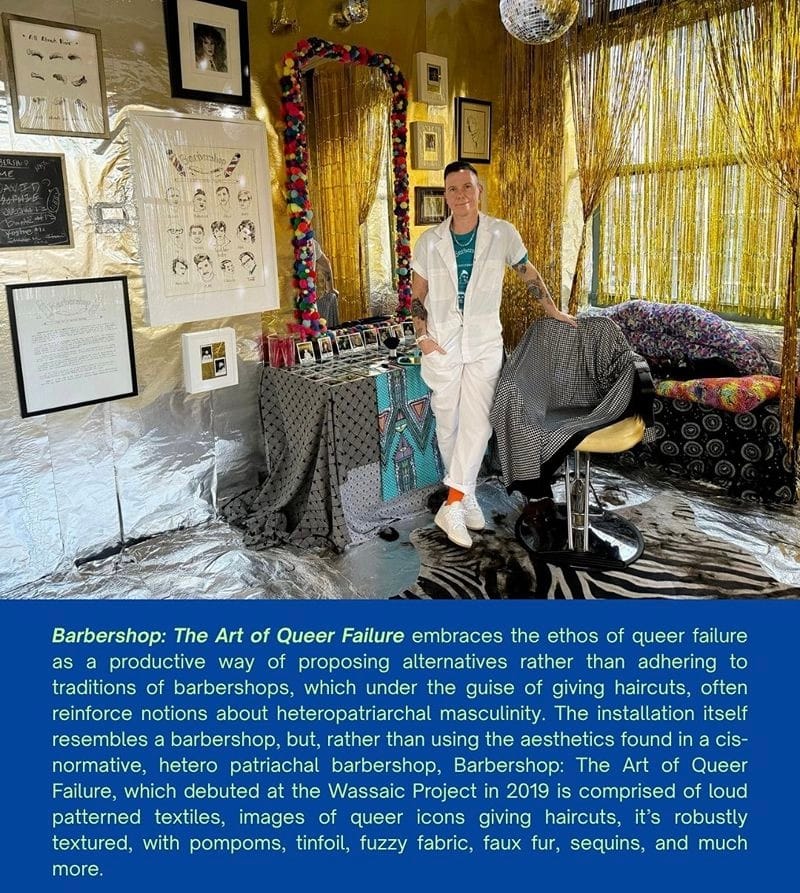
Ace Lehner, a tenure-track professor of art and art history at the University of Vermont and a Hudson Valley–area artist, brings to the show a practice built around trans and queer visual culture and what Lehner calls "queer failure.” Their best-known piece, “Barbershop: The Art of Queer Failure,” which debuted at the Wassaic Project, turns the motif of the barbershop into a site of world-making: Lehner gives haircuts, and in exchange, participants agree to engage in an act of queer world-making before their haircut grows out. The props and residue of that exchange like the chair, the mirror, the terms negotiated, and the trimmings left behind now create provocative interpretations of their own at Re Institute.
Aisha Tandiwe Bell creates myth and ritual through mixed media including sculpture, performance, video, sound, drawing, and installation, addressing themes of fragmentation, shape-shifting, code-switching, hyphenated identities and multiple consciousness. Bell has described her sculptural characters as "a metaphor for awareness and for the space between freedom and the traps of race, sex, and class that Bell’s characters plot their escape from.
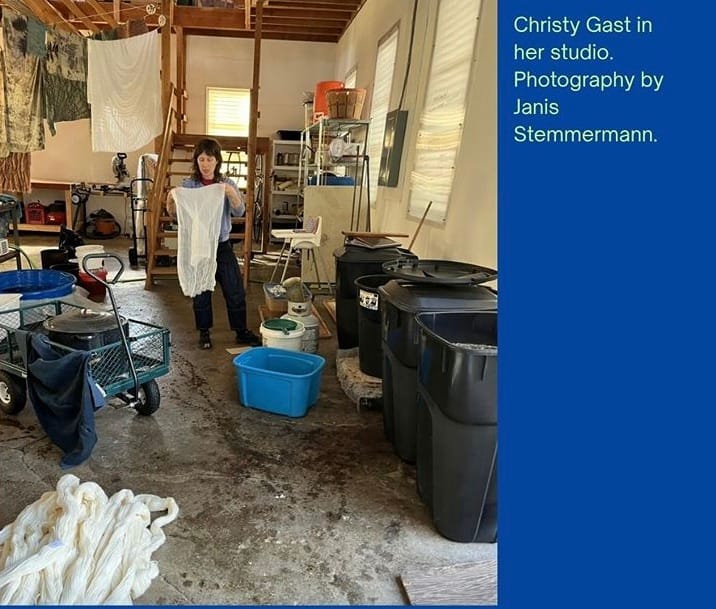
Dutchess County based artist Christy Gast’s work is Motivated by what she describes as "a deep and burning need to get out of town and look at the outskirts, the underskirts, and the infrastructure." Gast explores the American landscape in her work, recognizing, fetishizing, and challenging the often masculine narratives overlaid onto lakes, mountains, and open plains. The absurdist residue of those encounters—the canvas rockets, the denim sculptures, the beaver-chewed sticks she collects near her home—is an artifact of vulnerable, unresolved engagement.
"Red Flags for Everyone" opens Saturday, July 18 with an opening reception from 2–6pm and a performance program from 3–5pm featuring Alison Pebworth, Lukaza Branfman-Verissimo, Ace Lehner, John O'Donnell, and Tara Foley. A second performance event on August 15 (3–3:50pm) features Aisha Tandiwe Bell and Christy Gast and Tara Foley. The exhibition runs through August 30. The Re Institute is open Saturdays from 1–4pm when shows are up; other times by appointment.