In Talks, Exhibits And Music, Montgomery Place Explores A Less-Than-Palatable Past
Spring programming at Montgomery Place celebrates art and beauty while acknowledging the site's history of slavery.

Spring programming at Montgomery Place celebrates art and beauty while acknowledging the site's history of slavery.
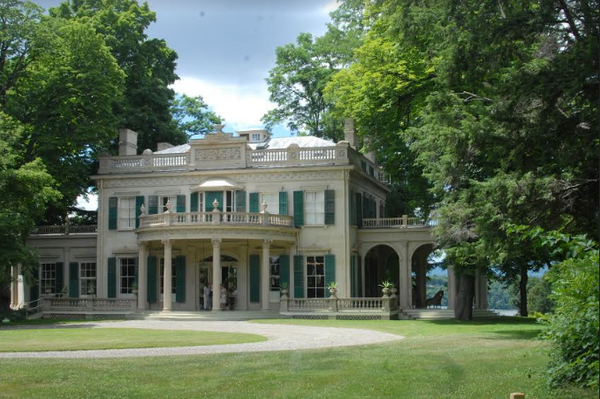
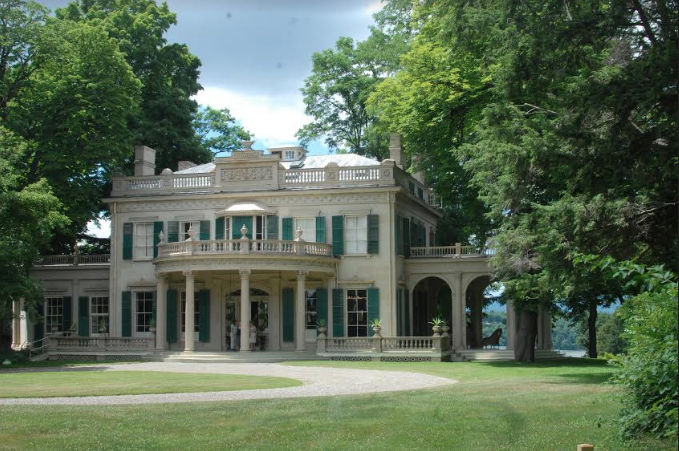
The Montgomery Place mansion in Red Hook, New York is one of the most exquisite historic architectural jewels left by the Livingston dynasty in the Hudson Valley. Purchased by Bard College in 2016, the site will soon host three spring series, including performances or period-appropriate music of the Gilded Age; garden events; and the inaugural Gilsonfest, which honors the life of Alexander Gilson, an accomplished gardener and one of the many slaves owned by the Livingston family.
“Until pretty recently most regular people didn’t realize there was slavery in New York,” said Gilsonfest founder and Bard history professor Myra Armstead. “But any historian would know that the Hudson Valley, in the Colonial period through the early 1800s, was a slave society.”
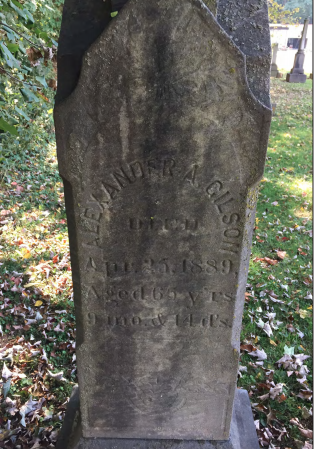
In spite of Gilson's inhumane bondage by the region’s most celebrated historic family, after being freed by the Manumission Act of 1827 he continued his work as Janet Livingston Montgomery’s gardener and eventually went on to leave the estate for his own nursery business in Red Hook. Gilson’s gravestone was just recently discovered in a small integrated gravesite by Historic Red Hook member Claudine Klose.
“Gilson was exceptional by virtue of being successful,” said Armstead. “In those days [for a freed slave] to be a success was to be independent. For most African Americans at that time it was much more hardscrabble. He was able to have a rapport with successful whites and own his own property.”
It is unknown how many slaves the Livingston family owned in total but records show Montgomery Place alone enslaved a whole lot of people — a dozen at the time of Manumission.
“They were a family of substance and they all had slaves,” said Armstead. Then, paraphrasing historian Walter Johnson, she added, “‘Slaves made white men.’ It’s the ownership of slaves that allowed American men to achieve their success stories. That’s the hardest part for contemporary people to understand.”
This series of events is a collaboration between Bard, Historic Red Hook, Dutchess County Historical Society, and Red Hook Quilters.
On Friday, May 24 at 11:30 a.m. there will be an opening of an exhibition, Alexander Gilson: From Property to Property Owner, at the Historic Red Hook Annex on Cherry Street. It includes an exhibit by students in a Bard College class about Alexander Gilson, a quilting presentation, and a presentation on historic garden artifacts and plants.
Then there will be a public signage dedication in honor of the life of Alexander Gilson at 1 p.m. at the Montgomery Place Visitor Center followed by a gathering at the Montgomery Place Greenhouse tool room to celebrate an adjunct exhibition on Gilson.
The program concludes on Sunday, May 26 at 2 p.m. with the lecture “History of Memorial Day” by Armstead, Lyford Paterson Edwards and Helen Gray Edwards at the Montgomery Place Coach House. Events are free and open to the public and no registration is required.
“It’s important for people to be aware of the long historical presence of slaves and freed people in the area,” Armstead said of what she hopes the public takes away from Gilsonfest. “There’s been a lot of surprise, enthusiasm, and pride about Gilson in the local black community and it’s been encouraging for black students on campus. They’re embracing this history.”
The gift that Gilsonfest gives to Montgomery Place and to us all is context. Enjoy the serenity of the gardens, knowing they were cultivated by Gilson. Listen to the music that filled the halls in the late 1800s, with a sober understanding of what came before. And enjoy Gilsonfest, knowing that while the history of Montgomery Place is soiled by the sin of slavery it is at least a more complete and honest history.
The season begins on Saturday, May 11 at 3 p.m. with the concert “The Musical Life of Cora and Thomas Livingston at Montgomery Place,” a recital with Christopher Brellochs on saxophone and Rita Costanzi on harp, inside the Montgomery Place Mansion House Parlor. The event is limited to 40 seats.
Cora Livingston Barton and her husband Thomas Barton expanded the Montgomery Place estate to express the sensibilities of the time. It was 1860 and the beginning of the Gilded Age; relatives such as Major General Richard Delafield, who was stationed at West Point, inspired the dedication of musical compositions such as “Florida March” and “Manassas March.” This performance will be a singular opportunity to hear these forgotten compositions.
Then, on Saturday, May 18 at 3 p.m., Brellochs, a Dutchess Community College Associate Professor, will present the lecture “Music of the Gilded Age in the Hudson Valley,” discussing the role and importance of music locally during this period.
Finally, on Sunday, May 26 at 4 p.m., Brellochs’ saxophone quartet will perform “The Gardener of Montgomery Place and the Composer of Newburgh, New York,” an outdoor performance free to the public. Performed on the porch, the event will address Gilson’s contribution to the site by playing works by Newburgh, New York composer Ulysses J. Alsdorf, whose grandfather was also freed by the Manumission Act and, promoters say, had a similar life journey.
Continuing the celebration of horticulture on the mansion grounds, on Friday, May 24 at 4 p.m, there will be garden party exhibition opening of The Gilded Garden: Historic Ornament in the Landscape at Montgomery Place, curated by Barbara Israel Garden Antiques.
For more specific information on all of the events, please visit bard.edu/montgomeryplace.