Sara Karloff on the Father Behind the Monster Ahead of New "Frankenstein" Score Premiere
Composer Michael Shapiro brings a world premiere chamber version of his Frankenstein—movie score to Stissing Center this Saturday, with Boris Karloff's daughter on hand to talk about the man behind the monster.
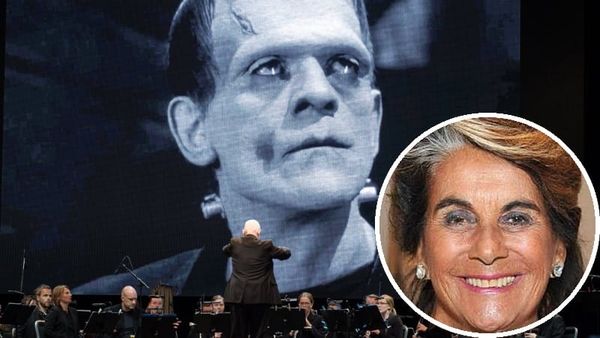
On Saturday, August 29,Stissing Center in Pine Plains screens Frankenstein (1931) in a new way: with a live score, performed in the room, for a film that was originally released with no music at all. Composer Michael Shapiro's chamber arrangement gets its world premiere, performed live by the Argus Quartet with pianist Steven Beck.
The evening opens with a Q&A featuring Sara Karloff, Boris Karloff's daughter, and includes a display of Frankenstein-inspired fan art from the collection of Stissing Center's own executive director Patrick Trettenero.
A Nine-Year-Old's Fan Letter
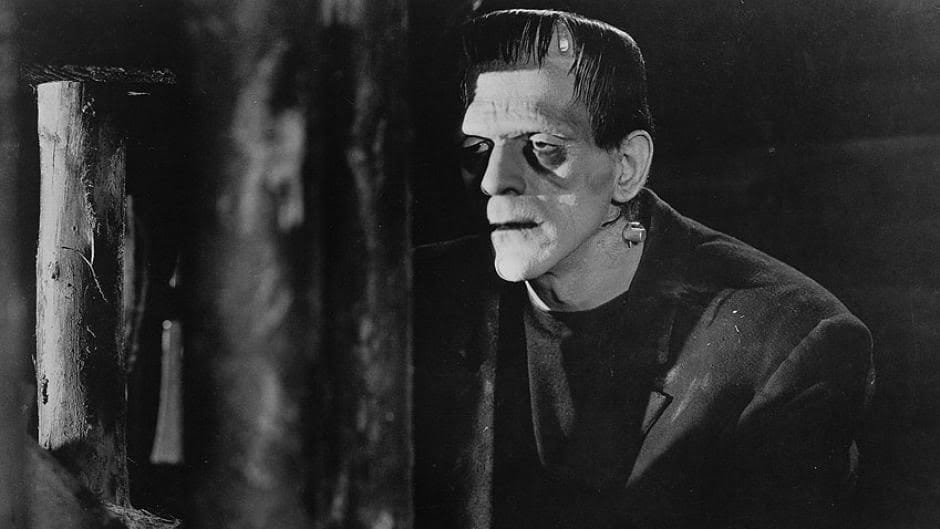
Shapiro's connection to Karloff’s Frankenstein goes back to childhood too. He first saw it around age seven or eight on “Million Dollar Movie,” a New York tv program on WOR Channel 9 that used to run the Universal horror catalog in heavy rotation. When his father caught him watching, he told Shapiro to turn it off—then explained why. As a 13-year-old in 1931, the elder Shapiro had paid a nickel to see Frankenstein at the Brooklyn Paramount, and the sight of Karloff's monster walking backward through that doorway gave him nightmares for a full week.
The warning didn't take. By nine or ten, Shapiro had also discovered “Thriller,” the horror anthology Boris Karloff hosted on ABC, and was hooked enough to write him a fan letter, addressed simply to “Boris Karloff, Hollywood, California.” Through a little postal magic It reached him. Karloff wrote back with two autographed photos—one as himself, and one as the monster, on older paper Shapiro guesses came from a stack saved since the film's original release. Shapiro still has both.
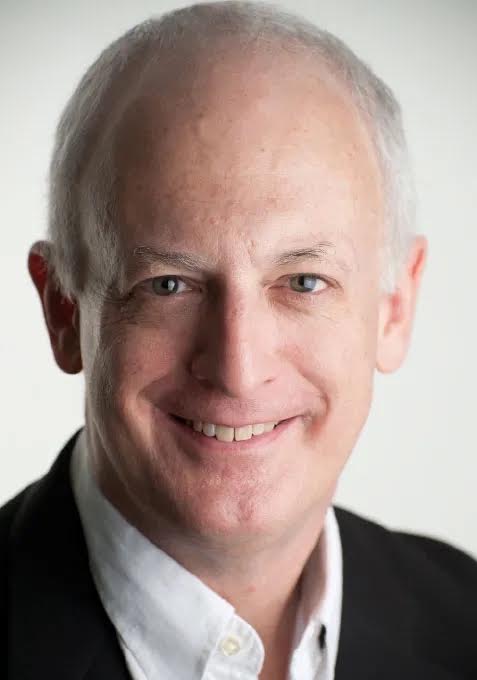
Composer Michael Shapiro.
Decades later, a mutual friend introduced Shapiro to Sara Karloff, and the two became close collaborators. "We've become incredible friends," Shapiro says, pointing to a growing list of joint projects, including an upcoming London premiere of the full orchestral version of his score with the Royal Philharmonic at Cadogan Hall in October, where Karloff will again join him for a Q&A. "It's just a dream come true for me," he says.
Six Versions, One Score
Shapiro was commissioned to write the Frankenstein score in 2001, and it premiered the following year at the Jacob Burns Film Center. Since then it's been reworked into six configurations—chamber orchestra, full orchestra, opera, wind ensemble, and now piano quintet—and performed, by Shapiro's count, more than 80 times worldwide, including a recording of the overture by the City of Birmingham Symphony Orchestra. Saturday's piano quintet arrangement is a world premiere in its own right, scaled specifically for Stissing Center's more intimate room.
The original film, Shapiro explains, was made before studios had solved the technical problem of layering music under dialogue. Critics, including Leonard Maltin, have long noted that the silence leaves the film feeling static. Shapiro's score was written to close that gap without overwhelming it. "I characterize and underscore what is happening in the drama, and in the personalities of the players," he says. "When the score is done live with the film, after the overture, people forget there's live music. It becomes one artistic expression."
Stissing Center became involved in the project through its own executive director. Patrick Trettenero, a self-described devotee of Boris Karloff and Frankenstein, first connected with Shapiro after driving up to Binghamton to hear a performance of the orchestral score there. The Saturday show, and the fan-art exhibit pulled from Trettenero's own collection, grew out of that conversation.
What the Monster Means to Children
"Boris Karloff, the great actor that he was, gives the creature a soul," Shapiro says. "It has a soul. It feels pain." Sara Karloff has her own account of that effect, drawn from watching audiences—especially children—respond to her father's performance over the decades. "Children get it," she says. "They understand that the creature is the victim and not the perpetrator." She points to Marilyn Harris, the child actor who played Maria in the film, who wanted to always hold Boris Karloff's hand and ride in the same car with him on the way to the set. "Those are real tears, and those are real sympathies," Karloff says of Harris’s portrayal. "He always elicits real sympathy and understanding from children." (Shapiro’s father excluded, apparently.)
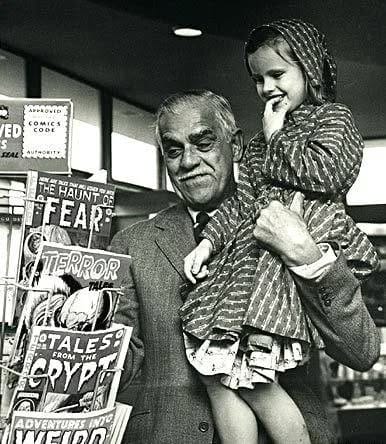
Boris and young Sara Karloff inspect the comics section.
Off screen, Sara Karloff describes her father as "a lovely human being," a good listener with a warm, dry sense of British humor, who was "head over heels in love with the game of cricket," kept a pet pig named Violet, and spent much of his free time gardening. "He was the antithesis of the roles he played," she says, "which makes him an even better actor."
It's that contrast, more than the film's scares, that Karloff hopes carries through Saturday's screening: a monster movie that, underneath the score and the makeup, is really an introduction to the gentle man who made it unforgettable.
Stissing Center, 2950 Church Street, Pine Plains, NY 12567
After a decade of writing for RI (along with many other publications and organizations) Jamie took over as editor in 2025. He has a masters in journalism from NYU, a wonderful wife, two kids and a Carolina dog named Zelda.