The Future of Rural Interiors
The makers, dealers, and dreamers reshaping how the region decorates itself.

The makers, dealers, and dreamers reshaping how the region decorates itself.
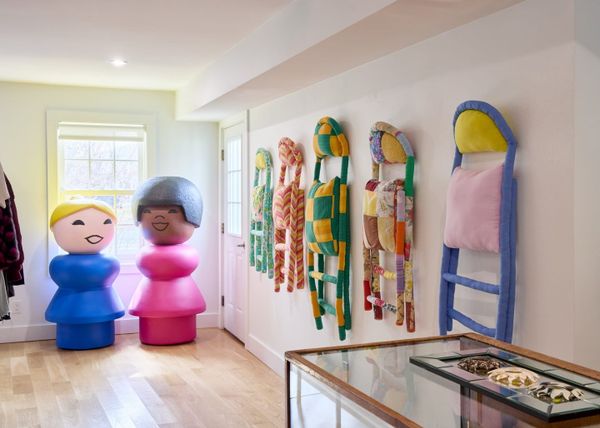
Peggy Mercury, at Kent Barns, blurs the line between contemporary art gallery and boutique. Photo by Josh Simpson of past exhibition “Gathered Threads” by Natalie Baxter.
Joan Osofsky has been thinking about what this region's homes look like—and what they should look like—for four decades. What she arrived at isn't a style so much as a visual sensibility: "Warm, timeless, living, personal with heart, modern country, authentic, collective, cozy and quietly beautiful." Hammertown, the three-store interiors empire she founded in Pine Plains in 1985, became a reference point for a certain way of inhabiting this landscape.
The next generation of homeowners, she says, is finding its own version of the same instinct. "They're seeing beyond IKEA and West Elm. They want to thrift, go to antique shops, repurpose things—and do it in a modern, comfortable way." That impulse is alive and well across the region, in shops and studios that each bring their own eye to the question of how to live beautifully in a beautiful place.
Hammertown closed this spring. Osofsky, now in her 80s, made the call herself after succession planning that stretched through Covid and nearly concluded three times. The inventory is gone. The sensibility isn't. Here are a few of our favorite places carrying it forward.
9 Maple Street, Kent, Connecticut
Part gallery, part boutique, entirely its own thing. Founded by James Boehmer—an acclaimed makeup artist and former global artistic director for Shiseido—and Greg Fricke, a former modeling agency scout, Peggy Mercury opened at Kent Barns in 2024 and has become one of the more interesting stops in Litchfield County. Apothecary, accessories, ceramics, contemporary art, handcrafted objects—everything chosen to provoke, elevate, or simply delight.
521 Warren Street, Hudson
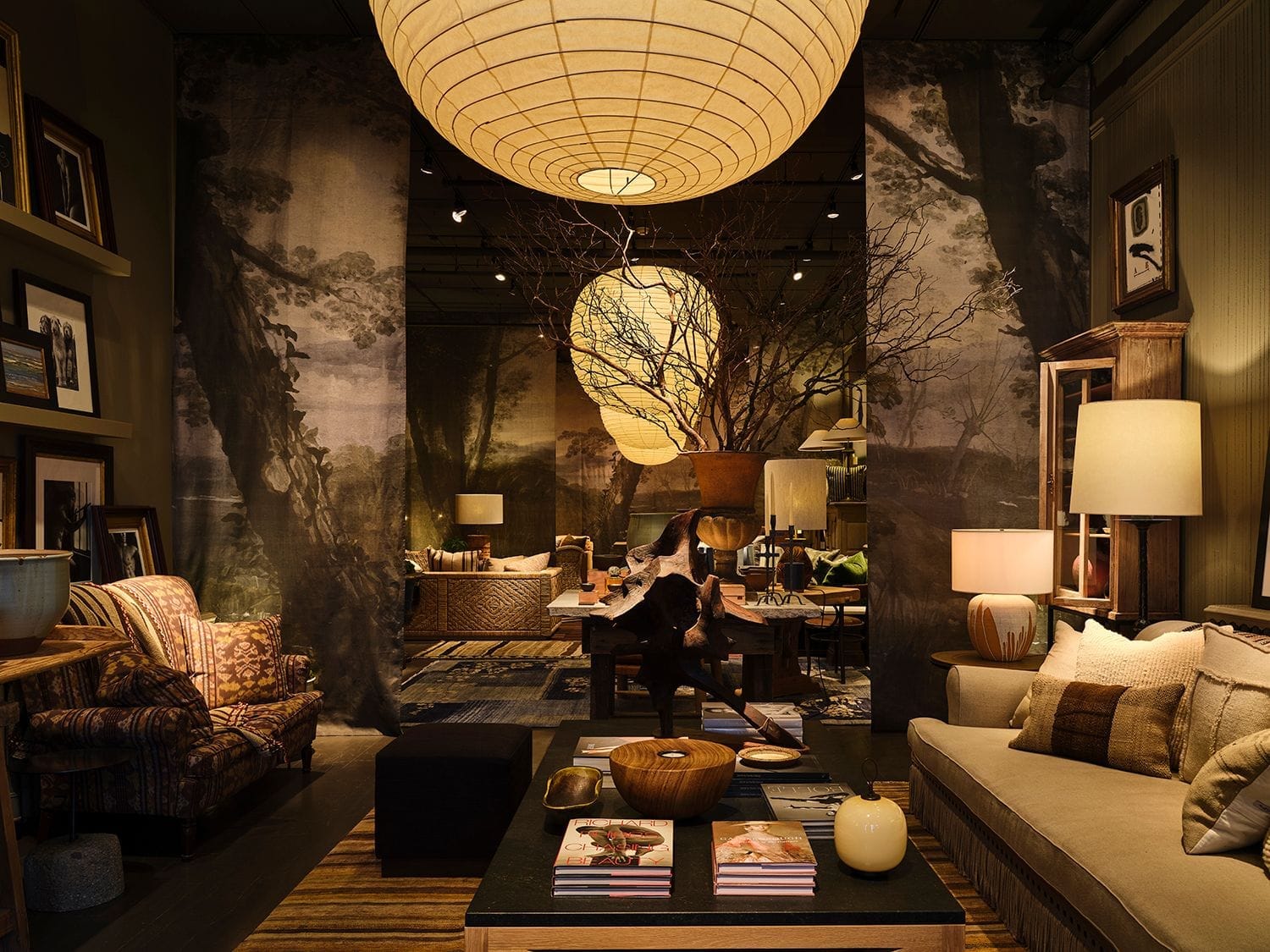
Alfredo Paredes spent more than three decades at Ralph Lauren, rising to executive vice president and chief creative officer. In 2019 he left to run his own practice, and last March, for the first time, he put his name on a building. Not in Manhattan. In Hudson. The shop at 521 Warren integrates his own furniture line with European vintage—worn farmhouse tables, early modernist chairs, surfaces that show their use. "Earth tones are honest," he says. "They're the colors of the natural world—wood, stone, soil, leather. The quickest way to date a space is to chase a color moment."
4 Depot Square, Chatham
While the Shaker Museum's permanent home takes shape in Chatham (opening 2028), artist Maira Kalman has curated a pop-up exhibition and general store drawn from the museum's vast collection. Her own new paintings hang alongside Shaker objects she's selected—the conversation between her exuberant, digressive sensibility and the Shakers' handsome functionalism turns out to be a pleasant experience. The store sells notecards, books, textiles, and handcrafted objects, with proceeds benefiting the museum.
8 Old Barn Road, Kent, Connecticut
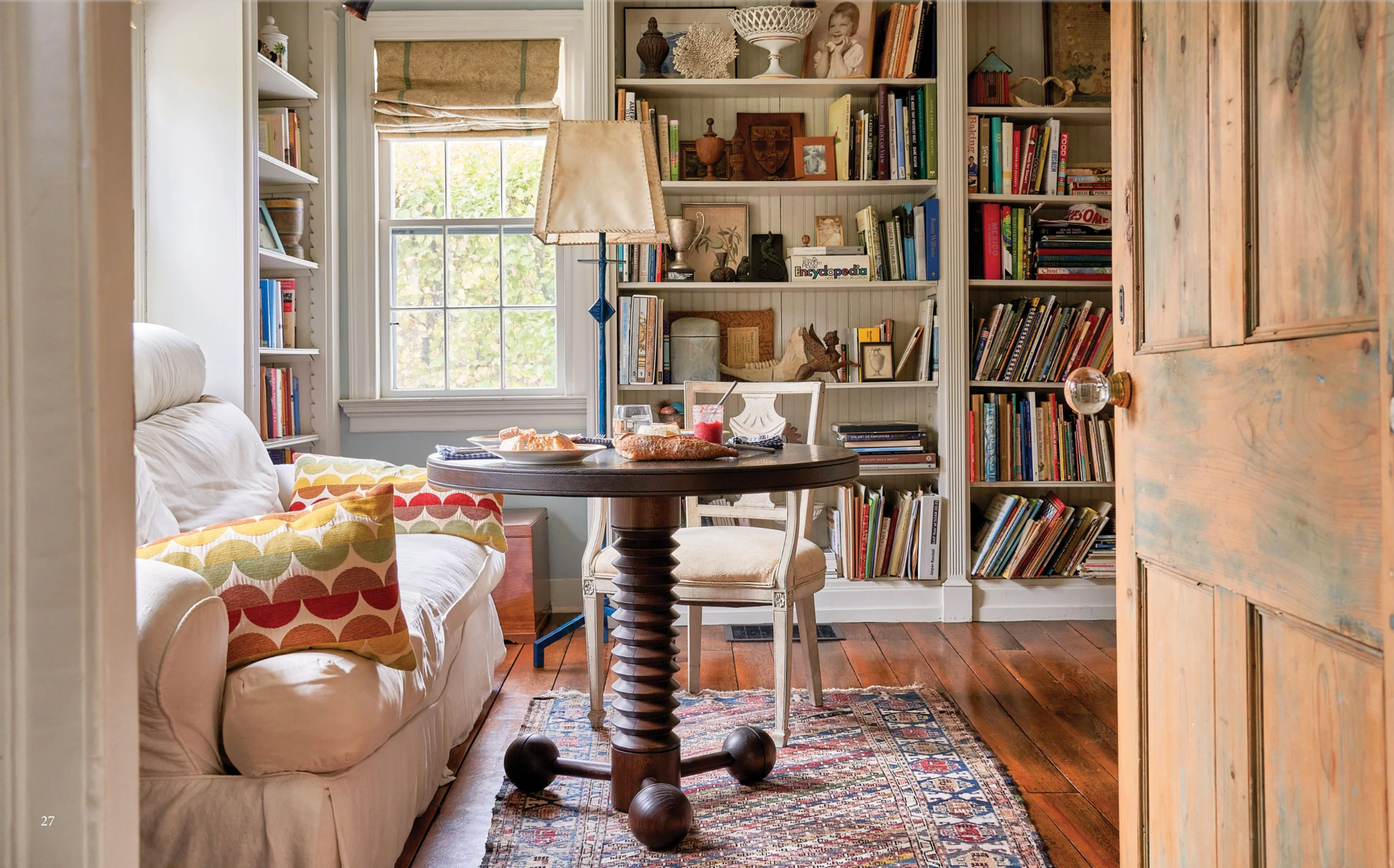
Seven thousand square feet in a converted barn complex outside Kent, run by Greg Randall, sculpture and 18th-century English furniture maker, and Natalie Randall, whose background is fashion. Genuine connoisseurship at the high end and a real eye for how things will live in a room. The custom furniture workshop produces pieces on commission.
292 South Main Street, Sheffield, Massachusetts
Andrew Jack came to chairmaking circuitously through art school and an apprenticeship with Tennessee master Curtis Buchanan, widely regarded as one of the foremost contemporary interpreters of the Windsor tradition. Buchanan now refers clients and students directly to Jack, making the Sheffield shop a living link in a long chain. No nails, no screws; the strength resides entirely in differential moisture content between components as they seize and tighten. "The seat is like a dividing line," Jack says. "It's the epicenter for all the joinery." Traditional forms—the Birdcage Windsor, the Democratic chair—made well, last for a long time and never go out of fashion.