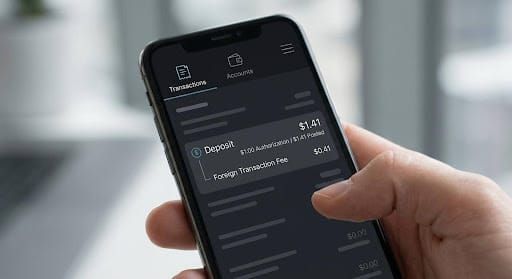
A dollar is a dollar. That’s the whole appeal of a one-dollar minimum, and it’s why Canadians keep searching for it.
Then you make the deposit and the line in your banking app reads $1.37. Or the dollar goes through clean and the site shows a balance of 0.71. Neither of those is a scam, usually. It’s the ordinary friction of pushing a very small amount of money through two or three systems that were never built for very small amounts of money.
Worth knowing where the gap comes from before you go chasing the number.
Where the extra cents come from
Most of it is currency. A good share of the sites running a one-dollar floor hold balances in US dollars and will take a Canadian card without complaint. The deposit posts in USD, your bank converts, and the conversion carries a foreign exchange fee on top of whatever rate you got. On a one-dollar deposit that fee can be a real fraction of the deposit itself. Almost no money in absolute terms. Proportionally, though, it’s the most expensive deposit you will ever make.
Then there’s the processor, which has its own floor. Sometimes that floor isn’t the casino’s. A site can advertise $1 while the method you picked won’t move less than $5, and you tend to find this out at the cashier rather than on the landing page. SlotsUp’s low-deposit casino list for Canada separates the site minimum from the payment method minimum, and those two numbers disagree more often than you’d think. It varies by method and by site, which is the annoying part, because you can’t learn it once and be done with it.
One thing that does not cause the gap, despite getting blamed for it constantly, is Interac. Interac e-Transfer handles one-dollar amounts fine.
The statement puzzle
This one confuses more people than the fees do.
You deposit a dollar and the entry that shows up carries a company name you’ve never seen, often registered somewhere with no obvious connection to the site you were on. The merchant name on a card statement is frequently the payment processor and not the merchant. That’s standard across a lot of online commerce and has nothing to do with gambling in particular.
What makes it worse at a dollar is that there’s no amount to recognize it by. A $40 charge you can place. A $1 charge from a processor you’ve never heard of, noticed three days later, you cannot. Anyone who has had to work out what a casino statement in USD actually refers to knows the reconstruction takes longer than it should.
So make a note of the date and the method on your first deposit at any new site. Five seconds, and it saves you an email to support.
A dollar in, but not a dollar out
Here’s the part the minimum deposit figure doesn’t tell you.
Minimum deposit and minimum withdrawal get set separately, and the withdrawal floor is almost always the higher of the two. A site perfectly happy to take $1 may not process a payout under $20, and at some places it’s more than that. The dollar gets you in. Getting anything back out means building the balance past a threshold nobody mentioned at the door.
Bonus qualification works the same way. Welcome offers normally carry a minimum of their own, and it’s rarely the site minimum. A dollar is enough to open an account and play. It usually isn’t enough to trigger anything.
For comparison, the provincial side
The provincially run sites don’t really compete in this part of the market. Their floors sit higher and they’re published plainly, which makes them a decent reference point for what a deposit minimum looks like with no acquisition incentive attached to it.
- BCLC’s PlayNow — C$5
- OLG in Ontario — C$15
- Loto-Québec’s Espacejeux — C$20 by card, or C$10 through a prepaid voucher
- Several of the private Ontario-licensed operators — C$10
None of them go below C$5.
Check any of these at the operator’s own cashier page before you rely on them, since they do move.
What to actually do with this
A one-dollar minimum is real and it works. It gets you inside a site’s cashier, its interface and its game library for about the price of nothing, and that’s a perfectly good use for it.
Just treat the dollar as a test rather than a bankroll. Put it in, look at what posts to your account and what posts to your bank, note the discrepancy if there is one, and then decide whether you want to use the site at a size where the fees stop mattering. Most of the friction that makes a one-dollar deposit awkward quietly disappears at twenty.
And if the two numbers don’t reconcile at all, that’s useful to know as well. Better to find that out for a dollar.