On Monday the Hudson Common Council introduced a resolution asserting its authority over city real estate contracts—a message to new Mayor Joseph Ferris, who extended a controversial 70-unit housing development agreement in May without council approval.

The resolution, introduced by Council President Margaret Morris, does something unusual: stating, in formal legislative language, a power the council already has—that under city code, no sale or lease of city real estate may be made, authorized, or changed without its approval. It's a direct response to the discovery, surfacing at a late-June meeting, that Ferris had quietly signed an amendment to the city's contract with Kearney Realty & Development Group on May 20, weeks before the council or the public knew, without seeking authorization. 

Hudson Mayor Joseph Ferris

What the Heck is Going on?

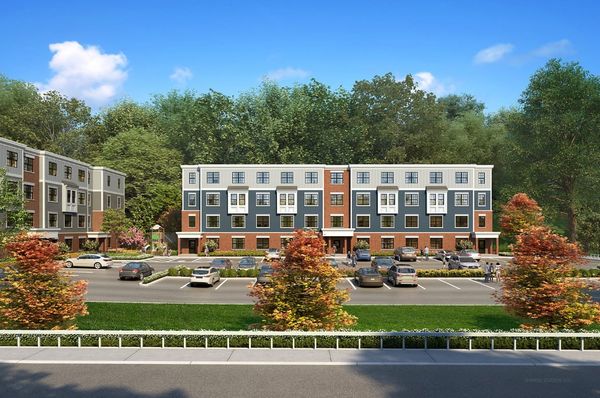
The contract in question dates back to May 2023, when the city agreed to sell two parcels—on Mill Street and State Street—to Kearney for $420,000, part of a "scattered-site" affordable housing plan under then-Mayor Kamal Johnson; a third parcel, on Rossman Avenue, was authorized separately. Branded "Hudson Rising," the plan called for 70 units on Mill Street, 21 apartments plus commercial space on State Street, and townhomes on Rossman Avenue. Kearney had a two-year window to close, with up to two six-month extensions for diligently pursuing financing—pushing the outside date to May 3, 2026, which then passed without a closing.

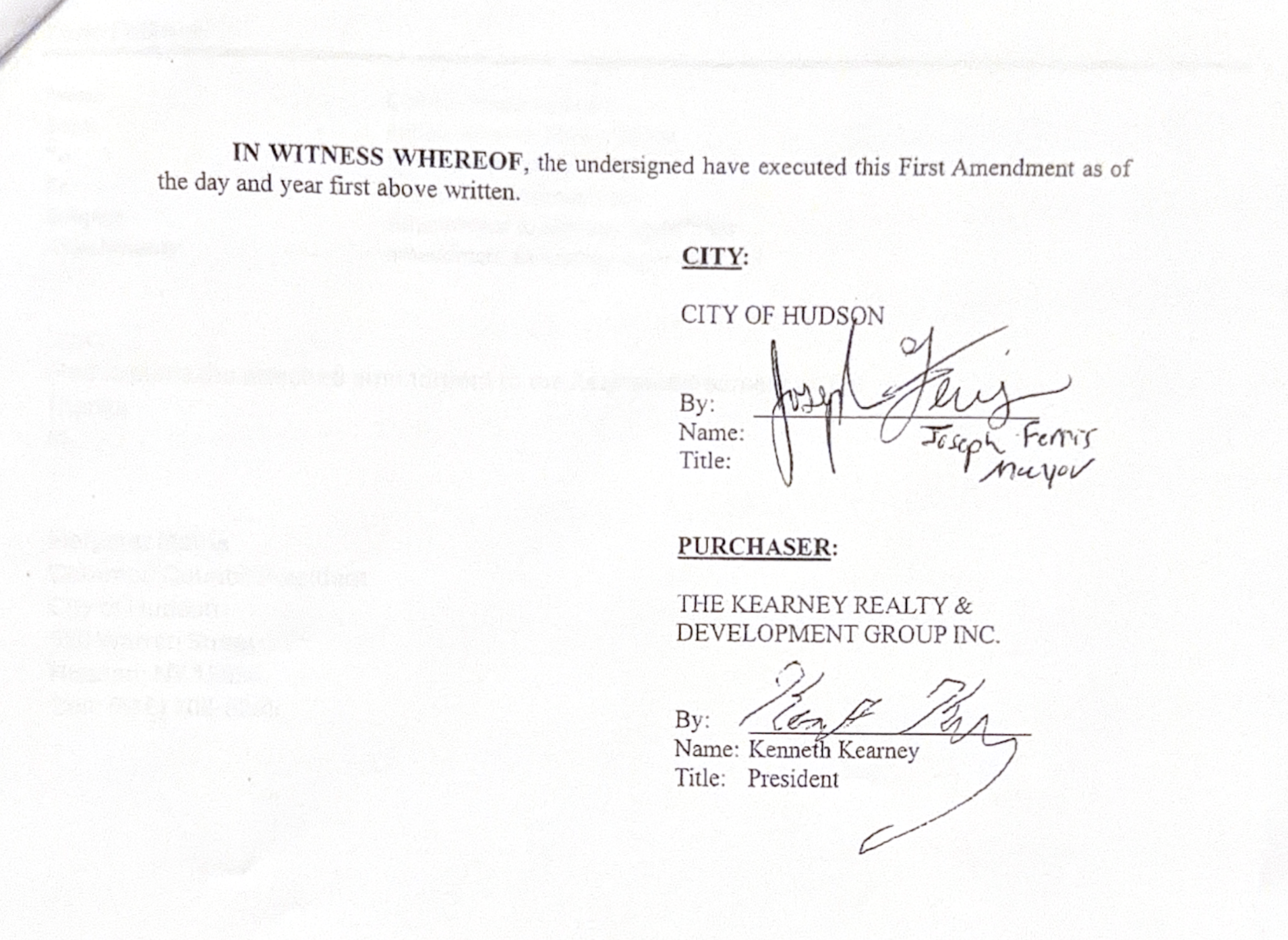
On May 20, Ferris signed an amendment changing the closing date from May 3 to an open-ended trigger: 30 days after the city "discontinued all pending actions/proceedings" tied to its ability to convey title. Critics say that tying the closing date to ongoing litigation, effectively keeps the contract alive indefinitely.

The Mayor has yet to make a comment on Monday’s development, with his office referring to a previously statements for his rationale on the matter in which he said: "The contract closing date was not extended. The City of Hudson cannot unilaterally cancel the contract. If we were to do so, Kearney Group would have a breach of contract claim against the City and could seek damages for the City's termination."

"[City Attorney Andrew Howard] advised me that since the City was already in contract with Kearney Group, is a named party in the Article 78 proceeding, and has a legal obligation to perform under the contract until such time as a Court rules otherwise, it was necessary to execute the amendment to maintain the status quo."

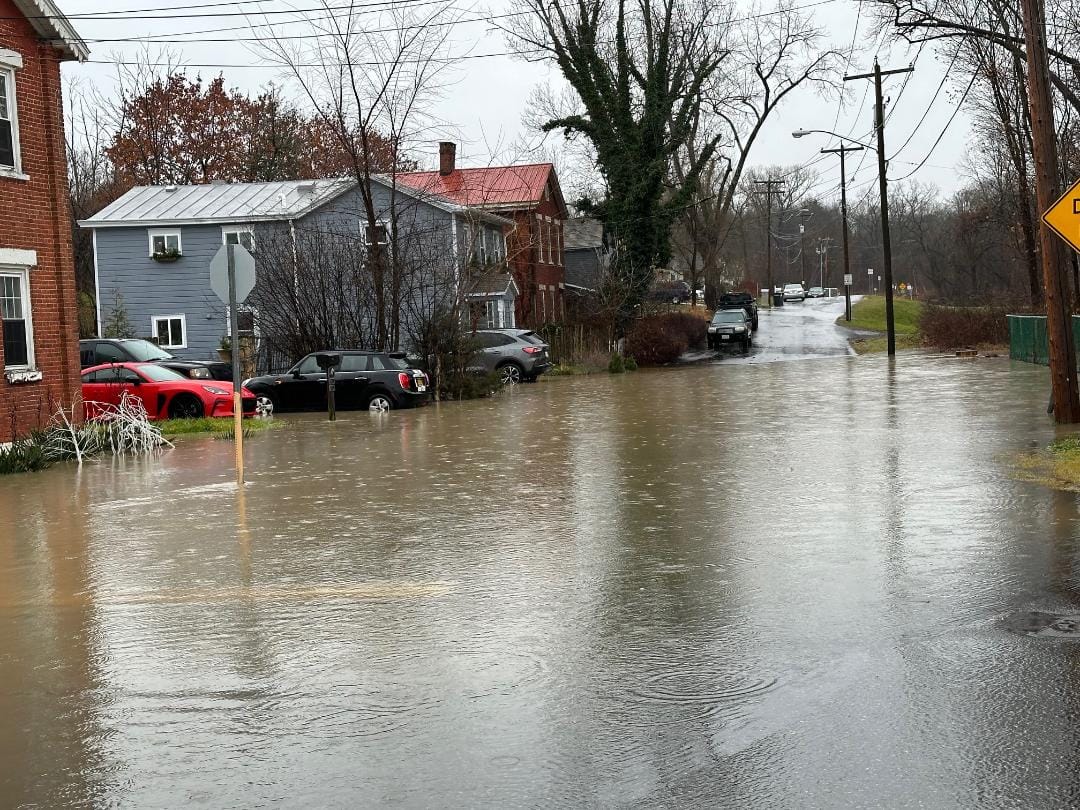
Mill Street residents, who are already in litigation with the city for allegedly skipping state land-use reviews for a site that they say is parkland and regularly floods, rejected the mayor's reasoning in a late-June response. On Ferris claim the contract was "not extended," they counter that swapping a fixed closing date for an open-ended one is, by definition, an extension.

Past flooding at the Mill Street site. Photo by Lance Wheeler.

The Council Says It Wasn't Ferris’s Call

Jack Hornickel, a Mill Street resident, land-use attorney, and Pace University law professor and member of Mill Street Neighbors, submitted a legal memo to the city last week arguing the extension isn't just bad governance—it's unenforceable. Under New York precedent, he contends, only the council can set the terms of a municipal sale; the mayor's role in executing a contract is purely ministerial. His memo cites prior cases and claims that a mayor can't deviate from a council-authorized contract without further approval. If that holds, Hornickel argues, the Farris' amendment is void, the closing date reverts to May 3, and Kearney is already in default.

Hornickel says he'd tracked the closing date for roughly two years, originally seeing it less as a guaranteed win than as leverage to renegotiate, relocate, or resize the project. He brought it up publicly at the council's June meeting; Morris said she'd look into it, and within days confirmed Ferris had signed an amendment a month earlier.

Hornickel also says there is a question about who may have drafted the amendment document. He says it is possible Kearney's attorneys drafted the extension and sent it to the mayor's office to sign. His evidence is the signature block itself: Kearney's block is typed out in full, with the title "President" and the name "Kenneth Kearney" already typed in, while the city's block was left blank—no title, no name—leaving Ferris to complete his section by hand. "If [city attorney Andrew Howard] prepared that document, why would he prepare a document for his client and not type out the title 'mayor?'" Hornickel asks.

Two days before signing, at a May 18 town hall, Ferris was asked about the contract's status and, according to attendee accounts, Hornickel says, there was no clear answer. "Is it possible that he didn't know what was going on on the 18th, but then knew exactly what was going on on the 20th?" Hornickel poses.

Ferris has maintained that he "followed the guidance provided by the city's corporation counsel," in both amending the contract and determining he had authority to do so.

Monday's council resolution stops short of declaring a default or voiding the amendment, but puts the council's position on record. Asked what should happen next, Hornickel says: "I think the council should nullify that document, and then reassert its authority and take action on the contract with whatever it believes, as a council, is appropriate."

That's Not All

The Mill Street Neighbors's oposition to the Kearney project goes beyond the missed deadline. The 2023 approval conditioned the sale on developing all three "Hudson Rising" sites, but State Street stalled after May 2025, with no Planning Board activity since, and Kearney has yet to submitted a site plan for Rossman Avenue. Hornickel argues abandoning two of three sites is itself a material breach undercutting the "scattered-site" rationale the city used to select the developer in the first place.

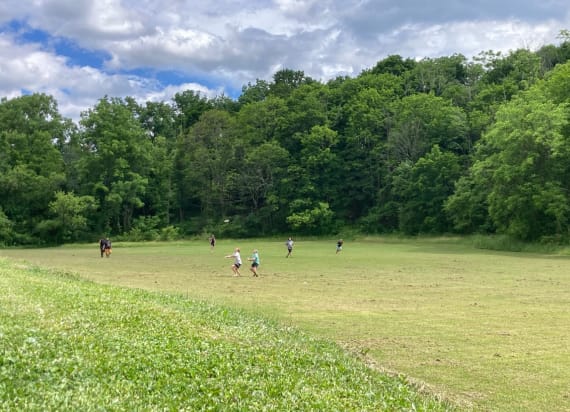
A separate dispute, in litigation since July 2025, questions whether the Mill Street parcel was ever the city's to sell. The roughly three-acre lot was a school playground and later a softball field before the school district deeded it to the city in 1983 restricted to "park and recreational purposes only." City planning documents since have repeatedly identified the site as parkland, and Hornickel claims, under New York's Public Trust Doctrine, parkland can't be sold for non-park use without state legislative approval—never sought here.

Kearney did discover the issue with the school beforehand and the Board of Education agreed in February 2024 to release the city from the original sale condition for $136,000. But even if it was a legal transfer, usage was never approved by the state, the neighbors contend.

Past flooding at the Mill Street and Second Street. The development site is in the field to the back right. Photo by Lance Wheeler.

The Mill Street Neighbors' suit is a "hybrid petition"—an Article 78 challenge to the Planning Board's approval of the development plan, plus a request for a declaratory judgment on the land's status.

Hornickel says the neighborhood expected more from Ferris, who appeared to oppose the project during his 2025 debate with Republican Lloyd Koedding. "We thought that meant we had his support," he says.

Where Things Stand

Monday's resolution is the council's first formal assertion of authority in the dispute. Two draft resolutions Hornickel submitted to council counsel Kenneth Dow ask the aldermen to go further: One would declare Kearney in default; the other would dedicate the Mill Street site as parkland, void the contract as an unauthorized sale of protected land, and return Kearney's $10,000 deposit.

Whether the council moves toward either remains to be seen. What Monday's resolution makes clear is that this council intends to be in the room when that decision is made.

Share this post

Written by

Jamie Larson
After a decade of writing for RI (along with many other publications and organizations) Jamie took over as editor in 2025. He has a masters in journalism from NYU, a wonderful wife, two kids and a Carolina dog named Zelda.