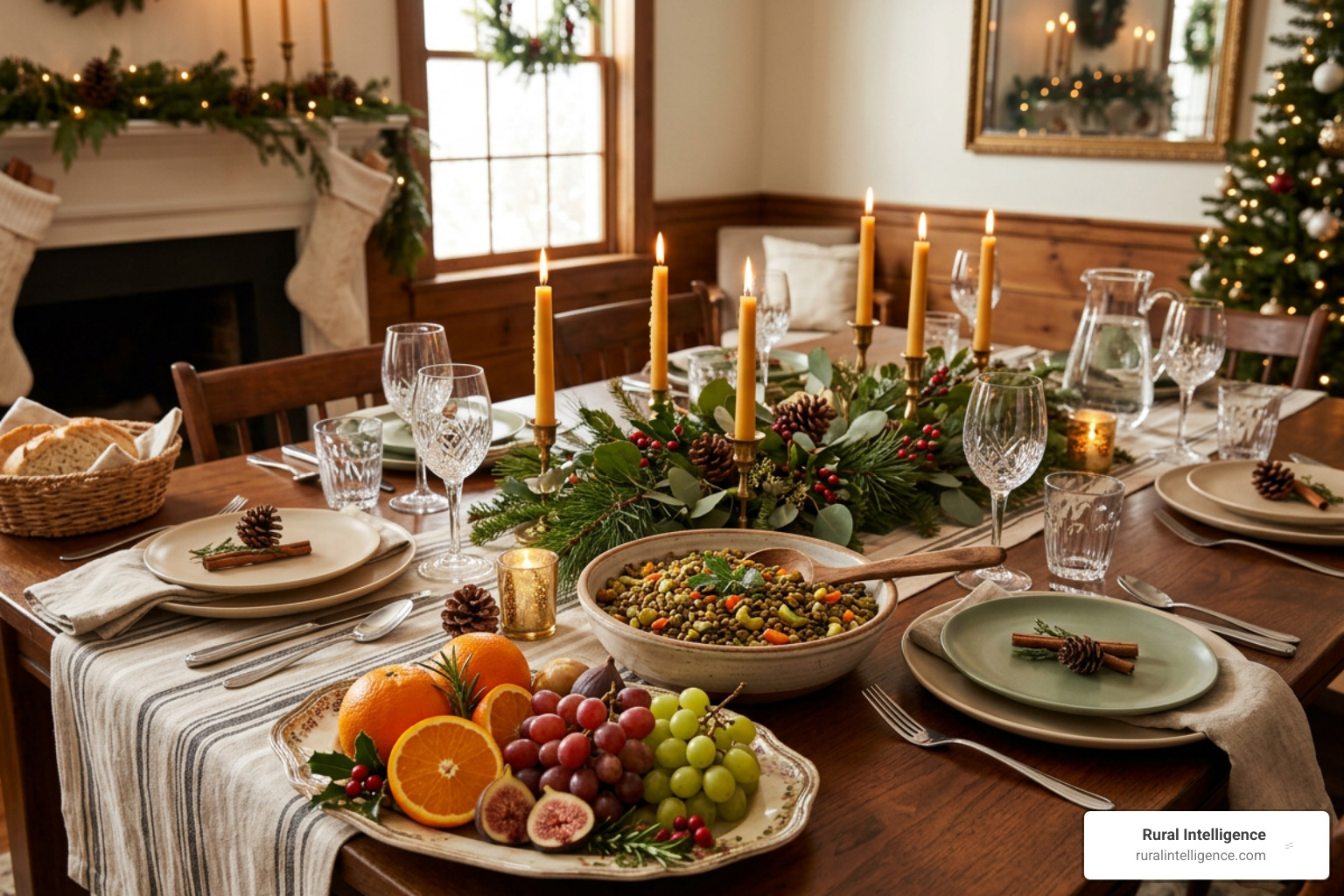
Global Origins and Traditions of New Year's Eve
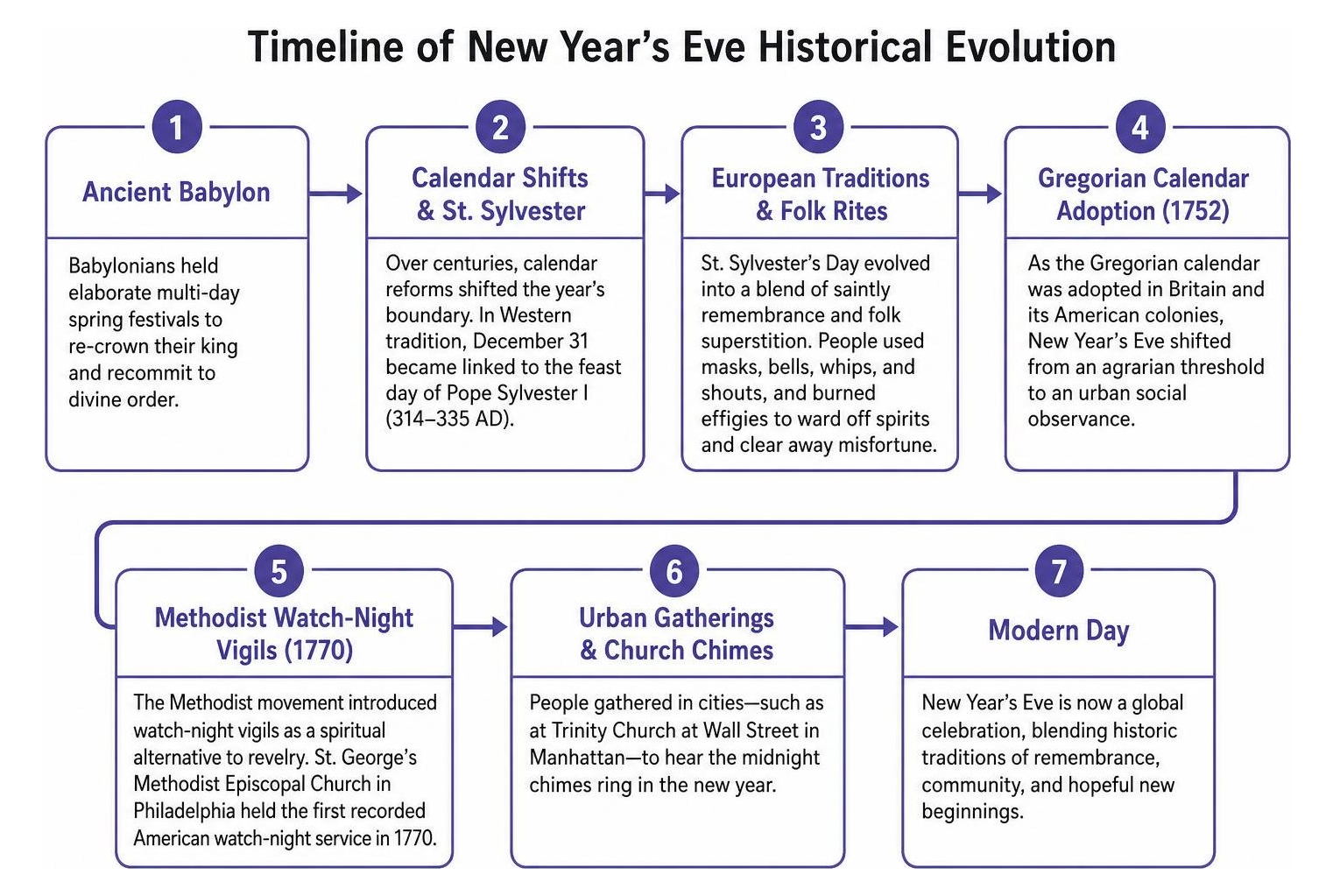
Long before modern countdowns illuminated city skylines, ancient civilizations marked the turning of seasons with symbolic rites. The Babylonians held elaborate multi-day spring festivals to re-crown their king and recommit to divine order. Over centuries, calendar reforms shifted the year's boundary. In the Western tradition, December 31 became synonymous with the feast day of Pope Sylvester I (who presided from 314 to 335 AD). Across continental Europe, St. Sylvester's Day evolved into a vibrant blend of saintly remembrance and folk superstition.
Much of our modern revelry stems from ancient apotropaic rituals—practices designed to ward off malevolent forces. People believed the liminal space between the old year and the new was fraught with roaming spirits. In response, Northern and Central European communities took to the streets wearing grotesque masks, ringing heavy cowbells, cracking whips, and shouting into the winter night to banish demons before dawn. Burning effigies, such as Scotland's historical torching of the "Auld Wife" figure to represent the death of the old year, symbolized clearing away misfortune. These enduring communal customs mirror how we celebrate our own seasonal heritage across the countryside, as seen in the 10 local holiday traditions we love.
Historical Evolution from Ancient Rites to St. Sylvester's Day
As civic calendars settled onto the Gregorian framework—which Britain and its American colonies officially adopted in 1752—New Year's Eve transformed from an agrarian threshold into an urban social observance. In early America, colonial attitudes were mixed; Puritan authorities initially discouraged boisterous mid-winter revelry on religious grounds. However, community gatherings soon found footing through distinct cultural streams.
The Methodist movement, pioneered by John Wesley in England around 1742, introduced solemn watch-night vigils to offer a spiritual counterweight to tavern carousing. The practice quickly crossed the Atlantic, with St. George's Methodist Episcopal Church in Philadelphia holding the first recorded American watch-night service in 1770. Meanwhile, secular public celebrations gained momentum in bustling cities. Downtown worshippers and revelers alike gathered beneath the historic spire of Trinity Church at the head of Wall Street in Manhattan, listening to its midnight chimes peal across the financial district.
The character of public celebration faced dramatic disruptions during the 20th century. During the Prohibition era (1920–1933), the closure of licensed bars pushed festivities indoors to private speakeasies, and living rooms. The 1933 repeal of the Eighteenth Amendment sparked a massive revival in public municipal celebrations, cementing the modern hospitality landscape of rooftop toasts, ballroom galas, and communal midnight cheers.
Symbolic Customs, Attire, and Lucky Culinary Rituals
Culinary folklore plays a massive role in shaping midnight menus across the globe. Almost every culture features a dish designed to invite prosperity, wealth, longevity, or good health into the home. In Spain and Latin America, the custom of las doce uvas de la suerte requires eating twelve grapes—one on each stroke of the midnight clock—to guarantee twelve lucky months. In the Philippines, households display twelve distinct round fruits and wear polka-dotted clothing, associating circular shapes with coins and financial abundance.
Symbolic culinary staples anchor traditional holiday tables worldwide:
| Country / Region | Traditional Food or Item | Symbolic Meaning |
|---|---|---|
| Spain & Latin America | Twelve green grapes | Good fortune for each incoming calendar month |
| Italy & Brazil | Green or brown lentils | Coins, accumulation of wealth, and abundance |
| Southern United States | Black-eyed peas, collard greens, cornbread | Luck, paper currency, and pocket gold |
| Japan | Toshikoshi soba (buckwheat noodles) | Long life and cleanly cutting ties with past hardship |
| Philippines | Round fruits and polka dots | Financial prosperity and continuous success |
| Netherlands | Oliebollen (fried dough balls) | Warding off winter perils and cleansing misfortune |
Attire carries its own playful superstitions. In parts of Central and South America, revelers wear vibrant yellow underwear to attract success and joy, or red to spark romantic passion in the coming months.
Iconic Spectacles and Midnight Countdowns Around the World
Large-scale public spectacles represent the sensory pinnacle of the holiday. At One Times Square in New York City, rooftop festivities began in 1904 under the auspices of The New York Times, replacing dangerous midnight fireworks with an illuminated time ball drop in 1907. Today, the world-famous sphere measures 12.5 feet in diameter, weighs an astonishing 12,350 pounds, and sparkles with 5,280 Waterford crystal triangles.
Tens of thousands gather in person while millions follow the NYE Live Schedule from Times Square NYC online. Beyond the pyrotechnics, the event incorporates global sentiment: through the Times Square Wishing Wall, thousands of personal hopes written online and in person are printed directly onto three thousand pounds of colorful confetti that flutter over Manhattan at midnight.
The Evolution of the Times Square Ball Drop and Regional US Novelty Drops
The 60-second descent of the Times Square crystal ball along its 77-foot flagpole has inspired countless cities across America to create their own novelty countdown drops celebrating local agriculture and regional heritage.
Rather than standard spheres, cities drop cultural mascots:
- Raleigh, North Carolina: Lowers a massive 900-pound brass acorn.
- Atlanta, Georgia: Welcomes the year with its iconic Peach Drop.
- Strasburg, Pennsylvania: Releases hundreds of ping-pong balls over waiting crowds.
- Key West, Florida: Lowers a giant ruby slipper carrying a famed drag performer.
These quirky civic spectacles offer memorable alternatives to standard countdowns, echoing the vibrant community spirit captured in our archives of the memorable parties of 2016.
International Pyrotechnics, Drone Shows, and Time Zone Transitions

Global countdowns roll across the planet along the International Date Line. The earliest celebrations occur in the Pacific island nations of Kiribati (specifically the Line Islands), Samoa, and Tonga. Twelve hours later, midnight reaches Western Europe, moving across the Americas before concluding at uninhabited outposts like Baker Island and Howland Island.
The scale of international celebrations continues to push technical and artistic boundaries. In the United Kingdom, over 250,000 spectators regularly gather along the River Thames to watch dazzling pyrotechnics erupt from the London Eye. In South America, Rio de Janeiro hosts the world's largest beachfront gathering along Copacabana Beach, attracting millions of revelers dressed in white to honor Yemanjá and watch multi-stage musical lineups.
Municipal events increasingly blend pyrotechnics with sustainable technology. A spectacular show featuring 1,200 drones and eclectic sound highlighted the 2026 New Year's Eve celebration in Rio, projecting luminous landmarks like Christ the Redeemer high above Copacabana without heavy acoustic disturbance.
Reflective Observances and At-Home Celebration Ideas
Alongside civic parties, New Year's Eve preserves deeply introspective customs. In Japan, Buddhist temples observe Joya no Kane, striking their heavy temple bells 108 times before and after midnight to cleanse humanity of the 108 earthly passions and defilements (bonō). In South Korea, crowds gather around Seoul's historic Bosingak Belfry, where civic leaders ring the great bronze bell 33 times to bring peace and renewal.
Sacred Watch-Night Services and Midnight Contemplation
For many communities, the transition between years is best met in quiet contemplation. Watch-night services remain an essential spiritual tradition across Methodist, Baptist, and African American congregations—a practice rooted in Christian covenant renewal and the historic "Freedom's Eve" of December 31, 1862, when enslaved people waited for the Emancipation Proclamation to take effect.
Catholic churches observe midnight Eucharistic adoration and holy hours of thanksgiving, while non-denominational chapels hold candlelight meditations. These gatherings offer a peaceful haven to reflect on past challenges, recite prayers of gratitude, and set grounded intentions for personal renewal.
Structuring an Intimate New Year's Eve Gathering at Home
Hosting at home allows you to bypass crowded transit lines and design an evening centered on warmth, great conversation, and curated dining.
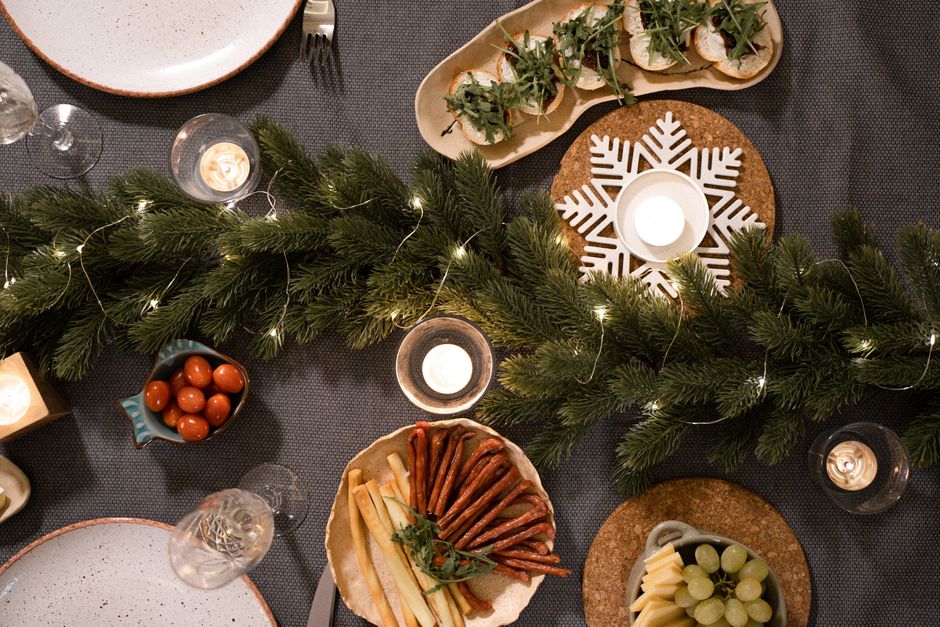
To host a seamless, stress-free gathering:
- Set the Stage with Low Lighting and Warm Accents: Use taper candles, seasonal evergreen sprigs, and metallic tableware to create an inviting atmosphere.
- Curate an Accessible Grazing Menu: Pair artisanal cheeses, cured meats, and local farmstead dips so guests can graze freely. If you are preparing a multi-course meal, review our guide to winter dinner party 101 for pacing and prep strategies.
- Establish a Dedicated Beverage Station: Provide chilled sparkling wines, craft ciders, and creative non-alcoholic mocktails alongside glassware and garnishes.
- Prepare Meaningful Countdown Activities: Distribute blank intention cards where guests can write down things to leave behind in the old year, or supply noisemakers for midnight.
Entertainment, Safety, and Logistics for a Seamless Midnight
Music defines the final moments of the year. The universal anthem of the holiday, "Auld Lang Syne"—penned by Scottish poet Robert Burns in 1788—was popularized across North America by bandleader Guy Lombardo and his Royal Canadians during their legendary New York hotel broadcasts from 1929 through the 1970s. In Austria, the stroke of midnight is met with Johann Strauss II's "The Blue Danube" (An der schönen blauen Donau), prompting impromptu waltzing in living rooms and public squares across Vienna.
Modern New Year's Eve Broadcasts and Media
Television retrospectives and live variety shows remain central to global holiday culture:
- North America: Millions tune in to long-running network specials like Dick Clark's New Year's Rockin' Eve, alongside multi-city countdown broadcasts featuring live pop, country, and comedy stages. In Quebec, the satirical comedy revue Bye Bye commands record-breaking provincial viewership.
- Japan: NHK's legendary Kōhaku Uta Gassen (Red and White Song Battle) pits the nation's top musical artists against one another in a year-end broadcast tradition dating back to 1951.
- Iceland: The annual satirical comedy special Áramótaskaupið captures an astounding 75% of the national population, uniting the country in collective laughter before midnight bonfires.
For households opting out of cable packages, major countdown platforms now stream commercial-free webcasts with accessible features such as open captioning and American Sign Language interpretation.
Public Transit, Crowd Navigation, and Eco-Friendly Practices
Safe planning is essential for a worry-free night. Municipalities and ride-share providers often offer extended services or fare discounts to deter impaired driving. If you plan to attend a crowded downtown countdown, note that security checkpoints enforce strict bag policies, and public restrooms can be limited. Dress in insulated, moisture-wicking layers to comfortably handle hours outdoors in winter weather.
Communities are also prioritizing eco-conscious celebration practices. Municipalities are shifting toward low-smoke, quieter pyrotechnics, synchronized aerial drone choreography, and structured post-event waste collection to protect local waterways and wildlife habitats from excess debris.
Frequently Asked Questions About New Year's Eve
Why do people make noise and ring bells at midnight?
Midnight noisemaking traces back to ancient Babylonian and European folk beliefs. Raucous noise—from clanging metal pans and shouting to blowing horns and firing pyrotechnics—was believed to scare away evil wandering spirits during seasonal transitions. In civic settings, church bells pealed across towns to announce the arrival of the new calendar year.
What is the history behind watch-night services?
Watch-night services were introduced around 1742 by Methodist founder John Wesley as a solemn, reflective alternative to drunken street revelry. Congregants gathered late on December 31 to examine their moral lives, pray, and renew their spiritual vows. In the United States, watch-night services hold deep significance in African American church history, commemorating the historic night of December 31, 1862, when Black Americans watched for the dawn of the Emancipation Proclamation.
Which country celebrates the New Year first across global time zones?
The Pacific island nation of Kiribati (particularly the Line Islands, located at UTC+14) is the first inhabited place to welcome the New Year, alongside Samoa and Tonga. Conversely, uninhabited territories such as Baker Island and Howland Island (UTC-12) are among the very last places on Earth to see the date turn.
Conclusion
A memorable holiday comes down to intentionality. Whether your ideal evening involves cheering amid thousands in a brightly lit town square, gathering around a crackling fireplace with close friends, or welcoming midnight with quiet reflection, the turning of the calendar offers a meaningful opportunity to pause, celebrate, and begin anew.
As you plan your seasonal calendar across the region, explore our curated coverage of regional visual art exhibitions, community gatherings, and cultural happenings that make our countryside so vibrant throughout the winter season.