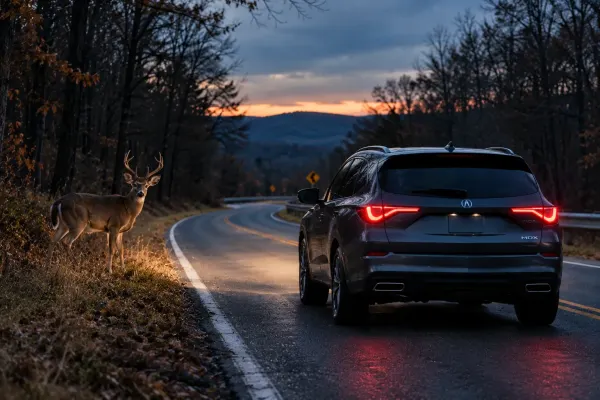
The clocks fall back on Nov. 1, and with them goes the easy version of the Friday drive north. A city household that leaves Brooklyn at five for a house in Columbia County or the Berkshires now makes the entire trip in the dark, on the Taconic's long unlit curves, in the busiest weeks of the year for deer on the road.
Anyone weighing a new Acura MDX for that commute will find features built for it, from available all-wheel drive to a dedicated Snow mode. But the car is only part of the plan. How and when you drive matters more between now and the first thaw.
Deer season is also commuting season
State Farm's claims data has ranked November as the riskiest month for animal collisions, followed by October and December, the stretch that covers deer mating and hunting season. The insurer's advice is plain: watch for animals between dusk and dawn, use high beams where it is safe to, and if one deer crosses, expect others to follow. Above all, brake firmly and do not swerve. Leaving the road to avoid a deer is often worse than the deer itself.
On the Taconic, Route 22 or the back roads into northern Litchfield County, that means slowing down at dusk on the stretches where woods meet the shoulder, and treating a Friday departure time as a safety decision. Leaving at two instead of five can put most of the drive in daylight.
Snow changes the second half of the trip
Highways get plowed first. The last few miles to a country house often do not, and a long gravel driveway can stay rutted and icy for days. All-wheel drive helps a car get moving and hold its line on a slick climb, but it does nothing for stopping distance. Winter tires do, which is why plenty of weekenders keep a second set mounted from December through March.
Before the first snow weekend:
- Swap to winter tires, or at least check the tread on the all-seasons.
- Refill the washer reservoir with fluid rated for freezing temperatures.
- Keep a shovel, ice scraper, blanket and phone charger in the cargo area.
- Have the battery tested; a cold weekend after a week of city stop-and-go is when weak ones fail.
- Arrange driveway plowing before you need it, not the morning after a storm.
Take a typical Park Slope couple with an old farmhouse outside Chatham. Through October they leave Friday after work and never think about it. In November they start leaving at two, put winter tires on the week before Thanksgiving and ask the neighbor down the road to plow the driveway on storm weekends. The drive feels easier, mostly because they stop meeting deer on the Taconic after dark.
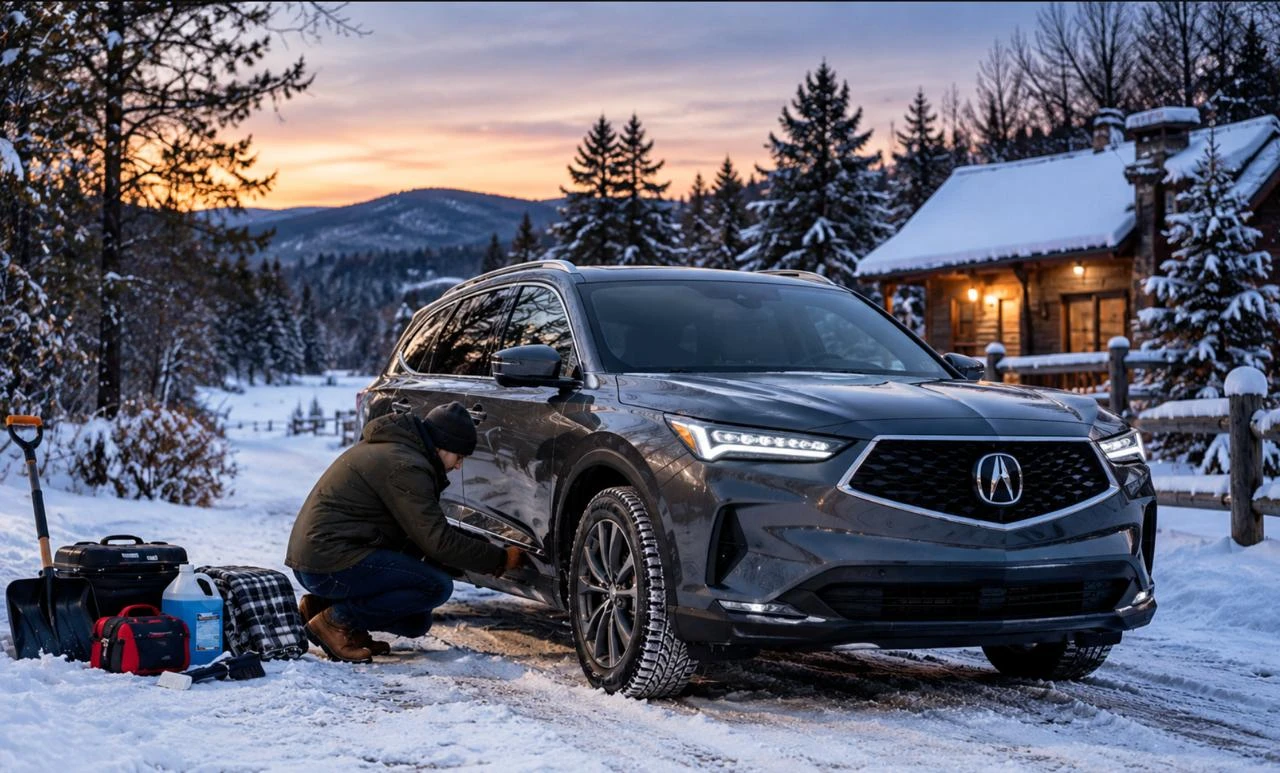
What the MDX brings to the drive
The standard MDX pairs a 290-horsepower 3.5-liter V6 with a 10-speed automatic. Acura’s SH-AWD system, available in place of front-wheel drive, can shift power between the wheels for grip on slick pavement. Its drive modes include a Snow setting that adjusts how power is distributed. A third row is standard, which helps on weekends with guests, and SH-AWD models can tow up to 5,000 pounds when properly equipped. The Type S Advance runs a different engine, a 355-horsepower turbocharged 3.0-liter V6, and adds an adaptive air suspension with a Lift mode that raises the body for rutted driveways.
Acura of Brooklyn, part of Plaza Auto Mall, the family-owned dealer group on Nostrand Avenue since 1975, sells the MDX new and services it with factory-trained technicians and genuine OEM parts. A pre-winter check before the drives get dark can be booked through its service center at www.acuraofbrooklyn.com/service-center, and the service team offers pickup and drop-off across the five boroughs, so the car can be ready by Friday without a weekday lost to the dealer.
The takeaway
The city-to-country drive in late fall is less about horsepower than timing and preparation. Leave in daylight when you can, brake rather than swerve when a deer appears, and get the tires, battery and driveway sorted before the first storm rather than after it.