Prolific Local Photographer Patrick Harbron Brings His Rock and Roll Icons to Artsee
The long-time Columbia County resident, and tireless photographer, whose lens has caught Blondie, Freddie Mercury, Tina Turner, and everyone in between opens a retrospective exhibition of rock and pop portraits November 19 in Hudson.
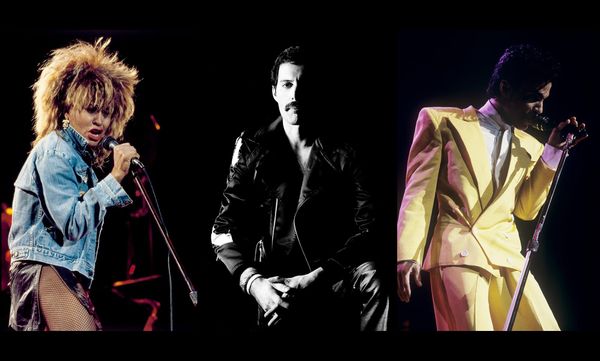
Pictured: Tina Turner, Freddie Mercury, and Prince, Shot by Patrick Harbron. All photos are courtest of the artist, Copyright Patric Harbron/Rock Icons.
In August 1977, Patrick Harbron was a young Canadian writer sent by the Toronto Globe and Mail to review Rush ahead of a big hometown show. The paper didn't want to send a photographer, so he brought his own camera and took what he calls "a crappy picture." The paper paid him $75 for the photo and $50 for the article. It was at that moment he decided to be a photographer.
Nearly half a century later, Harbron, who has lived in Columbia County since 1996, is bringing some of the results to Hudson. “Icons—Rock and Roll Photographs by Patrick Harbron” opens atArtsee, 529 Warren Street, on November 19 with a reception from 4–6pm, and it will be on view through January 31. The show is a selection of archival photographs from the 1970s to the 2000s, offered as signed and numbered limited editions. It is Harbron's first exhibit of his rock and roll work in Hudson.
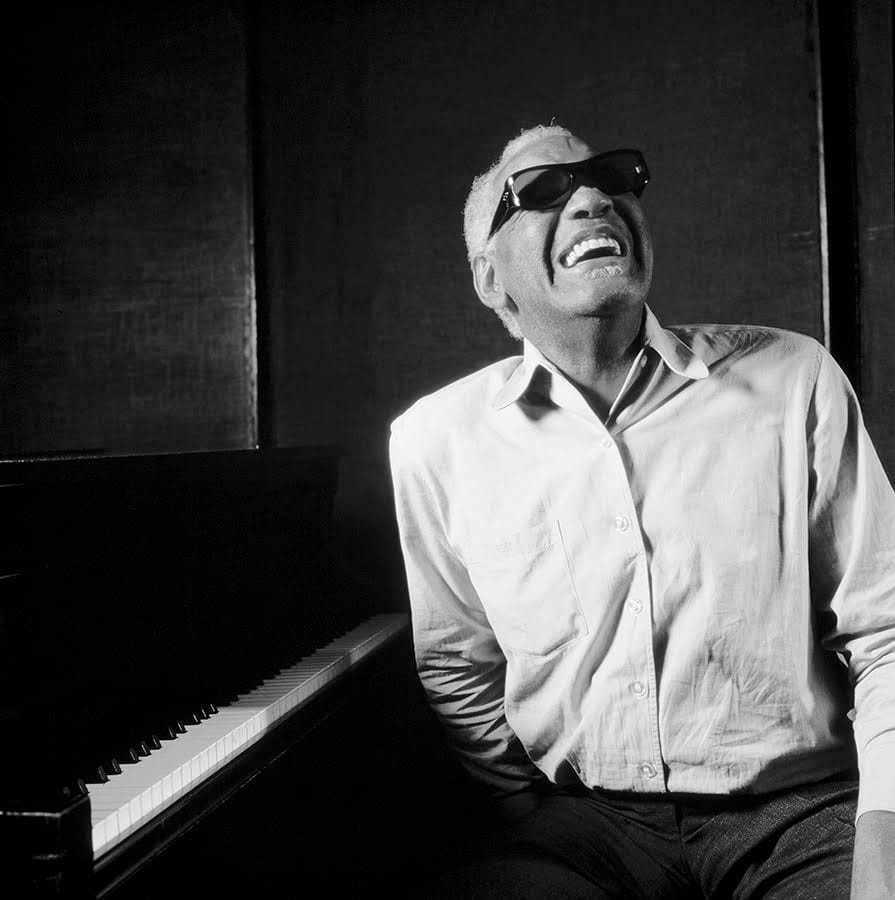
Harbron says Ray Charles was disarmingly relaxed in their half hour photo session. This was his favorite shot from the day, snapping the picture as Charles laughed during their casual conversation. Credit Patrick Harbron/Rock Icons.
The list of subjects Harbron has captured reads like a hall of fame and many of his shots are instantly recognizable as some of the most culturally definitive shots of artists including Prince, Blondie, Elton John, Tina Turner, David Bowie, Madonna, Ray Charles, and Queen's Freddie Mercury, along with Bruce Springsteen and Mick Jagger. While selecting images for the Artsee show Harbron says an unintentional pattern emerged. Nearly all of them are vocalists. "I wasn't conscious of it until I made the collection and curated it and showed the gallery," he says. "So they are the voices of music that meant so much to people."
"I'm not dwelling in the past, but the past is the present," Harbron adds. "People really want to see this stuff; they react viscerally to it and positively because music brings up memories." He compares looking at a photograph to hearing a song. "There's two ways to listen to music. You can think of a song and then play it, or you can play a song and it makes you think. So the photographs do the same thing."
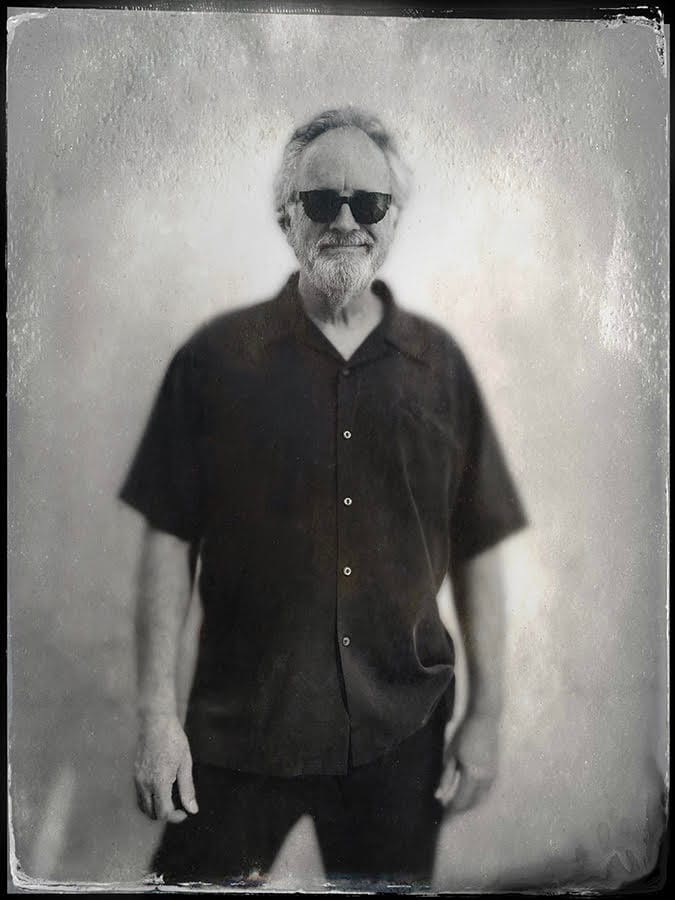
The man behind the camera. Harbron also works with historic photography styles like this self portrait. Credit Patrick Harbron.
From Toronto Clubs to Magazine Covers
Harbron began his career shooting bands at El Mocambo, a small club in downtown Toronto, and he spent three years apprenticing in a fashion photographer's studio. He photographed Bruce Springsteen at tour dates for the singer's record company. His photographs have run on hundreds of album covers and in Time, Life, Rolling Stone, and People, and he has published books of his work. If all his work around the music industry wasn’t enough he has also built a silo of his career around shooting still photography for major television productions, including the first season of House of Cards, and Only Murders in the Building for four seasons.
His parents were both journalists and educators, and his father was an amateur musician and photographer. He says that instilled a habit in him from an early age to treat events as history while they were happening. "Everything's history the second it's over," Harbron says. He kept and cataloged his negatives, and he can still walk to a binder in his studio and pull out the Blondie session he shot in August 1978.
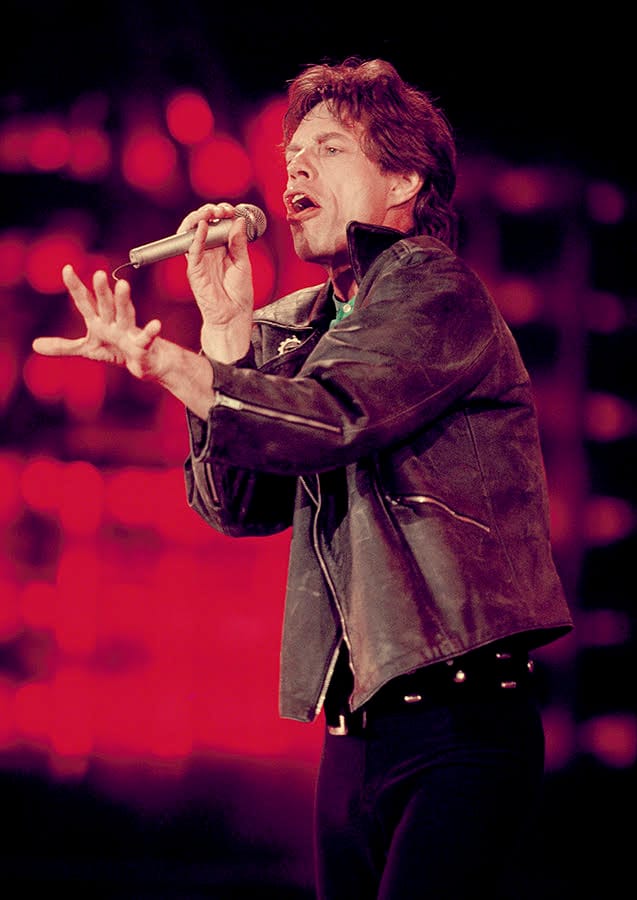
Mick Jagger of the Rolling Stones. Credit Patrick Harbron/Rock Icons.
What he was after depended on the assignment. A concert is journalism, he says: he's capturing a moment within the limits of the lighting, the time and the artist. A portrait is something he builds. "They're both creative, but one is you constructing." He had 30 minutes with Ray Charles in the singer's Los Angeles studio in the early '90s, he says, and one of the pictures, Charles reacting to something Harbron said with his piano in the background, is "one of my favorite portraits." His 1978 Bowie photograph is a concert shot, "but for me, it's a portrait," Harbron says, because it intimately captured a moment for one man, in his element, in front of 18,000 people.
There and Back Again
Harbron found Columbia County through the classifieds. In 1996 he called a realtor about a listing in the New York Times, and the agent said he was in Kinderhook. Harbron asked where that was. "It's just west of Chatham," the realtor told him. He asked where that was. On a Sunday near the end of September, Harbron drove up and was shown three houses. He bought the third, an 1864 house, and closed exactly two months later. "We just looked in the classifieds of the New York Times and fell over," he says. "I thought it was a little cabin on a lake, which I'm glad we didn't buy." He will have owned it for 30 years a few days after the show opens.
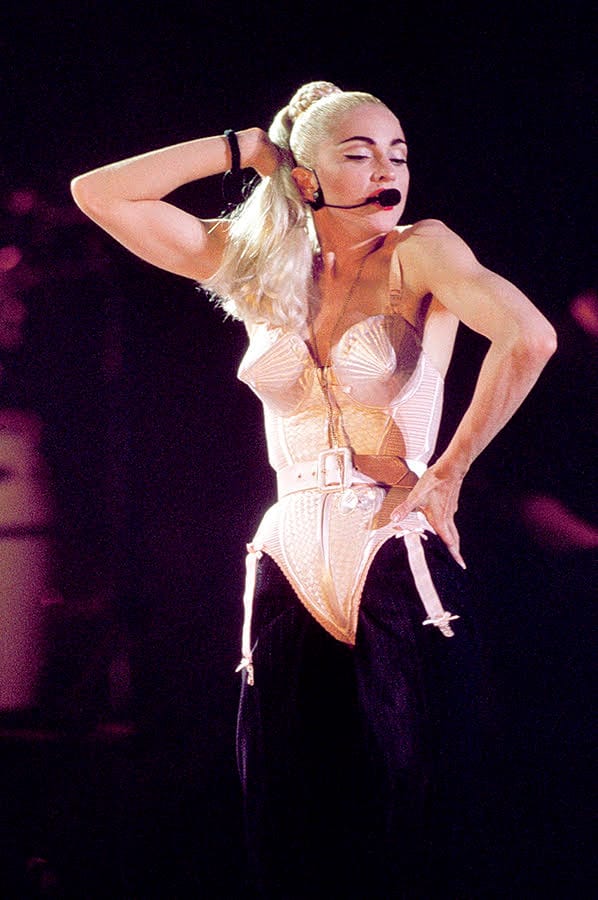
Madona. Credit Patrick Harbron/Rock Icons.
He remembers when he could have bought a building on Warren Street for $45,000. "Blew that one," he says, remarking on just how much the city has changed over the past three decades.
"If I tried to do this kind of show in Hudson 10 years ago, it might not have worked," he says. "But it is now." He points to the musicians and actors and creative industry professionals like himself that now live across the region. "I can't walk down the street without knowing someone or saying hi or recognizing a person," he says. "We're a small community, but we support each other."
Why Artsee
The show came about because of the shop's walls. Artsee, an eyewear boutique run by Julio Santiago, caught Harbron's attention when it displayed portraits by Greg Gorman in its attached gallery. They got to talking, and Santiago offered him a show. Harbron is usually wary of exhibitions in businesses and restaurants, where a portrait hangs over someone deciding on a salad. "But his space is as much a gallery as it is a retail," he says. There is a separate gallery space, and the eyewear itself is displayed like art. “Eyeglasses ought to be admired like art," Santiago says, "and the faces of our clients are the museum.”
Harbron's prints are also sold throughMorrison Hotel Gallery in New York and throughrockandrollicons.com. In June 2025 the Canadian Association of Professional Photographers and Media inducted him as a legendary Canadian photographer.
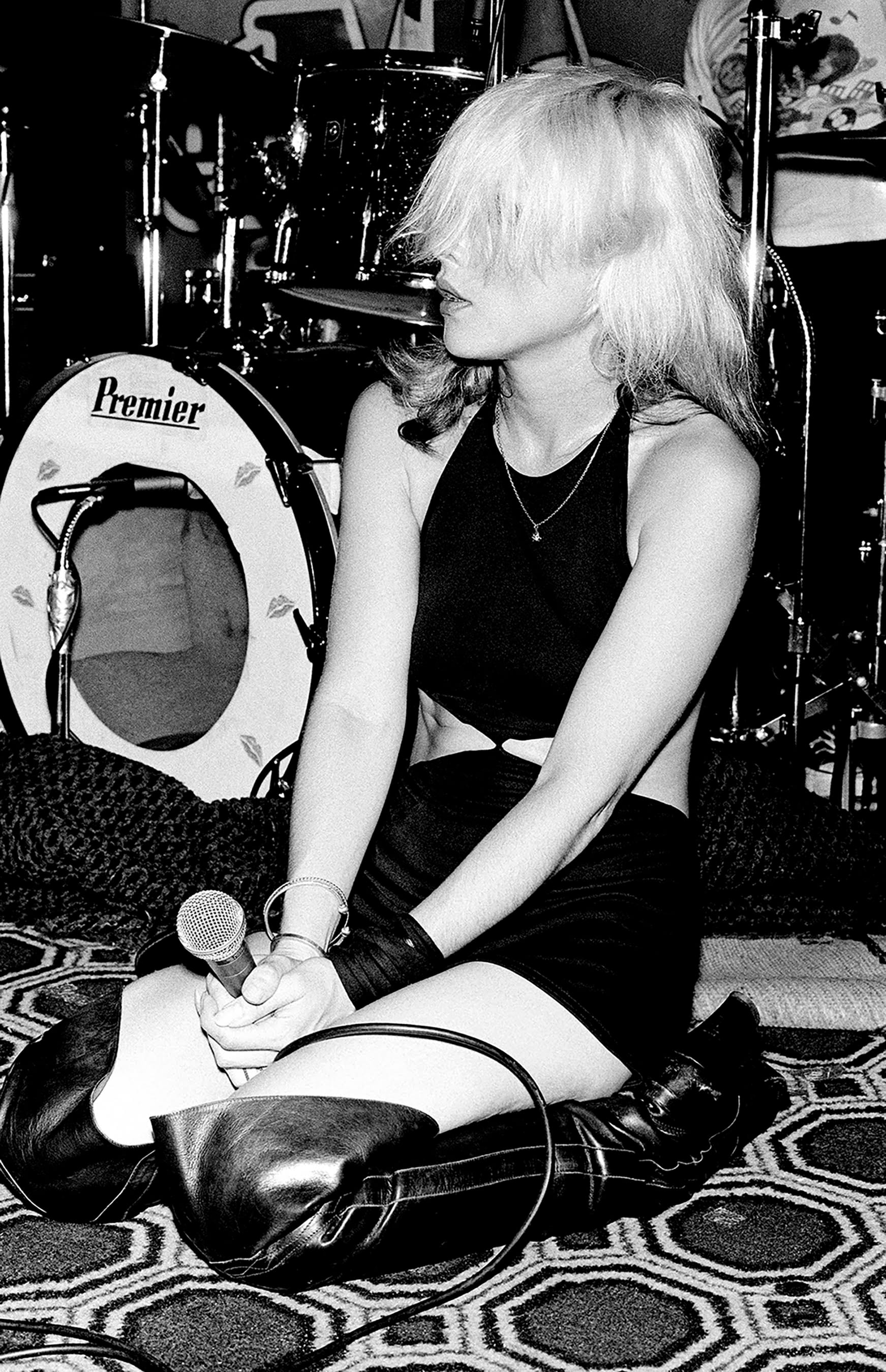
Debbie Harry at an early Blondie performance. Credit Patrick Harbron/Rock Icons.
He remembers the feeling of standing in front of a newsstand as a kid, looking at magazine covers shot by Irving Penn, Richard Avedon and other famous photojournalists. "Wow, I would love to do that," he remembers thinking. "And then to be able to get closer to that, and to just have success from what I thought would work, feels good," Harbron says. "That's awesome."
“Icons—Rock and Roll Photographs by Patrick Harbron” opens Thursday, November 19, from 4–6pm atArtsee, 529 Warren Street, Hudson, and runs through January 31,. See Artsee's website for winter hours.
After a decade of writing for RI (along with many other publications and organizations) Jamie took over as editor in 2025. He has a masters in journalism from NYU, a wonderful wife, two kids and a Carolina dog named Zelda.