Farmhouse style has been popular for years, and it’s easy to see why. It feels relaxed, practical and warm, the opposite of a showroom. But there’s a difference between a living room that looks like a real farmhouse and one that looks like a catalog’s idea of one. The furniture you choose decides which you end up with.
Whether you live in an actual old farmhouse in the country or just want the feel of one, here’s how to choose farmhouse living room furniture that looks right and stands up to daily life.
Start with the bones of the room
Real farmhouses weren’t decorated all at once. They filled up over decades, with pieces added as they were needed or handed down. The best farmhouse rooms keep that feeling.
Before buying anything, look at what the room already gives you: exposed beams, wide floorboards, a fireplace, deep windowsills, plaster walls. Those features should lead, and the furniture should support them. A room with a big stone fireplace doesn’t need a dramatic sofa competing with it.
If you need inspiration, look at how old rural buildings have been adapted, like this salvaged barn rebuilt as a great room, where the structure does most of the decorating.
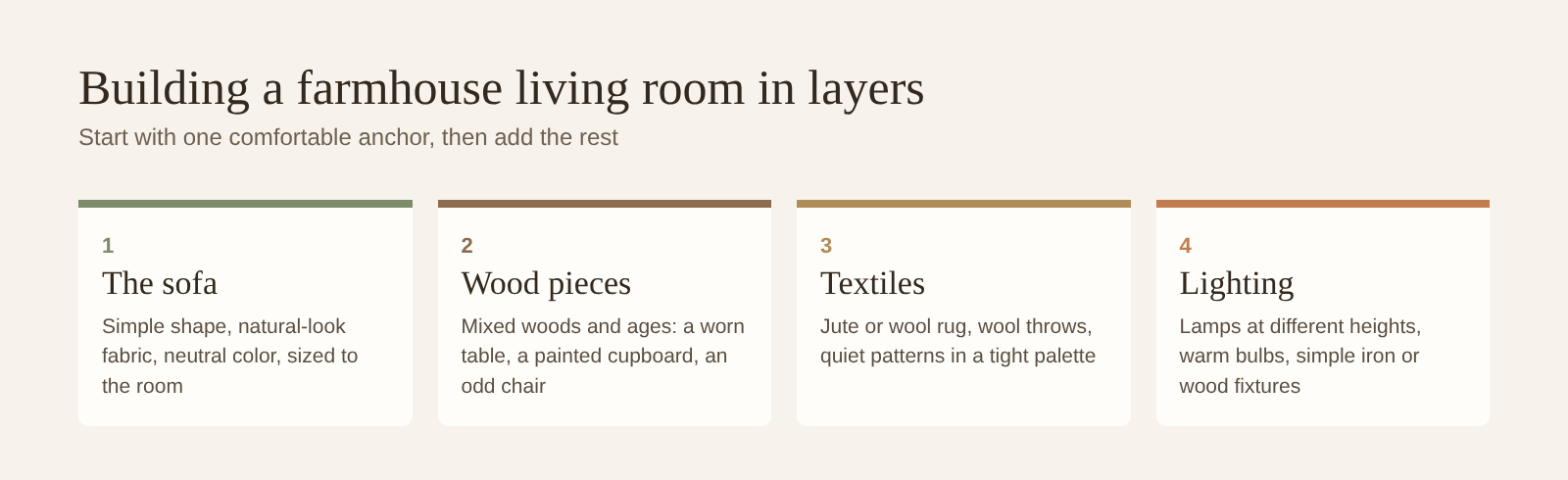
Graphic showing the four layers of a farmhouse living room: sofa, wood pieces, textiles and lighting
Farmhouse rooms come together in layers: one comfortable anchor piece, then wood, then textiles, then light.
The sofa: comfortable, simple and sturdy
The sofa is the anchor of any farmhouse living room, and it should look like it’s meant to be used.
What works:
- Simple shapes. Rolled arms, track arms or slipcovered designs all fit. Avoid anything too sleek or too ornate.
- Natural, textured fabrics. Linen, cotton, wool blends and heavy weaves suit the style. Performance fabrics that look like linen are a practical choice for homes with dogs and muddy boots.
- Neutral colors. Oatmeal, cream, stone, warm gray and muted greens sit well with wood and stone. A deeper color, such as navy or forest green, can work in a room with plenty of light.
- Slipcovers. A washable slipcover is one of the most farmhouse things a sofa can have. It looks relaxed and comes off for cleaning.
Getting the size right matters more in an old house, where walls are rarely straight and windows sit at odd heights. Measure the space, and the doors you’ll bring the sofa through, before you buy. Some makers, such as Dream Sofa, let you set a sofa’s width and length to the inch, which helps with awkward alcoves and the narrow doorways many older houses have.
Wood pieces: mix, don’t match
Matching furniture sets are the fastest way to lose the farmhouse feel. Mix woods, finishes and ages instead.
- Coffee table. A reclaimed wood table, an old trunk or a low bench all work. Look for something with marks and character.
- Side tables. Mismatched side tables look more natural than a pair. A small stool or stack of crates can stand in.
- Storage. A painted cupboard, an old dresser or an open shelf unit holds books, blankets and games. Farmhouse rooms are practical, so storage should be visible and useful.
- Accent chairs. A Windsor chair, a leather armchair or a wing chair adds a second seat without matching the sofa.
Antique and vintage shops in rural areas are often the best source. A piece with a history will always look more at home than one made to look old.
Textiles: layer for warmth
Textiles soften the wood and make the room comfortable.
- Rugs. A large jute or wool rug grounds the seating area. Layer a smaller vintage rug on top for color.
- Throws. Wool and cotton throws on the sofa and chairs make the room feel used.
- Cushions. Mix plain linens with checks, stripes or small florals in a limited palette.
- Curtains. Simple linen or cotton panels on plain rods let in light and keep the look relaxed.
Keep patterns quiet and colors close together. Farmhouse rooms feel calm because nothing fights for attention.
Lighting: low and warm
Farmhouses were lit by lamps long before overhead lights, and that’s still the best approach.
- Use table and floor lamps at different heights.
- Choose warm bulbs rather than cool white.
- Add wall sconces beside a fireplace or above shelving.
- If there’s an overhead fixture, a simple iron or wood design suits the style better than a glass chandelier.
Arranging the room
Farmhouse living rooms are built for conversation, so arrange the furniture around people rather than a screen. Pull the sofa off the wall if the room allows it, and set chairs facing it across the coffee table so everyone can talk without turning. If there’s a fireplace, make it the focal point and group the seating around it. Leave clear paths to doors, because old houses often have several, and a room you have to squeeze through never feels relaxed. In a big room, a second, smaller seating area by a window, with two chairs and a small table, makes the space feel used rather than empty.
Mistakes to avoid
- Too many signs. A single vintage sign can be charming; a wall of “Gather” and “Home” signs looks staged.
- Everything distressed. A few worn pieces add character. A room full of new furniture made to look old feels fake.
- Shiny finishes. High gloss, chrome and mirrored furniture work against the style.
- Clutter. Farmhouse doesn’t mean full. Leave space on surfaces and walls.
Bringing it together
The best farmhouse living rooms feel collected over time rather than bought in one go. Start with a comfortable, well-made sofa that fits the room, add wood pieces with character, layer warm textiles and light it with lamps. Then let the room grow.
For a modern take on the same ideas, see how upstate designers are blending warm minimalism with history, and how vintage pieces can be rethought for today’s homes. Farmhouse style was never about a look. It was about a room that works for the people who live in it.