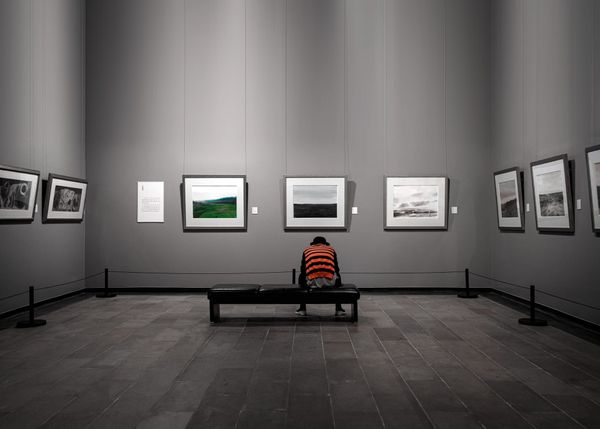
Berkshire museums should treat a good place to sit as part of the exhibition, not a courtesy outside it. A bench can determine whether someone spends time with a painting or heads for the exit.
In a region whose cultural institutions reward sustained attention, visitor comfort belongs in the curatorial conversation.
This isn’t a complaint about one museum’s furniture. It’s an argument for judging cultural access by more than the ability to get through the front door. Admission buys entry. The experience inside should make staying possible.
Looking takes time
The best museum encounters are rarely efficient. A visitor notices a detail, moves closer, steps back, then looks again. Seating supports that process.
It gives someone permission to remain with an artwork without having to keep moving or explain why standing has become uncomfortable. A chair can serve interpretation as effectively as another wall label.
Scale changes the visit
At MASS MoCA, contemporary art occupies a former industrial complex in North Adams. That relationship between art and architecture is central to its appeal: the buildings are part of the encounter.
Across a large museum, though, moving between works also takes energy. The ambition of an installation shouldn’t depend on the stamina of its audience.
Beauty needs breathing room
The Clark Art Institute in Williamstown brings art and landscape into the same visit. Its setting makes a useful point about cultural tourism: people don’t necessarily experience a museum as a sequence of separate amenities.
Galleries, paths, meals, and the trip back to the car all draw on the same reserve of energy.
A rest before that reserve runs out can preserve the pleasure of the afternoon. Comfort isn’t the opposite of serious looking. Often, it makes serious looking possible.
Not every need is visible
A person who needs a seat may not use a cane or wheelchair. Pain, fatigue, balance difficulties, and recovery from illness don’t always announce themselves. Nor should visitors have to disclose a diagnosis to justify resting.
Clearly visible seating offers something that an accommodation available only on request can’t: the freedom to make an ordinary decision without negotiation.
Compliance is a floor
The Americans with Disabilities Act provides an essential legal framework for access. But the broader question of hospitality deserves attention alongside compliance.
Can visitors identify a place to pause before they need it urgently? Can companions remain together? Is the resting place somewhere pleasant, or does taking a break effectively mean leaving the exhibition?
Comfort isn’t homework
Visitors already manage plenty: transportation, tickets, weather, and the competing wishes of a group. Museums should resist adding an unspoken requirement to arrive with a complete personal endurance strategy.
Massagers can offer a way to relax tired muscles at home; they can’t replace a chair halfway through a gallery visit. Comfort during the visit belongs in the institution’s planning, too.
Seats should serve the art
There are legitimate objections. Furniture can obstruct circulation, interrupt sightlines, or conflict with an artist’s installation. Conservation and security requirements matter.
The answer is thoughtful placement rather than a bench in every available gap. A seat facing one work can invite concentration; seating between galleries can provide recovery without changing the exhibition’s visual argument.
Small museums count, too
This principle isn’t reserved for enormous buildings. At the Norman Rockwell Museum in Stockbridge, an illustration can reward close attention to gesture, expression, and narrative detail.
Smaller galleries elsewhere in the region ask for similar concentration. Modest institutions may have limited space and budgets, but even a few well-considered resting places can make a visit feel less hurried.
Make the information useful
Museums can begin without a capital campaign: review where people pause, ask visitors about comfort, and make seating information easy to find before arrival. Portable stools, where permitted, should have clear instructions and an obvious pickup point.
Front-desk staff should be able to explain the options plainly. The useful test is simple: can someone plan a satisfying visit without first having to telephone and describe what their body can’t do?