Renowned Sculptor William Carlson Comes Out of Hiding for Gallerie 271 Show in Monterey
After 15 years in the Berkshires, a man who has work in the Met, Smithsonian, and the Yokohama Museum of Art is finally showing his neighbors his life’s work.

After 15 years in the Berkshires, a man who has work in the Met, Smithsonian, and the Yokohama Museum of Art is finally showing his neighbors his life’s work.
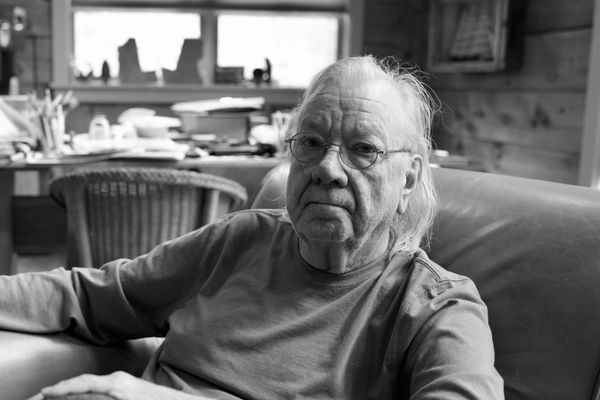
For 15 years William Carlson has lived in Monterey, making technically and physically demanding sculptures that merge glass and stone into transfixing objects. His work can be seen in the Metropolitan Museum of Art, the Smithsonian's Renwick Gallery, and the Yokohama Museum of Art in Japan. Large format sculptures of Carlson’s reside in public parks and the lobbies of important buildings. He drew Japanese collectors across continents and shaped generations of student artists over decades of teaching at the University of Illinois and the University of Miami.
"I have worked around here and had my work around here," Carlson says. "But I've not been terribly visible."
That changes this Memorial Day weekend, when Carlson opens “Two to Tango” at Gallerie 271 in Monterey, a summer exhibition he co-headlines with painter Jaye Allison.
The 75-year-old artist is facing a significant moment in his life. It’s time to move, time to downsize, time to focus on his health, but that doesn't mean he wants to stop. he wants people to see that he’s still here, still thinking critically about the work he’s making. He’s decided that his neighbors deserve to know what he's been up to.
"The people know me from one point of view," he says. "I'd like to have them have a chance to see what I do with my creative life."
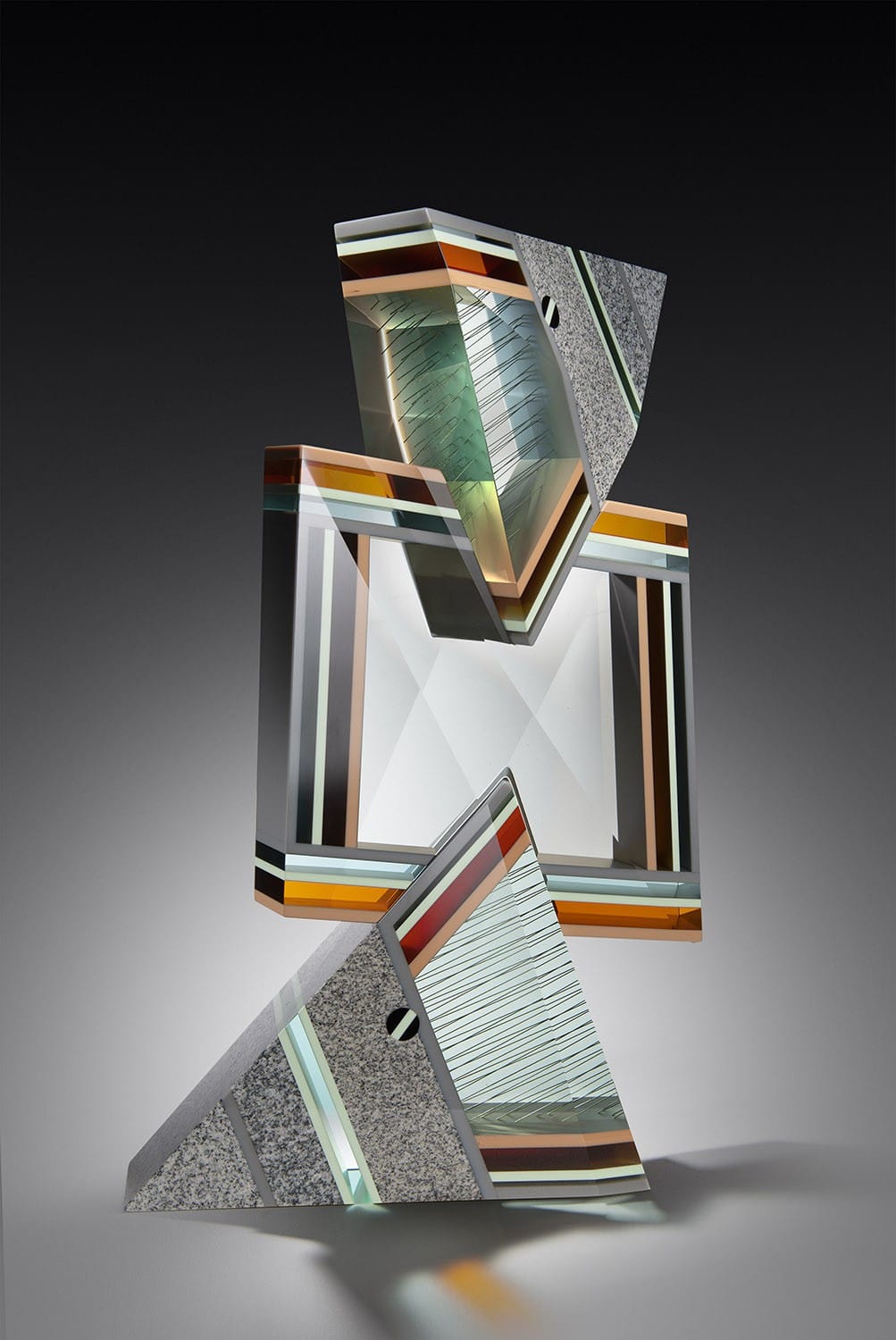
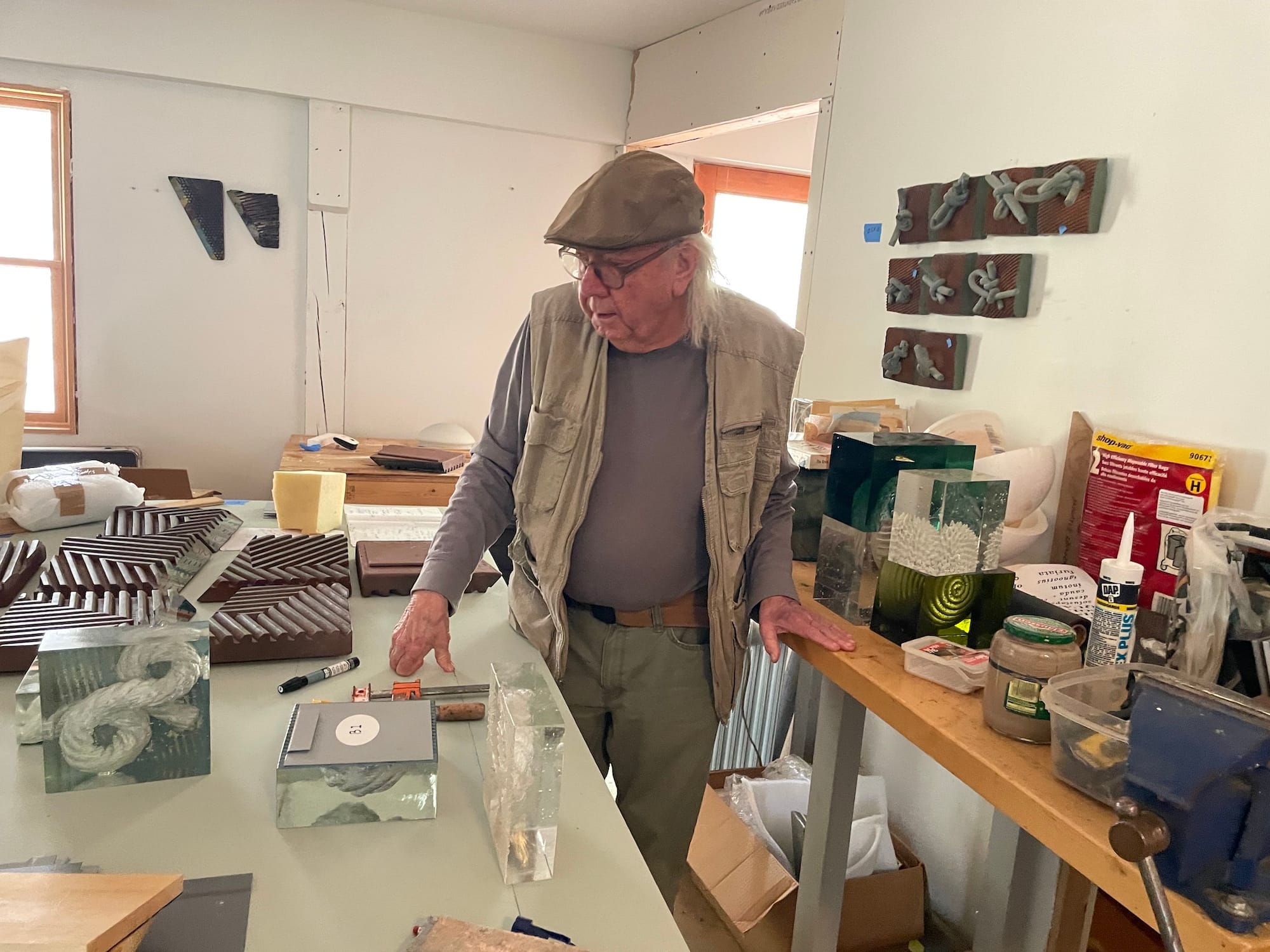
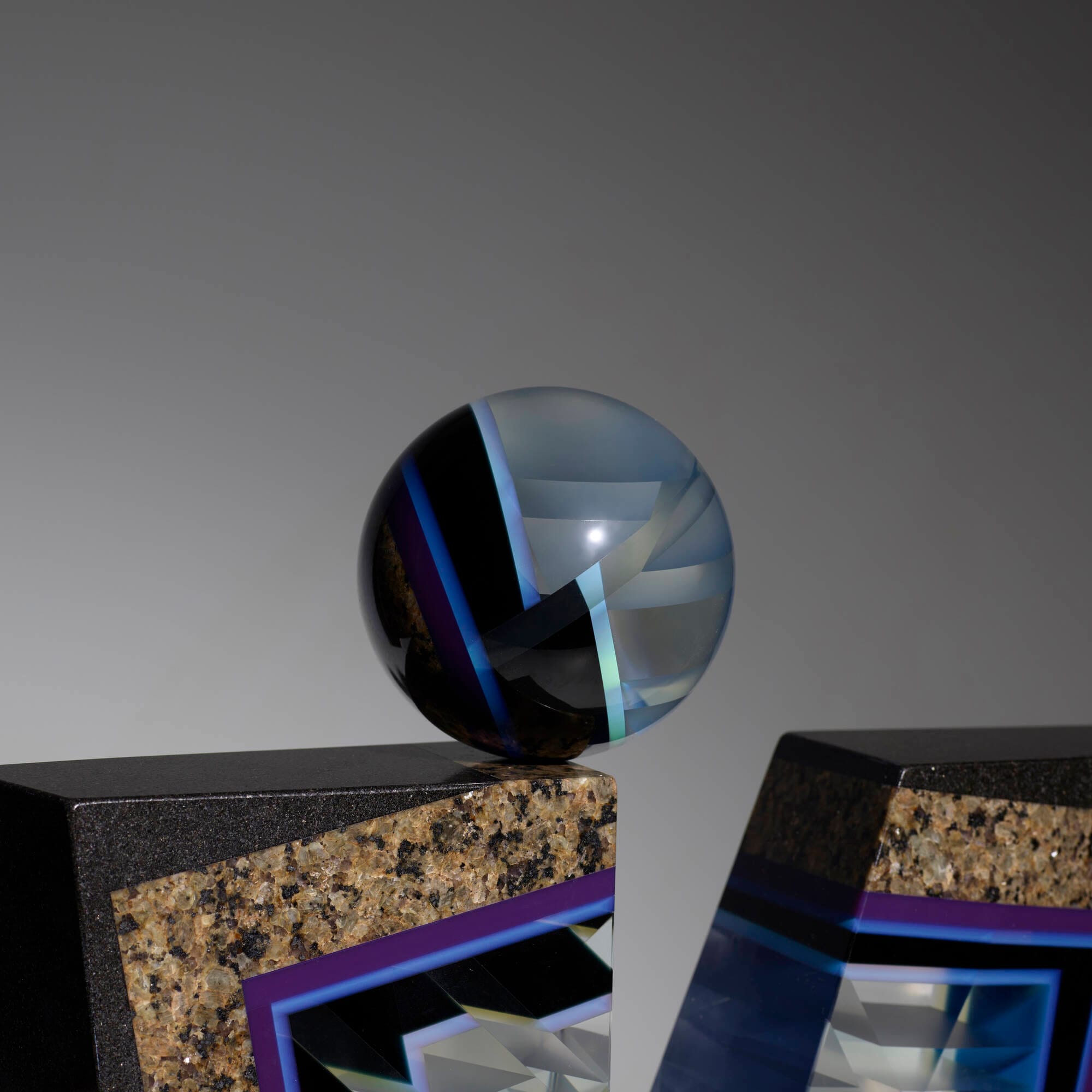
Carlson has spent his career bringing diverse materials (granite, cast glass, dichroic glass sourced from Japan, wire, rope, adhesives used in aerospace and museum conservation) together in fascinating and complex ways.
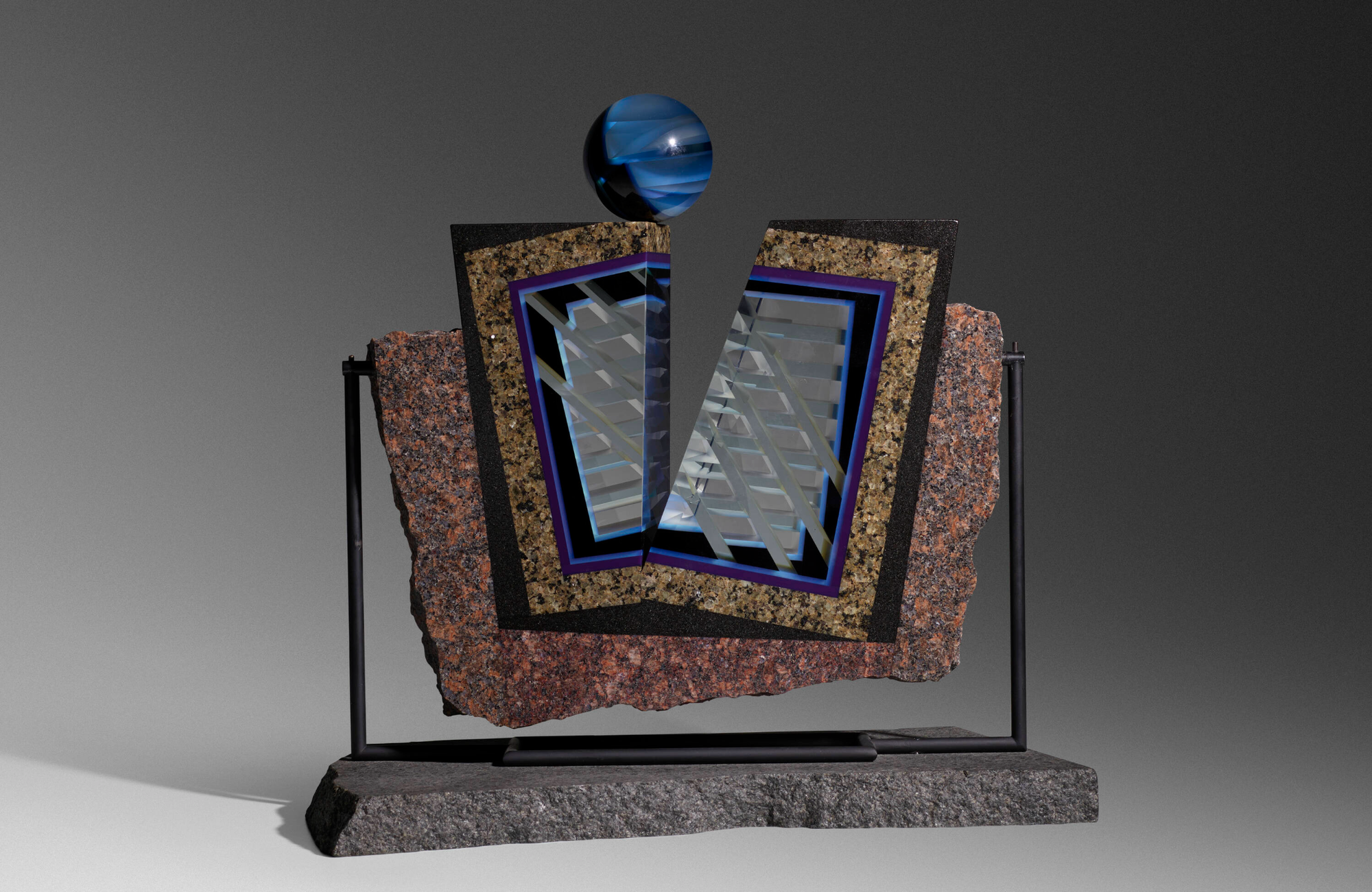
His formal logic draws from geology as much as art history. The cast glass adhered to granite references sedimentary rock and agate structures. But the experience of the work is something else entirely. The glass activates in light. What appears to be a solid, weighty object suddenly contains something transparent, even luminous, something that behaves differently depending on where you stand, what time of day it is, whether you're moving.
"Everything is always in transition," Carlson says, holding one of his composite objects in front of the window. "There's not a time when there is a ‘correct’ way to view this.”
He describes his sculptures as kinetic, despite containing no moving parts. The kinetics are in the viewer. Move around the piece and the piece changes. He has been chasing that effect for 50 years.
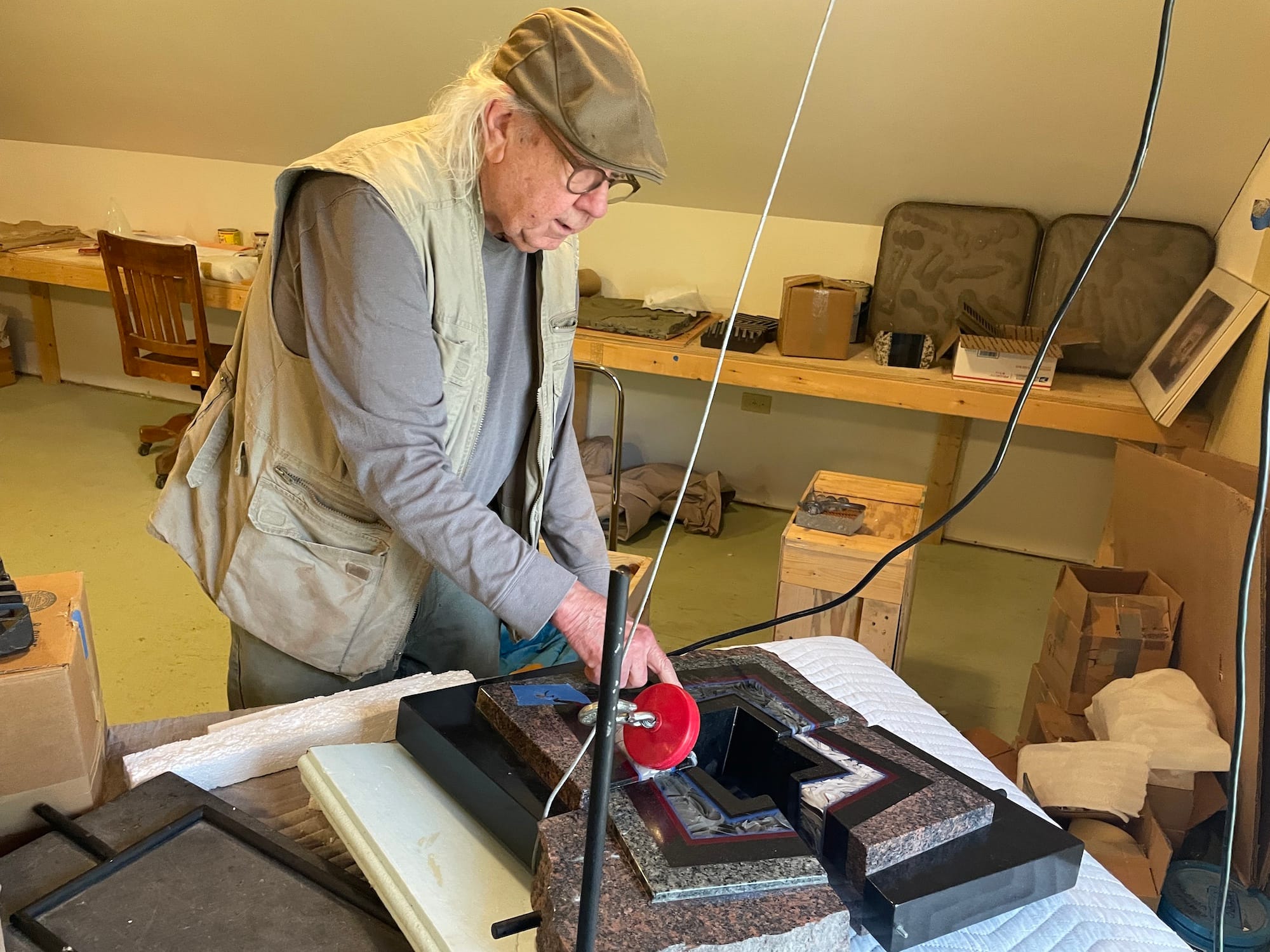
His earliest influence was architecture, specifically its rules—which he immediately wanted to break. He spent his career trying to use the formal language of structure and geometry while humanizing it, making objects that have what he calls "a lean and a look," a posture, something bodily rather than strictly architectural.
"As long as I'm doing my job," he says, "you shouldn't really be able to define it with either a single picture or a single comment."
His landmark public commissions bear this out. A wall installation separating the public entrance from the lobby of the Chicago Board of Options Exchange was engineered to be optically mesmerizing—with corrugation and reflected light playing off an escalator behind it, so every passerby saw something slightly different—while also being thick enough to withstand attack. He has work at a Mayo Clinic in Jacksonville, Florida, and pieces commissioned for university buildings in Illinois. Each project required Carlson to invent or adapt his own machinery, because the tools to work granite and glass together in the way he envisioned simply didn't exist.
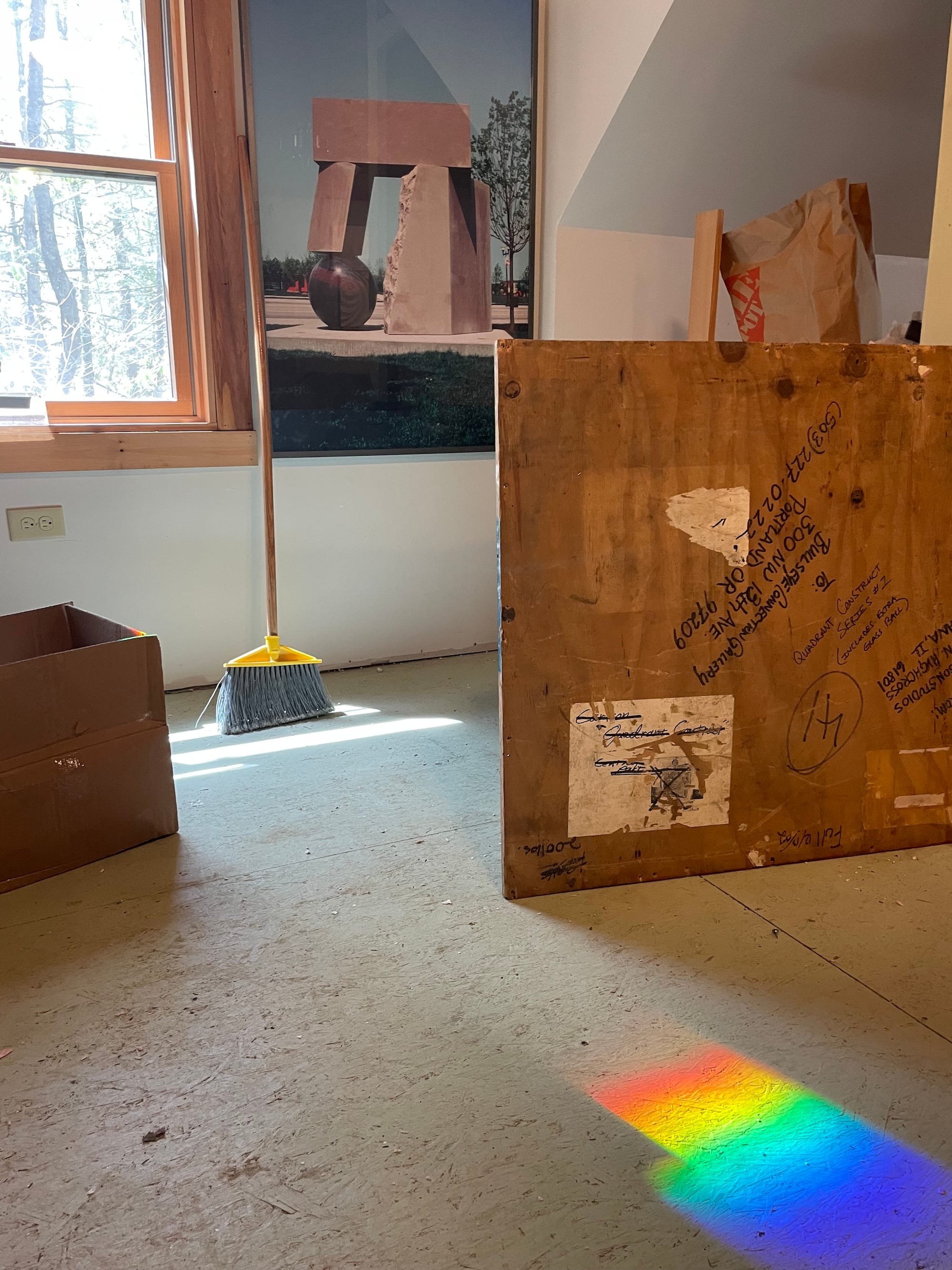
He describes himself as "artist, inventor, and masochist.” He’s spent half a century carrying loads of granite. He’s burned his hands on hot glass. He built pieces requiring a winch to lift. “I still have all 10 fingers!” he says with pride, holding up his well-worn hands for inspection. They’re big in relation to his frame, dark and leathery.
"I used to be strong," he says. "I have lost my strength over the last probably 10 years. So I'm feeling a little diminished and a little humbled by my physical self.”
Carlson needs to downsize. His studio and house have become more than he can manage on his own. His children are in Colorado. He doesn't yet know where he's going next.
The opportunity at Gallerie 271 emerged from this context. Carlson made the first move. He put together a portfolio of slides of his work and left it in gallery owner Dave Hattem's mailbox. Carlson does not really do the internet.
"Holy moly," is how Hattem described his reaction once he looked inside the package Carlson dropped off. "This guy is a serious sculptor."
There's a certain poetry to the narrative of this meeting. Hattem is the retired chief legal officer for Equitable, one of the nation's largest retirement fund managers, helping people construct the financial architecture of their next chapter on the largest possible scale. And yet here he is now, at his summertime passion project in a converted auto body garage on Route 23, creating a space for a world-renowned sculptor to work through his own relationship to his art and life, on his own terms.
Hattem bought the 1960’s collision shop as a place to store his own cars and found himself with extra space he didn't need. He turned it into the seasonal gallery, open Fridays and Saturdays from Memorial Day through Labor Day, now in its fourth year.
Carlson says he was always motivated to defy cliches of object-making and wanted to make work that redefined what sculpture could be. Did he accomplish his goal?
"I’ll never consider that done," he says. "That's the reason I'm still making. I still make things."
Carlson also says he hasn't found his comfortable place yet. That everything has always been on to the next step before the last one was finished. He’s still hard at work in the studio next to his house. He acknowledged that he'll have to change the scale of what he aspires to, step back from the scale he was once known for, and work differently with what his body now allows.
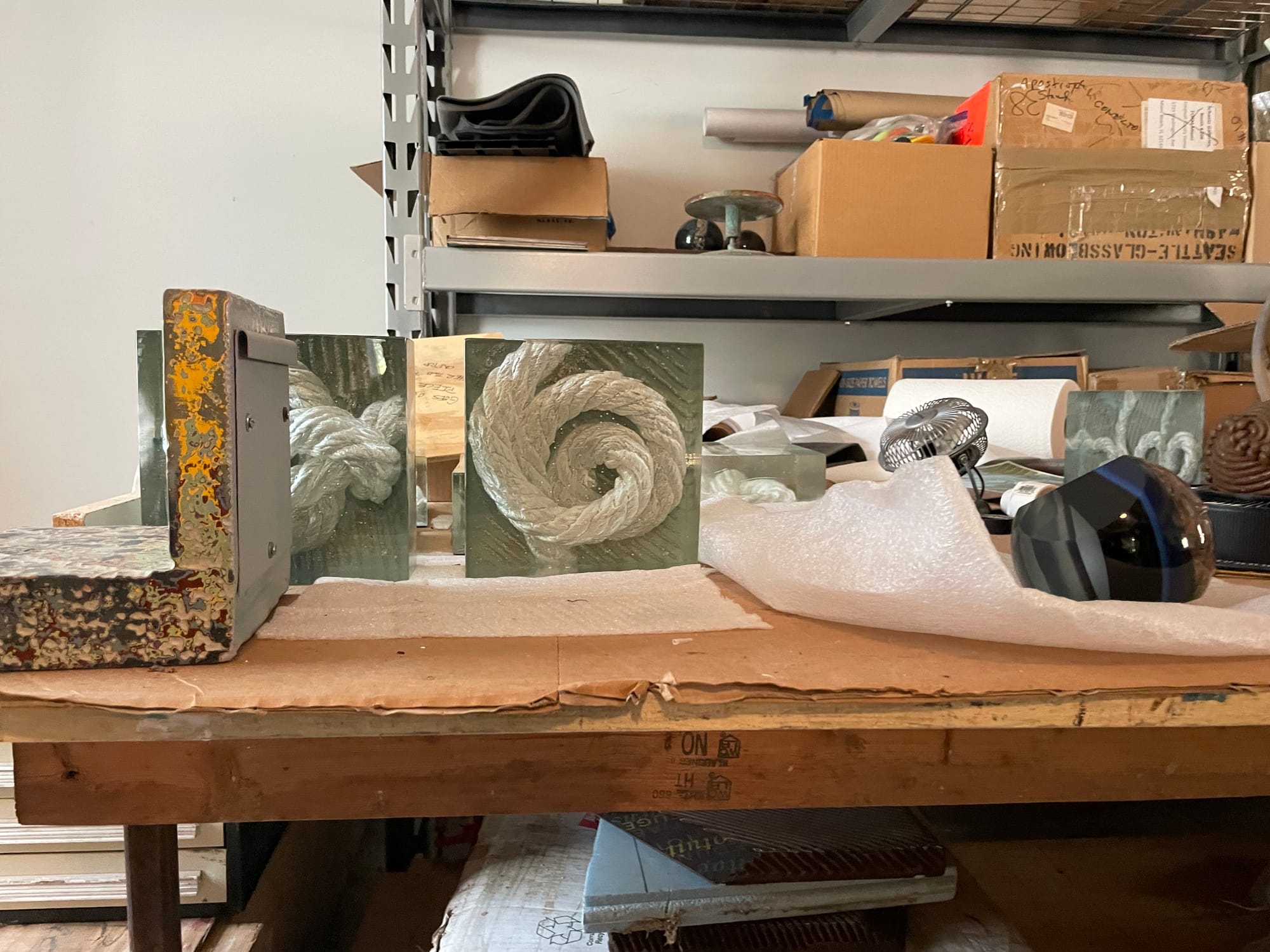
And yet he put together those slides and left them in a stranger's mailbox. He asked, after 15 quiet years, to finally be known by the community around him.
"At this point," Carlson says, "I'd like to at least have them have a chance to see what I do."
“Two to Tango” featuring William Carlson and Jaye Allison opens Memorial Day Weekend and runs through July 4th at Gallerie 271, 271 Main Road, Monterey, MA. The gallery is open Fridays and Saturdays.