"Surrender" by Jennifer Acker: Familiar Berkshire Settings, Feelings, Characters, and Goats
One city-dwelling friend told Acker the novel worked as "a prophylactic for anyone thinking about country life."

One city-dwelling friend told Acker the novel worked as "a prophylactic for anyone thinking about country life."
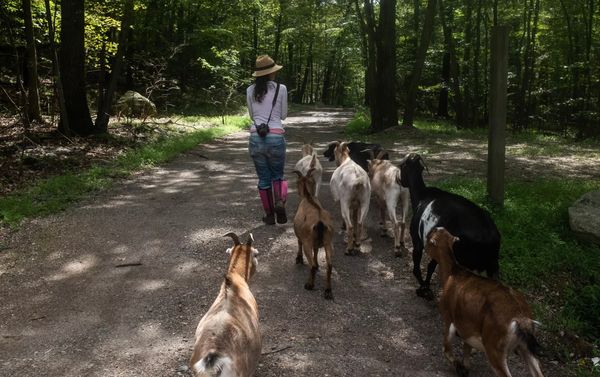
There's a popular fantasy about the ease of life in our rural region that tantalizes the minds of burnt-out urban professionals when they hit middle age. It involves a farmhouse, some land, a slower life, a second chance at something. They sell apartments and leave careers, showing up in the Berkshires with energy and good intentions but a fairly hazy sense of what comes next.
Surrender, Montague-based author and Amherst College literature professor Jennifer Acker's second novel, uses this familiar emotional setting and the local landscape to examine themes of loss, aging, and the minefield of nostalgic love.
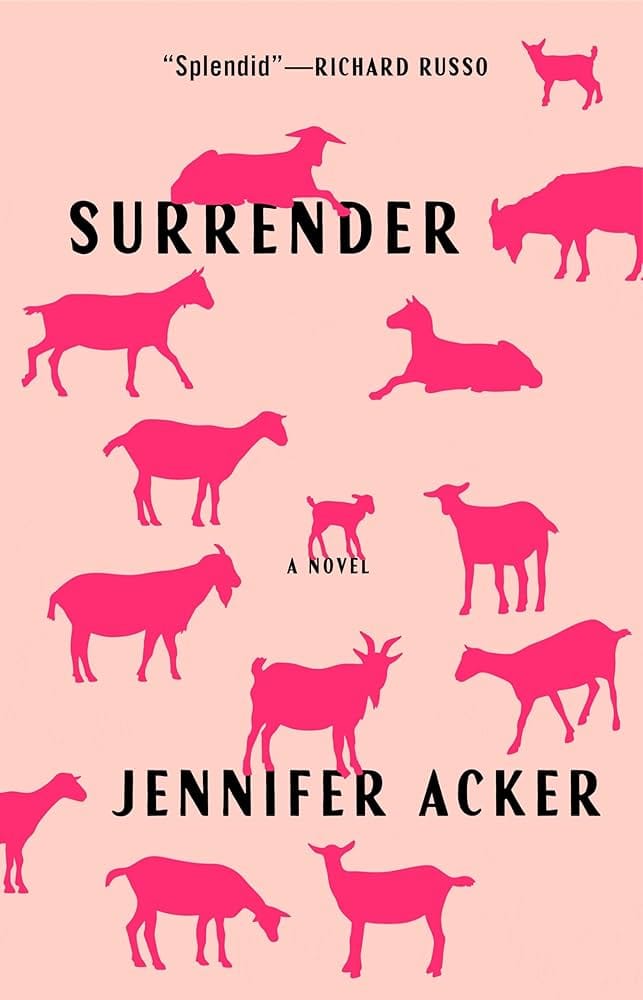
At the story's center is Lucy Richard, a woman who has spent two decades in a successful New York public relations career, largely in orbit around the academic life of her significantly older husband Michael. At 47, she returns to rural Massachusetts to take over her late father's farm and raise a few goats. The fantasy of bucolic convalescence evaporates almost immediately. Her savings are wiped out by a bad investment, her farming mentor dies suddenly, and her husband begins showing signs of dementia. Then a childhood friend named Sandy moves back to town, and what develops between them is both a potential romance and a reckoning — with desire, loyalty, and what it actually costs to want something for yourself in the second half of life.
Acker is not writing from the outside looking in. She grew up in Whitefield, Maine, on a small family farm, and has lived in Montague long enough to have attended town meetings and absorbed all the infrastructure of small-town life that her novel renders with authority. She interviewed working goat farmers while writing the book. "A lot of the rhythms of farming are taken from my upbringing," she says. "It's always been interesting to me to try to capture the world as it is, and to try to show something that maybe most people aren't aware of, or a kind of life that is not familiar to us."
That grounding extends to the geography. The village store where Lucy works is modeled on the one near Acker's house. The home Sandy moves into is, in fact, Acker's own.
The novel also draws from Acker's personal history: her farmer father's death a few years ago, and memories of watching women in her mother's circle leave their marriages and begin new lives when she was a teenager.
But Acker was equally deliberate about the structural bones of the story. "Those were the twin stories that I thought about when I was conceiving of this book," she says — "someone who was trying to save the family farm, moving back from the city to embrace a rural lifestyle, and that, as part of this midlife upheaval, she would develop a new romance." The two plots aren't separable, which is the point. Lucy's relationship to the land and her relationship to Sandy grow from the same hunger: the need, late but not too late, to build a life that is actually hers.
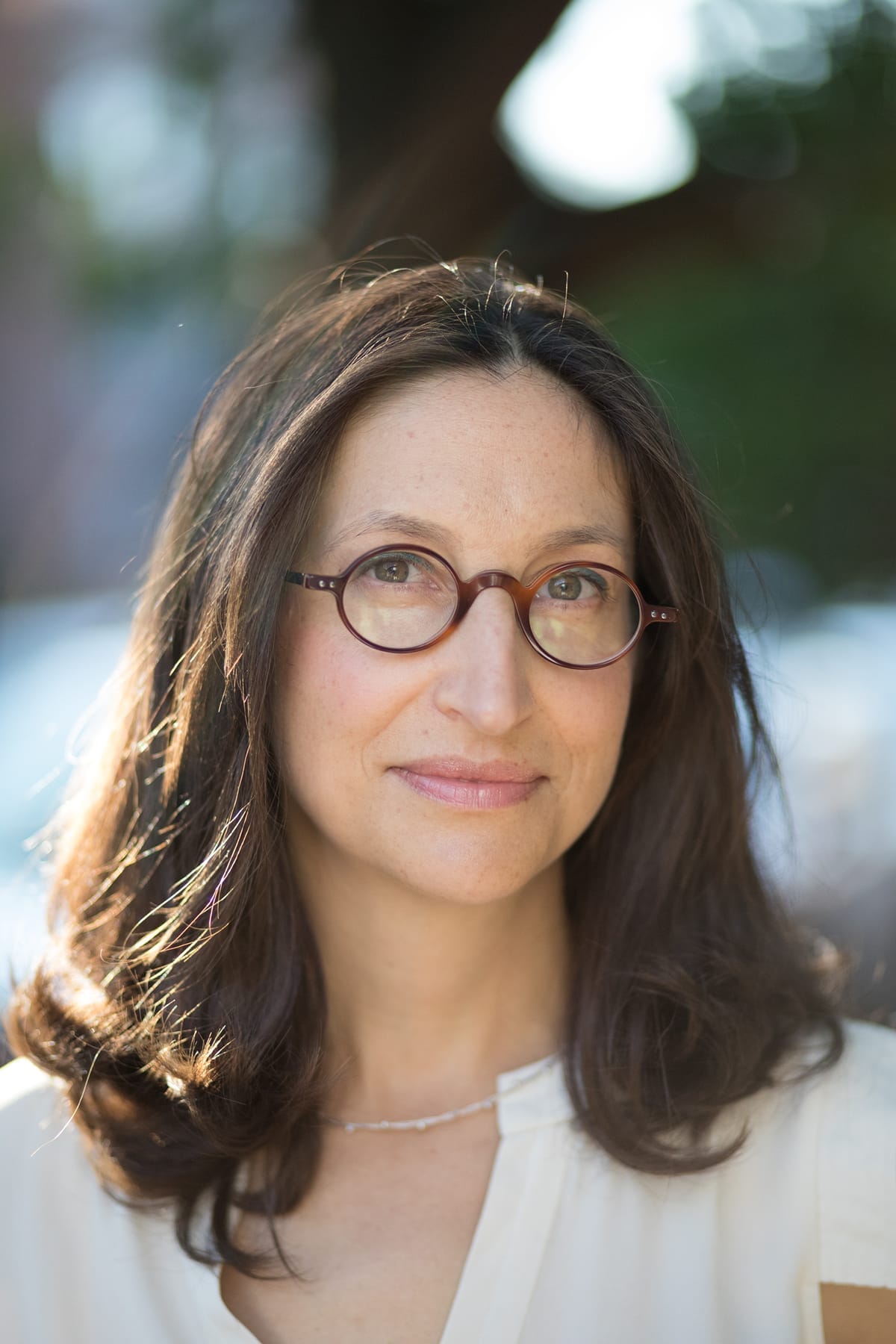
Acker is the founder and editor-in-chief of The Common, a print literary magazine based at Amherst that has, since its founding, built a reputation for publishing serious work rooted in a strong sense of place. She also teaches writing and editing at Amherst, where she directs the Literary Publishing Internship and LitFest. Her debut novel, The Limits of the World, was a fiction honoree for the Massachusetts Book Award, and her essays, stories, and criticism have appeared in the Washington Post, Literary Hub, the Yale Review, and Ploughshares, among others. She has an MFA from the Bennington Writing Seminars.
When she writes novels, Acker says, she's always thinking about trouble — "what kind of trouble your characters get into, partly because that's life, but also because that's art." The trouble in Surrender is abundant, varied, and crucially familiar. Anyone who has watched a marriage erode, or found themselves at midlife holding a set of dreams that no longer quite fit, will recognize the territory.
One city-dwelling friend told Acker the novel worked as "a prophylactic for anyone thinking about country life." Whether it tempers the fantasy or simply makes it more honest is an open question. What the book refuses to do is flatter anyone — except maybe the goats. The farm is beautiful and it is brutal and it does not care that Lucy is going through a personal transformation.
This isn't a Hallmark movie about a bisexual awakening. "Sometimes big changes come at a cost," Acker says. "Achieving those things can be a lot of hard work, and there are other people that might get hurt. Those are all really hard things to think about." She wanted to look at midlife "very fully" — both what people in that moment are dreaming about, and the real friction of trying to act on those dreams.
"I very much think of this as a book about second chances, second acts, and the opportunities that are still available to women in middle age," she says. Beyond the romance, the female friendships in the novel carry real weight. There's a network of women who hold Lucy together through her cascade of losses. Acker hopes those relationships offer readers something beyond the story itself: "a lot of hope and solace," and an inspiration to draw their own friends closer.
Surrender is published by Delphinium Books and is available now.