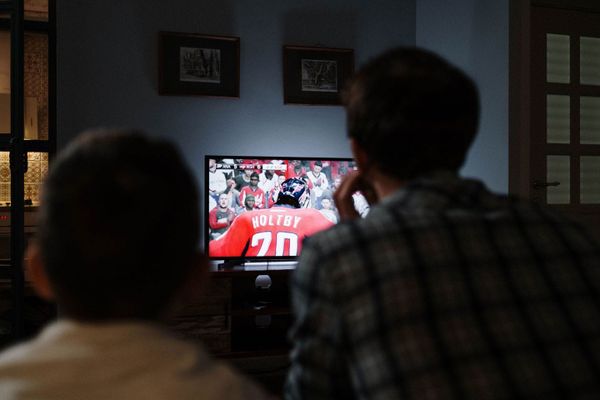
Game day has its own rituals and that's food on the table, familiar faces on the couch and a friendly argument over who will win. But phones have changed the experience, bringing live statistics, predictions and sports betting into gatherings that once revolved around the television. The challenge is embracing new habits without losing the sense of community that makes watching sport worthwhile.
Football traditions meet a changing audience
Football remains a fixture of American sporting life, although fans' interests are shifting. In Gallup's 2026 poll, 31% of U.S. adults named football as their favorite sport to watch, while 20% said they had no favorite. Soccer reached 9%, putting it close to basketball and baseball.
Not every household follows the same league, and not everyone arrives at a watch party with a team to support, while others tune in for basketball, soccer or whatever match happens to be on.
That variety can be a good thing. The food, conversation and company matter just as much as the final score. It gives longtime supporters and casual viewers a reason to join in. Even rival supporters can find common ground in the excitement of a close contest, while discussions about rising sports stars give fans another reason to follow the season.
Betting can be part of the conversation
For some fans, predicting the outcome is part of the fun. A close game invites debate over which team has the advantage or which player might make the difference. Betting can add another dimension. Nobody needs to place a wager to participate.
A 2026 Urban Institute study found that 24% of sports bettors said they bet primarily to socialize with friends and family. Another 52% cited fun or excitement as a reason for betting, while 67% said they bet to try to win money. The figures also show that motivations vary, even among people who share the same hobby.
These motivations help explain why betting enters sports conversations. Still, there's a difference between debating predictions over snacks and feeling expected to spend money to join the fun. Keeping wagers optional allows everyone to enjoy the occasion on their own terms.
Phones also create a more private experience
Phones make it easy to follow several games, check live scores and explore betting options without leaving the couch. That convenience keeps fans informed, but it can also pull attention away from the people sitting beside them.
A viewer might be checking statistics while someone else follows a different matchup or browses social media. During a close finish, these individual distractions can make a shared experience feel surprisingly fragmented.
Hosts don't need to ban phones to preserve the atmosphere. Instead, they can encourage a balance between following the action online and staying involved with the people in the room. After all, part of the appeal of watching sport together is having someone nearby to celebrate a great play or debate a questionable call.
Comparing betting information without losing the social side
For fans who choose to explore betting, understanding the available information is part of making informed decisions. Different platforms can present different markets, odds and features, so it helps to know what is being compared rather than focusing on a single headline price.
For readers interested in Canadian sports betting, Covers.com provides information on sportsbook options, odds picks and predictions. This side-by-side offers a starting point for comparing available options and understanding how different platforms present their services. Covers also publishes sports analysis and betting-related coverage, giving readers additional context as they follow sporting events.
Comparisons can help people understand odds and platform features, but they can't guarantee an outcome or remove betting risks. Canadian readers should check provincial rules and individual platforms' terms, while U.S. readers should remember that betting regulations vary by state.
Consider a group watching a close football game. One person is focused on the team's recent performances, another is debating the likely winner and someone else is curious about the odds. If a key player's injury changes the team's prospects, the discussion might shift again. These different interests can coexist, provided nobody feels pressured to bet and the conversation remains enjoyable.
Local hosts can set their own tone
There's no single formula for a good game-day gathering. Some groups love debating performances and predictions; others would rather concentrate on the food and cheer when something exciting happens.
A few simple habits can help keep everyone involved:
- Make betting optional and avoid pressuring guests to participate
- Welcome fans who follow different sports or teams
- Keep the focus on conversation, shared excitement and the game itself
- Respect athletes' mental health and privacy when discussing performance or injuries
Technology will continue to change how people follow sport, but community doesn't need to disappear behind a screen. The best game-day traditions are built on shared moments, spirited disagreement and the pleasure of being together.