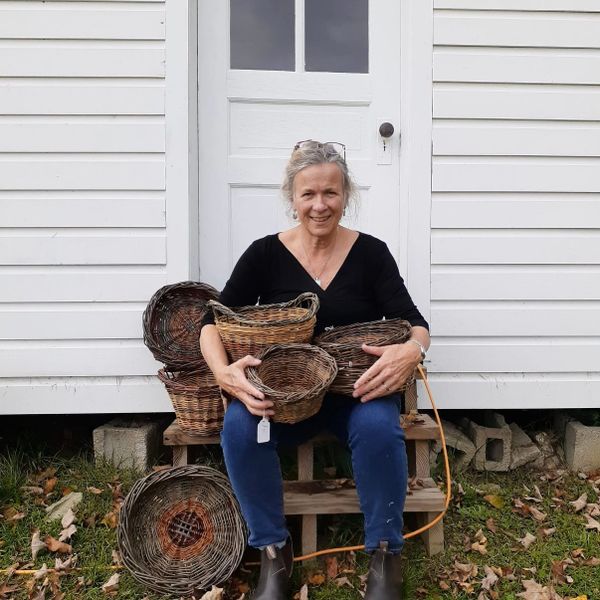
Williamstown Willow Basket Weaver and Teacher Heleny Cook Lets Local Beavers Do the Pruning
Heleny Cook spent decades organizing coal miners, running Marion Barry’s summer jobs program, and teaching high school English before she ever picked up a willow switch. She’s made up for lost time.
Even though she now teaches the art, Heleny Cook didn’t start weaving willow until 2019, in her seventies, on the same South Williamstown land where she was born. She grew up on Wendling Farm, the family dairy and chicken operation that supplied eggs to Williams College, before her father, an MIT-trained industrialist who ran Cornish Wire and Warren Wire, sold his business and moved the family to Manhattan. Cook spent the decades after college about as far from a quiet craft studio as a person can get: organizing coal miners in East Tennessee, running the job development office for Mayor Marion Barry’s summer jobs program in Washington, D.C., and then teaching high school English in the capital city’s public school system for 20 years before retiring back to Oblong Road.
It was on return visits to the farm, long before retirement, that she first started “getting lost in the forest with grapevines,” as she puts it, that laid the foundation of her interest before discoveringVermont Willow Nursery a few years ago and changing her life. During the pandemic, she took online classes from a basket maker named Hannah von Alst in Ireland. “I started working, practicing, practicing, practicing,” Cook says, “but not really getting too far.” She’s since studied with weavers in England, Denmark, and Canada too, and now runs her own studio,Wendling Willows Basketry, named for the family farm, where she grows cultivated willow and forages the wild kind.
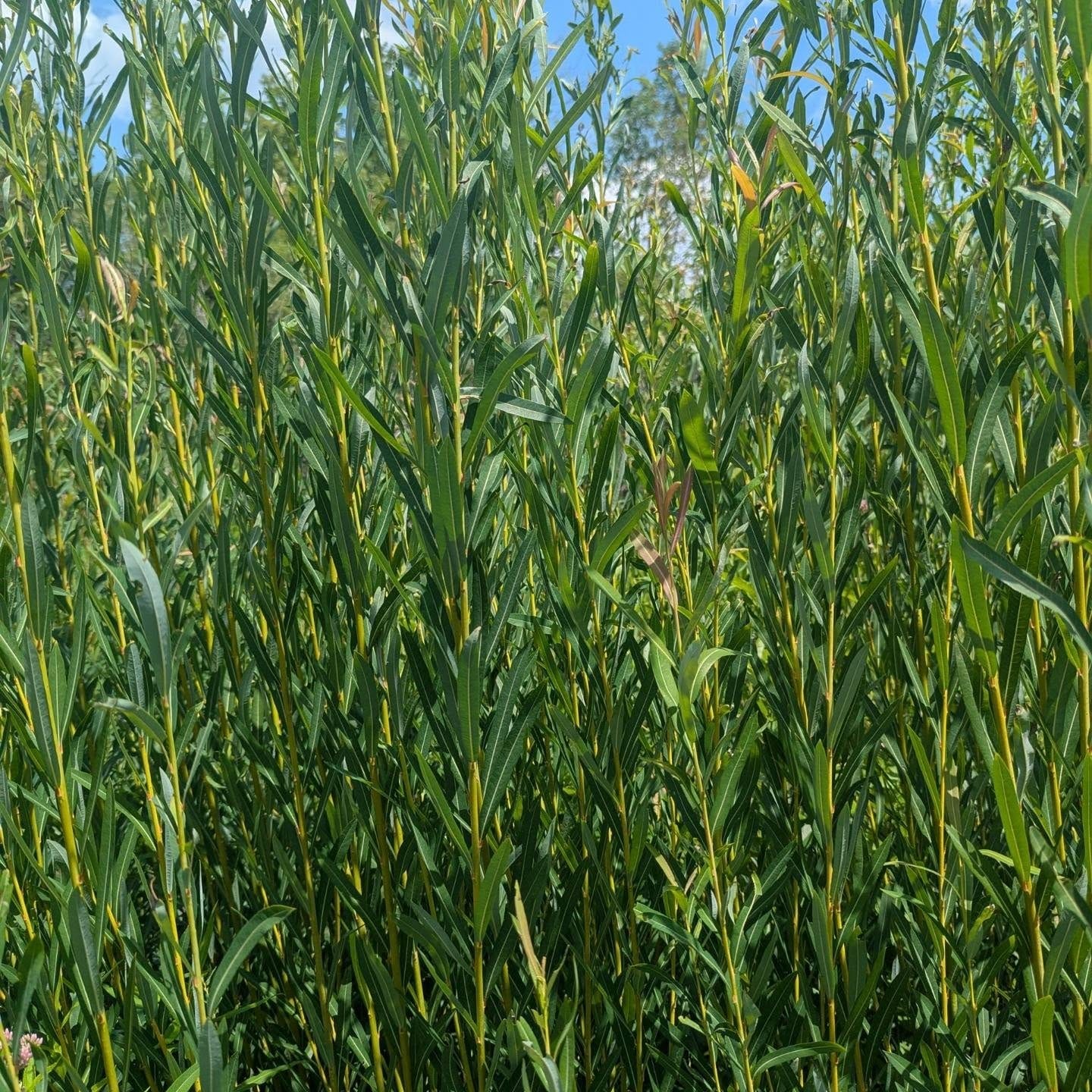
Finding wild willow, she says, sometimes includes the assistance of troublesome beavers. “Beavers love willow, they use it to make their dams,” Cook says. The animals also bury willow in their ponds as winter food, and in the process, they do her pruning for her. “You stick a piece of willow in the ground and it will grow, and then you coppice it, and it’ll grow six sticks out of it,” she says. Coppicing is an ancient woodland management technique where trees or shrubs are cut down near ground level to a living stump, called a stool, to encourage new, multi-stemmed shoots to regrow. “So the beavers coppice the willow for me.” This year she tracked a beaver-dammed patch to a farmer’s field, where the animals had turned a small creek into a chain of ponds much to the farmer’s frustration. She hauled out roughly 40 pounds of willow, now drying and soaking for a batch of woven obelisks, structures she says are perfect, elegant, low-maintenance, reusable stand-ins for Christmas trees.
Outside of indigenous practices, Cook says the closest thing to a regional willow tradition she’s found is inLiverpool, New York, a lakeside village near Syracuse where German immigrant salt workers began weaving willow baskets as winter work in the 1850s. At its peak around 1892, the village was shipping hundreds of thousands of baskets a year along the Erie Canal; a small museum there still honors the trade. Beyond that, Cook says her work follows England’s centuries-old willow culture going back to medieval wattle fencing.
A Teacher Again
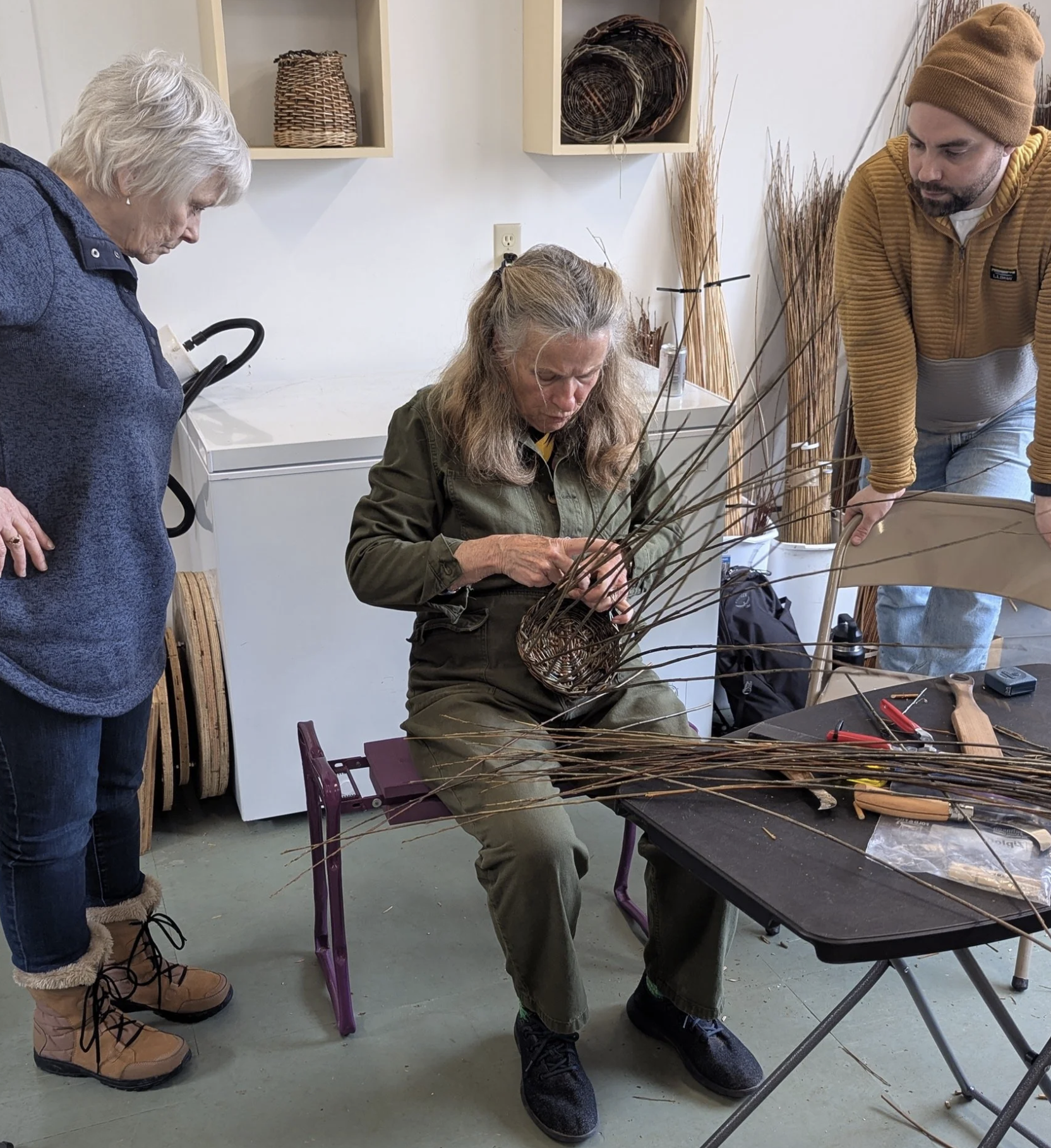
Cook backed into teaching basket-making almost by accident, after Molly de St. Andre, owner of the boutiqueBon Dimanche on Railroad Street in Great Barrington, spotted her selling baskets at a holiday market and offered her studio space. Cook taught 24 classes last year and is still adding more this year, including a winter series on oval baskets at that same Great Barrington studio. Her students split roughly into two camps, she says: retirees “figuring out what to do with the rest of our life,” and people under 40 drawn to something tactile after a day spent at a screen. “This is so satisfying because it’s real,” she says they tell her, describing the meditative state that settles in after a few hours of weaving.
Next up at her South Williamstown studio is a two-day Jardinière Weekend Workshop, October 31 and November 1, where students weave a traditional willow jardinière, a planter form developed by English basketmakerJenny Crisp for herbs, houseplants, and seasonal flowers, with the option on day two to build a second one or weave a custom piece around a plant brought from home. After that comes a run of half-day holiday ornament workshops, November 14 and 15, split into morning (9am–noon) and afternoon (1–4pm) sessions each day, with students able to sign up for a single session or book the full day. Multi-day classes come with a homemade lunch Cook makes herself, built whenever possible from her own garden.
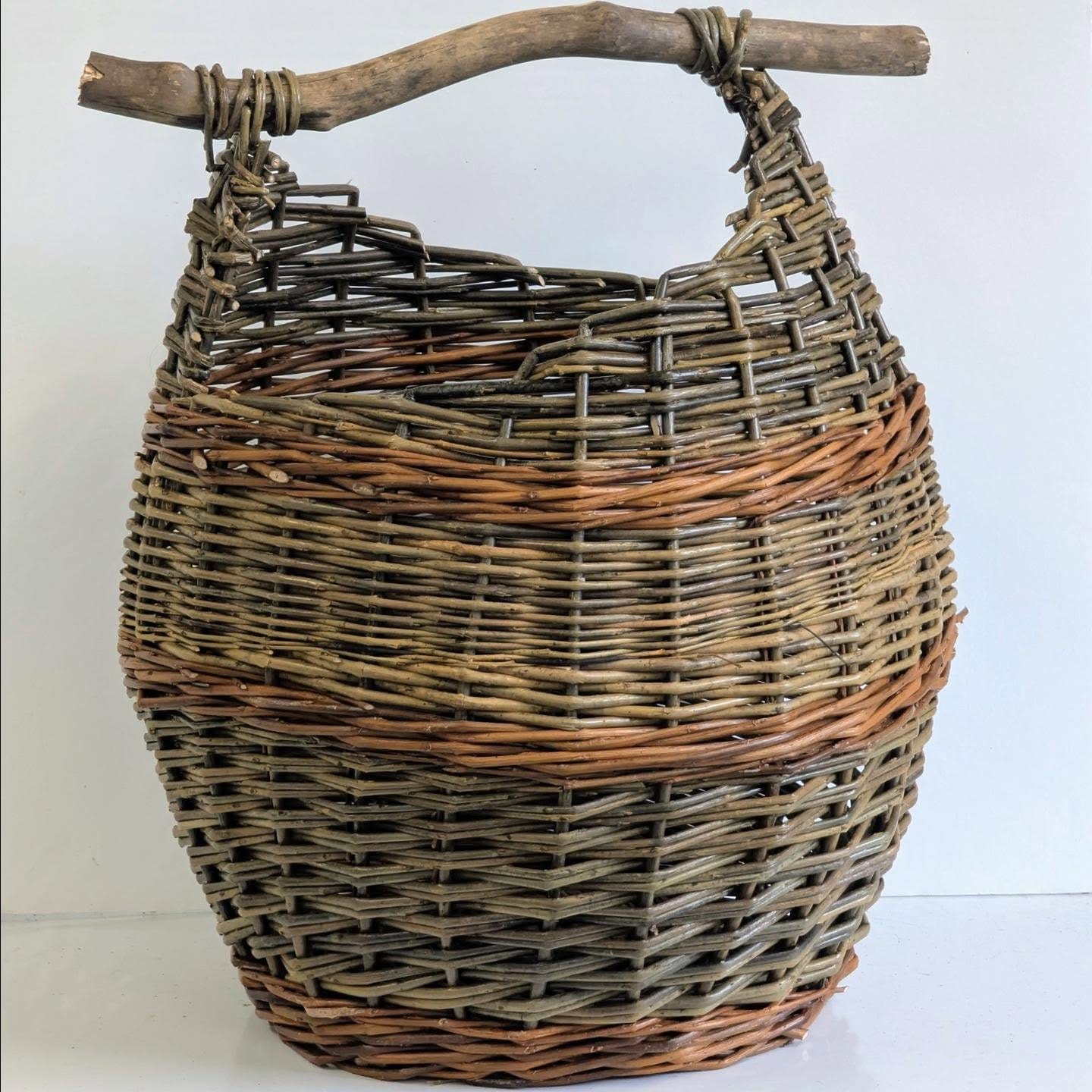
Beyond the classroom, Cook’s finished work is sold directly at Provisions in Williamstown,Red Shirt Farm Market in Lanesborough,Woodlife Farm Market in New Lebanon, and theRailroad Street Collective in Great Barrington, where her teaching career started. She also sells at seasonal farmers markets and straight from the South Williamstown studio. Inventory shifts constantly, since every piece is handwoven in small batches, so what’s available changes with the season, heaviest on apple and berry baskets through the fall, Christmas trees and ornaments once the holidays approach.
After a decade of writing for RI (along with many other publications and organizations) Jamie took over as editor in 2025. He has a masters in journalism from NYU, a wonderful wife, two kids and a Carolina dog named Zelda.