Forensic Report on Damning Botstein Email to Epstein Inconclusive: Bard Trustee Says Concerned Students are “Bitching and Raving”
The analysis calls the message "highly suspicious" but says it cannot prove it was fabricated. Bard trustee Asher Edelman feels the issue has been resolved.
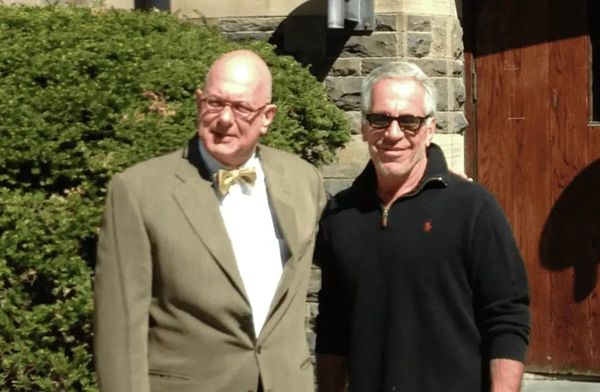
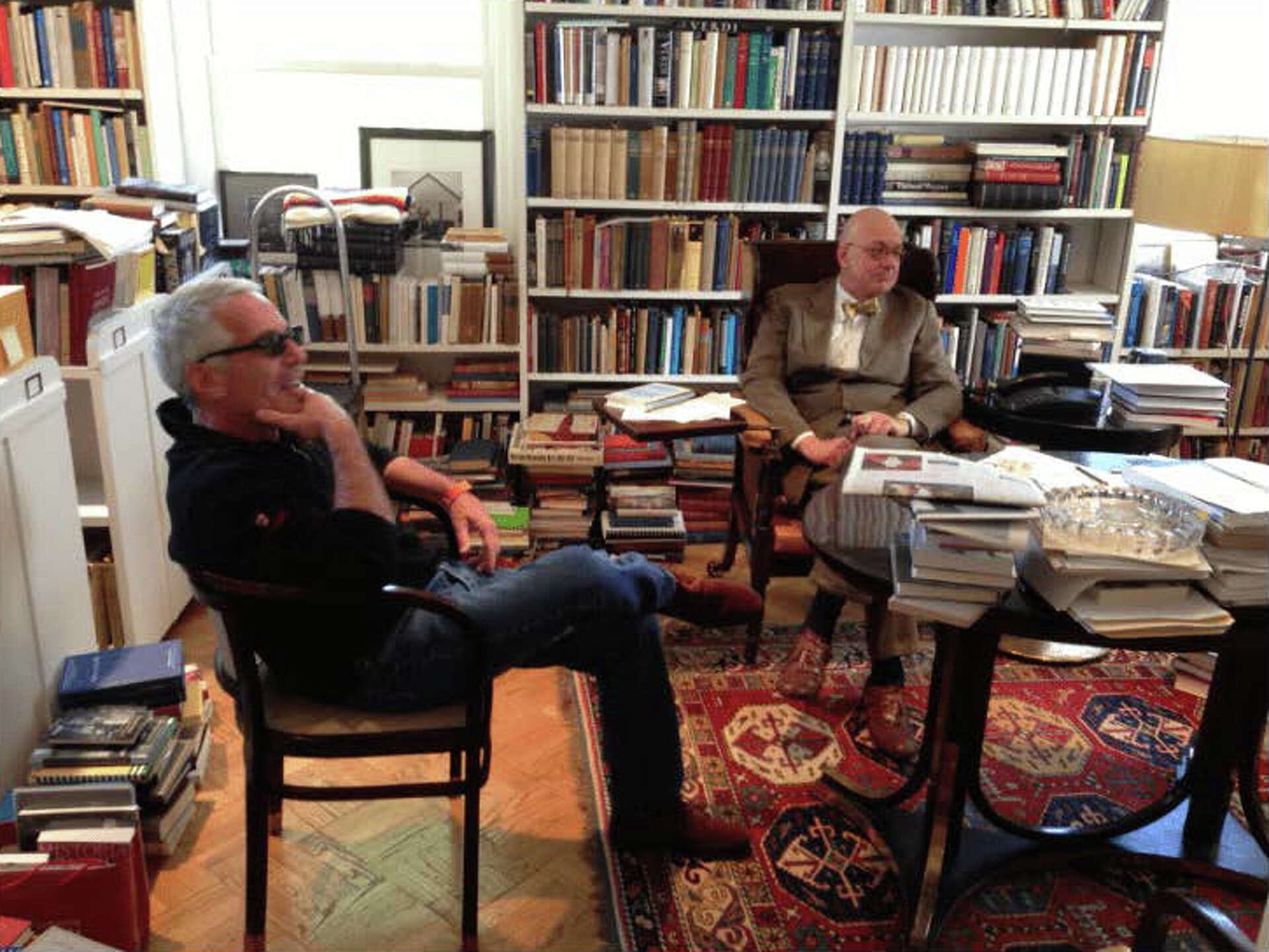
Pictured: Former Bard President Leon Botstein gives convicted pedophile and sex trafficker Jeffrey Epstein a tour of the college in 2013.
Leon Botstein, who led Bard College for 51 years, resigned his remaining roles at the college on October 8, a day after Rep. Jamie Raskin, the ranking Democrat on the House Judiciary Committee, cited an email in the Justice Department's Jeffrey Epstein files as "damning evidence" against him.
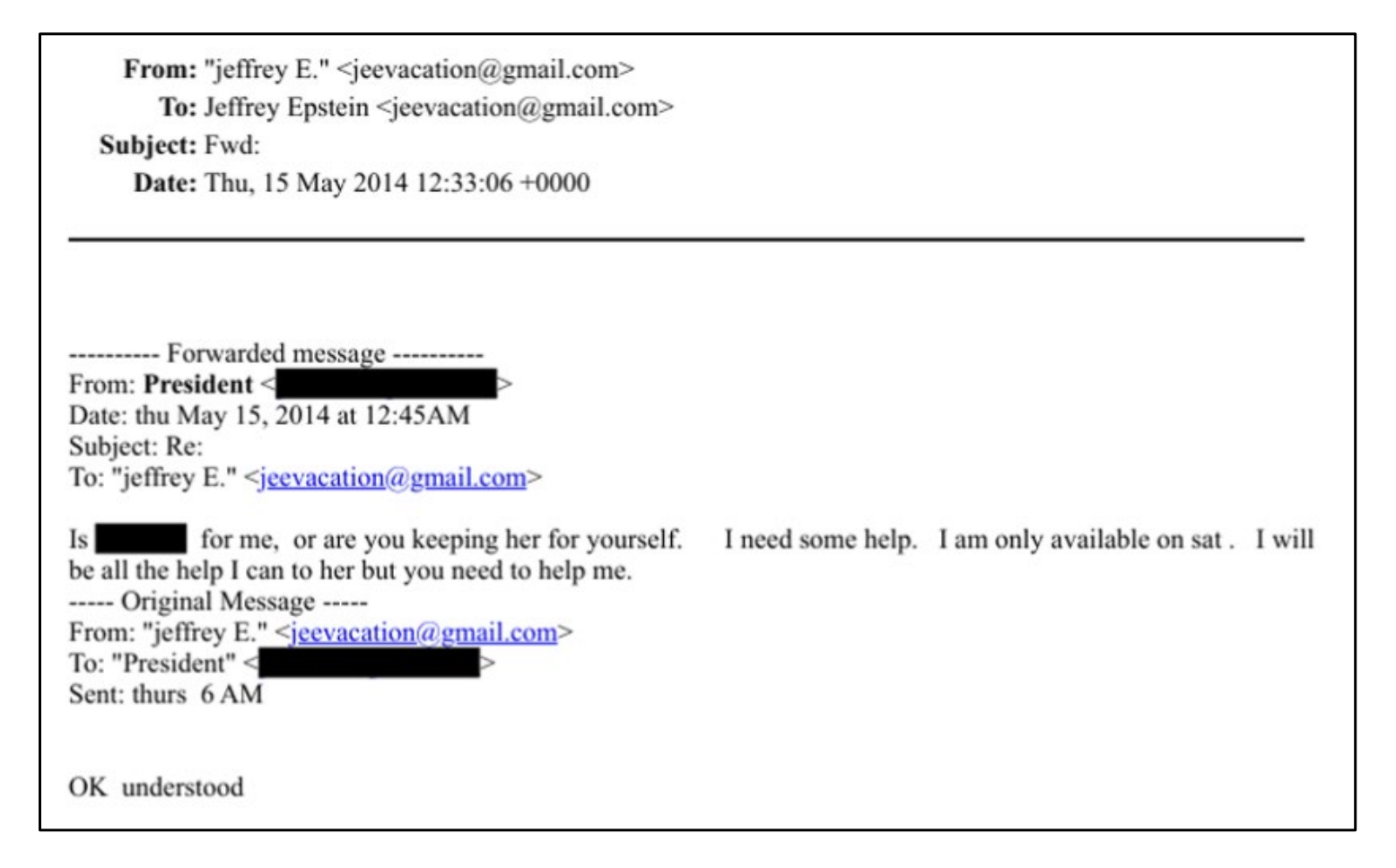
The email, dated May 15, 2014, and attributed to Botstein, asks Epstein about a woman whose name is redacted: "Is [redacted] for me, or are you keeping her for yourself." Botstein says he did not write or send it. Bard's trustees hired the cybersecurity firm FTI Consulting to examine the message, and the college says the resultingreport gives"a strong substantive basis" for doubting it is real. But the 19-page report stops well short of calling the email a fake, and it leaves open how the former president's old emails were stored, what became of them and what other evidence is still being held back by the Department of Justice.
The board that commissioned the report also includes a trustee who has become increasingly dismissive of Botstein's critics. "The students who are bitching and raving would not be there without Leon Botstein," Bard trustee and longtime Botstein defender Asher Edelman told the Times Unionin a report published Sunday.
Bard trustee Asher Edelman.
The remark raises the question of whether the board member actually wants answers about Botstein and about Bard's handling of sexual misconduct, or just wants the matter to go away. The timing of the college's announcements adds to that question: Bard released the report's findings Thursday and named a new president the next day.
The email in question
The email in question appears in the DOJ's Epstein files as text quoted inside an email Jeffrey Epstein purportedly forwarded to himself. Raskin'sOctober 7 letter to Bard's trustees says the woman is a young vocalist Epstein was trafficking, identified as "Jane Doe," and cites the email in what it calls "damning evidence that Botstein likely enabled and possibly even participated in Epstein's abuse." Botstein says,"As I previously said, I did not author or send that email." His spokesman says it is the only email he disputes, according to WAMC, and a Times Union analysis counts his name more than 2,500 times in the Epstein files.
The Email Shared by Raskin on October 7.
What the report found, and what it didn't
FTI Consulting, the cybersecurity firm the board retained, examined two PDF copies of the exchange from the DOJ's files. It concludes "with reasonable certainty" that the emails did not exist on Bard's servers as of a July 2017 migration from the Zimbra system to Google Workspace. It also lists three irregularities. The quoted header on the message attributed to Epstein reads "Sent: thurs 6 AM," with no date or year, while six preserved Epstein-Botstein emails from 2013 and 2014 carry full dates down to the second. Botstein's reply is stamped 12:45am on May 15, which would place it five hours and 15 minutes before the message it answers. However, there is no evidence of which time zone Epstein was in. And the reply exists only as quoted text, with no original email or transmission records to authenticate it.
The report says it "is not possible at this time to establish with certainty that the exchange was entirely fabricated," and that its limitations "prevented a definitive determination that the disputed emails were fabricated or materially altered." It also says FTI "did not consider whether the contents of the exchange, if authentic, support any underlying allegation."
"Bitching and Raving"
Edelman characterized the findings more definitively in the Times Union."The findings in the report are clear," Edelman told reporter Sarah Trafton. "It looks like an insert even to the naked eye, and it turns out it is."
The report does not say that. It states that its examination "did not identify evidence of a visible insertion within the examined PDFs," and that it observed no overlaid timestamp, "obvious pasted-text seam, or distinctive font discontinuity." It adds that this does not address whether a modified email was "incorporated into a document and rendered as a uniform image" before the earliest PDF version existed.
Edelman, a financier and longtime Botstein friend, told the New York Times earlier this month that Botstein's critics"should kiss his feet."
As quoted, the remark does not say which students Edelman means. Bard students and alumni have criticized the college's handling of sexual assault complaints for decades, and this year the student group Take Back Bard called for Botstein's immediate resignation. Rural Intelligence has asked Bard whether the board stands by Edelman's remark. We await their response.
While Edelman seems keen to move on from the Botstein allegations, the historic culture of sexual misconduct at Bard reared its ugly head again last week, when music professor Kyle Gann was placed on leave after Jil Christensen, an alumna, alleged he sexually assaulted her in 1998. The allegation is unproven, but Christensen provided a copy of an apology letter Gann sent her after the encounter. It lands as Raskin's letter describes reports from more than a dozen whistleblowers about a long-standing culture of sexual misconduct at Bard and says Botstein interfered in Title IX cases, which Botstein calls untrue. The school has pledged an external review of sexual misconduct concerns, and Bard has said its gender-based misconduct policy exceeds federal Title IX requirements.
Why was this new email reviewed on its own?
Bard's statement calls the forensic analysis the first step in its response to Raskin's letter and says its review of the other claims is ongoing. It names no firm, scope, or timeline for that review. The trustees earlier hired the law firm WilmerHale, which found that "nothing that President Botstein did in connection with his relationship with Jeffrey Epstein was illegal" but, according to the New York Times, said he "minimized and was not fully accurate in describing his relationship with Epstein." Raskin called that review"too narrow" in June, and only a short summary has been made public. Rural Intelligence has asked Bard whether a broader independent review of Botstein's communications is underway and who is conducting it. We await their response.
What happened to the old server?
The report's central finding concerns July 2017, three years after the email is dated. FTI searched Google Vault, where a litigation hold was placed on Botstein's account in October 2022, roughly five years after the migration, along with logs from the migration itself. The report concedes that its migration review "did not establish a complete inventory of Botstein's email" and that a message deleted before 2017 or not transferred successfully "could have been absent from both the migration logs and Google Vault." It adds that Vault's "search and indexing behavior" limited the work. The report does not say whether Bard made backups of the old Zimbra system when it switched in 2017, whether any exist or whether they were searched.
Where are Botstein's old devices?
FTI reviewed Bard's email records, the migration logs, and the two PDFs. The report does not say whether Botstein or the college kept the computers or phones he used in 2014 or later, whether anyone searched them or, if they were discarded, when. The same goes for the other side of the exchange: FTI says "additional examination of the original electronic records underlying the DOJ disclosures would be necessary to establish the provenance, integrity, and authorship" of the email, and it did not have the native files. Inside Higher Ed reports that members of Congress could view an unredacted version at the Justice Department, while the report says FTI could not recover the redacted address and searched president@bard.edu as a stand-in.
Gaps in the analysis itself
The report's appendices read in places like a work in progress. The search register includes bracketed notes such as "[Exact queries, scope, dates and hit counts.]" and says that for the May 15, 2014, migration records, "All-subject review remained outstanding." The report says additional testing against known emails "is necessary to determine whether Google Vault reliably indexes and returns quoted-header text," and that positive controls using known full-date headers "remain to be documented." Without that, the lack of hits for "Sent: thurs 6 AM" is difficult to weigh. The report also says certain searches "may have returned results" that were judged irrelevant.
The five-hour-15-minute discrepancy also has a possible innocent explanation that the report acknowledges. In an appendix, it notes that 6am at UTC+2 equals 4am UTC and 12:45am at UTC-4 equals 4:45am UTC, which would make the reply come 45 minutes after the message. The report says "no evidence established those as the actual zones," so the question stays open.
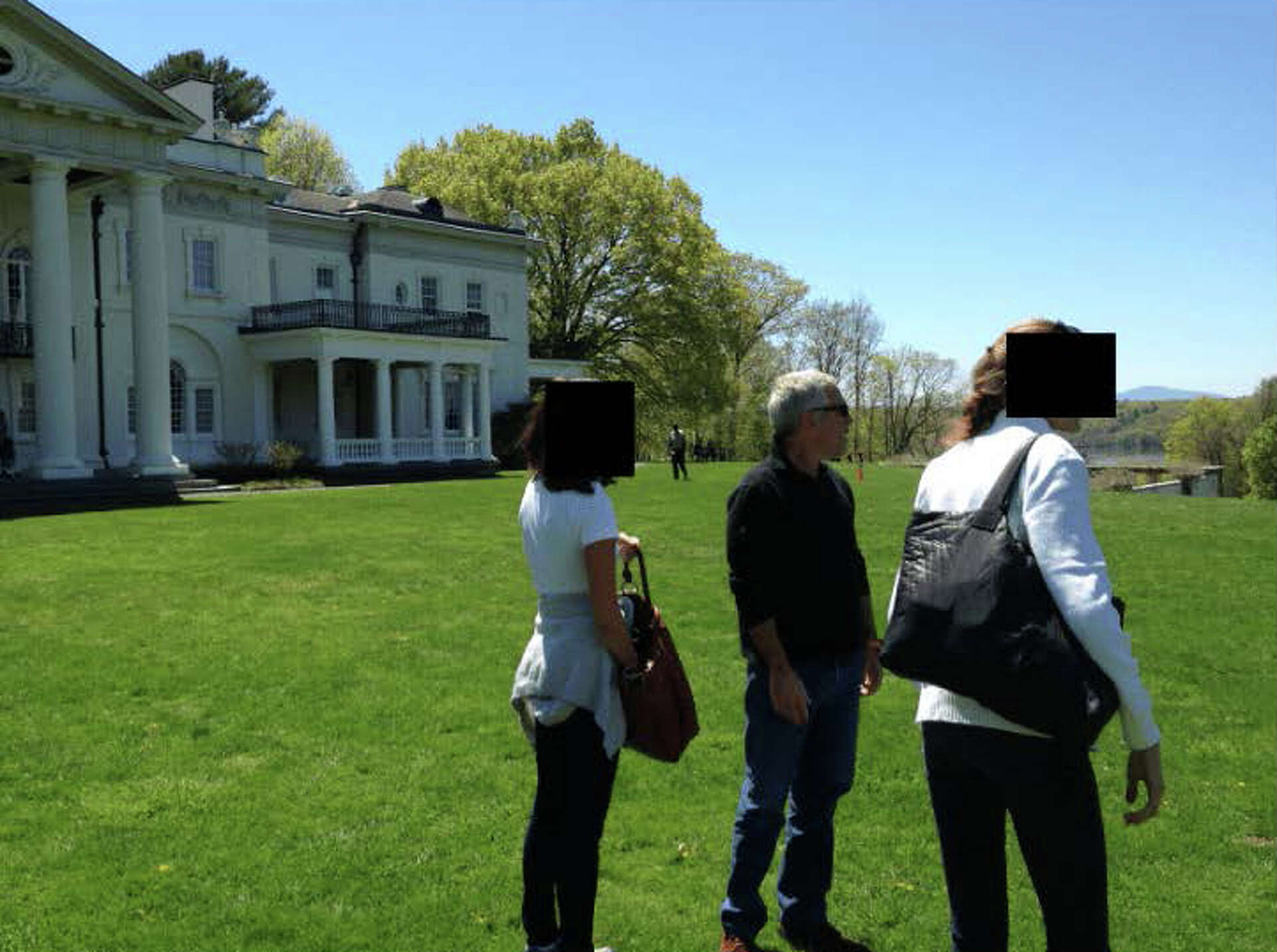
Epstien toured Bard with two unidentified women.
A new president
Bard announced the report's findings Thursday, October 22. The next day, it named Marvin Krislov, president of Pace University since 2017 and formerly president of Oberlin College, as its next president, for a three-year term beginning July 1, 2027. "I am honored and humbled by this opportunity to lead this extraordinary institution," Krislov says. Acting president Jonathan Becker remains until then. Bard's statement on the report does not mention the appointment, and the college has not said whether the timing of the two announcements, a day apart, was coordinated. It invites a question the college has not addressed: whether naming a new president a day after a report with this many open questions was meant to move the story along.
After a decade of writing for RI (along with many other publications and organizations) Jamie took over as editor in 2025. He has a masters in journalism from NYU, a wonderful wife, two kids and a Carolina dog named Zelda.