Motherland Author Julia Ioffe and her Monumental New Text on Russian Women Opens Summer Book Series at The Mount

"Motherland: A Feminist History of Modern Russia, from Revolution to Autocracy" is now required reading, and her book talk at the Mount is a can't-miss kickoff to a season of strongly curated events July 6-7.

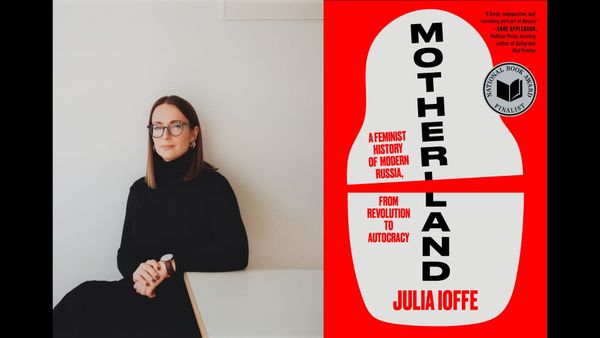
Julia Ioffe has spent nearly two decades explaining Russia to American audiences—as a Moscow correspondent for The New Yorker and Foreign Policy, a staff writer at The Atlantic, a Washington correspondent for GQ, and now a founding partner and Washington correspondent at Puck, the media company she helped launch in 2021. She has been a fixture on MSNBC, CBS, and PBS as a Russia analyst through two decades of American anxiety about the country, and her reporting and commentary have shaped how a broad swath of the public understands Vladimir Putin, the war in Ukraine, and the machinery of Russian power. She is, by any measure, one of the most prominent Western voices on the region.

The information she uncovered for her first book surprised even her. 

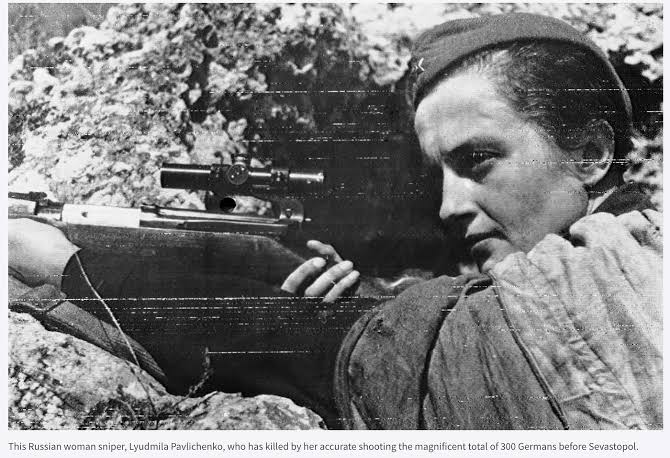
Motherland: A Feminist History of Modern Russia, from Revolution to Autocracy, published in October and named a finalist for the National Book Award, tells the story of the last 150 years of Russian history through its women rather than its men—deliberately sidelining Lenin, Stalin, Khrushchev, Brezhnev, and Gorbachev as background figures in favor of the feminist revolutionaries, Soviet women soldiers, political wives, and contemporary dissidents who built and then lost one of the 20th century's most radical experiments in gender equality. Ioffe will discuss the book at The Mount, Edith Wharton's former estate in Lenox, on July 6 and 7, opening the Berkshires institution's 2026 summer lecture series.

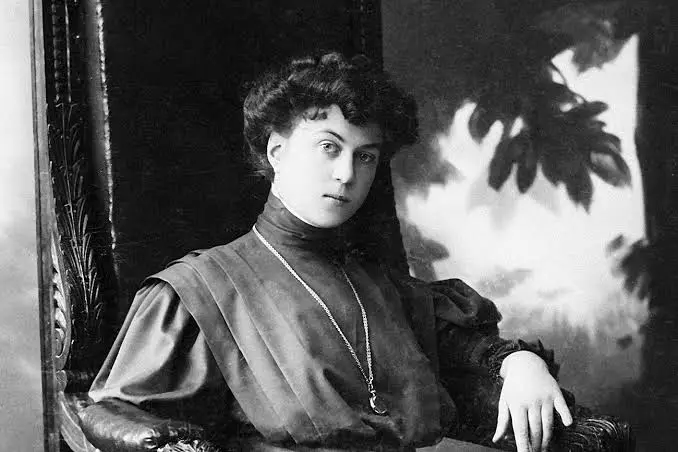
Alexandra Kollontai

The Woman History Forgot

Don't feel bad if you've never heard the name Alexandra Kollontai. Neither had Julia Ioffe, and Ioffe is about as deep into Russian history as a Western journalist gets.

"Despite studying Soviet history in college, and then reading about it pretty obsessively, and covering Russia for so long, for two decades now, I didn't know any of this stuff, and I had to really dig to find it," Ioffe says. "And as I did, the more I discovered, the more angry and upset I got because it’s not just that they weren’t written about. They were just ignored and dismissed as unimportant and unserious."

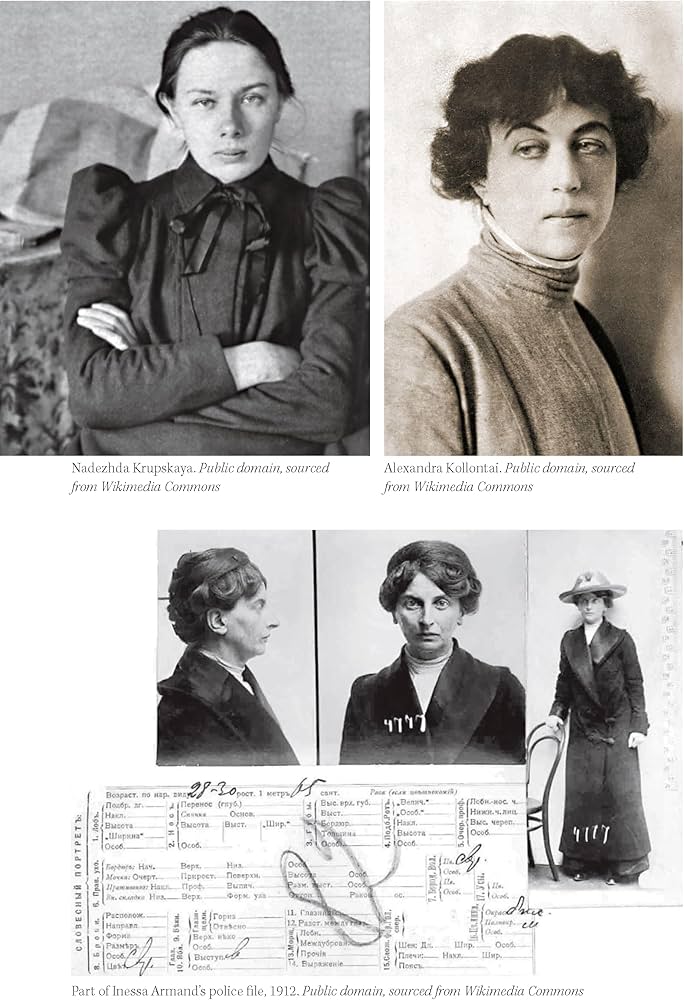
Kollontai was the first female official in the revolutionary Soviet government, serving as Commissar of Social Welfare beginning in 1917, and the architect of some of the era's most radical legislation: legal abortion, paid maternity leave, no-fault divorce, and the decriminalization of homosexuality, decades before any Western democracy approached the same. She also wrote extensively, and controversially (even among her fellow Bolsheviks) about sexual liberation, arguing that economic freedom for women was the precondition for relationships based on love and mutual respect rather than dependence.

"She not only was writing this stuff in the early part of the 20th century, but she actually was able to put a lot of it into practice, in part because she also embraced this very ruthless political approach of using political terror and seizing power extra-judicially," Ioffe says. "But she was able to put some of these things into practice—like legal, free, safe abortion and paid maternity leave. We still don't have these things here in the US over 100 years later."

The vision Kollontai and her contemporaries pursued did not survive contact with the men who consolidated power around them. Ioffe is careful, in conversation, not to let the ideology entirely off the hook for what followed, even as she distinguishes between the aspiration and its execution. 

People often say communism makes sense in principle but that the conditions in the Soviet Union simply weren't right for it. Ioffe pushes back against this premise. While she believes socialist policy can clearly serve the public good, she argued that the way Soviet Communism set out to remake reality itself was a failed experiment, one that produced immense suffering for the women and men who lived through it. The terror of the Stalin era in particular, she says, was not a bastardization of the system but was built into how Soviet Communism operated—mass violence carried out against ordinary people, women and children sent into the gulag system, an entire apparatus of repression that made the original promises of liberation almost beside the point.

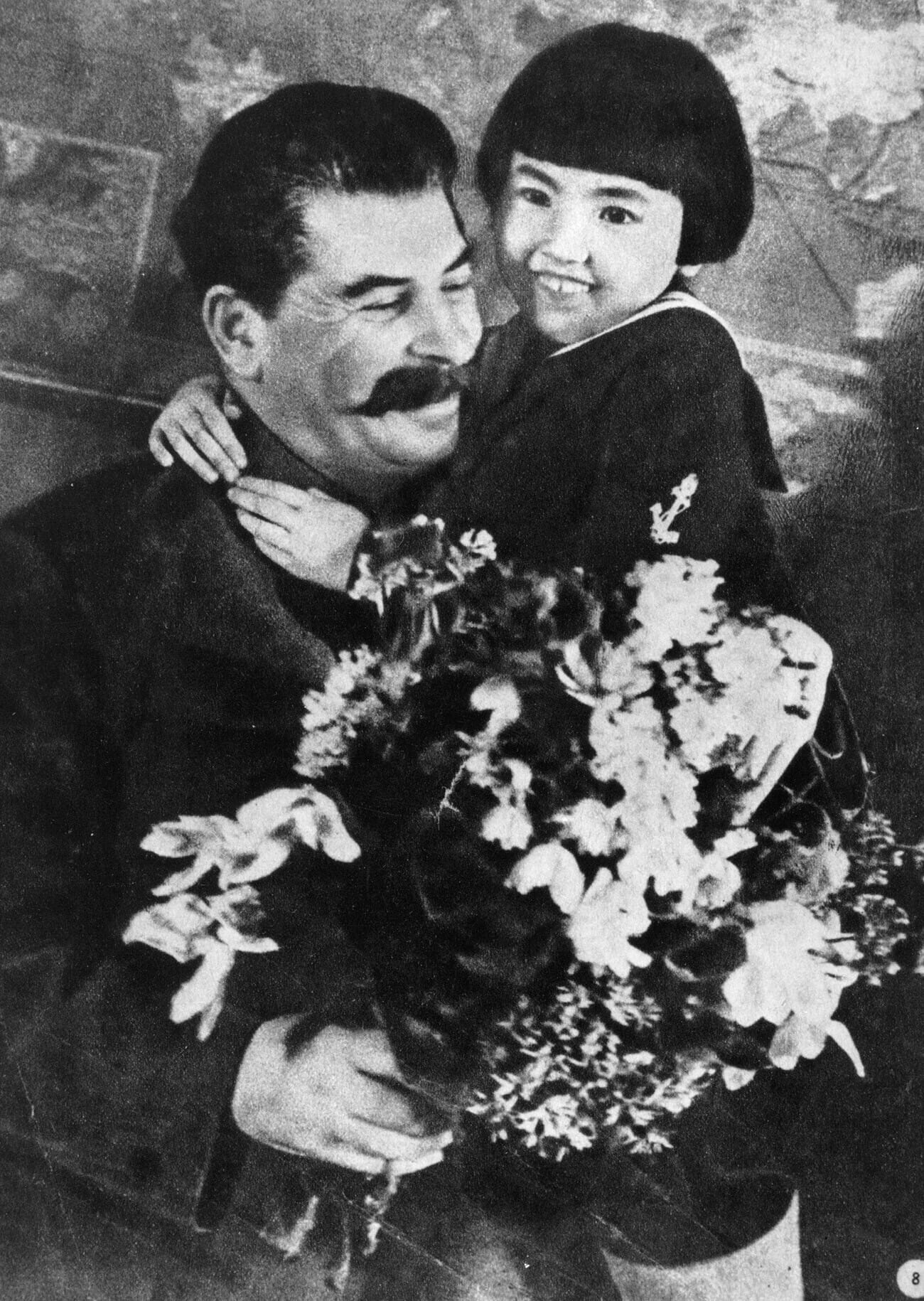
Joseph Stalin holds a child in a famous propaganda image.

"There's a ruthlessness to the ideology put into practice by people like Lenin, who supported the use of political terror from the beginning," Ioffe says, addressing the strain of leftist historical revisionism that locates the catastrophe solely in Stalin's personal pathology rather than in the system itself.

That ruthlessness, paradoxically, is also what allowed early gains for women to be implemented at all. "It's top down. It's not organic, it's not something they fought for," Ioffe says.

The promises that did survive the revolution's early decades arrived in incomplete forms. As Soviet women entered the workforce in mass numbers—as doctors, engineers, scientists, soldiers—the domestic labor of running a household and raising children never left their hands. 

Ioffe's reporting on contemporary Russia returns again and again to what scholars call the "double burden": women working full-time jobs and functioning as the primary breadwinners while still being solely responsible for housework and childcare, a dynamic that, in Ioffe's account, has barely loosened its grip in the century since Kollontai's reforms. The book does not flinch from describing what filled the space that burden left in many Russian men's lives. Ioffe does not mince words, referring at points to a generation of Russian men as "man-children"—content to let their wives carry both income and household, while spending what they themselves earn on alcohol, mistresses, and folly.

Ioffe traces a version of this dynamic to a darker collective psychology that she examines at length in the book: The idea that male dignity is bound up with domination, and that female advancement is experienced by many men, in Russia as an existential threat.

"As women become more liberated and emancipated, suddenly everybody starts talking about a ‘crisis of masculinity,’” she says. “Women are doing so well, and the men aren't doing as well, and what can be done? Usually the answer that our societies come up with is to keep the women down, because inherent in that equation is that for men to feel good and not to feel sad is for them to be dominant, which I reject, and the men in my life reject.” 

“But in Russia and here in America that framework resonates with so many—that [women’s liberation] is actually unnatural, and the more natural way is to just keep women down. I think that's what is at the root of all these conversations about a crisis of masculinity, or the male loneliness epidemic. It assumes that the only way men can be happy is if they're dominating women."

Writing the Book She Wished She'd Had

The book's origins were, by Ioffe's own account, an accident of her publishing process. She had set out to write something else entirely: a book about modern Russia that pointedly did not center on Vladimir Putin, after years of what she described as an exhausting news cycle of "Trump, Putin, Russia, Trump, Putin, Russia." Her proposal included a chapter on the Russian Orthodox Church, one on national trauma, and—almost as an afterthought—a sample chapter built from an unpublished article she'd written years earlier about Russian women.

"All these publishers were like, 'No, that's the book we want, that's what we want to read,'" Ioffe recalls. Her agent had been telling her this for years. Ioffe had resisted. "I was like, 'No, I don't want to write about that, about women. I want to write a serious book.'"

The realization that followed was uncomfortable. "I realized the extent to which I had internalized the approach of so many historians and journalists, who are mostly men, and who don't see this kind of social history, and specifically women's roles, as serious. And it made me upset, not just with them, but also with myself, for what I had missed."

Part of the research took Ioffe, who emigrated from Moscow at age seven, into her own family archive—a year's worth of letters between her great-grandparents that she had always known existed but had never sat down to read in full. She sent draft chapters to her own parents, who had grown up fully inside the Soviet system, and found that much of what she'd uncovered was new even to them.

The book proposal she eventually settled on was not commercial. "I knew this book wouldn't be a bestseller, and that wasn't my goal. My goal was to add to the canon of historical literature about Russia,” Ioffe says, “To correct it, add nuance, and to add back a history that had been so overlooked and ignored," she says. A friend, the American-born daughter of Soviet Jewish refugees whom Ioffe met in Moscow, put it more simply: "She said, 'You need to write the book that we should have had as young correspondents in Moscow, that we wish we would have had.'"

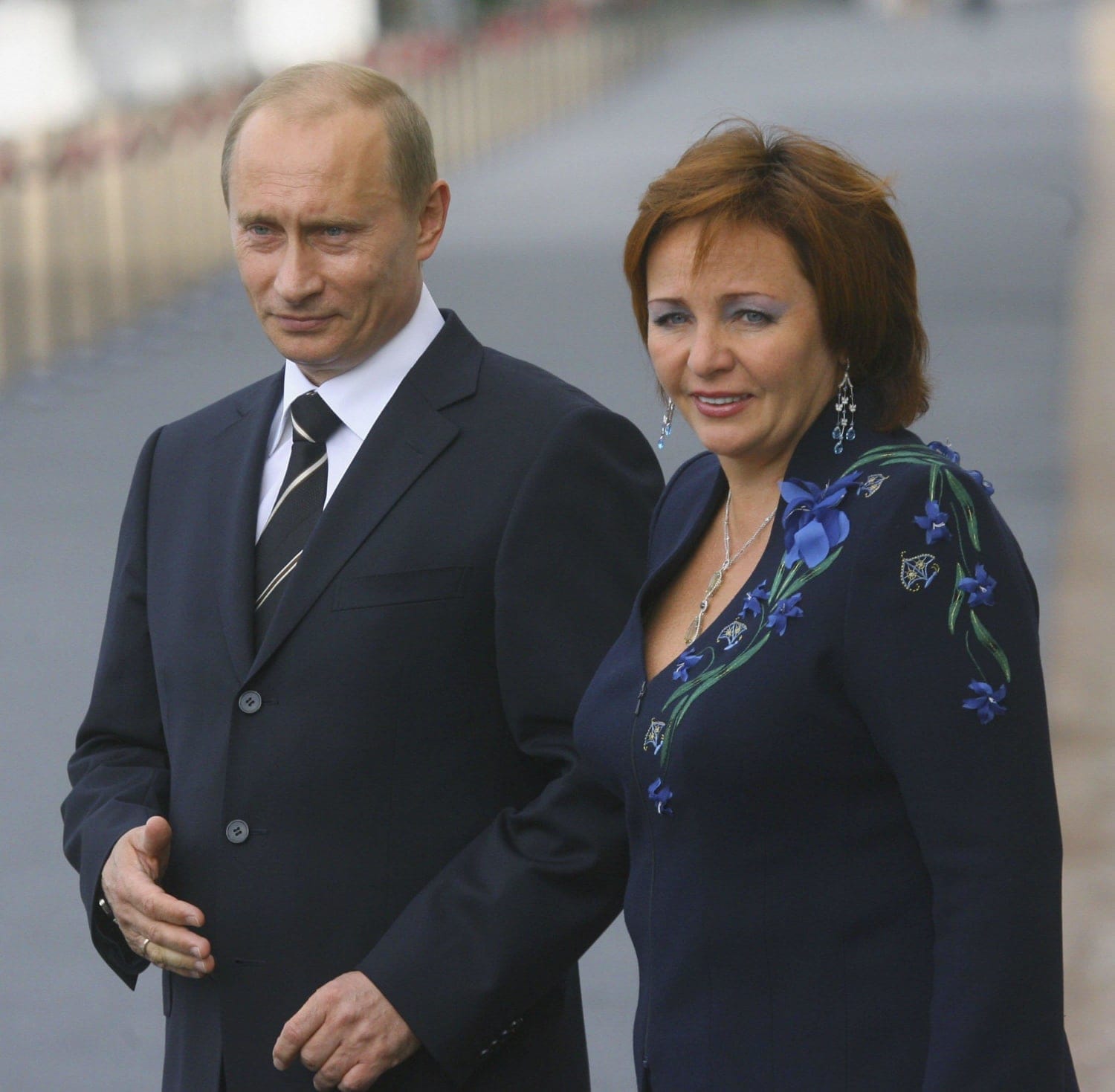
Vladimir Putin with his first wife, Lyudmila Putina, whom he divorced in 2014 after persistent rumors of his infidelityB

Since publication, Ioffe has heard from Russian readers directly, and the response has echoed her own experience researching the book: People telling her that they, too, had no idea most of this history existed. The erasure, in other words, was not simply a failure of Western Russia-watchers or a gap in the English-language record. It happened inside Russia as well, to Russians, about their own stories.

That response points to something larger about what Motherland actually is. It is not a postmortem on a closed chapter of history, a settled account of a fight that ended in defeat. The women's movement Ioffe traces, from Kollontai's revolutionary legislating through the generations of Soviet doctors, soldiers, and dissidents who came after, never fully concluded, and Ioffe's own work, decades of dispatches insisting that the story of Russia is bigger and stranger than its men in power, places her as a continuation of it. She is, in her way, the latest entry in a lineage of women she labored to excavate. 

What Ioffe has done in the thoughtful, immaculately written, and vitally relevant, creation of Motherland: A Feminist History of Modern Russia, from Revolution to Autocracy is remarkable. Her work illuminates the Russian experience in a way never before rendered so wholly. It is a crucial text that challenges a reader to take a hammer to preconceptions and, if you’re brave enough, reap a painful, yet more truthful understanding of our world and ourselves. 

A Summer of Strongly Curated Events

Ioffe’s two appearances at the mount are part of The Mount's 2026 Summer Lecture Series, now in its 34th year, was conceived under the banner "Let Your Mind and Spirit Soar," part of a broader rebrand that has the 113-year-old estate operating under a refreshed identity as the Edith Wharton Cultural Center. Executive Director Susan Wissler has described the season's intent as a showcase of voices who reshape the public imagination—unsung figures and convention-defiers whose work expands how audiences think about culture and history. 

Ioffe's talk, on Monday, July 6 at 4pm and Tuesday, July 7 at 11am in The Mount's open-air event tent, opens that lineup.

The season continues through the summer with a run of author conversations that are similarly mind-expanding: Mark Braude on The Typewriter and the Guillotine (July 13 & 14); Martha Ackmann on her Dolly Parton biography Ain't Nobody's Fool (July 20 & 21); Carla Kaplan on Troublemaker: The Fierce, Unruly Life of Jessica Mitford (July 27 & 28); and Jeff Chang on Water Mirror Echo: Bruce Lee and the Making of Asian America (August 3 & 4). 

The Mount's parallel "In Conversation" series, curated and hosted by Andre Bernard, former vice president of the John Simon Guggenheim Memorial Foundation, and its "New York Stories" series both run concurrently through the summer and into the fall, with appearances including retired Army general and former CIA director David Petraeus, New York Times editor Jodi Kantor, and Politico senior editor Peter S. Canellos, among others. Weekly readings of Wharton's own short fiction continue on the Terrace through October as part of the long-running "Wharton on Wednesdays" series.

Tickets for the Ioffe talk and the rest of the summer season are available now through The Mount's website.

Share this post

Written by

Jamie Larson
After a decade of writing for RI (along with many other publications and organizations) Jamie took over as editor in 2025. He has a masters in journalism from NYU, a wonderful wife, two kids and a Carolina dog named Zelda.