"Hudson Folk" Captures the People, Places, and Relationships Shaping the Region’s Cultural Life
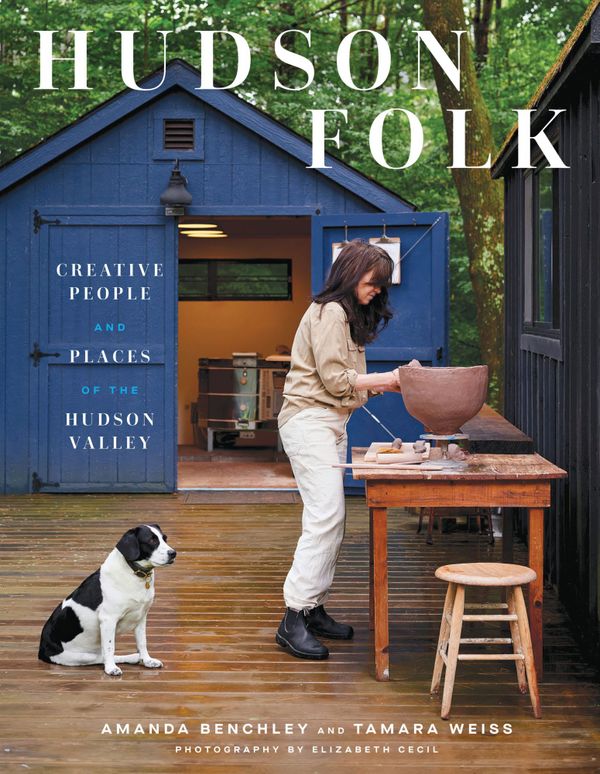
"Hudson Folk: Creative People and Places in the Hudson Valley" written by Amanda Benchley and Tamara Weiss, with photographs by Elizabeth Cecil, presents the region’s creative life as a web of relationships.
The Hudson Valley has long inspired a particular kind of mythology. The river, mountains, farm fields, and old houses promise room to work and space to think. Artists arrive in search of solitude, exchanging cramped apartments and expensive studios for barns, churches, workshops, and acreage. Ideas flourish. Community follows. Before long, the landscape begins to look like an accomplice in the creative act.
There is some truth in that story, but Hudson Folk: Creative People and Places in the Hudson Valley (Abrams) finds something more interesting beneath it. Written by Amanda Benchley and Tamara Weiss, with photographs by Elizabeth Cecil, the book presents the region’s creative life as a web of relationships—joining internationally known artists and actors with people whose work is inseparable from the communities that produced them.
Its 23 profiles include painter Tschabalala Self and her husband, gallerist Michael Mosby; actors Rebecca Hall and Morgan Spector; artist Lyle Ashton Harris; writer and food forager Tamar Adler; basket maker Deborah Needleman; musician, painter, and poet Ian Felice; and artists and designers working in ceramics, jewelry, sculpture, furniture, fashion, theater, and film. Some arrived with established careers. Others grew up here or built their creative lives through the region’s venues, schools, friendships, and informal networks.
Jess and Lee Falco are the sibling duo behind the Falcon in Marlboro.
Jess and Lee Falco embody that second story. Lee was raised in Marlboro, where his father, Tony, created an informal performing arts center inside a former Methodist church. Musicians played, artists exhibited their work, Lee’s mother cooked dinner, and audiences contributed to a donation box that paid the performers. Tony later dismantled the church and rebuilt it behind the family home, then opened the Falcon in a former cabinetry shop overlooking a waterfall in the center of town.
Lee began running sound at the Falcon when he was 13. After Tony died from complications of Covid, Lee, Jess, and Lee’s brother Julian took over the venue. They now carry forward a cultural institution that helped form them, programming jazz, rock, blues, folk, and world music while exhibiting the work of local artists. Their chapter connects home, family, work, and community so completely that separating one from another becomes impossible. Jess describes their lives as the product of relationships formed close to home: “Every house we’ve lived in, every job we’ve ever had, is truly because of living in the Hudson Valley. It’s all connected back to here.”
Circles of Influence and Exchange
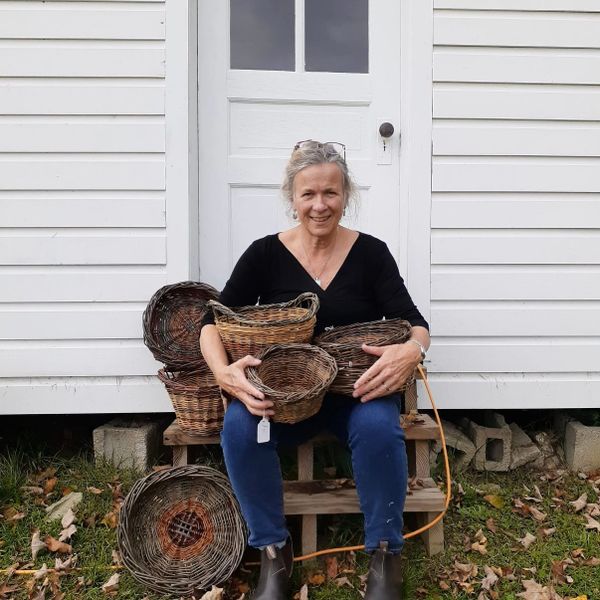
That sense of connection runs throughout Hudson Folk. Self first encountered the area as a Bard College student and eventually settled in Catskill with Mosby, who grew up in Hudson. Ceramics artist Katie Stout works in a former church in Germantown and hires Bard students as studio assistants. Hall and Spector became friends with Felice through their children’s Waldorf school; Hall and Felice subsequently began painting together and planning an exhibition. Needleman grows willow for her baskets, teaches the craft to an apprentice, and organizes an annual holiday market of regional makers at Stissing House in Pine Plains.
The book’s Hudson Valley is built through these overlapping circles of influence and exchange. Schools feed studios. Studios become gathering places. Friendships lead to collaborations. Houses accommodate workshops, offices, gardens, rehearsal rooms, and visiting artists. Even solitary practices exist within a larger communal structure.
Cecil’s photographs make those connections visible. The homes and studios are often beautiful, as one expects from an expansive illustrated book published by Abrams, but beauty rarely feels detached from use. Worktables are covered with tools and materials. Clay waits to be shaped. Baskets hang from rafters. Paintings lean against walls. Instruments, books, flowers, fabric, and unfinished objects fill the rooms. Dogs wander into the frame with the proprietary air of creatures who know they belong there.
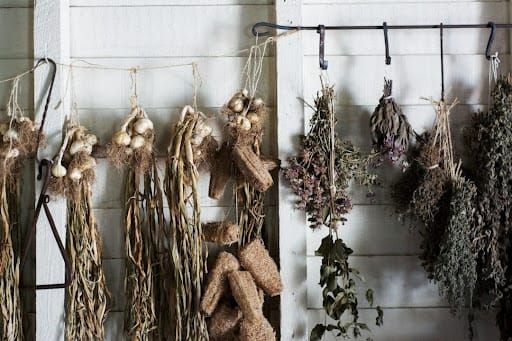
Deborah Needleman began weaving baskets in 2018.
These places reveal the practical architecture of creative lives. Deborah Needleman’s former cow barn holds bundles of willow and rush harvested for future baskets. Rebecca Hall paints in a converted barn while Morgan Spector works elsewhere on the family’s 40-acre property. Felice’s studio occupies a church, a space that retains a spiritual character for him even as it serves the daily requirements of painting and songwriting. Designer and builder Rick Anderson moves between craft, architecture, fishing, and the landscape that informs them all.
A Thriving and Fragile Cultural Ecology
The houses resist a single regional aesthetic. There are 19th-century farmhouses and converted churches, but also a modest 1990s home that artist Will Squibb cheerfully compares to a double-wide trailer. Squibb lives on a former dairy farm in Livingston, rotating among ceramics, collage, and writing while imagining the property as a shared compound where friends might eventually use woodworking, metal, and ceramics studios. His ambitions arise from abundance—land, barns, possibility—but his story also carries an economic warning. Hudson has become prohibitively expensive for emerging artists, pushing them toward former agricultural buildings and towns farther from its center.
Benchley and Weiss acknowledge that tension in their introduction. During the nearly two years they spent making Hudson Folk, they witnessed rapid change across the region. New shops, hotels, restaurants, and galleries arrived as rents climbed beyond the reach of many young families. The book celebrates a thriving cultural ecology while recognizing that the conditions supporting it are fragile. The same appeal that draws artists can produce the wealth and development that eventually displace them.
That contradiction shadows the ideal of the Hudson Valley as an endlessly receptive creative refuge. Old barns and generous acreage are not equally available to everyone, and the freedom to withdraw into nature depends on money, timing, and circumstance. Still, Hudson Folk makes a persuasive case for what the region can offer beyond real estate: interdependence, mentorship, collaboration, and a daily proximity between art and ordinary life.
Near its end, the book asks its subjects where they go to “tune in or tune out.” Their answers lead to gardens, creeks, studios, wetlands, woodsheds, swimming holes, and the river. Lee Falco goes to his studio and practices. Jess stays home on the rare evenings when she and Lee are free and the Falcon is closed. Their answers return the book to its essential terrain. Creativity lives here in the continual movement between solitude and community, private work and public gathering, the place where someone goes to make something and the people waiting to receive it.
Brian is the editorial director for the Chronogram Media family of publications. He lives in Kingston with his partner Lee Anne and the rapscallion mutt Clancy.