A successful gallery day depends as much on timing and bag management as it does on the exhibition list. Independent art spaces often sit between major transit hubs, making them ideal for travelers with a few hours to spare. The challenge is building a route that leaves room for delayed trains, venue rules, and the slower pace that good art deserves.
Treat the day as a series of flexible stops. Choose a compact gallery district, confirm opening hours, and decide where your luggage will go before you arrive. That basic plan makes it easier to enjoy an unexpected exhibition without watching the clock every few minutes.
The Rhythm of Independent Galleries
Independent galleries rarely operate like large museums. Many open around 11 a.m. or noon, close one or two days a week, and change their schedules while exhibitions are being installed. Check each venue’s own website or social pages on the morning of your visit, even if a map listing says it’s open. A private event or installation period can alter the posted hours.
Build your route around three priority galleries, then add two optional stops nearby. In a dense arts district, allow 25 to 40 minutes per gallery and another 10 minutes for walking, checking in, or finding the entrance. Some spaces occupy upper floors, converted warehouses or buildings with discreet signage, so the front door may take longer to locate than expected.
Established gallery routes can help you judge a realistic pace. A published Chelsea galleries itinerary shows how several venues can be grouped into a walkable New York afternoon, while this New York gallery guide offers another useful view of planning around contemporary spaces.
Keep the order flexible once you start. If a small gallery has an artist talk beginning in 20 minutes, stay for it and drop a lower-priority stop. Gallery hopping works best when the schedule has room for discovery. Ten carefully viewed works will leave a stronger impression than six hurried rooms visited only to complete a list.
Navigating Strict Venue Cloakrooms
Cloakroom policies can disrupt a gallery plan when you arrive with a suitcase, large backpack, or shopping bags. Small venues may have no staffed cloakroom at all. Others can accept coats and compact bags but refuse wheeled luggage because storage space is limited. Large institutions may inspect bags and impose size restrictions, especially during busy exhibitions.
Contact the venue in advance if its website doesn’t give exact dimensions. A short message asking whether a cabin-size suitcase can be stored is more useful than assuming “cloakroom available” covers every item. Keep valuable documents, medication and electronics in a small crossbody bag that can remain with you if the larger bag must be checked.
For a London itinerary beginning or ending at Euston, reserving Euston left luggage before setting out can remove the largest item from the equation. Confirm the location’s opening hours, booking terms and collection process, then save the confirmation where you can reach it without unpacking your bag.
Pack with gallery rules in mind as well. Put your coat near the top, avoid attaching loose items to the outside of your backpack, and carry a reusable folding tote for small purchases. Before leaving any staffed cloakroom, photograph or securely store the claim ticket. A simple note in your phone with the venue name also helps when several gallery visits begin to blur together.
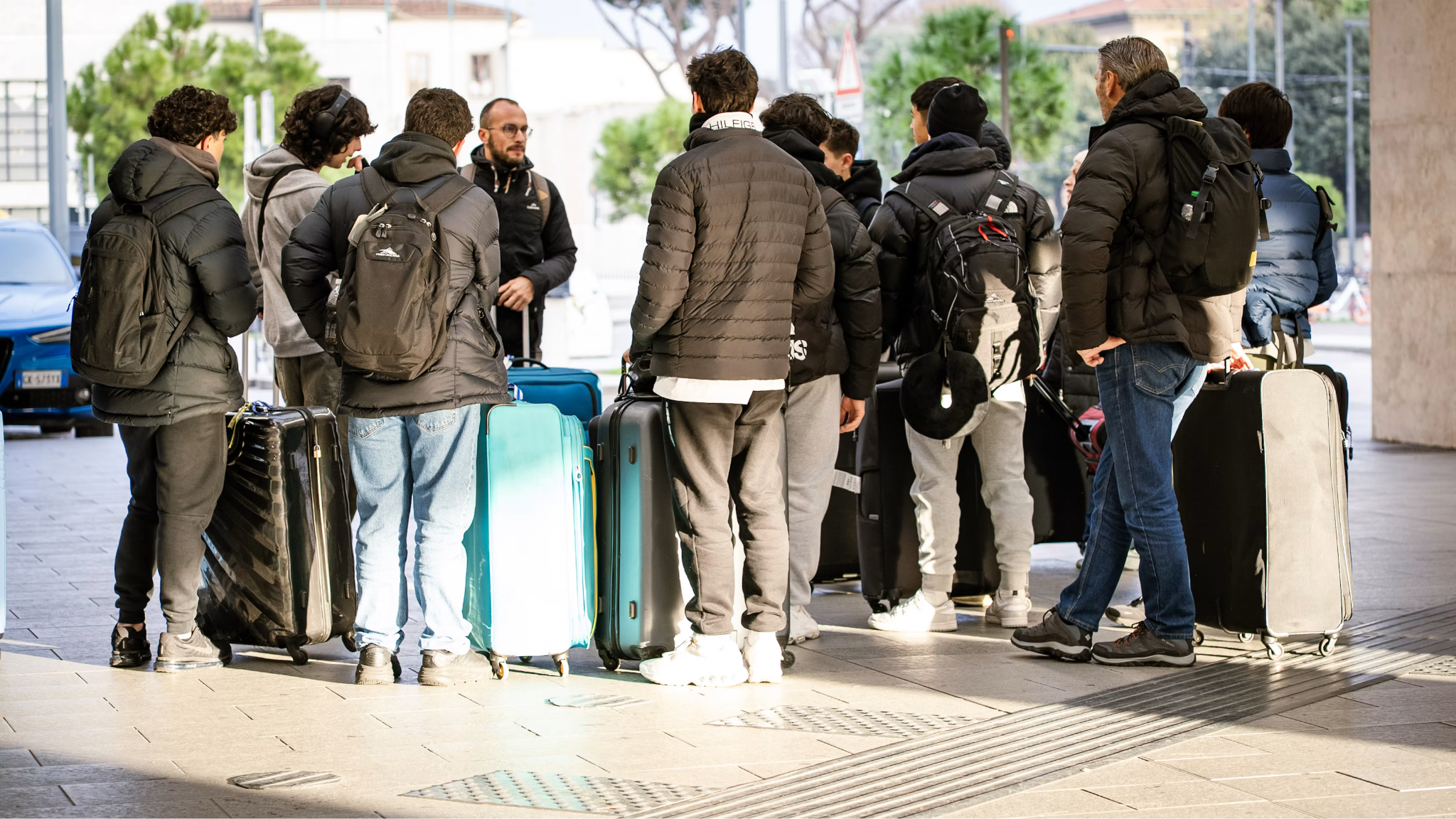
Image Credit: Unsplash
Stashing Heavy Bags Near Key Stations
The best storage point is usually connected to the station you’ll use later, not simply the closest option to your first gallery. Returning across a city to collect a suitcase can erase an hour from a short layover. Plot the station, storage location and final gallery on one map before booking anything.
Check four practical details: the hours, walking distance from the platform, access requirements, and how early you need to collect your bags. A location described as five minutes from a station entrance might take 15 minutes from your arrival platform, especially in a large terminal. Add time for stairs, crowded concourses, and unfamiliar exits.
Your gallery route should then move in a loose arc back toward the bag and departure station. A self-guided Chelsea gallery walk offers a useful model. It groups nearby cultural stops instead of sending visitors back and forth across the neighborhood. The same principle works in London, Paris, or any rail-connected city.
Before handing over a bag, remove travel documents and check that every zipper is closed. Take a quick photo of the item and any receipt or digital claim information. Set two phone reminders: one for the time you need to leave the final gallery and another for the storage location’s closing time. If the service uses a local partner, check the storefront name and street number so you can identify it quickly on your return.
A locker or staffed storage location also gives you a natural reset point. You can pick up a charger, change layers, and reorganize purchases before boarding, all without carrying extra weight through exhibition rooms.
Maximizing Time Between Rail Departures
Work backward from the scheduled departure, setting a firm time to reach the station concourse. For an unfamiliar terminal, 30 to 45 minutes before departure is a sensible target. Add the time needed to retrieve your luggage, then set a final-gallery departure time. If your train leaves at 6 p.m., for example, you might plan to collect bags at 5:10 and reach the station by 5:30.
Choose your last stop carefully. It should sit close to your return route and allow a quick exit. Large ticketed exhibitions often involve lines, timed entry and several floors, so they’re better placed earlier in the day. A small independent space near the station makes a more forgiving final visit.
Allow for the character of the galleries too. London’s cultural scene extends beyond familiar museum districts, as this account of London’s alternative spaces demonstrates. Exploring those venues can require longer walks or less direct transit, so pair one outlying destination with a cluster of central stops instead of scattering the whole day.
Save addresses and train details offline in case reception drops underground. Screenshots of your ticket, storage confirmation, and route home can prevent avoidable delays. Carry a portable charger, but don’t rely on your phone for every part of the plan. Writing the station name, departure time, and storage address on a small card gives you a useful backup.
Once delays begin, cut one stop early. A 20-minute buffer has more value at the station than inside a gallery you’re rushing through. End at the space nearest your return route, collect your bag at the planned time, and leave the final minutes for finding the platform, buying food, and settling in before departure, perhaps after checking out the Poughkeepsie mobile galleries.
A well-paced gallery day should finish with one last look at the work, not a sprint through the terminal. Set your bag collection alarm before entering the final venue, then give that exhibition your full attention until it rings.