Cruising down I-75 next to an 18-wheeler can feel oddly calm. The truck is steady, the driver sits high above traffic, and it seems like someone up there must have a perfect view of everything below. Surely that big cab comes with a bird's-eye view of the road.
The reality is very different. Those huge trucks have enormous blind spots, and plenty of passenger cars spend miles sitting right in them without realizing it. From the cab, a small sedan riding alongside the trailer might as well be invisible.
Most drivers never give it a second thought. They pass slowly, hang out beside the trailer, or tuck in close behind it while waiting to change lanes. Each of those habits can put a car exactly where the truck driver simply can't see it.
The Blind Spots That Move With Every Truck
Every vehicle has blind spots, but big rigs take the concept to another level. Trucks have large zones in front, behind, and along both sides where a car can disappear from the driver's view entirely, even with oversized mirrors.
The front blind spot stretches out ahead of the cab, so a car that cuts in too closely may vanish below the driver's line of sight. Behind the trailer, there's no rearview mirror at all, which means a car tailgating the truck is effectively hidden.
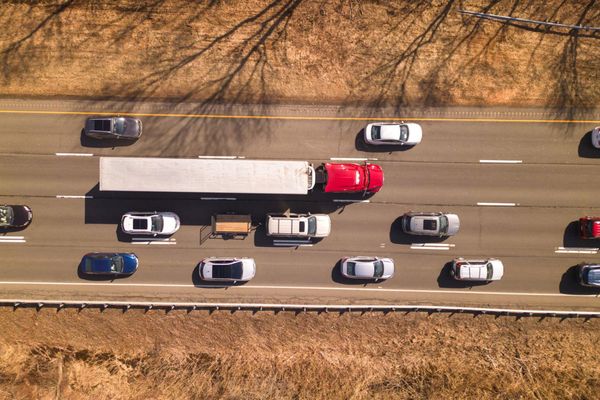
The side blind spots are the biggest of the bunch, especially on the right. These areas are known as truck no zones, and because they're so much larger than a passenger car's blind spots, they can hide entire vehicles from a driver trying to change lanes or turn.
Why the Right Side Can Be Especially Dangerous
The right side of a truck is the trickiest place to be. The driver sits on the left, so the view down the passenger side is limited, and the blind spot there can stretch across multiple lanes. A car riding along the right side of the trailer can easily go unnoticed.
Lane changes create the biggest risk. If a truck driver needs to move right and doesn't spot a car beside the trailer, the truck can drift into that lane with nowhere for the smaller vehicle to go.
Turns add another danger. Trucks often swing wide to the left before turning right, leaving what looks like an inviting gap on the right side. Drivers who slip into that space can get caught as the truck completes its turn, a situation sometimes called a squeeze play.
The Dangerous Assumption That a Truck Driver Can See You
Truck mirrors are big, but they can't cover everything. Even with multiple mirrors, there are gaps where a car simply doesn't appear. A driver doing everything right can still miss a vehicle sitting in one of those zones.
Size and stopping distance raise the stakes. A fully loaded truck can weigh up to 80,000 pounds and needs far more room to stop than a passenger car. Cutting in front of a truck and then braking leaves the truck driver little chance to avoid a collision.
Positioning matters too. Drivers who linger beside a trailer or follow too closely assume the truck driver knows they're there. That assumption can be costly. A simple rule of thumb from safety officials helps here, which is that if you can't see the truck driver in their mirror, they can't see you.
How to Stay Visible Around Commercial Trucks
Passing a truck safely means doing it decisively. Signal, pass on the left when possible, and keep moving rather than lingering beside the trailer. Once past, wait until you can see the whole front of the truck in your rearview mirror before moving back over.
Distance is your friend. Leave plenty of space behind a truck so the driver can see you and so you have room to react if traffic stops suddenly. Following a truck closely also blocks your view of what's happening ahead.
Watch for clues about what the truck is about to do. Turn signals, slowing, and a wide swing at intersections often mean a turn is coming. Giving trucks extra room in those moments can prevent dangerous squeeze plays and side-impact crashes.
Conclusion
Big rigs come with blind spots big enough to hide entire cars. Those no zones in front, behind, and along both sides create real risks, especially when drivers assume the trucker can see everything around them.
The right side, the space directly behind the trailer, and the area just in front of the cab deserve extra caution. Lingering in those zones or cutting in too closely can leave a truck driver with no time or space to react.
A little respect for the space around a truck goes a long way. Passing promptly, keeping a healthy following distance, and watching for turn signals can help everyone share the highway safely and avoid preventable crashes.