The Garden’s Second Season: Fall Blooms, Winter Roots, and a Lighter Approach to Cleanup
The garden in fall can be every bit as lovely as it is in spring or summer, and a few shifts in approach can make tending it lighter and more rewarding.

The garden in fall can be every bit as lovely as it is in spring or summer, and a few shifts in approach can make tending it lighter and more rewarding.
By Margaret Donsbach Tomlinson
The garden in fall can be every bit as lovely as it is in spring or summer, and a few shifts in approach can make tending it lighter and more rewarding. At the top of the delight scale is walking through the garden to notice what’s in bloom and decide where to plant more fall-bloomers. Brilliant red cardinal flower (Lobelia cardinalis) stays in bloom until late September, attracting butterflies and hummingbirds. It thrives in consistently moist soil and will survive occasional flooding. Black-eyed Susan (Rudbeckia fulgida) lights up fall gardens with its golden flowers. Drought-tolerant when established, it grows best in well-drained soil. Both will self-seed when conditions suit them.
Goldenrod, blooming at the same time as ragweed, has an undeserved reputation. Its pollen is dispersed by bees and other insects, not wind, so it doesn’t cause hay fever. Though common goldenrod (Solidago canadensis) can become an aggressive nuisance, better behaved goldenrods are just as beautiful. Sun-loving showy goldenrod (Solidago speciosa) is well named for its bright yellow blooms, while arching sprays of sweet goldenrod (Solidago odora) will bloom in both sun and part shade.
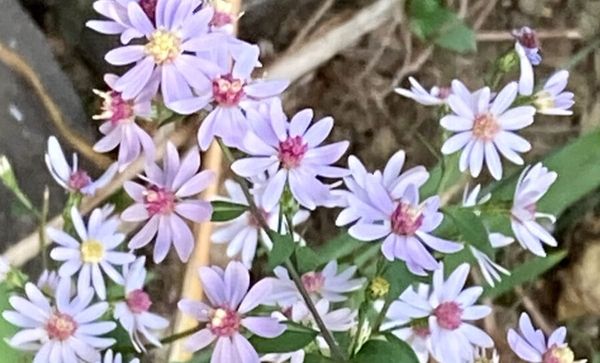
The champions of the fall garden are native asters. Some with richly blue-purple flowers include New York aster (Symphyotrichum novi-belgii); New England aster (S. novae-angliae); aromatic aster (S. oblongifolium), named for the scent of its leaves rather than its flowers; and shade-tolerant blue wood aster (S. cordifolium). Bees and butterflies flock to asters as late as mid-October when little else is blooming.

Early fall is the best time to plant trees and shrubs. Deciduous or evergreen, they stop producing top growth in fall and direct more energy below ground. A 2025 study led by scientists at Belgium’s University of Antwerp found that woody roots can continue growing slowly through winter, even after trunks have stopped growing and leaves have fallen. Researchers sampled beech and birch trees in forests and also studied young beech, birch, oak, and aspen trees in Belgium, Spain, and Norway. As long as the soil did not freeze, root growth continued even when temperatures approached zero.
That makes fall planting more than a matter of avoiding summer heat. Cooler air reduces stress on newly planted trees and shrubs, while soil often remains warm enough for roots to establish themselves. Regular watering is still important until the ground freezes, especially during a dry autumn. A layer of mulch can moderate changes in soil temperature and help retain moisture. The goal is to give woody plants time to settle in below ground so they are ready to leaf out and grow when spring arrives.
Trees and woody shrubs also capture carbon from the atmosphere and store it in their roots, trunks, and branches. One New York native, the tulip tree (Liriodendron tulipifera), may be especially efficient at the job. Research published in 2024 found that tulip-tree wood has unusually large macrofibrils, threadlike bundles of cellulose and other cell-wall materials. Its wood falls into a newly recognized category between hardwood and softwood, and researchers think that structure may help explain the tree’s ability to store carbon efficiently.
Tulip trees diverged from magnolias 30 to 50 million years ago, around a period when atmospheric carbon dioxide declined sharply. Their wood structure may have evolved in response. In a home landscape, however, carbon storage is not a contest won by a single species. Large, long-lived trees such as red oaks (Quercus rubra) and white oaks (Quercus alba) accumulate substantial stores simply because they build so much wood over many decades. Choosing a tree suited to the site—and giving it enough room to reach maturity—matters as much as choosing a species with impressive carbon credentials.
Smaller trees also store carbon. Dogwood trees have exceptionally hard wood people once used for daggers, calling it “dagwood.” The arrowwood shrub (Viburnum dentatum) preserves a similar reference in its name; people once made arrows from it. Hardwood trees and shrubs store more carbon than softwoods because their cellular structure is denser, but any tree or woody shrub will remove carbon from the air. Through photosynthesis, leaves absorb carbon dioxide and convert it to the molecules needed to build branches, trunks, roots, and leaves. The carbon in the wood stays locked up until the wood decays, while the carbon in the roots stays in the soil long after the tree or shrub dies.
Raking leaves is a traditional fall habit. Most communities now ban burning them to limit air pollution and fire hazards. Instead, municipalities often have leaf pick-up programs, composting the leaves and using the compost in parks and natural areas. At home in the garden, though, leaves are a valuable resource.
Trees and shrubs are host plants for many butterfly and moth caterpillars. In fall, they spend the winter in leaf litter as chrysalises and pupae, emerging in spring as winged pollinators. Leaves also condition and enrich the soil as they break down. Raking leaves off any areas of lawn and moving them under trees and shrubs or into flower beds will keep lawn grass from being smothered while preserving the benefit of the leaves.
This approach does not require leaving every leaf exactly where it falls. Thick, wet mats can damage turf and may be slippery on paths. Move leaves from those places into garden beds, around shrubs, or beneath trees, where they form a loose blanket. It can be tempting to chop some up with a mower, but this could kill any butterfly chrysalises and moth pupae nestled in the leaf litter. Gently moving the leaves with a rake is the best way to protect these insects. By spring, much of the material will have settled into the soil, returning nutrients to the same plants that produced it.

Bee hotels—artificial structures designed to provide nesting sites for solitary, cavity-nesting bees like our native mason bees—are charming but require regular cleaning to keep them from harboring disease and parasites. An easier way to support these insects is to leave dead flower stalks standing through winter, then cut some back to a height of eight to 24 inches in late winter or early spring. The cut ends expose cavities just as emerging bees begin looking for nest sites. New growth soon hides the old stalks, which can remain in place while the next generation develops inside them.
Most stem-nesting bees need a cavity that is already hollow. A smaller group—including some carpenter, leafcutter, and resin bees—can excavate the soft centers of pithy stems. Plants with hospitable hollow stems include cardinal flower, bee balm, anise hyssop, Joe Pye flower, tall coreopsis, rattlesnake master, and milkweed. Asters, goldenrod, and obedient plant offer pithy stems. An easier way to support these insects is to leave dead flower stalks standing through the early winter months, then cut some back to a height of eight to 24 inches in late winter or early spring.